
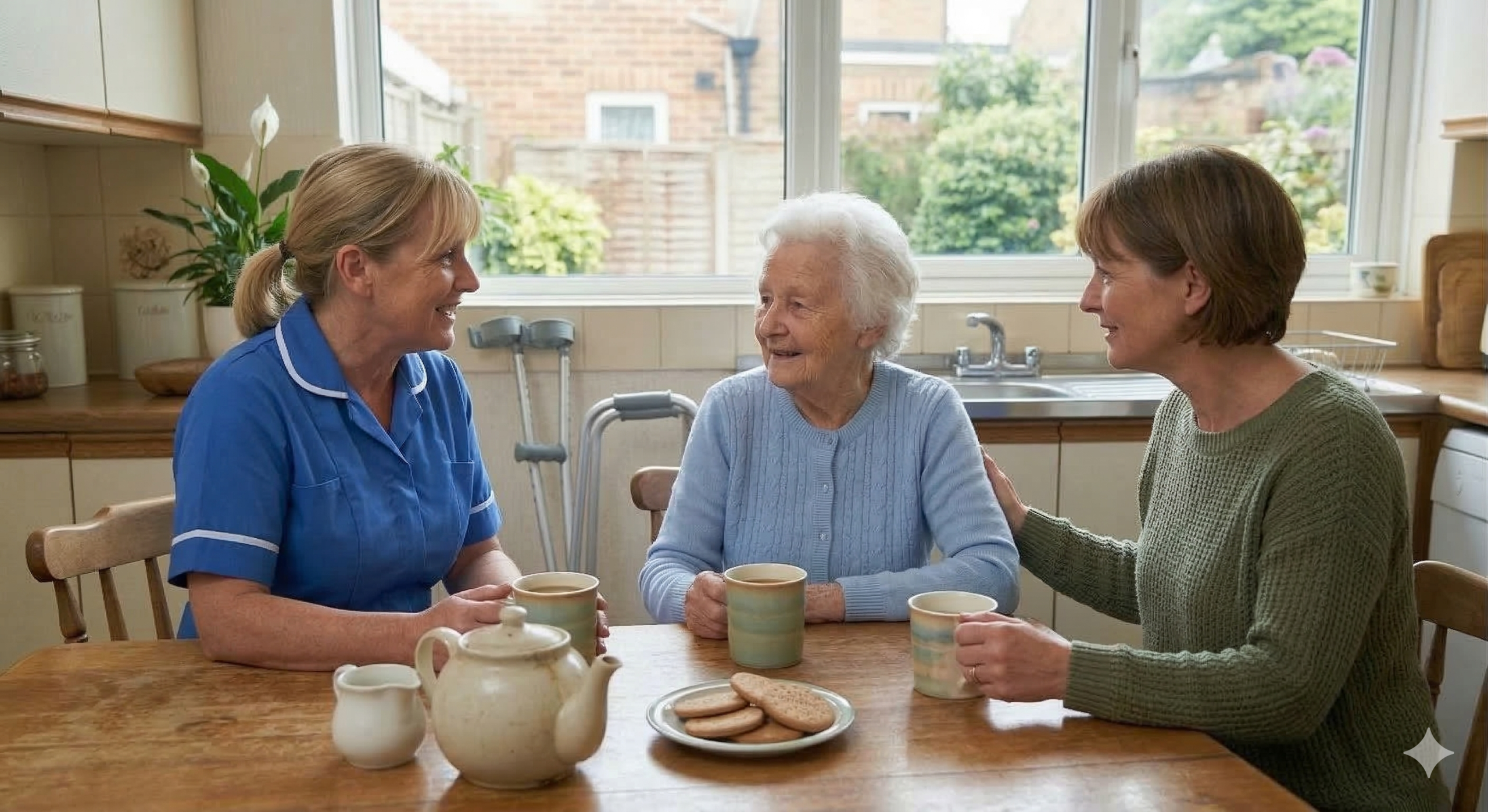
End-of-Life Care at Home Gives Your Family Time Together
Comfort, companionship, and practical support so your parent can stay at home during their final weeks and months.
Nobody is ready for this conversation. Not really. You can know it is coming for months and still feel completely unprepared when the consultant says the words.
Your parent is dying. The treatment has stopped working. The focus now is on comfort.
In that moment, most families ask the same thing: can they stay at home?
The answer, for many families in Cheltenham, is yes. End-of-life care at home means your parent spends their final weeks and months in their own bed, in their own room, surrounded by the people and things they love. Not on a hospital ward. Not in an unfamiliar building. At home.
SW Care has been providing home care in Cheltenham since July 2018. We have delivered over 100,000 hours of care to 100s of families across the area. Some of those families came to us at the very end, when time was short and comfort was everything.
We are not a hospice. We provide comfort, companionship, and practical support. Medical palliative care comes from NHS district nurses and hospice teams. We work alongside them, handling everything else so your family can focus on being together.
What End-of-Life Care at Home Actually Involves
The phrase “end-of-life care” sounds clinical. In practice, it is deeply personal and mostly very quiet.
Your parent needs to be clean, comfortable, and cared for. That means help with washing, dressing, and personal hygiene when they can no longer manage alone. It means repositioning them in bed to prevent pressure sores. It means managing continence with complete dignity, every single time.
Medication reminders are part of the routine. Your parent may have tablets or liquid medications prescribed by their GP or palliative consultant. The carer makes sure those reminders happen on time, every time.
Meals and fluids matter too, even when appetite fades. Small, frequent offerings. A cup of tea made exactly how they like it. Toast cut into triangles because that is how they have always had it. These details sound small. They are not. They are the thread of normality that holds everything together.
The carer keeps the home calm and clean. They change bedding, tidy the room, and make sure the environment feels peaceful.
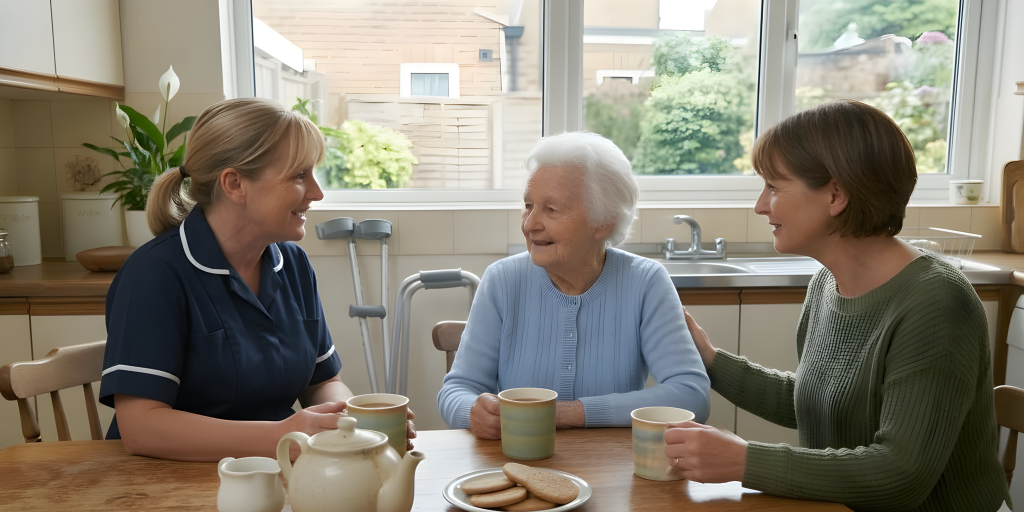
And then there is companionship. Sitting with your parent when the family needs a break. Reading to them. Playing their favourite music. Being present, quietly, so they are never alone.
That is what end-of-life care at home involves. Practical support, delivered with kindness, in the place your parent knows best.
We Are Not a Hospice
This needs to be said clearly, because families deserve honesty about what they are getting.
SW Care is a home care provider, registered with and inspected by the Care Quality Commission. We are CQC rated Good. We provide comfort, companionship, and practical support to people at the end of their lives. We do not provide medical palliative interventions. We do not administer injections. We do not manage syringe drivers or clinical pain relief. We do not employ nurses.
Medical care is the responsibility of the NHS palliative care team: district nurses, hospice-at-home teams, and specialist palliative consultants. These are NHS professionals, not SW Care staff.
What we do is fill the hours between their visits. The NHS team might visit for 30 minutes. The rest of the day, your parent still needs someone there. Someone to help them to the toilet, to bring them water, to sit with them when they are frightened, to call the district nurse if something changes.
That is our role. We are the constant presence in your parent’s home. We are not a hospice. We are the people who make it possible for your parent to stay at home.
How Carers Work Alongside NHS Palliative Teams
Good end-of-life care is a team effort. The medical side and the practical side need to work together, and in Cheltenham, that is exactly what happens.
SW Care holds a strong working relationship with NHS teams in the area. District nurses handle clinical interventions: pain management, wound care, medication changes, clinical assessments. Our carers handle everything else.
A typical day might look like this. The carer arrives in the morning and helps your parent wash and change. They prepare breakfast. The district nurse visits at 10am, checks the medication regime, assesses pain levels, and leaves notes for the GP. The carer stays. They prepare lunch. They help your parent reposition. They keep the home running.
In the afternoon, a hospice-at-home nurse might visit to review symptoms. The carer is there to let them in and to share observations from the day.
Communication matters. Our carers keep detailed notes on every visit. If your parent has been unsettled, if their appetite has dropped, if they seem to be in more discomfort, that information reaches the NHS team. Nothing falls through the gaps.
Medical expertise from the NHS. Practical support and companionship from SW Care. Your parent gets the full picture, without you having to coordinate it all yourself.
Families Deserve Honest Support at the Hardest Time
The system does not prepare families for this. Your parent gets a diagnosis, a prognosis, maybe a leaflet. And then you are sent home to figure it out.
Nobody tells you what the nights will be like. Nobody explains that you will lie awake listening for breathing. Nobody warns you that the exhaustion hits differently when it is layered with grief.
You are watching your parent decline. You are fielding phone calls from relatives who want updates. You are managing medications you do not fully understand. And somewhere in the middle of all of it, you are supposed to be processing the fact that you are losing someone you love.
That is too much for one person. And yet families do it every day in Cheltenham, quietly, without help, because they do not know what is available or because they feel they should be able to cope.
Needing help is not a failure. It is a recognition of how enormous this is.
Keeping Your Parent Comfortable at Home
Picture your parent in their own bedroom. The curtains are half-drawn. The bedside table has a glass of water and the book they were reading last month. Photos of the grandchildren sit on the chest of drawers. Through the window, they can see the garden they spent 30 years tending.
A carer sits in the armchair next to the bed. The radio is on, turned low. The district nurse visited this morning and adjusted the medication. Everything is calm. Your parent is clean, comfortable, and at peace.
You are in the kitchen, making tea for your sister who just arrived. You can hear laughter from the bedroom. The carer is telling your parent a story about something that happened at the shops.
This is what end-of-life care at home looks like on a good day. Not dramatic. Not clinical. Just quiet, dignified, human.
Your parent is surrounded by the sounds and textures of their life. The creaky floorboard outside the bathroom. The clock that chimes on the hour. The quilt your grandmother made.
These things matter. Most people want to die at home, in familiar surroundings, with the people they love nearby. Home care makes that possible.
End-of-Life Care at Home vs Hospital
Families sometimes face a choice: keep their parent at home or allow them to be admitted to hospital. Both options have a place. But they are very different experiences.
At home, your parent gets one-to-one attention from a carer who knows them. Family can visit any time, stay overnight, come and go as they please. The environment is familiar. The routine is their own. Noise levels are low. Dignity is maintained throughout.
In hospital, your parent shares a ward with other patients. Visiting hours apply. The lights are bright. The sounds are unfamiliar. Staff are stretched across many patients. Personal care happens on the ward’s schedule, not your parent’s. Privacy is limited by curtains rather than walls.
For many people, hospital is the right place when active medical treatment is needed. But when treatment has stopped and the focus is on comfort, home offers something a hospital cannot: control.
Your parent decides when they wake up. They decide what they eat. They decide who is in the room. They are not a patient in a bed. They are a person in their home.
That distinction matters more than most people realise until they are living it.
Families across Cheltenham rely on our care services we provide across Cheltenham for consistent, high-quality support at home.
Supporting the Whole Family Through This
End-of-life care is not just about the person who is dying. It is about everyone around them.
The spouse who has been sleeping in a chair for weeks because they are afraid to leave the room. The adult children juggling work, their own families, and daily visits. The grandchildren who sense something is wrong but do not fully understand it.
Everyone in the family is carrying something. Most of them are trying to carry it alone.
A carer in the home changes the dynamic. Someone else is handling the personal care, the meals, the overnight checks. The family can step back from the practical tasks and just be family again.
You can sit with your parent without worrying about whether they need changing. You can take the grandchildren to the park for an hour. You can have a conversation with your partner that is not about medication schedules.
That space is not a luxury. It is what allows families to be present during the time that matters most.
Overnight and Round-the-Clock Options
The nights are the hardest part. During the day, there is activity, there are visitors, there is routine. At night, it is just you and the silence and the sound of breathing.
Many families managing end-of-life care at home struggle most between midnight and 6am. That is when anxiety peaks. That is when you lie awake wondering whether that sound was normal, whether you should call someone.
Waking night care means a carer is in the home, awake, through the entire night. They check on your parent at regular intervals. They handle any personal care needs. They are there if your parent wakes up confused or distressed. And if something changes, they know what to do and who to call.
Sleeping night care is for families who need someone in the home overnight but where the need is less constant. The carer sleeps in a spare room and wakes if needed.
For families who need someone there around the clock, longer care packages can be arranged. A carer present during the day, another through the night, seven days a week.
Some families start with daytime visits and add overnight support as needs increase. There is no fixed path. The right option depends on your parent’s condition and what stage things have reached.
When Families Usually Call Us
There is no single moment when families decide to get help. But there are patterns we see again and again.
Sometimes it starts with the GP. They mention palliative care. They suggest thinking about extra support at home. That conversation plants a seed.
Sometimes it is the hospital discharge team. Treatment has run its course, and the hospital says your parent can come home with a care package in place.
Sometimes it is simpler and more painful than that. You are exhausted. You have been managing alone for weeks. You snapped at your parent this morning and you hate yourself for it. You are sitting in the car park at Tesco crying and you know something has to change.
All of these are valid. All of these are normal. There is no wrong time to call.
The families who find it easiest to adjust are the ones who call before the crisis point. Getting a carer in place early means your parent gets used to a new face while they are still relatively well. The carer learns their preferences, their personality, their routine. When things become more difficult, that relationship is already established.
But if you are reading this at the crisis point, that is OK too. Call us on 01242 352 554. We will talk you through it.
A Cheltenham Team That Has Done This Before
End-of-life care requires experience. Not just training. Experience. The kind that only comes from sitting with families at 3am, from knowing when to speak and when to stay quiet, from understanding that grief starts long before someone dies.
SW Care has been doing this since July 2018. Our carers live and work in Cheltenham. They know the local NHS teams and how the system works in Gloucestershire.
We were named a Top 20 Home Care Group in 2025 by Homecare.co.uk. That award is based entirely on reviews written by families. Not marketing. Not self-nomination. Real families writing honest assessments of the care they received.
Those families have given us a 9.8 out of 10 rating across 121 verified reviews on Homecare.co.uk. You can read every single one of them. They are public, unedited, and written by people who trusted us with someone they love.
Every carer is covered by our insurance, every visit, no exceptions. That is not a footnote. It is a commitment.
End-of-Life Care Costs in Cheltenham
You deserve a straight answer about money, even at a time like this.
End-of-life care costs depend on the level of support your parent needs. A few hours of daytime care costs less than round-the-clock support. Overnight care is priced differently to daytime visits. The cost reflects the hours, the tasks, and the frequency.
Some families fund care privately. Others receive funding through NHS Continuing Healthcare (CHC). If your parent has been assessed as having a “primary health need,” they may qualify for CHC funding, which covers care costs in full. Your GP, consultant, or hospital discharge team can request a CHC assessment.
Gloucestershire County Council may also provide funding following a needs assessment from adult social care. If your parent already has a social worker, they can discuss options with you.
Attendance Allowance is another source of support. It is a weekly benefit for people over state pension age who need help with personal care. It is not means-tested.
Some families combine multiple funding sources. Others pay privately while funding applications are processed.
We are not going to publish a price list and pretend it fits every situation. Your parent’s needs are specific. The honest thing to do is talk to you directly and give you a clear, written breakdown.
Meet the Cheltenham Team That Delivers Your Home Care
You’re in safe hands.
Every family that trusts us with their loved one’s care deserves to know who’s behind it. Here is the team that runs your care — from the first phone call to daily visits at home.

Kasha Patrzykowska
Registered Manager
Kasha brings 17 years of domiciliary care experience, including advanced qualifications in care management, safeguarding, and medication administration. She is named on our CQC registration — which means she is personally accountable for the quality and safety of every care package we deliver. Kasha oversees every care plan, leads our team of carers, and is the person the CQC inspector speaks to when they visit.

Stacey Cole
Manager
Stacey brings 13 years of care management experience, with training in person-centred care planning, risk assessment, and family communication. As Manager, she handles family enquiries, organises care assessments, and makes sure the transition from your first phone call to a carer arriving at your door is smooth and stress-free. Stacey is often the first person families speak to — and she stays involved throughout.

Kamila Czerwonka
Care Coordinator
Kamila brings 14 years of care coordination experience, with specialist knowledge in rota management, carer matching, and continuity of care. As Care Coordinator, her job is to match the right carer to your loved one, schedule every visit, and make sure nothing falls through the cracks. Kamila learns your loved one’s preferences, personality, and routine — then builds a small, consistent team of named carers around them.

Faisal Khan
Head of Marketing
Faisal leads the organisation’s marketing strategy, strengthening brand visibility and supporting sustainable growth. He focuses on clear communication, digital presence and community engagement to ensure services are accessible and well represented. His work supports trust, transparency and awareness of high-quality home care within the local community.

Gus Saggu
Nominated Individual & Director
A Nominated Individual is the person registered with the Care Quality Commission (CQC) who is responsible for supervising the management of the regulated activity. They are the main point of contact between the service and the CQC. Gus brings extensive leadership experience in health and social care, ensuring robust governance, compliance, and a culture of continuous improvement across the Cheltenham service.
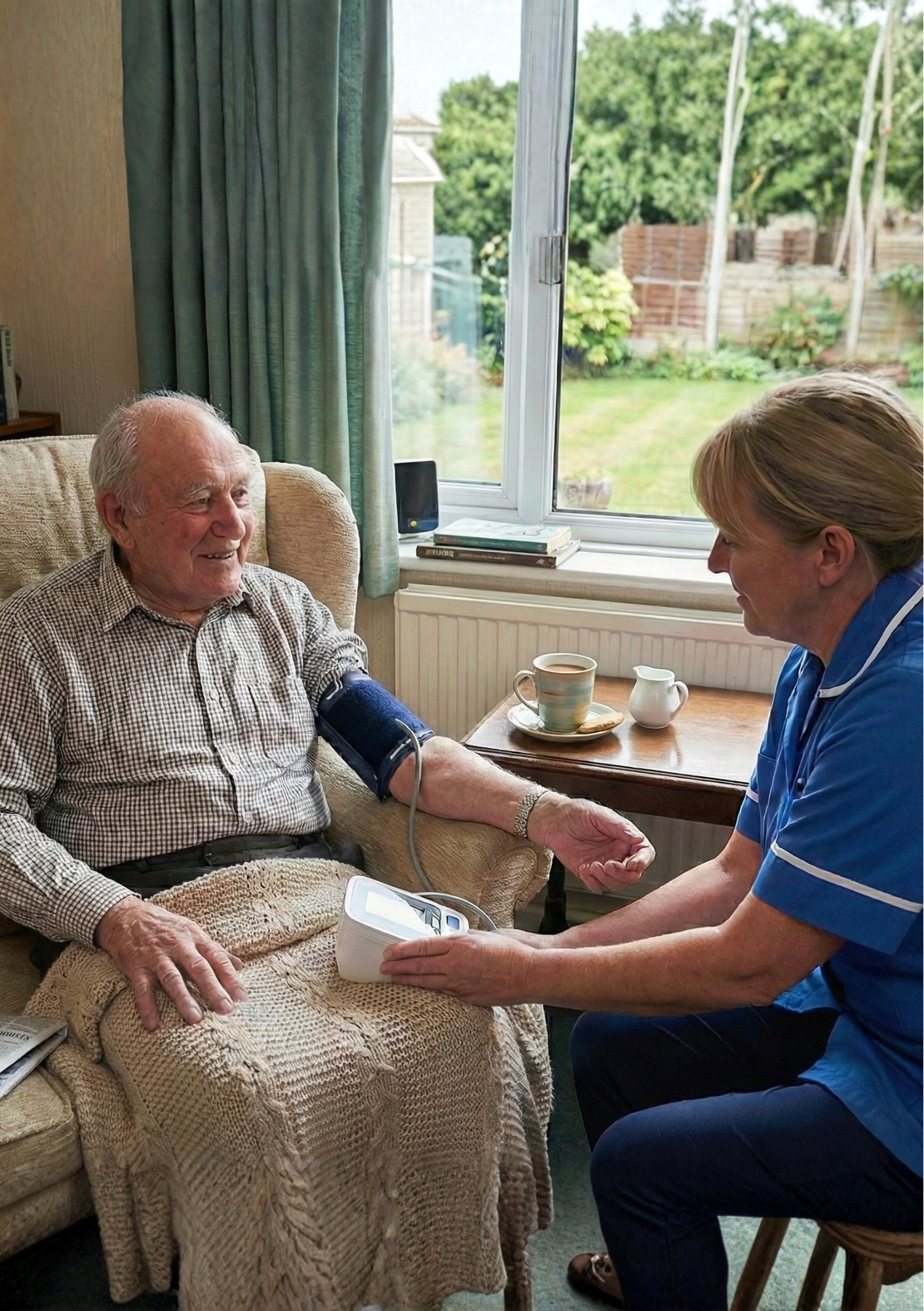
Behind every care team is a wider team of admin, finance, HR, recruitment and marketing people that all work together — making sure your loved one’s care runs smoothly, every single day.
Getting Started Takes One Phone Call
Most families feel unsure about this first step. That’s completely normal. Here’s what happens.
01
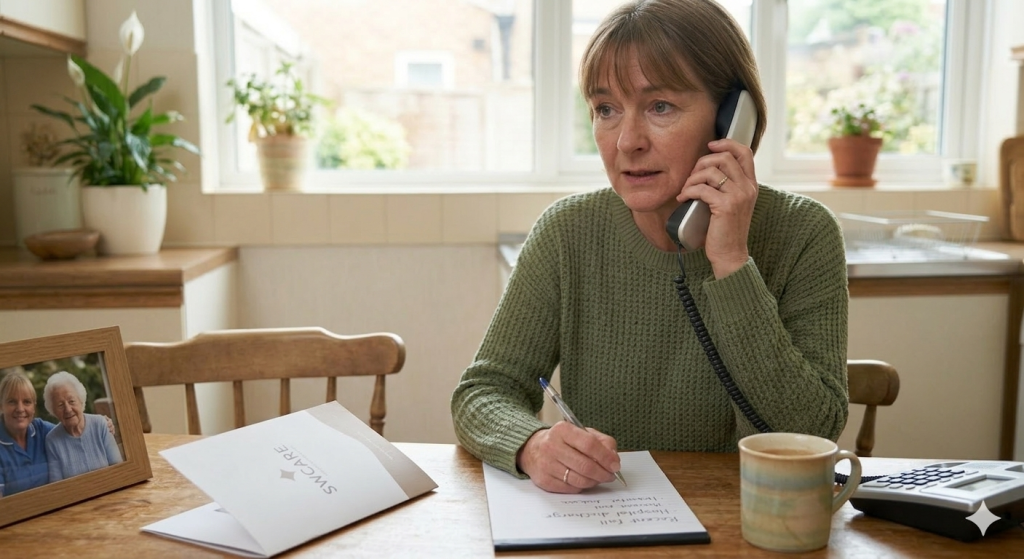
One 10-Minute Phone Call Gives You Clarity
Call our care team on 01242 352 554 or send an email. Speak directly to Kasha, Kamila, Stacey or Faisal — our care team. Tell them what’s worrying you and what you need. No pressure. They’ll walk you through the process.
02
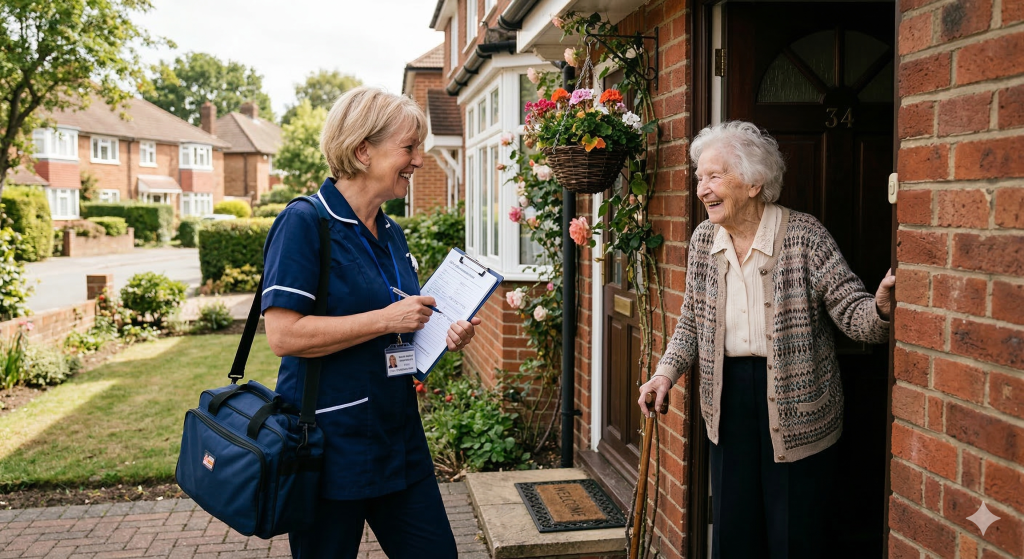
We Visit. We Listen. We Assess and Plan.
We visit you and carry out a CARE ASSESSMENT. It’s FREE and will give you a detailed plan of what care is required. Plans are made to fit your budget and personal family circumstances.
03
Your Parent Gets Their Own Small Team
Based on your loved one’s needs, we match a SMALL TEAM of qualified and appropriately trained carers. And if and when you are happy with everything, we will begin care.
The best way to start is to call our dedicated Cheltenham care team on 01242 352 554 or send an email. There’s no obligation. They’re here to answer your questions and help you decide at your pace.
Nine Care Services Delivered by One Local Cheltenham Team
We provide nine distinct home care services to families across Cheltenham. Every service is managed from our Cambray Place office and delivered by carers who are trained to Care Certificate standards with ongoing development. Meet the team behind your parent’s care.
- Personal Care — Washing, dressing, bathing, and continence support
- Dementia Care — Consistent routines and patient support for memory loss
- Live-In Care — A dedicated carer in your parent’s home around the clock
- Complex Care — PEG feeding, catheter care, stoma maintenance, and hoisting
- Companionship Care — Regular visits for company, conversation, and light support
- Overnight Care — Waking or sleeping night carers for safety and reassurance
- Respite Care — Temporary cover so family carers can take a proper break
- Hospital Discharge Care — Reablement support when your parent leaves hospital
- End-of-Life Care — Comfort, companionship, and dignity in the final weeks and months
Most families start with one or two visits a day and adjust as needs change. Your parent’s care plan is reviewed regularly, and you can call the office at any time to discuss changes. Browse our full range of home care services to see what support looks like in practice.
Get Expert Guidance on the Right Care for Your Loved One
In just 10 minutes, our care coordinators will help you understand your options and create a plan that works for your family.
There is never any obligation.
End-of-Life Care at Home Gives Your Family Time Together
Comfort, companionship, and practical support so your parent can stay at home during their final weeks and months.
Nobody is ready for this conversation. Not really. You can know it is coming for months and still feel completely unprepared when the consultant says the words.
Your parent is dying. The treatment has stopped working. The focus now is on comfort.
In that moment, most families ask the same thing: can they stay at home?
The answer, for many families in Cheltenham, is yes. End-of-life care at home means your parent spends their final weeks and months in their own bed, in their own room, surrounded by the people and things they love. Not on a hospital ward. Not in an unfamiliar building. At home.
SW Care has been providing home care in Cheltenham since July 2018. We have delivered over 100,000 hours of care to 100s of families across the area. Some of those families came to us at the very end, when time was short and comfort was everything.
We are not a hospice. We provide comfort, companionship, and practical support. Medical palliative care comes from NHS district nurses and hospice teams. We work alongside them, handling everything else so your family can focus on being together.
What End-of-Life Care at Home Actually Involves
The phrase “end-of-life care” sounds clinical. In practice, it is deeply personal and mostly very quiet.
Your parent needs to be clean, comfortable, and cared for. That means help with washing, dressing, and personal hygiene when they can no longer manage alone. It means repositioning them in bed to prevent pressure sores. It means managing continence with complete dignity, every single time.
Medication reminders are part of the routine. Your parent may have tablets or liquid medications prescribed by their GP or palliative consultant. The carer makes sure those reminders happen on time, every time.
Meals and fluids matter too, even when appetite fades. Small, frequent offerings. A cup of tea made exactly how they like it. Toast cut into triangles because that is how they have always had it. These details sound small. They are not. They are the thread of normality that holds everything together.
The carer keeps the home calm and clean. They change bedding, tidy the room, and make sure the environment feels peaceful.
And then there is companionship. Sitting with your parent when the family needs a break. Reading to them. Playing their favourite music. Being present, quietly, so they are never alone.
That is what end-of-life care at home involves. Practical support, delivered with kindness, in the place your parent knows best.
We Are Not a Hospice
This needs to be said clearly, because families deserve honesty about what they are getting.
SW Care is a home care provider, registered with and inspected by the Care Quality Commission. We are CQC rated Good. We provide comfort, companionship, and practical support to people at the end of their lives. We do not provide medical palliative interventions. We do not administer injections. We do not manage syringe drivers or clinical pain relief. We do not employ nurses.
Medical care is the responsibility of the NHS palliative care team: district nurses, hospice-at-home teams, and specialist palliative consultants. These are NHS professionals, not SW Care staff.
What we do is fill the hours between their visits. The NHS team might visit for 30 minutes. The rest of the day, your parent still needs someone there. Someone to help them to the toilet, to bring them water, to sit with them when they are frightened, to call the district nurse if something changes.
That is our role. We are the constant presence in your parent’s home. We are not a hospice. We are the people who make it possible for your parent to stay at home.
How Carers Work Alongside NHS Palliative Teams
Good end-of-life care is a team effort. The medical side and the practical side need to work together, and in Cheltenham, that is exactly what happens.
SW Care holds a strong working relationship with NHS teams in the area. District nurses handle clinical interventions: pain management, wound care, medication changes, clinical assessments. Our carers handle everything else.
A typical day might look like this. The carer arrives in the morning and helps your parent wash and change. They prepare breakfast. The district nurse visits at 10am, checks the medication regime, assesses pain levels, and leaves notes for the GP. The carer stays. They prepare lunch. They help your parent reposition. They keep the home running.
In the afternoon, a hospice-at-home nurse might visit to review symptoms. The carer is there to let them in and to share observations from the day.
Communication matters. Our carers keep detailed notes on every visit. If your parent has been unsettled, if their appetite has dropped, if they seem to be in more discomfort, that information reaches the NHS team. Nothing falls through the gaps.
Medical expertise from the NHS. Practical support and companionship from SW Care. Your parent gets the full picture, without you having to coordinate it all yourself.
Families Deserve Honest Support at the Hardest Time
The system does not prepare families for this. Your parent gets a diagnosis, a prognosis, maybe a leaflet. And then you are sent home to figure it out.
Nobody tells you what the nights will be like. Nobody explains that you will lie awake listening for breathing. Nobody warns you that the exhaustion hits differently when it is layered with grief.
You are watching your parent decline. You are fielding phone calls from relatives who want updates. You are managing medications you do not fully understand. And somewhere in the middle of all of it, you are supposed to be processing the fact that you are losing someone you love.
That is too much for one person. And yet families do it every day in Cheltenham, quietly, without help, because they do not know what is available or because they feel they should be able to cope.
Needing help is not a failure. It is a recognition of how enormous this is.
Keeping Your Parent Comfortable at Home
Picture your parent in their own bedroom. The curtains are half-drawn. The bedside table has a glass of water and the book they were reading last month. Photos of the grandchildren sit on the chest of drawers. Through the window, they can see the garden they spent 30 years tending.
A carer sits in the armchair next to the bed. The radio is on, turned low. The district nurse visited this morning and adjusted the medication. Everything is calm. Your parent is clean, comfortable, and at peace.
You are in the kitchen, making tea for your sister who just arrived. You can hear laughter from the bedroom. The carer is telling your parent a story about something that happened at the shops.
This is what end-of-life care at home looks like on a good day. Not dramatic. Not clinical. Just quiet, dignified, human.
Your parent is surrounded by the sounds and textures of their life. The creaky floorboard outside the bathroom. The clock that chimes on the hour. The quilt your grandmother made.
These things matter. Most people want to die at home, in familiar surroundings, with the people they love nearby. Home care makes that possible.
End-of-Life Care at Home vs Hospital
Families sometimes face a choice: keep their parent at home or allow them to be admitted to hospital. Both options have a place. But they are very different experiences.
At home, your parent gets one-to-one attention from a carer who knows them. Family can visit any time, stay overnight, come and go as they please. The environment is familiar. The routine is their own. Noise levels are low. Dignity is maintained throughout.
In hospital, your parent shares a ward with other patients. Visiting hours apply. The lights are bright. The sounds are unfamiliar. Staff are stretched across many patients. Personal care happens on the ward’s schedule, not your parent’s. Privacy is limited by curtains rather than walls.
For many people, hospital is the right place when active medical treatment is needed. But when treatment has stopped and the focus is on comfort, home offers something a hospital cannot: control.
Your parent decides when they wake up. They decide what they eat. They decide who is in the room. They are not a patient in a bed. They are a person in their home.
That distinction matters more than most people realise until they are living it.
Families across Cheltenham rely on our care services we provide across Cheltenham for consistent, high-quality support at home.
Supporting the Whole Family Through This
End-of-life care is not just about the person who is dying. It is about everyone around them.
The spouse who has been sleeping in a chair for weeks because they are afraid to leave the room. The adult children juggling work, their own families, and daily visits. The grandchildren who sense something is wrong but do not fully understand it.
Everyone in the family is carrying something. Most of them are trying to carry it alone.
A carer in the home changes the dynamic. Someone else is handling the personal care, the meals, the overnight checks. The family can step back from the practical tasks and just be family again.
You can sit with your parent without worrying about whether they need changing. You can take the grandchildren to the park for an hour. You can have a conversation with your partner that is not about medication schedules.
That space is not a luxury. It is what allows families to be present during the time that matters most.
Overnight and Round-the-Clock Options
The nights are the hardest part. During the day, there is activity, there are visitors, there is routine. At night, it is just you and the silence and the sound of breathing.
Many families managing end-of-life care at home struggle most between midnight and 6am. That is when anxiety peaks. That is when you lie awake wondering whether that sound was normal, whether you should call someone.
Waking night care means a carer is in the home, awake, through the entire night. They check on your parent at regular intervals. They handle any personal care needs. They are there if your parent wakes up confused or distressed. And if something changes, they know what to do and who to call.
Sleeping night care is for families who need someone in the home overnight but where the need is less constant. The carer sleeps in a spare room and wakes if needed.
For families who need someone there around the clock, longer care packages can be arranged. A carer present during the day, another through the night, seven days a week.
Some families start with daytime visits and add overnight support as needs increase. There is no fixed path. The right option depends on your parent’s condition and what stage things have reached.
When Families Usually Call Us
There is no single moment when families decide to get help. But there are patterns we see again and again.
Sometimes it starts with the GP. They mention palliative care. They suggest thinking about extra support at home. That conversation plants a seed.
Sometimes it is the hospital discharge team. Treatment has run its course, and the hospital says your parent can come home with a care package in place.
Sometimes it is simpler and more painful than that. You are exhausted. You have been managing alone for weeks. You snapped at your parent this morning and you hate yourself for it. You are sitting in the car park at Tesco crying and you know something has to change.
All of these are valid. All of these are normal. There is no wrong time to call.
The families who find it easiest to adjust are the ones who call before the crisis point. Getting a carer in place early means your parent gets used to a new face while they are still relatively well. The carer learns their preferences, their personality, their routine. When things become more difficult, that relationship is already established.
But if you are reading this at the crisis point, that is OK too. Call us on 01242 352 554. We will talk you through it.
A Cheltenham Team That Has Done This Before
End-of-life care requires experience. Not just training. Experience. The kind that only comes from sitting with families at 3am, from knowing when to speak and when to stay quiet, from understanding that grief starts long before someone dies.
SW Care has been doing this since July 2018. Our carers live and work in Cheltenham. They know the local NHS teams and how the system works in Gloucestershire.
We were named a Top 20 Home Care Group in 2025 by Homecare.co.uk. That award is based entirely on reviews written by families. Not marketing. Not self-nomination. Real families writing honest assessments of the care they received.
Those families have given us a 9.8 out of 10 rating across 121 verified reviews on Homecare.co.uk. You can read every single one of them. They are public, unedited, and written by people who trusted us with someone they love.
Every carer is covered by our insurance, every visit, no exceptions. That is not a footnote. It is a commitment.
End-of-Life Care Costs in Cheltenham
You deserve a straight answer about money, even at a time like this.
End-of-life care costs depend on the level of support your parent needs. A few hours of daytime care costs less than round-the-clock support. Overnight care is priced differently to daytime visits. The cost reflects the hours, the tasks, and the frequency.
Some families fund care privately. Others receive funding through NHS Continuing Healthcare (CHC). If your parent has been assessed as having a “primary health need,” they may qualify for CHC funding, which covers care costs in full. Your GP, consultant, or hospital discharge team can request a CHC assessment.
Gloucestershire County Council may also provide funding following a needs assessment from adult social care. If your parent already has a social worker, they can discuss options with you.
Attendance Allowance is another source of support. It is a weekly benefit for people over state pension age who need help with personal care. It is not means-tested.
Some families combine multiple funding sources. Others pay privately while funding applications are processed.
We are not going to publish a price list and pretend it fits every situation. Your parent’s needs are specific. The honest thing to do is talk to you directly and give you a clear, written breakdown.
Comfort and Personal Care
Washing, dressing, repositioning, and continence support delivered with complete dignity. Your parent stays clean, comfortable, and cared for throughout the day and night.
This is one of the our full range of home care services in Cheltenham that families in Cheltenham trust us to deliver with compassion and professionalism.
Medication Reminders
The carer makes sure your parent takes prescribed medications on time. Any changes from the GP or palliative consultant are followed. Nothing is missed.
Meals and Hydration
Small, frequent meals and drinks prepared the way your parent likes them. When appetite fades, the carer keeps offering with patience and without pressure.
Overnight Presence
Waking night carers stay alert through the night. Sleeping night carers are on hand if needed. Your parent is never alone at the time when families worry most.
Companionship and Calm
Sitting with your parent, talking, reading, playing music. Being present so they are never alone. The carer fills the hours between NHS visits with quiet, human company.
Family Support
End-of-life care is not just for your parent. It gives the whole family space to step back from the practical tasks and be together during the time that matters most.
End-of-Life Care at Home Gives Your Family Time Together
Comfort, companionship, and practical support so your parent can stay at home during their final weeks and months.
Nobody is ready for this conversation. Not really. You can know it is coming for months and still feel completely unprepared when the consultant says the words.
Your parent is dying. The treatment has stopped working. The focus now is on comfort.
In that moment, most families ask the same thing: can they stay at home?
The answer, for many families in Cheltenham, is yes. End-of-life care at home means your parent spends their final weeks and months in their own bed, in their own room, surrounded by the people and things they love. Not on a hospital ward. Not in an unfamiliar building. At home.
SW Care has been providing home care in Cheltenham since July 2018. We have delivered over 100,000 hours of care to 100s of families across the area. Some of those families came to us at the very end, when time was short and comfort was everything.
We are not a hospice. We provide comfort, companionship, and practical support. Medical palliative care comes from NHS district nurses and hospice teams. We work alongside them, handling everything else so your family can focus on being together.
What End-of-Life Care at Home Actually Involves
The phrase “end-of-life care” sounds clinical. In practice, it is deeply personal and mostly very quiet.
Your parent needs to be clean, comfortable, and cared for. That means help with washing, dressing, and personal hygiene when they can no longer manage alone. It means repositioning them in bed to prevent pressure sores. It means managing continence with complete dignity, every single time.
Medication reminders are part of the routine. Your parent may have tablets or liquid medications prescribed by their GP or palliative consultant. The carer makes sure those reminders happen on time, every time.
Meals and fluids matter too, even when appetite fades. Small, frequent offerings. A cup of tea made exactly how they like it. Toast cut into triangles because that is how they have always had it. These details sound small. They are not. They are the thread of normality that holds everything together.
The carer keeps the home calm and clean. They change bedding, tidy the room, and make sure the environment feels peaceful.
And then there is companionship. Sitting with your parent when the family needs a break. Reading to them. Playing their favourite music. Being present, quietly, so they are never alone.
That is what end-of-life care at home involves. Practical support, delivered with kindness, in the place your parent knows best.
We Are Not a Hospice
This needs to be said clearly, because families deserve honesty about what they are getting.
SW Care is a home care provider, registered with and inspected by the Care Quality Commission. We are CQC rated Good. We provide comfort, companionship, and practical support to people at the end of their lives. We do not provide medical palliative interventions. We do not administer injections. We do not manage syringe drivers or clinical pain relief. We do not employ nurses.
Medical care is the responsibility of the NHS palliative care team: district nurses, hospice-at-home teams, and specialist palliative consultants. These are NHS professionals, not SW Care staff.
What we do is fill the hours between their visits. The NHS team might visit for 30 minutes. The rest of the day, your parent still needs someone there. Someone to help them to the toilet, to bring them water, to sit with them when they are frightened, to call the district nurse if something changes.
That is our role. We are the constant presence in your parent’s home. We are not a hospice. We are the people who make it possible for your parent to stay at home.
How Carers Work Alongside NHS Palliative Teams
Good end-of-life care is a team effort. The medical side and the practical side need to work together, and in Cheltenham, that is exactly what happens.
SW Care holds a strong working relationship with NHS teams in the area. District nurses handle clinical interventions: pain management, wound care, medication changes, clinical assessments. Our carers handle everything else.
A typical day might look like this. The carer arrives in the morning and helps your parent wash and change. They prepare breakfast. The district nurse visits at 10am, checks the medication regime, assesses pain levels, and leaves notes for the GP. The carer stays. They prepare lunch. They help your parent reposition. They keep the home running.
In the afternoon, a hospice-at-home nurse might visit to review symptoms. The carer is there to let them in and to share observations from the day.
Communication matters. Our carers keep detailed notes on every visit. If your parent has been unsettled, if their appetite has dropped, if they seem to be in more discomfort, that information reaches the NHS team. Nothing falls through the gaps.
Medical expertise from the NHS. Practical support and companionship from SW Care. Your parent gets the full picture, without you having to coordinate it all yourself.
Families Deserve Honest Support at the Hardest Time
The system does not prepare families for this. Your parent gets a diagnosis, a prognosis, maybe a leaflet. And then you are sent home to figure it out.
Nobody tells you what the nights will be like. Nobody explains that you will lie awake listening for breathing. Nobody warns you that the exhaustion hits differently when it is layered with grief.
You are watching your parent decline. You are fielding phone calls from relatives who want updates. You are managing medications you do not fully understand. And somewhere in the middle of all of it, you are supposed to be processing the fact that you are losing someone you love.
That is too much for one person. And yet families do it every day in Cheltenham, quietly, without help, because they do not know what is available or because they feel they should be able to cope.
Needing help is not a failure. It is a recognition of how enormous this is.
Keeping Your Parent Comfortable at Home
Picture your parent in their own bedroom. The curtains are half-drawn. The bedside table has a glass of water and the book they were reading last month. Photos of the grandchildren sit on the chest of drawers. Through the window, they can see the garden they spent 30 years tending.
A carer sits in the armchair next to the bed. The radio is on, turned low. The district nurse visited this morning and adjusted the medication. Everything is calm. Your parent is clean, comfortable, and at peace.
You are in the kitchen, making tea for your sister who just arrived. You can hear laughter from the bedroom. The carer is telling your parent a story about something that happened at the shops.
This is what end-of-life care at home looks like on a good day. Not dramatic. Not clinical. Just quiet, dignified, human.
Your parent is surrounded by the sounds and textures of their life. The creaky floorboard outside the bathroom. The clock that chimes on the hour. The quilt your grandmother made.
These things matter. Most people want to die at home, in familiar surroundings, with the people they love nearby. Home care makes that possible.
End-of-Life Care at Home vs Hospital
Families sometimes face a choice: keep their parent at home or allow them to be admitted to hospital. Both options have a place. But they are very different experiences.
At home, your parent gets one-to-one attention from a carer who knows them. Family can visit any time, stay overnight, come and go as they please. The environment is familiar. The routine is their own. Noise levels are low. Dignity is maintained throughout.
In hospital, your parent shares a ward with other patients. Visiting hours apply. The lights are bright. The sounds are unfamiliar. Staff are stretched across many patients. Personal care happens on the ward’s schedule, not your parent’s. Privacy is limited by curtains rather than walls.
For many people, hospital is the right place when active medical treatment is needed. But when treatment has stopped and the focus is on comfort, home offers something a hospital cannot: control.
Your parent decides when they wake up. They decide what they eat. They decide who is in the room. They are not a patient in a bed. They are a person in their home.
That distinction matters more than most people realise until they are living it.
Families across Cheltenham rely on our care services we provide across Cheltenham for consistent, high-quality support at home.
Supporting the Whole Family Through This
End-of-life care is not just about the person who is dying. It is about everyone around them.
The spouse who has been sleeping in a chair for weeks because they are afraid to leave the room. The adult children juggling work, their own families, and daily visits. The grandchildren who sense something is wrong but do not fully understand it.
Everyone in the family is carrying something. Most of them are trying to carry it alone.
A carer in the home changes the dynamic. Someone else is handling the personal care, the meals, the overnight checks. The family can step back from the practical tasks and just be family again.
You can sit with your parent without worrying about whether they need changing. You can take the grandchildren to the park for an hour. You can have a conversation with your partner that is not about medication schedules.
That space is not a luxury. It is what allows families to be present during the time that matters most.
Overnight and Round-the-Clock Options
The nights are the hardest part. During the day, there is activity, there are visitors, there is routine. At night, it is just you and the silence and the sound of breathing.
Many families managing end-of-life care at home struggle most between midnight and 6am. That is when anxiety peaks. That is when you lie awake wondering whether that sound was normal, whether you should call someone.
Waking night care means a carer is in the home, awake, through the entire night. They check on your parent at regular intervals. They handle any personal care needs. They are there if your parent wakes up confused or distressed. And if something changes, they know what to do and who to call.
Sleeping night care is for families who need someone in the home overnight but where the need is less constant. The carer sleeps in a spare room and wakes if needed.
For families who need someone there around the clock, longer care packages can be arranged. A carer present during the day, another through the night, seven days a week.
Some families start with daytime visits and add overnight support as needs increase. There is no fixed path. The right option depends on your parent’s condition and what stage things have reached.
When Families Usually Call Us
There is no single moment when families decide to get help. But there are patterns we see again and again.
Sometimes it starts with the GP. They mention palliative care. They suggest thinking about extra support at home. That conversation plants a seed.
Sometimes it is the hospital discharge team. Treatment has run its course, and the hospital says your parent can come home with a care package in place.
Sometimes it is simpler and more painful than that. You are exhausted. You have been managing alone for weeks. You snapped at your parent this morning and you hate yourself for it. You are sitting in the car park at Tesco crying and you know something has to change.
All of these are valid. All of these are normal. There is no wrong time to call.
The families who find it easiest to adjust are the ones who call before the crisis point. Getting a carer in place early means your parent gets used to a new face while they are still relatively well. The carer learns their preferences, their personality, their routine. When things become more difficult, that relationship is already established.
But if you are reading this at the crisis point, that is OK too. Call us on 01242 352 554. We will talk you through it.
A Cheltenham Team That Has Done This Before
End-of-life care requires experience. Not just training. Experience. The kind that only comes from sitting with families at 3am, from knowing when to speak and when to stay quiet, from understanding that grief starts long before someone dies.
SW Care has been doing this since July 2018. Our carers live and work in Cheltenham. They know the local NHS teams and how the system works in Gloucestershire.
We were named a Top 20 Home Care Group in 2025 by Homecare.co.uk. That award is based entirely on reviews written by families. Not marketing. Not self-nomination. Real families writing honest assessments of the care they received.
Those families have given us a 9.8 out of 10 rating across 121 verified reviews on Homecare.co.uk. You can read every single one of them. They are public, unedited, and written by people who trusted us with someone they love.
Every carer is covered by our insurance, every visit, no exceptions. That is not a footnote. It is a commitment.
End-of-Life Care Costs in Cheltenham
You deserve a straight answer about money, even at a time like this.
End-of-life care costs depend on the level of support your parent needs. A few hours of daytime care costs less than round-the-clock support. Overnight care is priced differently to daytime visits. The cost reflects the hours, the tasks, and the frequency.
Some families fund care privately. Others receive funding through NHS Continuing Healthcare (CHC). If your parent has been assessed as having a “primary health need,” they may qualify for CHC funding, which covers care costs in full. Your GP, consultant, or hospital discharge team can request a CHC assessment.
Gloucestershire County Council may also provide funding following a needs assessment from adult social care. If your parent already has a social worker, they can discuss options with you.
Attendance Allowance is another source of support. It is a weekly benefit for people over state pension age who need help with personal care. It is not means-tested.
Some families combine multiple funding sources. Others pay privately while funding applications are processed.
We are not going to publish a price list and pretend it fits every situation. Your parent’s needs are specific. The honest thing to do is talk to you directly and give you a clear, written breakdown.
Palliative and End of Life Care in Cheltenham
Palliative and end-of-life care provides gentle, dignified support when it matters most. Our carers help your parent stay comfortable at home, working alongside NHS palliative teams to manage symptoms and provide companionship in the final weeks and months.
Comfort and Personal Care
Washing, dressing, repositioning, and continence support delivered with complete dignity. Your parent stays clean, comfortable, and cared for throughout the day and night.
This is one of the our full range of home care services in Cheltenham that families in Cheltenham trust us to deliver with compassion and professionalism.
Medication Reminders
The carer makes sure your parent takes prescribed medications on time. Any changes from the GP or palliative consultant are followed. Nothing is missed.
Meals and Hydration
Small, frequent meals and drinks prepared the way your parent likes them. When appetite fades, the carer keeps offering with patience and without pressure.
Overnight Presence
Waking night carers stay alert through the night. Sleeping night carers are on hand if needed. Your parent is never alone at the time when families worry most.
Companionship and Calm
Sitting with your parent, talking, reading, playing music. Being present so they are never alone. The carer fills the hours between NHS visits with quiet, human company.
Family Support
End-of-life care is not just for your parent. It gives the whole family space to step back from the practical tasks and be together during the time that matters most.
End-of-Life Care at Home Gives Your Family Time Together
Comfort, companionship, and practical support so your parent can stay at home during their final weeks and months.
Nobody is ready for this conversation. Not really. You can know it is coming for months and still feel completely unprepared when the consultant says the words.
Your parent is dying. The treatment has stopped working. The focus now is on comfort.
In that moment, most families ask the same thing: can they stay at home?
The answer, for many families in Cheltenham, is yes. End-of-life care at home means your parent spends their final weeks and months in their own bed, in their own room, surrounded by the people and things they love. Not on a hospital ward. Not in an unfamiliar building. At home.
SW Care has been providing home care in Cheltenham since July 2018. We have delivered over 100,000 hours of care to 100s of families across the area. Some of those families came to us at the very end, when time was short and comfort was everything.
We are not a hospice. We provide comfort, companionship, and practical support. Medical palliative care comes from NHS district nurses and hospice teams. We work alongside them, handling everything else so your family can focus on being together.
What End-of-Life Care at Home Actually Involves
The phrase “end-of-life care” sounds clinical. In practice, it is deeply personal and mostly very quiet.
Your parent needs to be clean, comfortable, and cared for. That means help with washing, dressing, and personal hygiene when they can no longer manage alone. It means repositioning them in bed to prevent pressure sores. It means managing continence with complete dignity, every single time.
Medication reminders are part of the routine. Your parent may have tablets or liquid medications prescribed by their GP or palliative consultant. The carer makes sure those reminders happen on time, every time.
Meals and fluids matter too, even when appetite fades. Small, frequent offerings. A cup of tea made exactly how they like it. Toast cut into triangles because that is how they have always had it. These details sound small. They are not. They are the thread of normality that holds everything together.
The carer keeps the home calm and clean. They change bedding, tidy the room, and make sure the environment feels peaceful.
And then there is companionship. Sitting with your parent when the family needs a break. Reading to them. Playing their favourite music. Being present, quietly, so they are never alone.
That is what end-of-life care at home involves. Practical support, delivered with kindness, in the place your parent knows best.
We Are Not a Hospice
This needs to be said clearly, because families deserve honesty about what they are getting.
SW Care is a home care provider, registered with and inspected by the Care Quality Commission. We are CQC rated Good. We provide comfort, companionship, and practical support to people at the end of their lives. We do not provide medical palliative interventions. We do not administer injections. We do not manage syringe drivers or clinical pain relief. We do not employ nurses.
Medical care is the responsibility of the NHS palliative care team: district nurses, hospice-at-home teams, and specialist palliative consultants. These are NHS professionals, not SW Care staff.
What we do is fill the hours between their visits. The NHS team might visit for 30 minutes. The rest of the day, your parent still needs someone there. Someone to help them to the toilet, to bring them water, to sit with them when they are frightened, to call the district nurse if something changes.
That is our role. We are the constant presence in your parent’s home. We are not a hospice. We are the people who make it possible for your parent to stay at home.
How Carers Work Alongside NHS Palliative Teams
Good end-of-life care is a team effort. The medical side and the practical side need to work together, and in Cheltenham, that is exactly what happens.
SW Care holds a strong working relationship with NHS teams in the area. District nurses handle clinical interventions: pain management, wound care, medication changes, clinical assessments. Our carers handle everything else.
A typical day might look like this. The carer arrives in the morning and helps your parent wash and change. They prepare breakfast. The district nurse visits at 10am, checks the medication regime, assesses pain levels, and leaves notes for the GP. The carer stays. They prepare lunch. They help your parent reposition. They keep the home running.
In the afternoon, a hospice-at-home nurse might visit to review symptoms. The carer is there to let them in and to share observations from the day.
Communication matters. Our carers keep detailed notes on every visit. If your parent has been unsettled, if their appetite has dropped, if they seem to be in more discomfort, that information reaches the NHS team. Nothing falls through the gaps.
Medical expertise from the NHS. Practical support and companionship from SW Care. Your parent gets the full picture, without you having to coordinate it all yourself.
Families Deserve Honest Support at the Hardest Time
The system does not prepare families for this. Your parent gets a diagnosis, a prognosis, maybe a leaflet. And then you are sent home to figure it out.
Nobody tells you what the nights will be like. Nobody explains that you will lie awake listening for breathing. Nobody warns you that the exhaustion hits differently when it is layered with grief.
You are watching your parent decline. You are fielding phone calls from relatives who want updates. You are managing medications you do not fully understand. And somewhere in the middle of all of it, you are supposed to be processing the fact that you are losing someone you love.
That is too much for one person. And yet families do it every day in Cheltenham, quietly, without help, because they do not know what is available or because they feel they should be able to cope.
Needing help is not a failure. It is a recognition of how enormous this is.
Keeping Your Parent Comfortable at Home
Picture your parent in their own bedroom. The curtains are half-drawn. The bedside table has a glass of water and the book they were reading last month. Photos of the grandchildren sit on the chest of drawers. Through the window, they can see the garden they spent 30 years tending.
A carer sits in the armchair next to the bed. The radio is on, turned low. The district nurse visited this morning and adjusted the medication. Everything is calm. Your parent is clean, comfortable, and at peace.
You are in the kitchen, making tea for your sister who just arrived. You can hear laughter from the bedroom. The carer is telling your parent a story about something that happened at the shops.
This is what end-of-life care at home looks like on a good day. Not dramatic. Not clinical. Just quiet, dignified, human.
Your parent is surrounded by the sounds and textures of their life. The creaky floorboard outside the bathroom. The clock that chimes on the hour. The quilt your grandmother made.
These things matter. Most people want to die at home, in familiar surroundings, with the people they love nearby. Home care makes that possible.
End-of-Life Care at Home vs Hospital
Families sometimes face a choice: keep their parent at home or allow them to be admitted to hospital. Both options have a place. But they are very different experiences.
At home, your parent gets one-to-one attention from a carer who knows them. Family can visit any time, stay overnight, come and go as they please. The environment is familiar. The routine is their own. Noise levels are low. Dignity is maintained throughout.
In hospital, your parent shares a ward with other patients. Visiting hours apply. The lights are bright. The sounds are unfamiliar. Staff are stretched across many patients. Personal care happens on the ward’s schedule, not your parent’s. Privacy is limited by curtains rather than walls.
For many people, hospital is the right place when active medical treatment is needed. But when treatment has stopped and the focus is on comfort, home offers something a hospital cannot: control.
Your parent decides when they wake up. They decide what they eat. They decide who is in the room. They are not a patient in a bed. They are a person in their home.
That distinction matters more than most people realise until they are living it.
Families across Cheltenham rely on our care services we provide across Cheltenham for consistent, high-quality support at home.
Supporting the Whole Family Through This
End-of-life care is not just about the person who is dying. It is about everyone around them.
The spouse who has been sleeping in a chair for weeks because they are afraid to leave the room. The adult children juggling work, their own families, and daily visits. The grandchildren who sense something is wrong but do not fully understand it.
Everyone in the family is carrying something. Most of them are trying to carry it alone.
A carer in the home changes the dynamic. Someone else is handling the personal care, the meals, the overnight checks. The family can step back from the practical tasks and just be family again.
You can sit with your parent without worrying about whether they need changing. You can take the grandchildren to the park for an hour. You can have a conversation with your partner that is not about medication schedules.
That space is not a luxury. It is what allows families to be present during the time that matters most.
Overnight and Round-the-Clock Options
The nights are the hardest part. During the day, there is activity, there are visitors, there is routine. At night, it is just you and the silence and the sound of breathing.
Many families managing end-of-life care at home struggle most between midnight and 6am. That is when anxiety peaks. That is when you lie awake wondering whether that sound was normal, whether you should call someone.
Waking night care means a carer is in the home, awake, through the entire night. They check on your parent at regular intervals. They handle any personal care needs. They are there if your parent wakes up confused or distressed. And if something changes, they know what to do and who to call.
Sleeping night care is for families who need someone in the home overnight but where the need is less constant. The carer sleeps in a spare room and wakes if needed.
For families who need someone there around the clock, longer care packages can be arranged. A carer present during the day, another through the night, seven days a week.
Some families start with daytime visits and add overnight support as needs increase. There is no fixed path. The right option depends on your parent’s condition and what stage things have reached.
When Families Usually Call Us
There is no single moment when families decide to get help. But there are patterns we see again and again.
Sometimes it starts with the GP. They mention palliative care. They suggest thinking about extra support at home. That conversation plants a seed.
Sometimes it is the hospital discharge team. Treatment has run its course, and the hospital says your parent can come home with a care package in place.
Sometimes it is simpler and more painful than that. You are exhausted. You have been managing alone for weeks. You snapped at your parent this morning and you hate yourself for it. You are sitting in the car park at Tesco crying and you know something has to change.
All of these are valid. All of these are normal. There is no wrong time to call.
The families who find it easiest to adjust are the ones who call before the crisis point. Getting a carer in place early means your parent gets used to a new face while they are still relatively well. The carer learns their preferences, their personality, their routine. When things become more difficult, that relationship is already established.
But if you are reading this at the crisis point, that is OK too. Call us on 01242 352 554. We will talk you through it.
A Cheltenham Team That Has Done This Before
End-of-life care requires experience. Not just training. Experience. The kind that only comes from sitting with families at 3am, from knowing when to speak and when to stay quiet, from understanding that grief starts long before someone dies.
SW Care has been doing this since July 2018. Our carers live and work in Cheltenham. They know the local NHS teams and how the system works in Gloucestershire.
We were named a Top 20 Home Care Group in 2025 by Homecare.co.uk. That award is based entirely on reviews written by families. Not marketing. Not self-nomination. Real families writing honest assessments of the care they received.
Those families have given us a 9.8 out of 10 rating across 121 verified reviews on Homecare.co.uk. You can read every single one of them. They are public, unedited, and written by people who trusted us with someone they love.
Every carer is covered by our insurance, every visit, no exceptions. That is not a footnote. It is a commitment.
End-of-Life Care Costs in Cheltenham
You deserve a straight answer about money, even at a time like this.
End-of-life care costs depend on the level of support your parent needs. A few hours of daytime care costs less than round-the-clock support. Overnight care is priced differently to daytime visits. The cost reflects the hours, the tasks, and the frequency.
Some families fund care privately. Others receive funding through NHS Continuing Healthcare (CHC). If your parent has been assessed as having a “primary health need,” they may qualify for CHC funding, which covers care costs in full. Your GP, consultant, or hospital discharge team can request a CHC assessment.
Gloucestershire County Council may also provide funding following a needs assessment from adult social care. If your parent already has a social worker, they can discuss options with you.
Attendance Allowance is another source of support. It is a weekly benefit for people over state pension age who need help with personal care. It is not means-tested.
Some families combine multiple funding sources. Others pay privately while funding applications are processed.
We are not going to publish a price list and pretend it fits every situation. Your parent’s needs are specific. The honest thing to do is talk to you directly and give you a clear, written breakdown.
End-of-Life Care at Home Gives Your Family Time Together
Comfort, companionship, and practical support so your parent can stay at home during their final weeks and months.
Nobody is ready for this conversation. Not really. You can know it is coming for months and still feel completely unprepared when the consultant says the words.
Your parent is dying. The treatment has stopped working. The focus now is on comfort.
In that moment, most families ask the same thing: can they stay at home?
The answer, for many families in Cheltenham, is yes. End-of-life care at home means your parent spends their final weeks and months in their own bed, in their own room, surrounded by the people and things they love. Not on a hospital ward. Not in an unfamiliar building. At home.
SW Care has been providing home care in Cheltenham since July 2018. We have delivered over 100,000 hours of care to 100s of families across the area. Some of those families came to us at the very end, when time was short and comfort was everything.
We are not a hospice. We provide comfort, companionship, and practical support. Medical palliative care comes from NHS district nurses and hospice teams. We work alongside them, handling everything else so your family can focus on being together.
What End-of-Life Care at Home Actually Involves
The phrase “end-of-life care” sounds clinical. In practice, it is deeply personal and mostly very quiet.
Your parent needs to be clean, comfortable, and cared for. That means help with washing, dressing, and personal hygiene when they can no longer manage alone. It means repositioning them in bed to prevent pressure sores. It means managing continence with complete dignity, every single time.
Medication reminders are part of the routine. Your parent may have tablets or liquid medications prescribed by their GP or palliative consultant. The carer makes sure those reminders happen on time, every time.
Meals and fluids matter too, even when appetite fades. Small, frequent offerings. A cup of tea made exactly how they like it. Toast cut into triangles because that is how they have always had it. These details sound small. They are not. They are the thread of normality that holds everything together.
The carer keeps the home calm and clean. They change bedding, tidy the room, and make sure the environment feels peaceful.
And then there is companionship. Sitting with your parent when the family needs a break. Reading to them. Playing their favourite music. Being present, quietly, so they are never alone.
That is what end-of-life care at home involves. Practical support, delivered with kindness, in the place your parent knows best.
We Are Not a Hospice
This needs to be said clearly, because families deserve honesty about what they are getting.
SW Care is a home care provider, registered with and inspected by the Care Quality Commission. We are CQC rated Good. We provide comfort, companionship, and practical support to people at the end of their lives. We do not provide medical palliative interventions. We do not administer injections. We do not manage syringe drivers or clinical pain relief. We do not employ nurses.
Medical care is the responsibility of the NHS palliative care team: district nurses, hospice-at-home teams, and specialist palliative consultants. These are NHS professionals, not SW Care staff.
What we do is fill the hours between their visits. The NHS team might visit for 30 minutes. The rest of the day, your parent still needs someone there. Someone to help them to the toilet, to bring them water, to sit with them when they are frightened, to call the district nurse if something changes.
That is our role. We are the constant presence in your parent’s home. We are not a hospice. We are the people who make it possible for your parent to stay at home.
How Carers Work Alongside NHS Palliative Teams
Good end-of-life care is a team effort. The medical side and the practical side need to work together, and in Cheltenham, that is exactly what happens.
SW Care holds a strong working relationship with NHS teams in the area. District nurses handle clinical interventions: pain management, wound care, medication changes, clinical assessments. Our carers handle everything else.
A typical day might look like this. The carer arrives in the morning and helps your parent wash and change. They prepare breakfast. The district nurse visits at 10am, checks the medication regime, assesses pain levels, and leaves notes for the GP. The carer stays. They prepare lunch. They help your parent reposition. They keep the home running.
In the afternoon, a hospice-at-home nurse might visit to review symptoms. The carer is there to let them in and to share observations from the day.
Communication matters. Our carers keep detailed notes on every visit. If your parent has been unsettled, if their appetite has dropped, if they seem to be in more discomfort, that information reaches the NHS team. Nothing falls through the gaps.
Medical expertise from the NHS. Practical support and companionship from SW Care. Your parent gets the full picture, without you having to coordinate it all yourself.
Families Deserve Honest Support at the Hardest Time
The system does not prepare families for this. Your parent gets a diagnosis, a prognosis, maybe a leaflet. And then you are sent home to figure it out.
Nobody tells you what the nights will be like. Nobody explains that you will lie awake listening for breathing. Nobody warns you that the exhaustion hits differently when it is layered with grief.
You are watching your parent decline. You are fielding phone calls from relatives who want updates. You are managing medications you do not fully understand. And somewhere in the middle of all of it, you are supposed to be processing the fact that you are losing someone you love.
That is too much for one person. And yet families do it every day in Cheltenham, quietly, without help, because they do not know what is available or because they feel they should be able to cope.
Needing help is not a failure. It is a recognition of how enormous this is.
Keeping Your Parent Comfortable at Home
Picture your parent in their own bedroom. The curtains are half-drawn. The bedside table has a glass of water and the book they were reading last month. Photos of the grandchildren sit on the chest of drawers. Through the window, they can see the garden they spent 30 years tending.
A carer sits in the armchair next to the bed. The radio is on, turned low. The district nurse visited this morning and adjusted the medication. Everything is calm. Your parent is clean, comfortable, and at peace.
You are in the kitchen, making tea for your sister who just arrived. You can hear laughter from the bedroom. The carer is telling your parent a story about something that happened at the shops.
This is what end-of-life care at home looks like on a good day. Not dramatic. Not clinical. Just quiet, dignified, human.
Your parent is surrounded by the sounds and textures of their life. The creaky floorboard outside the bathroom. The clock that chimes on the hour. The quilt your grandmother made.
These things matter. Most people want to die at home, in familiar surroundings, with the people they love nearby. Home care makes that possible.
End-of-Life Care at Home vs Hospital
Families sometimes face a choice: keep their parent at home or allow them to be admitted to hospital. Both options have a place. But they are very different experiences.
At home, your parent gets one-to-one attention from a carer who knows them. Family can visit any time, stay overnight, come and go as they please. The environment is familiar. The routine is their own. Noise levels are low. Dignity is maintained throughout.
In hospital, your parent shares a ward with other patients. Visiting hours apply. The lights are bright. The sounds are unfamiliar. Staff are stretched across many patients. Personal care happens on the ward’s schedule, not your parent’s. Privacy is limited by curtains rather than walls.
For many people, hospital is the right place when active medical treatment is needed. But when treatment has stopped and the focus is on comfort, home offers something a hospital cannot: control.
Your parent decides when they wake up. They decide what they eat. They decide who is in the room. They are not a patient in a bed. They are a person in their home.
That distinction matters more than most people realise until they are living it.
Families across Cheltenham rely on our care services we provide across Cheltenham for consistent, high-quality support at home.
Supporting the Whole Family Through This
End-of-life care is not just about the person who is dying. It is about everyone around them.
The spouse who has been sleeping in a chair for weeks because they are afraid to leave the room. The adult children juggling work, their own families, and daily visits. The grandchildren who sense something is wrong but do not fully understand it.
Everyone in the family is carrying something. Most of them are trying to carry it alone.
A carer in the home changes the dynamic. Someone else is handling the personal care, the meals, the overnight checks. The family can step back from the practical tasks and just be family again.
You can sit with your parent without worrying about whether they need changing. You can take the grandchildren to the park for an hour. You can have a conversation with your partner that is not about medication schedules.
That space is not a luxury. It is what allows families to be present during the time that matters most.
Overnight and Round-the-Clock Options
The nights are the hardest part. During the day, there is activity, there are visitors, there is routine. At night, it is just you and the silence and the sound of breathing.
Many families managing end-of-life care at home struggle most between midnight and 6am. That is when anxiety peaks. That is when you lie awake wondering whether that sound was normal, whether you should call someone.
Waking night care means a carer is in the home, awake, through the entire night. They check on your parent at regular intervals. They handle any personal care needs. They are there if your parent wakes up confused or distressed. And if something changes, they know what to do and who to call.
Sleeping night care is for families who need someone in the home overnight but where the need is less constant. The carer sleeps in a spare room and wakes if needed.
For families who need someone there around the clock, longer care packages can be arranged. A carer present during the day, another through the night, seven days a week.
Some families start with daytime visits and add overnight support as needs increase. There is no fixed path. The right option depends on your parent’s condition and what stage things have reached.
When Families Usually Call Us
There is no single moment when families decide to get help. But there are patterns we see again and again.
Sometimes it starts with the GP. They mention palliative care. They suggest thinking about extra support at home. That conversation plants a seed.
Sometimes it is the hospital discharge team. Treatment has run its course, and the hospital says your parent can come home with a care package in place.
Sometimes it is simpler and more painful than that. You are exhausted. You have been managing alone for weeks. You snapped at your parent this morning and you hate yourself for it. You are sitting in the car park at Tesco crying and you know something has to change.
All of these are valid. All of these are normal. There is no wrong time to call.
The families who find it easiest to adjust are the ones who call before the crisis point. Getting a carer in place early means your parent gets used to a new face while they are still relatively well. The carer learns their preferences, their personality, their routine. When things become more difficult, that relationship is already established.
But if you are reading this at the crisis point, that is OK too. Call us on 01242 352 554. We will talk you through it.
A Cheltenham Team That Has Done This Before
End-of-life care requires experience. Not just training. Experience. The kind that only comes from sitting with families at 3am, from knowing when to speak and when to stay quiet, from understanding that grief starts long before someone dies.
SW Care has been doing this since July 2018. Our carers live and work in Cheltenham. They know the local NHS teams and how the system works in Gloucestershire.
We were named a Top 20 Home Care Group in 2025 by Homecare.co.uk. That award is based entirely on reviews written by families. Not marketing. Not self-nomination. Real families writing honest assessments of the care they received.
Those families have given us a 9.8 out of 10 rating across 121 verified reviews on Homecare.co.uk. You can read every single one of them. They are public, unedited, and written by people who trusted us with someone they love.
Every carer is covered by our insurance, every visit, no exceptions. That is not a footnote. It is a commitment.
End-of-Life Care Costs in Cheltenham
You deserve a straight answer about money, even at a time like this.
End-of-life care costs depend on the level of support your parent needs. A few hours of daytime care costs less than round-the-clock support. Overnight care is priced differently to daytime visits. The cost reflects the hours, the tasks, and the frequency.
Some families fund care privately. Others receive funding through NHS Continuing Healthcare (CHC). If your parent has been assessed as having a “primary health need,” they may qualify for CHC funding, which covers care costs in full. Your GP, consultant, or hospital discharge team can request a CHC assessment.
Gloucestershire County Council may also provide funding following a needs assessment from adult social care. If your parent already has a social worker, they can discuss options with you.
Attendance Allowance is another source of support. It is a weekly benefit for people over state pension age who need help with personal care. It is not means-tested.
Some families combine multiple funding sources. Others pay privately while funding applications are processed.
We are not going to publish a price list and pretend it fits every situation. Your parent’s needs are specific. The honest thing to do is talk to you directly and give you a clear, written breakdown.
Palliative and End of Life Care in Cheltenham
Palliative and end-of-life care provides gentle, dignified support when it matters most. Our carers help your parent stay comfortable at home, working alongside NHS palliative teams to manage symptoms and provide companionship in the final weeks and months.
Comfort and Personal Care
Washing, dressing, repositioning, and continence support delivered with complete dignity. Your parent stays clean, comfortable, and cared for throughout the day and night.
This is one of the our full range of home care services in Cheltenham that families in Cheltenham trust us to deliver with compassion and professionalism.
Medication Reminders
The carer makes sure your parent takes prescribed medications on time. Any changes from the GP or palliative consultant are followed. Nothing is missed.
Meals and Hydration
Small, frequent meals and drinks prepared the way your parent likes them. When appetite fades, the carer keeps offering with patience and without pressure.
Overnight Presence
Waking night carers stay alert through the night. Sleeping night carers are on hand if needed. Your parent is never alone at the time when families worry most.
Companionship and Calm
Sitting with your parent, talking, reading, playing music. Being present so they are never alone. The carer fills the hours between NHS visits with quiet, human company.
Family Support
End-of-life care is not just for your parent. It gives the whole family space to step back from the practical tasks and be together during the time that matters most.
End-of-Life Care at Home Gives Your Family Time Together
Comfort, companionship, and practical support so your parent can stay at home during their final weeks and months.
Nobody is ready for this conversation. Not really. You can know it is coming for months and still feel completely unprepared when the consultant says the words.
Your parent is dying. The treatment has stopped working. The focus now is on comfort.
In that moment, most families ask the same thing: can they stay at home?
The answer, for many families in Cheltenham, is yes. End-of-life care at home means your parent spends their final weeks and months in their own bed, in their own room, surrounded by the people and things they love. Not on a hospital ward. Not in an unfamiliar building. At home.
SW Care has been providing home care in Cheltenham since July 2018. We have delivered over 100,000 hours of care to 100s of families across the area. Some of those families came to us at the very end, when time was short and comfort was everything.
We are not a hospice. We provide comfort, companionship, and practical support. Medical palliative care comes from NHS district nurses and hospice teams. We work alongside them, handling everything else so your family can focus on being together.
What End-of-Life Care at Home Actually Involves
The phrase “end-of-life care” sounds clinical. In practice, it is deeply personal and mostly very quiet.
Your parent needs to be clean, comfortable, and cared for. That means help with washing, dressing, and personal hygiene when they can no longer manage alone. It means repositioning them in bed to prevent pressure sores. It means managing continence with complete dignity, every single time.
Medication reminders are part of the routine. Your parent may have tablets or liquid medications prescribed by their GP or palliative consultant. The carer makes sure those reminders happen on time, every time.
Meals and fluids matter too, even when appetite fades. Small, frequent offerings. A cup of tea made exactly how they like it. Toast cut into triangles because that is how they have always had it. These details sound small. They are not. They are the thread of normality that holds everything together.
The carer keeps the home calm and clean. They change bedding, tidy the room, and make sure the environment feels peaceful.
And then there is companionship. Sitting with your parent when the family needs a break. Reading to them. Playing their favourite music. Being present, quietly, so they are never alone.
That is what end-of-life care at home involves. Practical support, delivered with kindness, in the place your parent knows best.
We Are Not a Hospice
This needs to be said clearly, because families deserve honesty about what they are getting.
SW Care is a home care provider, registered with and inspected by the Care Quality Commission. We are CQC rated Good. We provide comfort, companionship, and practical support to people at the end of their lives. We do not provide medical palliative interventions. We do not administer injections. We do not manage syringe drivers or clinical pain relief. We do not employ nurses.
Medical care is the responsibility of the NHS palliative care team: district nurses, hospice-at-home teams, and specialist palliative consultants. These are NHS professionals, not SW Care staff.
What we do is fill the hours between their visits. The NHS team might visit for 30 minutes. The rest of the day, your parent still needs someone there. Someone to help them to the toilet, to bring them water, to sit with them when they are frightened, to call the district nurse if something changes.
That is our role. We are the constant presence in your parent’s home. We are not a hospice. We are the people who make it possible for your parent to stay at home.
How Carers Work Alongside NHS Palliative Teams
Good end-of-life care is a team effort. The medical side and the practical side need to work together, and in Cheltenham, that is exactly what happens.
SW Care holds a strong working relationship with NHS teams in the area. District nurses handle clinical interventions: pain management, wound care, medication changes, clinical assessments. Our carers handle everything else.
A typical day might look like this. The carer arrives in the morning and helps your parent wash and change. They prepare breakfast. The district nurse visits at 10am, checks the medication regime, assesses pain levels, and leaves notes for the GP. The carer stays. They prepare lunch. They help your parent reposition. They keep the home running.
In the afternoon, a hospice-at-home nurse might visit to review symptoms. The carer is there to let them in and to share observations from the day.
Communication matters. Our carers keep detailed notes on every visit. If your parent has been unsettled, if their appetite has dropped, if they seem to be in more discomfort, that information reaches the NHS team. Nothing falls through the gaps.
Medical expertise from the NHS. Practical support and companionship from SW Care. Your parent gets the full picture, without you having to coordinate it all yourself.
Families Deserve Honest Support at the Hardest Time
The system does not prepare families for this. Your parent gets a diagnosis, a prognosis, maybe a leaflet. And then you are sent home to figure it out.
Nobody tells you what the nights will be like. Nobody explains that you will lie awake listening for breathing. Nobody warns you that the exhaustion hits differently when it is layered with grief.
You are watching your parent decline. You are fielding phone calls from relatives who want updates. You are managing medications you do not fully understand. And somewhere in the middle of all of it, you are supposed to be processing the fact that you are losing someone you love.
That is too much for one person. And yet families do it every day in Cheltenham, quietly, without help, because they do not know what is available or because they feel they should be able to cope.
Needing help is not a failure. It is a recognition of how enormous this is.
Keeping Your Parent Comfortable at Home
Picture your parent in their own bedroom. The curtains are half-drawn. The bedside table has a glass of water and the book they were reading last month. Photos of the grandchildren sit on the chest of drawers. Through the window, they can see the garden they spent 30 years tending.
A carer sits in the armchair next to the bed. The radio is on, turned low. The district nurse visited this morning and adjusted the medication. Everything is calm. Your parent is clean, comfortable, and at peace.
You are in the kitchen, making tea for your sister who just arrived. You can hear laughter from the bedroom. The carer is telling your parent a story about something that happened at the shops.
This is what end-of-life care at home looks like on a good day. Not dramatic. Not clinical. Just quiet, dignified, human.
Your parent is surrounded by the sounds and textures of their life. The creaky floorboard outside the bathroom. The clock that chimes on the hour. The quilt your grandmother made.
These things matter. Most people want to die at home, in familiar surroundings, with the people they love nearby. Home care makes that possible.
End-of-Life Care at Home vs Hospital
Families sometimes face a choice: keep their parent at home or allow them to be admitted to hospital. Both options have a place. But they are very different experiences.
At home, your parent gets one-to-one attention from a carer who knows them. Family can visit any time, stay overnight, come and go as they please. The environment is familiar. The routine is their own. Noise levels are low. Dignity is maintained throughout.
In hospital, your parent shares a ward with other patients. Visiting hours apply. The lights are bright. The sounds are unfamiliar. Staff are stretched across many patients. Personal care happens on the ward’s schedule, not your parent’s. Privacy is limited by curtains rather than walls.
For many people, hospital is the right place when active medical treatment is needed. But when treatment has stopped and the focus is on comfort, home offers something a hospital cannot: control.
Your parent decides when they wake up. They decide what they eat. They decide who is in the room. They are not a patient in a bed. They are a person in their home.
That distinction matters more than most people realise until they are living it.
Families across Cheltenham rely on our care services we provide across Cheltenham for consistent, high-quality support at home.
Supporting the Whole Family Through This
End-of-life care is not just about the person who is dying. It is about everyone around them.
The spouse who has been sleeping in a chair for weeks because they are afraid to leave the room. The adult children juggling work, their own families, and daily visits. The grandchildren who sense something is wrong but do not fully understand it.
Everyone in the family is carrying something. Most of them are trying to carry it alone.
A carer in the home changes the dynamic. Someone else is handling the personal care, the meals, the overnight checks. The family can step back from the practical tasks and just be family again.
You can sit with your parent without worrying about whether they need changing. You can take the grandchildren to the park for an hour. You can have a conversation with your partner that is not about medication schedules.
That space is not a luxury. It is what allows families to be present during the time that matters most.
Overnight and Round-the-Clock Options
The nights are the hardest part. During the day, there is activity, there are visitors, there is routine. At night, it is just you and the silence and the sound of breathing.
Many families managing end-of-life care at home struggle most between midnight and 6am. That is when anxiety peaks. That is when you lie awake wondering whether that sound was normal, whether you should call someone.
Waking night care means a carer is in the home, awake, through the entire night. They check on your parent at regular intervals. They handle any personal care needs. They are there if your parent wakes up confused or distressed. And if something changes, they know what to do and who to call.
Sleeping night care is for families who need someone in the home overnight but where the need is less constant. The carer sleeps in a spare room and wakes if needed.
For families who need someone there around the clock, longer care packages can be arranged. A carer present during the day, another through the night, seven days a week.
Some families start with daytime visits and add overnight support as needs increase. There is no fixed path. The right option depends on your parent’s condition and what stage things have reached.
When Families Usually Call Us
There is no single moment when families decide to get help. But there are patterns we see again and again.
Sometimes it starts with the GP. They mention palliative care. They suggest thinking about extra support at home. That conversation plants a seed.
Sometimes it is the hospital discharge team. Treatment has run its course, and the hospital says your parent can come home with a care package in place.
Sometimes it is simpler and more painful than that. You are exhausted. You have been managing alone for weeks. You snapped at your parent this morning and you hate yourself for it. You are sitting in the car park at Tesco crying and you know something has to change.
All of these are valid. All of these are normal. There is no wrong time to call.
The families who find it easiest to adjust are the ones who call before the crisis point. Getting a carer in place early means your parent gets used to a new face while they are still relatively well. The carer learns their preferences, their personality, their routine. When things become more difficult, that relationship is already established.
But if you are reading this at the crisis point, that is OK too. Call us on 01242 352 554. We will talk you through it.
A Cheltenham Team That Has Done This Before
End-of-life care requires experience. Not just training. Experience. The kind that only comes from sitting with families at 3am, from knowing when to speak and when to stay quiet, from understanding that grief starts long before someone dies.
SW Care has been doing this since July 2018. Our carers live and work in Cheltenham. They know the local NHS teams and how the system works in Gloucestershire.
We were named a Top 20 Home Care Group in 2025 by Homecare.co.uk. That award is based entirely on reviews written by families. Not marketing. Not self-nomination. Real families writing honest assessments of the care they received.
Those families have given us a 9.8 out of 10 rating across 121 verified reviews on Homecare.co.uk. You can read every single one of them. They are public, unedited, and written by people who trusted us with someone they love.
Every carer is covered by our insurance, every visit, no exceptions. That is not a footnote. It is a commitment.
End-of-Life Care Costs in Cheltenham
You deserve a straight answer about money, even at a time like this.
End-of-life care costs depend on the level of support your parent needs. A few hours of daytime care costs less than round-the-clock support. Overnight care is priced differently to daytime visits. The cost reflects the hours, the tasks, and the frequency.
Some families fund care privately. Others receive funding through NHS Continuing Healthcare (CHC). If your parent has been assessed as having a “primary health need,” they may qualify for CHC funding, which covers care costs in full. Your GP, consultant, or hospital discharge team can request a CHC assessment.
Gloucestershire County Council may also provide funding following a needs assessment from adult social care. If your parent already has a social worker, they can discuss options with you.
Attendance Allowance is another source of support. It is a weekly benefit for people over state pension age who need help with personal care. It is not means-tested.
Some families combine multiple funding sources. Others pay privately while funding applications are processed.
We are not going to publish a price list and pretend it fits every situation. Your parent’s needs are specific. The honest thing to do is talk to you directly and give you a clear, written breakdown.
Comfort and Personal Care
Washing, dressing, repositioning, and continence support delivered with complete dignity. Your parent stays clean, comfortable, and cared for throughout the day and night.
This is one of the our full range of home care services in Cheltenham that families in Cheltenham trust us to deliver with compassion and professionalism.
Medication Reminders
The carer makes sure your parent takes prescribed medications on time. Any changes from the GP or palliative consultant are followed. Nothing is missed.
Meals and Hydration
Small, frequent meals and drinks prepared the way your parent likes them. When appetite fades, the carer keeps offering with patience and without pressure.
Overnight Presence
Waking night carers stay alert through the night. Sleeping night carers are on hand if needed. Your parent is never alone at the time when families worry most.
Companionship and Calm
Sitting with your parent, talking, reading, playing music. Being present so they are never alone. The carer fills the hours between NHS visits with quiet, human company.
Family Support
End-of-life care is not just for your parent. It gives the whole family space to step back from the practical tasks and be together during the time that matters most.
End-of-Life Care at Home Gives Your Family Time Together
Comfort, companionship, and practical support so your parent can stay at home during their final weeks and months.
Nobody is ready for this conversation. Not really. You can know it is coming for months and still feel completely unprepared when the consultant says the words.
Your parent is dying. The treatment has stopped working. The focus now is on comfort.
In that moment, most families ask the same thing: can they stay at home?
The answer, for many families in Cheltenham, is yes. End-of-life care at home means your parent spends their final weeks and months in their own bed, in their own room, surrounded by the people and things they love. Not on a hospital ward. Not in an unfamiliar building. At home.
SW Care has been providing home care in Cheltenham since July 2018. We have delivered over 100,000 hours of care to 100s of families across the area. Some of those families came to us at the very end, when time was short and comfort was everything.
We are not a hospice. We provide comfort, companionship, and practical support. Medical palliative care comes from NHS district nurses and hospice teams. We work alongside them, handling everything else so your family can focus on being together.
What End-of-Life Care at Home Actually Involves
The phrase “end-of-life care” sounds clinical. In practice, it is deeply personal and mostly very quiet.
Your parent needs to be clean, comfortable, and cared for. That means help with washing, dressing, and personal hygiene when they can no longer manage alone. It means repositioning them in bed to prevent pressure sores. It means managing continence with complete dignity, every single time.
Medication reminders are part of the routine. Your parent may have tablets or liquid medications prescribed by their GP or palliative consultant. The carer makes sure those reminders happen on time, every time.
Meals and fluids matter too, even when appetite fades. Small, frequent offerings. A cup of tea made exactly how they like it. Toast cut into triangles because that is how they have always had it. These details sound small. They are not. They are the thread of normality that holds everything together.
The carer keeps the home calm and clean. They change bedding, tidy the room, and make sure the environment feels peaceful.
And then there is companionship. Sitting with your parent when the family needs a break. Reading to them. Playing their favourite music. Being present, quietly, so they are never alone.
That is what end-of-life care at home involves. Practical support, delivered with kindness, in the place your parent knows best.
We Are Not a Hospice
This needs to be said clearly, because families deserve honesty about what they are getting.
SW Care is a home care provider, registered with and inspected by the Care Quality Commission. We are CQC rated Good. We provide comfort, companionship, and practical support to people at the end of their lives. We do not provide medical palliative interventions. We do not administer injections. We do not manage syringe drivers or clinical pain relief. We do not employ nurses.
Medical care is the responsibility of the NHS palliative care team: district nurses, hospice-at-home teams, and specialist palliative consultants. These are NHS professionals, not SW Care staff.
What we do is fill the hours between their visits. The NHS team might visit for 30 minutes. The rest of the day, your parent still needs someone there. Someone to help them to the toilet, to bring them water, to sit with them when they are frightened, to call the district nurse if something changes.
That is our role. We are the constant presence in your parent’s home. We are not a hospice. We are the people who make it possible for your parent to stay at home.
How Carers Work Alongside NHS Palliative Teams
Good end-of-life care is a team effort. The medical side and the practical side need to work together, and in Cheltenham, that is exactly what happens.
SW Care holds a strong working relationship with NHS teams in the area. District nurses handle clinical interventions: pain management, wound care, medication changes, clinical assessments. Our carers handle everything else.
A typical day might look like this. The carer arrives in the morning and helps your parent wash and change. They prepare breakfast. The district nurse visits at 10am, checks the medication regime, assesses pain levels, and leaves notes for the GP. The carer stays. They prepare lunch. They help your parent reposition. They keep the home running.
In the afternoon, a hospice-at-home nurse might visit to review symptoms. The carer is there to let them in and to share observations from the day.
Communication matters. Our carers keep detailed notes on every visit. If your parent has been unsettled, if their appetite has dropped, if they seem to be in more discomfort, that information reaches the NHS team. Nothing falls through the gaps.
Medical expertise from the NHS. Practical support and companionship from SW Care. Your parent gets the full picture, without you having to coordinate it all yourself.
Families Deserve Honest Support at the Hardest Time
The system does not prepare families for this. Your parent gets a diagnosis, a prognosis, maybe a leaflet. And then you are sent home to figure it out.
Nobody tells you what the nights will be like. Nobody explains that you will lie awake listening for breathing. Nobody warns you that the exhaustion hits differently when it is layered with grief.
You are watching your parent decline. You are fielding phone calls from relatives who want updates. You are managing medications you do not fully understand. And somewhere in the middle of all of it, you are supposed to be processing the fact that you are losing someone you love.
That is too much for one person. And yet families do it every day in Cheltenham, quietly, without help, because they do not know what is available or because they feel they should be able to cope.
Needing help is not a failure. It is a recognition of how enormous this is.
Keeping Your Parent Comfortable at Home
Picture your parent in their own bedroom. The curtains are half-drawn. The bedside table has a glass of water and the book they were reading last month. Photos of the grandchildren sit on the chest of drawers. Through the window, they can see the garden they spent 30 years tending.
A carer sits in the armchair next to the bed. The radio is on, turned low. The district nurse visited this morning and adjusted the medication. Everything is calm. Your parent is clean, comfortable, and at peace.
You are in the kitchen, making tea for your sister who just arrived. You can hear laughter from the bedroom. The carer is telling your parent a story about something that happened at the shops.
This is what end-of-life care at home looks like on a good day. Not dramatic. Not clinical. Just quiet, dignified, human.
Your parent is surrounded by the sounds and textures of their life. The creaky floorboard outside the bathroom. The clock that chimes on the hour. The quilt your grandmother made.
These things matter. Most people want to die at home, in familiar surroundings, with the people they love nearby. Home care makes that possible.
End-of-Life Care at Home vs Hospital
Families sometimes face a choice: keep their parent at home or allow them to be admitted to hospital. Both options have a place. But they are very different experiences.
At home, your parent gets one-to-one attention from a carer who knows them. Family can visit any time, stay overnight, come and go as they please. The environment is familiar. The routine is their own. Noise levels are low. Dignity is maintained throughout.
In hospital, your parent shares a ward with other patients. Visiting hours apply. The lights are bright. The sounds are unfamiliar. Staff are stretched across many patients. Personal care happens on the ward’s schedule, not your parent’s. Privacy is limited by curtains rather than walls.
For many people, hospital is the right place when active medical treatment is needed. But when treatment has stopped and the focus is on comfort, home offers something a hospital cannot: control.
Your parent decides when they wake up. They decide what they eat. They decide who is in the room. They are not a patient in a bed. They are a person in their home.
That distinction matters more than most people realise until they are living it.
Families across Cheltenham rely on our care services we provide across Cheltenham for consistent, high-quality support at home.
Supporting the Whole Family Through This
End-of-life care is not just about the person who is dying. It is about everyone around them.
The spouse who has been sleeping in a chair for weeks because they are afraid to leave the room. The adult children juggling work, their own families, and daily visits. The grandchildren who sense something is wrong but do not fully understand it.
Everyone in the family is carrying something. Most of them are trying to carry it alone.
A carer in the home changes the dynamic. Someone else is handling the personal care, the meals, the overnight checks. The family can step back from the practical tasks and just be family again.
You can sit with your parent without worrying about whether they need changing. You can take the grandchildren to the park for an hour. You can have a conversation with your partner that is not about medication schedules.
That space is not a luxury. It is what allows families to be present during the time that matters most.
Overnight and Round-the-Clock Options
The nights are the hardest part. During the day, there is activity, there are visitors, there is routine. At night, it is just you and the silence and the sound of breathing.
Many families managing end-of-life care at home struggle most between midnight and 6am. That is when anxiety peaks. That is when you lie awake wondering whether that sound was normal, whether you should call someone.
Waking night care means a carer is in the home, awake, through the entire night. They check on your parent at regular intervals. They handle any personal care needs. They are there if your parent wakes up confused or distressed. And if something changes, they know what to do and who to call.
Sleeping night care is for families who need someone in the home overnight but where the need is less constant. The carer sleeps in a spare room and wakes if needed.
For families who need someone there around the clock, longer care packages can be arranged. A carer present during the day, another through the night, seven days a week.
Some families start with daytime visits and add overnight support as needs increase. There is no fixed path. The right option depends on your parent’s condition and what stage things have reached.
When Families Usually Call Us
There is no single moment when families decide to get help. But there are patterns we see again and again.
Sometimes it starts with the GP. They mention palliative care. They suggest thinking about extra support at home. That conversation plants a seed.
Sometimes it is the hospital discharge team. Treatment has run its course, and the hospital says your parent can come home with a care package in place.
Sometimes it is simpler and more painful than that. You are exhausted. You have been managing alone for weeks. You snapped at your parent this morning and you hate yourself for it. You are sitting in the car park at Tesco crying and you know something has to change.
All of these are valid. All of these are normal. There is no wrong time to call.
The families who find it easiest to adjust are the ones who call before the crisis point. Getting a carer in place early means your parent gets used to a new face while they are still relatively well. The carer learns their preferences, their personality, their routine. When things become more difficult, that relationship is already established.
But if you are reading this at the crisis point, that is OK too. Call us on 01242 352 554. We will talk you through it.
A Cheltenham Team That Has Done This Before
End-of-life care requires experience. Not just training. Experience. The kind that only comes from sitting with families at 3am, from knowing when to speak and when to stay quiet, from understanding that grief starts long before someone dies.
SW Care has been doing this since July 2018. Our carers live and work in Cheltenham. They know the local NHS teams and how the system works in Gloucestershire.
We were named a Top 20 Home Care Group in 2025 by Homecare.co.uk. That award is based entirely on reviews written by families. Not marketing. Not self-nomination. Real families writing honest assessments of the care they received.
Those families have given us a 9.8 out of 10 rating across 121 verified reviews on Homecare.co.uk. You can read every single one of them. They are public, unedited, and written by people who trusted us with someone they love.
Every carer is covered by our insurance, every visit, no exceptions. That is not a footnote. It is a commitment.
End-of-Life Care Costs in Cheltenham
You deserve a straight answer about money, even at a time like this.
End-of-life care costs depend on the level of support your parent needs. A few hours of daytime care costs less than round-the-clock support. Overnight care is priced differently to daytime visits. The cost reflects the hours, the tasks, and the frequency.
Some families fund care privately. Others receive funding through NHS Continuing Healthcare (CHC). If your parent has been assessed as having a “primary health need,” they may qualify for CHC funding, which covers care costs in full. Your GP, consultant, or hospital discharge team can request a CHC assessment.
Gloucestershire County Council may also provide funding following a needs assessment from adult social care. If your parent already has a social worker, they can discuss options with you.
Attendance Allowance is another source of support. It is a weekly benefit for people over state pension age who need help with personal care. It is not means-tested.
Some families combine multiple funding sources. Others pay privately while funding applications are processed.
We are not going to publish a price list and pretend it fits every situation. Your parent’s needs are specific. The honest thing to do is talk to you directly and give you a clear, written breakdown.
Palliative and End of Life Care in Cheltenham
Palliative and end-of-life care provides gentle, dignified support when it matters most. Our carers help your parent stay comfortable at home, working alongside NHS palliative teams to manage symptoms and provide companionship in the final weeks and months.
Comfort and Personal Care
Washing, dressing, repositioning, and continence support delivered with complete dignity. Your parent stays clean, comfortable, and cared for throughout the day and night.
This is one of the our full range of home care services in Cheltenham that families in Cheltenham trust us to deliver with compassion and professionalism.
Medication Reminders
The carer makes sure your parent takes prescribed medications on time. Any changes from the GP or palliative consultant are followed. Nothing is missed.
Meals and Hydration
Small, frequent meals and drinks prepared the way your parent likes them. When appetite fades, the carer keeps offering with patience and without pressure.
Overnight Presence
Waking night carers stay alert through the night. Sleeping night carers are on hand if needed. Your parent is never alone at the time when families worry most.
Companionship and Calm
Sitting with your parent, talking, reading, playing music. Being present so they are never alone. The carer fills the hours between NHS visits with quiet, human company.
Family Support
End-of-life care is not just for your parent. It gives the whole family space to step back from the practical tasks and be together during the time that matters most.
End-of-Life Care at Home Gives Your Family Time Together
Comfort, companionship, and practical support so your parent can stay at home during their final weeks and months.
Nobody is ready for this conversation. Not really. You can know it is coming for months and still feel completely unprepared when the consultant says the words.
Your parent is dying. The treatment has stopped working. The focus now is on comfort.
In that moment, most families ask the same thing: can they stay at home?
The answer, for many families in Cheltenham, is yes. End-of-life care at home means your parent spends their final weeks and months in their own bed, in their own room, surrounded by the people and things they love. Not on a hospital ward. Not in an unfamiliar building. At home.
SW Care has been providing home care in Cheltenham since July 2018. We have delivered over 100,000 hours of care to 100s of families across the area. Some of those families came to us at the very end, when time was short and comfort was everything.
We are not a hospice. We provide comfort, companionship, and practical support. Medical palliative care comes from NHS district nurses and hospice teams. We work alongside them, handling everything else so your family can focus on being together.
What End-of-Life Care at Home Actually Involves
The phrase “end-of-life care” sounds clinical. In practice, it is deeply personal and mostly very quiet.
Your parent needs to be clean, comfortable, and cared for. That means help with washing, dressing, and personal hygiene when they can no longer manage alone. It means repositioning them in bed to prevent pressure sores. It means managing continence with complete dignity, every single time.
Medication reminders are part of the routine. Your parent may have tablets or liquid medications prescribed by their GP or palliative consultant. The carer makes sure those reminders happen on time, every time.
Meals and fluids matter too, even when appetite fades. Small, frequent offerings. A cup of tea made exactly how they like it. Toast cut into triangles because that is how they have always had it. These details sound small. They are not. They are the thread of normality that holds everything together.
The carer keeps the home calm and clean. They change bedding, tidy the room, and make sure the environment feels peaceful.
And then there is companionship. Sitting with your parent when the family needs a break. Reading to them. Playing their favourite music. Being present, quietly, so they are never alone.
That is what end-of-life care at home involves. Practical support, delivered with kindness, in the place your parent knows best.
We Are Not a Hospice
This needs to be said clearly, because families deserve honesty about what they are getting.
SW Care is a home care provider, registered with and inspected by the Care Quality Commission. We are CQC rated Good. We provide comfort, companionship, and practical support to people at the end of their lives. We do not provide medical palliative interventions. We do not administer injections. We do not manage syringe drivers or clinical pain relief. We do not employ nurses.
Medical care is the responsibility of the NHS palliative care team: district nurses, hospice-at-home teams, and specialist palliative consultants. These are NHS professionals, not SW Care staff.
What we do is fill the hours between their visits. The NHS team might visit for 30 minutes. The rest of the day, your parent still needs someone there. Someone to help them to the toilet, to bring them water, to sit with them when they are frightened, to call the district nurse if something changes.
That is our role. We are the constant presence in your parent’s home. We are not a hospice. We are the people who make it possible for your parent to stay at home.
How Carers Work Alongside NHS Palliative Teams
Good end-of-life care is a team effort. The medical side and the practical side need to work together, and in Cheltenham, that is exactly what happens.
SW Care holds a strong working relationship with NHS teams in the area. District nurses handle clinical interventions: pain management, wound care, medication changes, clinical assessments. Our carers handle everything else.
A typical day might look like this. The carer arrives in the morning and helps your parent wash and change. They prepare breakfast. The district nurse visits at 10am, checks the medication regime, assesses pain levels, and leaves notes for the GP. The carer stays. They prepare lunch. They help your parent reposition. They keep the home running.
In the afternoon, a hospice-at-home nurse might visit to review symptoms. The carer is there to let them in and to share observations from the day.
Communication matters. Our carers keep detailed notes on every visit. If your parent has been unsettled, if their appetite has dropped, if they seem to be in more discomfort, that information reaches the NHS team. Nothing falls through the gaps.
Medical expertise from the NHS. Practical support and companionship from SW Care. Your parent gets the full picture, without you having to coordinate it all yourself.
Families Deserve Honest Support at the Hardest Time
The system does not prepare families for this. Your parent gets a diagnosis, a prognosis, maybe a leaflet. And then you are sent home to figure it out.
Nobody tells you what the nights will be like. Nobody explains that you will lie awake listening for breathing. Nobody warns you that the exhaustion hits differently when it is layered with grief.
You are watching your parent decline. You are fielding phone calls from relatives who want updates. You are managing medications you do not fully understand. And somewhere in the middle of all of it, you are supposed to be processing the fact that you are losing someone you love.
That is too much for one person. And yet families do it every day in Cheltenham, quietly, without help, because they do not know what is available or because they feel they should be able to cope.
Needing help is not a failure. It is a recognition of how enormous this is.
Keeping Your Parent Comfortable at Home
Picture your parent in their own bedroom. The curtains are half-drawn. The bedside table has a glass of water and the book they were reading last month. Photos of the grandchildren sit on the chest of drawers. Through the window, they can see the garden they spent 30 years tending.
A carer sits in the armchair next to the bed. The radio is on, turned low. The district nurse visited this morning and adjusted the medication. Everything is calm. Your parent is clean, comfortable, and at peace.
You are in the kitchen, making tea for your sister who just arrived. You can hear laughter from the bedroom. The carer is telling your parent a story about something that happened at the shops.
This is what end-of-life care at home looks like on a good day. Not dramatic. Not clinical. Just quiet, dignified, human.
Your parent is surrounded by the sounds and textures of their life. The creaky floorboard outside the bathroom. The clock that chimes on the hour. The quilt your grandmother made.
These things matter. Most people want to die at home, in familiar surroundings, with the people they love nearby. Home care makes that possible.
End-of-Life Care at Home vs Hospital
Families sometimes face a choice: keep their parent at home or allow them to be admitted to hospital. Both options have a place. But they are very different experiences.
At home, your parent gets one-to-one attention from a carer who knows them. Family can visit any time, stay overnight, come and go as they please. The environment is familiar. The routine is their own. Noise levels are low. Dignity is maintained throughout.
In hospital, your parent shares a ward with other patients. Visiting hours apply. The lights are bright. The sounds are unfamiliar. Staff are stretched across many patients. Personal care happens on the ward’s schedule, not your parent’s. Privacy is limited by curtains rather than walls.
For many people, hospital is the right place when active medical treatment is needed. But when treatment has stopped and the focus is on comfort, home offers something a hospital cannot: control.
Your parent decides when they wake up. They decide what they eat. They decide who is in the room. They are not a patient in a bed. They are a person in their home.
That distinction matters more than most people realise until they are living it.
Families across Cheltenham rely on our care services we provide across Cheltenham for consistent, high-quality support at home.
Supporting the Whole Family Through This
End-of-life care is not just about the person who is dying. It is about everyone around them.
The spouse who has been sleeping in a chair for weeks because they are afraid to leave the room. The adult children juggling work, their own families, and daily visits. The grandchildren who sense something is wrong but do not fully understand it.
Everyone in the family is carrying something. Most of them are trying to carry it alone.
A carer in the home changes the dynamic. Someone else is handling the personal care, the meals, the overnight checks. The family can step back from the practical tasks and just be family again.
You can sit with your parent without worrying about whether they need changing. You can take the grandchildren to the park for an hour. You can have a conversation with your partner that is not about medication schedules.
That space is not a luxury. It is what allows families to be present during the time that matters most.
Overnight and Round-the-Clock Options
The nights are the hardest part. During the day, there is activity, there are visitors, there is routine. At night, it is just you and the silence and the sound of breathing.
Many families managing end-of-life care at home struggle most between midnight and 6am. That is when anxiety peaks. That is when you lie awake wondering whether that sound was normal, whether you should call someone.
Waking night care means a carer is in the home, awake, through the entire night. They check on your parent at regular intervals. They handle any personal care needs. They are there if your parent wakes up confused or distressed. And if something changes, they know what to do and who to call.
Sleeping night care is for families who need someone in the home overnight but where the need is less constant. The carer sleeps in a spare room and wakes if needed.
For families who need someone there around the clock, longer care packages can be arranged. A carer present during the day, another through the night, seven days a week.
Some families start with daytime visits and add overnight support as needs increase. There is no fixed path. The right option depends on your parent’s condition and what stage things have reached.
When Families Usually Call Us
There is no single moment when families decide to get help. But there are patterns we see again and again.
Sometimes it starts with the GP. They mention palliative care. They suggest thinking about extra support at home. That conversation plants a seed.
Sometimes it is the hospital discharge team. Treatment has run its course, and the hospital says your parent can come home with a care package in place.
Sometimes it is simpler and more painful than that. You are exhausted. You have been managing alone for weeks. You snapped at your parent this morning and you hate yourself for it. You are sitting in the car park at Tesco crying and you know something has to change.
All of these are valid. All of these are normal. There is no wrong time to call.
The families who find it easiest to adjust are the ones who call before the crisis point. Getting a carer in place early means your parent gets used to a new face while they are still relatively well. The carer learns their preferences, their personality, their routine. When things become more difficult, that relationship is already established.
But if you are reading this at the crisis point, that is OK too. Call us on 01242 352 554. We will talk you through it.
A Cheltenham Team That Has Done This Before
End-of-life care requires experience. Not just training. Experience. The kind that only comes from sitting with families at 3am, from knowing when to speak and when to stay quiet, from understanding that grief starts long before someone dies.
SW Care has been doing this since July 2018. Our carers live and work in Cheltenham. They know the local NHS teams and how the system works in Gloucestershire.
We were named a Top 20 Home Care Group in 2025 by Homecare.co.uk. That award is based entirely on reviews written by families. Not marketing. Not self-nomination. Real families writing honest assessments of the care they received.
Those families have given us a 9.8 out of 10 rating across 121 verified reviews on Homecare.co.uk. You can read every single one of them. They are public, unedited, and written by people who trusted us with someone they love.
Every carer is covered by our insurance, every visit, no exceptions. That is not a footnote. It is a commitment.
End-of-Life Care Costs in Cheltenham
You deserve a straight answer about money, even at a time like this.
End-of-life care costs depend on the level of support your parent needs. A few hours of daytime care costs less than round-the-clock support. Overnight care is priced differently to daytime visits. The cost reflects the hours, the tasks, and the frequency.
Some families fund care privately. Others receive funding through NHS Continuing Healthcare (CHC). If your parent has been assessed as having a “primary health need,” they may qualify for CHC funding, which covers care costs in full. Your GP, consultant, or hospital discharge team can request a CHC assessment.
Gloucestershire County Council may also provide funding following a needs assessment from adult social care. If your parent already has a social worker, they can discuss options with you.
Attendance Allowance is another source of support. It is a weekly benefit for people over state pension age who need help with personal care. It is not means-tested.
Some families combine multiple funding sources. Others pay privately while funding applications are processed.
We are not going to publish a price list and pretend it fits every situation. Your parent’s needs are specific. The honest thing to do is talk to you directly and give you a clear, written breakdown.
End-of-Life Care at Home Gives Your Family Time Together
Comfort, companionship, and practical support so your parent can stay at home during their final weeks and months.
Nobody is ready for this conversation. Not really. You can know it is coming for months and still feel completely unprepared when the consultant says the words.
Your parent is dying. The treatment has stopped working. The focus now is on comfort.
In that moment, most families ask the same thing: can they stay at home?
The answer, for many families in Cheltenham, is yes. End-of-life care at home means your parent spends their final weeks and months in their own bed, in their own room, surrounded by the people and things they love. Not on a hospital ward. Not in an unfamiliar building. At home.
SW Care has been providing home care in Cheltenham since July 2018. We have delivered over 100,000 hours of care to 100s of families across the area. Some of those families came to us at the very end, when time was short and comfort was everything.
We are not a hospice. We provide comfort, companionship, and practical support. Medical palliative care comes from NHS district nurses and hospice teams. We work alongside them, handling everything else so your family can focus on being together.
What End-of-Life Care at Home Actually Involves
The phrase “end-of-life care” sounds clinical. In practice, it is deeply personal and mostly very quiet.
Your parent needs to be clean, comfortable, and cared for. That means help with washing, dressing, and personal hygiene when they can no longer manage alone. It means repositioning them in bed to prevent pressure sores. It means managing continence with complete dignity, every single time.
Medication reminders are part of the routine. Your parent may have tablets or liquid medications prescribed by their GP or palliative consultant. The carer makes sure those reminders happen on time, every time.
Meals and fluids matter too, even when appetite fades. Small, frequent offerings. A cup of tea made exactly how they like it. Toast cut into triangles because that is how they have always had it. These details sound small. They are not. They are the thread of normality that holds everything together.
The carer keeps the home calm and clean. They change bedding, tidy the room, and make sure the environment feels peaceful.
And then there is companionship. Sitting with your parent when the family needs a break. Reading to them. Playing their favourite music. Being present, quietly, so they are never alone.
That is what end-of-life care at home involves. Practical support, delivered with kindness, in the place your parent knows best.
We Are Not a Hospice
This needs to be said clearly, because families deserve honesty about what they are getting.
SW Care is a home care provider, registered with and inspected by the Care Quality Commission. We are CQC rated Good. We provide comfort, companionship, and practical support to people at the end of their lives. We do not provide medical palliative interventions. We do not administer injections. We do not manage syringe drivers or clinical pain relief. We do not employ nurses.
Medical care is the responsibility of the NHS palliative care team: district nurses, hospice-at-home teams, and specialist palliative consultants. These are NHS professionals, not SW Care staff.
What we do is fill the hours between their visits. The NHS team might visit for 30 minutes. The rest of the day, your parent still needs someone there. Someone to help them to the toilet, to bring them water, to sit with them when they are frightened, to call the district nurse if something changes.
That is our role. We are the constant presence in your parent’s home. We are not a hospice. We are the people who make it possible for your parent to stay at home.
How Carers Work Alongside NHS Palliative Teams
Good end-of-life care is a team effort. The medical side and the practical side need to work together, and in Cheltenham, that is exactly what happens.
SW Care holds a strong working relationship with NHS teams in the area. District nurses handle clinical interventions: pain management, wound care, medication changes, clinical assessments. Our carers handle everything else.
A typical day might look like this. The carer arrives in the morning and helps your parent wash and change. They prepare breakfast. The district nurse visits at 10am, checks the medication regime, assesses pain levels, and leaves notes for the GP. The carer stays. They prepare lunch. They help your parent reposition. They keep the home running.
In the afternoon, a hospice-at-home nurse might visit to review symptoms. The carer is there to let them in and to share observations from the day.
Communication matters. Our carers keep detailed notes on every visit. If your parent has been unsettled, if their appetite has dropped, if they seem to be in more discomfort, that information reaches the NHS team. Nothing falls through the gaps.
Medical expertise from the NHS. Practical support and companionship from SW Care. Your parent gets the full picture, without you having to coordinate it all yourself.
Families Deserve Honest Support at the Hardest Time
The system does not prepare families for this. Your parent gets a diagnosis, a prognosis, maybe a leaflet. And then you are sent home to figure it out.
Nobody tells you what the nights will be like. Nobody explains that you will lie awake listening for breathing. Nobody warns you that the exhaustion hits differently when it is layered with grief.
You are watching your parent decline. You are fielding phone calls from relatives who want updates. You are managing medications you do not fully understand. And somewhere in the middle of all of it, you are supposed to be processing the fact that you are losing someone you love.
That is too much for one person. And yet families do it every day in Cheltenham, quietly, without help, because they do not know what is available or because they feel they should be able to cope.
Needing help is not a failure. It is a recognition of how enormous this is.
Keeping Your Parent Comfortable at Home
Picture your parent in their own bedroom. The curtains are half-drawn. The bedside table has a glass of water and the book they were reading last month. Photos of the grandchildren sit on the chest of drawers. Through the window, they can see the garden they spent 30 years tending.
A carer sits in the armchair next to the bed. The radio is on, turned low. The district nurse visited this morning and adjusted the medication. Everything is calm. Your parent is clean, comfortable, and at peace.
You are in the kitchen, making tea for your sister who just arrived. You can hear laughter from the bedroom. The carer is telling your parent a story about something that happened at the shops.
This is what end-of-life care at home looks like on a good day. Not dramatic. Not clinical. Just quiet, dignified, human.
Your parent is surrounded by the sounds and textures of their life. The creaky floorboard outside the bathroom. The clock that chimes on the hour. The quilt your grandmother made.
These things matter. Most people want to die at home, in familiar surroundings, with the people they love nearby. Home care makes that possible.
End-of-Life Care at Home vs Hospital
Families sometimes face a choice: keep their parent at home or allow them to be admitted to hospital. Both options have a place. But they are very different experiences.
At home, your parent gets one-to-one attention from a carer who knows them. Family can visit any time, stay overnight, come and go as they please. The environment is familiar. The routine is their own. Noise levels are low. Dignity is maintained throughout.
In hospital, your parent shares a ward with other patients. Visiting hours apply. The lights are bright. The sounds are unfamiliar. Staff are stretched across many patients. Personal care happens on the ward’s schedule, not your parent’s. Privacy is limited by curtains rather than walls.
For many people, hospital is the right place when active medical treatment is needed. But when treatment has stopped and the focus is on comfort, home offers something a hospital cannot: control.
Your parent decides when they wake up. They decide what they eat. They decide who is in the room. They are not a patient in a bed. They are a person in their home.
That distinction matters more than most people realise until they are living it.
Families across Cheltenham rely on our care services we provide across Cheltenham for consistent, high-quality support at home.
Supporting the Whole Family Through This
End-of-life care is not just about the person who is dying. It is about everyone around them.
The spouse who has been sleeping in a chair for weeks because they are afraid to leave the room. The adult children juggling work, their own families, and daily visits. The grandchildren who sense something is wrong but do not fully understand it.
Everyone in the family is carrying something. Most of them are trying to carry it alone.
A carer in the home changes the dynamic. Someone else is handling the personal care, the meals, the overnight checks. The family can step back from the practical tasks and just be family again.
You can sit with your parent without worrying about whether they need changing. You can take the grandchildren to the park for an hour. You can have a conversation with your partner that is not about medication schedules.
That space is not a luxury. It is what allows families to be present during the time that matters most.
Overnight and Round-the-Clock Options
The nights are the hardest part. During the day, there is activity, there are visitors, there is routine. At night, it is just you and the silence and the sound of breathing.
Many families managing end-of-life care at home struggle most between midnight and 6am. That is when anxiety peaks. That is when you lie awake wondering whether that sound was normal, whether you should call someone.
Waking night care means a carer is in the home, awake, through the entire night. They check on your parent at regular intervals. They handle any personal care needs. They are there if your parent wakes up confused or distressed. And if something changes, they know what to do and who to call.
Sleeping night care is for families who need someone in the home overnight but where the need is less constant. The carer sleeps in a spare room and wakes if needed.
For families who need someone there around the clock, longer care packages can be arranged. A carer present during the day, another through the night, seven days a week.
Some families start with daytime visits and add overnight support as needs increase. There is no fixed path. The right option depends on your parent’s condition and what stage things have reached.
When Families Usually Call Us
There is no single moment when families decide to get help. But there are patterns we see again and again.
Sometimes it starts with the GP. They mention palliative care. They suggest thinking about extra support at home. That conversation plants a seed.
Sometimes it is the hospital discharge team. Treatment has run its course, and the hospital says your parent can come home with a care package in place.
Sometimes it is simpler and more painful than that. You are exhausted. You have been managing alone for weeks. You snapped at your parent this morning and you hate yourself for it. You are sitting in the car park at Tesco crying and you know something has to change.
All of these are valid. All of these are normal. There is no wrong time to call.
The families who find it easiest to adjust are the ones who call before the crisis point. Getting a carer in place early means your parent gets used to a new face while they are still relatively well. The carer learns their preferences, their personality, their routine. When things become more difficult, that relationship is already established.
But if you are reading this at the crisis point, that is OK too. Call us on 01242 352 554. We will talk you through it.
A Cheltenham Team That Has Done This Before
End-of-life care requires experience. Not just training. Experience. The kind that only comes from sitting with families at 3am, from knowing when to speak and when to stay quiet, from understanding that grief starts long before someone dies.
SW Care has been doing this since July 2018. Our carers live and work in Cheltenham. They know the local NHS teams and how the system works in Gloucestershire.
We were named a Top 20 Home Care Group in 2025 by Homecare.co.uk. That award is based entirely on reviews written by families. Not marketing. Not self-nomination. Real families writing honest assessments of the care they received.
Those families have given us a 9.8 out of 10 rating across 121 verified reviews on Homecare.co.uk. You can read every single one of them. They are public, unedited, and written by people who trusted us with someone they love.
Every carer is covered by our insurance, every visit, no exceptions. That is not a footnote. It is a commitment.
End-of-Life Care Costs in Cheltenham
You deserve a straight answer about money, even at a time like this.
End-of-life care costs depend on the level of support your parent needs. A few hours of daytime care costs less than round-the-clock support. Overnight care is priced differently to daytime visits. The cost reflects the hours, the tasks, and the frequency.
Some families fund care privately. Others receive funding through NHS Continuing Healthcare (CHC). If your parent has been assessed as having a “primary health need,” they may qualify for CHC funding, which covers care costs in full. Your GP, consultant, or hospital discharge team can request a CHC assessment.
Gloucestershire County Council may also provide funding following a needs assessment from adult social care. If your parent already has a social worker, they can discuss options with you.
Attendance Allowance is another source of support. It is a weekly benefit for people over state pension age who need help with personal care. It is not means-tested.
Some families combine multiple funding sources. Others pay privately while funding applications are processed.
We are not going to publish a price list and pretend it fits every situation. Your parent’s needs are specific. The honest thing to do is talk to you directly and give you a clear, written breakdown.
Comfort and Personal Care
Washing, dressing, repositioning, and continence support delivered with complete dignity. Your parent stays clean, comfortable, and cared for throughout the day and night.
This is one of the our full range of home care services in Cheltenham that families in Cheltenham trust us to deliver with compassion and professionalism.
Medication Reminders
The carer makes sure your parent takes prescribed medications on time. Any changes from the GP or palliative consultant are followed. Nothing is missed.
Meals and Hydration
Small, frequent meals and drinks prepared the way your parent likes them. When appetite fades, the carer keeps offering with patience and without pressure.
Overnight Presence
Waking night carers stay alert through the night. Sleeping night carers are on hand if needed. Your parent is never alone at the time when families worry most.
Companionship and Calm
Sitting with your parent, talking, reading, playing music. Being present so they are never alone. The carer fills the hours between NHS visits with quiet, human company.
Family Support
End-of-life care is not just for your parent. It gives the whole family space to step back from the practical tasks and be together during the time that matters most.
End-of-Life Care at Home Gives Your Family Time Together
Comfort, companionship, and practical support so your parent can stay at home during their final weeks and months.
Nobody is ready for this conversation. Not really. You can know it is coming for months and still feel completely unprepared when the consultant says the words.
Your parent is dying. The treatment has stopped working. The focus now is on comfort.
In that moment, most families ask the same thing: can they stay at home?
The answer, for many families in Cheltenham, is yes. End-of-life care at home means your parent spends their final weeks and months in their own bed, in their own room, surrounded by the people and things they love. Not on a hospital ward. Not in an unfamiliar building. At home.
SW Care has been providing home care in Cheltenham since July 2018. We have delivered over 100,000 hours of care to 100s of families across the area. Some of those families came to us at the very end, when time was short and comfort was everything.
We are not a hospice. We provide comfort, companionship, and practical support. Medical palliative care comes from NHS district nurses and hospice teams. We work alongside them, handling everything else so your family can focus on being together.
What End-of-Life Care at Home Actually Involves
The phrase “end-of-life care” sounds clinical. In practice, it is deeply personal and mostly very quiet.
Your parent needs to be clean, comfortable, and cared for. That means help with washing, dressing, and personal hygiene when they can no longer manage alone. It means repositioning them in bed to prevent pressure sores. It means managing continence with complete dignity, every single time.
Medication reminders are part of the routine. Your parent may have tablets or liquid medications prescribed by their GP or palliative consultant. The carer makes sure those reminders happen on time, every time.
Meals and fluids matter too, even when appetite fades. Small, frequent offerings. A cup of tea made exactly how they like it. Toast cut into triangles because that is how they have always had it. These details sound small. They are not. They are the thread of normality that holds everything together.
The carer keeps the home calm and clean. They change bedding, tidy the room, and make sure the environment feels peaceful.
And then there is companionship. Sitting with your parent when the family needs a break. Reading to them. Playing their favourite music. Being present, quietly, so they are never alone.
That is what end-of-life care at home involves. Practical support, delivered with kindness, in the place your parent knows best.
We Are Not a Hospice
This needs to be said clearly, because families deserve honesty about what they are getting.
SW Care is a home care provider, registered with and inspected by the Care Quality Commission. We are CQC rated Good. We provide comfort, companionship, and practical support to people at the end of their lives. We do not provide medical palliative interventions. We do not administer injections. We do not manage syringe drivers or clinical pain relief. We do not employ nurses.
Medical care is the responsibility of the NHS palliative care team: district nurses, hospice-at-home teams, and specialist palliative consultants. These are NHS professionals, not SW Care staff.
What we do is fill the hours between their visits. The NHS team might visit for 30 minutes. The rest of the day, your parent still needs someone there. Someone to help them to the toilet, to bring them water, to sit with them when they are frightened, to call the district nurse if something changes.
That is our role. We are the constant presence in your parent’s home. We are not a hospice. We are the people who make it possible for your parent to stay at home.
How Carers Work Alongside NHS Palliative Teams
Good end-of-life care is a team effort. The medical side and the practical side need to work together, and in Cheltenham, that is exactly what happens.
SW Care holds a strong working relationship with NHS teams in the area. District nurses handle clinical interventions: pain management, wound care, medication changes, clinical assessments. Our carers handle everything else.
A typical day might look like this. The carer arrives in the morning and helps your parent wash and change. They prepare breakfast. The district nurse visits at 10am, checks the medication regime, assesses pain levels, and leaves notes for the GP. The carer stays. They prepare lunch. They help your parent reposition. They keep the home running.
In the afternoon, a hospice-at-home nurse might visit to review symptoms. The carer is there to let them in and to share observations from the day.
Communication matters. Our carers keep detailed notes on every visit. If your parent has been unsettled, if their appetite has dropped, if they seem to be in more discomfort, that information reaches the NHS team. Nothing falls through the gaps.
Medical expertise from the NHS. Practical support and companionship from SW Care. Your parent gets the full picture, without you having to coordinate it all yourself.
Families Deserve Honest Support at the Hardest Time
The system does not prepare families for this. Your parent gets a diagnosis, a prognosis, maybe a leaflet. And then you are sent home to figure it out.
Nobody tells you what the nights will be like. Nobody explains that you will lie awake listening for breathing. Nobody warns you that the exhaustion hits differently when it is layered with grief.
You are watching your parent decline. You are fielding phone calls from relatives who want updates. You are managing medications you do not fully understand. And somewhere in the middle of all of it, you are supposed to be processing the fact that you are losing someone you love.
That is too much for one person. And yet families do it every day in Cheltenham, quietly, without help, because they do not know what is available or because they feel they should be able to cope.
Needing help is not a failure. It is a recognition of how enormous this is.
Keeping Your Parent Comfortable at Home
Picture your parent in their own bedroom. The curtains are half-drawn. The bedside table has a glass of water and the book they were reading last month. Photos of the grandchildren sit on the chest of drawers. Through the window, they can see the garden they spent 30 years tending.
A carer sits in the armchair next to the bed. The radio is on, turned low. The district nurse visited this morning and adjusted the medication. Everything is calm. Your parent is clean, comfortable, and at peace.
You are in the kitchen, making tea for your sister who just arrived. You can hear laughter from the bedroom. The carer is telling your parent a story about something that happened at the shops.
This is what end-of-life care at home looks like on a good day. Not dramatic. Not clinical. Just quiet, dignified, human.
Your parent is surrounded by the sounds and textures of their life. The creaky floorboard outside the bathroom. The clock that chimes on the hour. The quilt your grandmother made.
These things matter. Most people want to die at home, in familiar surroundings, with the people they love nearby. Home care makes that possible.
End-of-Life Care at Home vs Hospital
Families sometimes face a choice: keep their parent at home or allow them to be admitted to hospital. Both options have a place. But they are very different experiences.
At home, your parent gets one-to-one attention from a carer who knows them. Family can visit any time, stay overnight, come and go as they please. The environment is familiar. The routine is their own. Noise levels are low. Dignity is maintained throughout.
In hospital, your parent shares a ward with other patients. Visiting hours apply. The lights are bright. The sounds are unfamiliar. Staff are stretched across many patients. Personal care happens on the ward’s schedule, not your parent’s. Privacy is limited by curtains rather than walls.
For many people, hospital is the right place when active medical treatment is needed. But when treatment has stopped and the focus is on comfort, home offers something a hospital cannot: control.
Your parent decides when they wake up. They decide what they eat. They decide who is in the room. They are not a patient in a bed. They are a person in their home.
That distinction matters more than most people realise until they are living it.
Families across Cheltenham rely on our care services we provide across Cheltenham for consistent, high-quality support at home.
Supporting the Whole Family Through This
End-of-life care is not just about the person who is dying. It is about everyone around them.
The spouse who has been sleeping in a chair for weeks because they are afraid to leave the room. The adult children juggling work, their own families, and daily visits. The grandchildren who sense something is wrong but do not fully understand it.
Everyone in the family is carrying something. Most of them are trying to carry it alone.
A carer in the home changes the dynamic. Someone else is handling the personal care, the meals, the overnight checks. The family can step back from the practical tasks and just be family again.
You can sit with your parent without worrying about whether they need changing. You can take the grandchildren to the park for an hour. You can have a conversation with your partner that is not about medication schedules.
That space is not a luxury. It is what allows families to be present during the time that matters most.
Overnight and Round-the-Clock Options
The nights are the hardest part. During the day, there is activity, there are visitors, there is routine. At night, it is just you and the silence and the sound of breathing.
Many families managing end-of-life care at home struggle most between midnight and 6am. That is when anxiety peaks. That is when you lie awake wondering whether that sound was normal, whether you should call someone.
Waking night care means a carer is in the home, awake, through the entire night. They check on your parent at regular intervals. They handle any personal care needs. They are there if your parent wakes up confused or distressed. And if something changes, they know what to do and who to call.
Sleeping night care is for families who need someone in the home overnight but where the need is less constant. The carer sleeps in a spare room and wakes if needed.
For families who need someone there around the clock, longer care packages can be arranged. A carer present during the day, another through the night, seven days a week.
Some families start with daytime visits and add overnight support as needs increase. There is no fixed path. The right option depends on your parent’s condition and what stage things have reached.
When Families Usually Call Us
There is no single moment when families decide to get help. But there are patterns we see again and again.
Sometimes it starts with the GP. They mention palliative care. They suggest thinking about extra support at home. That conversation plants a seed.
Sometimes it is the hospital discharge team. Treatment has run its course, and the hospital says your parent can come home with a care package in place.
Sometimes it is simpler and more painful than that. You are exhausted. You have been managing alone for weeks. You snapped at your parent this morning and you hate yourself for it. You are sitting in the car park at Tesco crying and you know something has to change.
All of these are valid. All of these are normal. There is no wrong time to call.
The families who find it easiest to adjust are the ones who call before the crisis point. Getting a carer in place early means your parent gets used to a new face while they are still relatively well. The carer learns their preferences, their personality, their routine. When things become more difficult, that relationship is already established.
But if you are reading this at the crisis point, that is OK too. Call us on 01242 352 554. We will talk you through it.
A Cheltenham Team That Has Done This Before
End-of-life care requires experience. Not just training. Experience. The kind that only comes from sitting with families at 3am, from knowing when to speak and when to stay quiet, from understanding that grief starts long before someone dies.
SW Care has been doing this since July 2018. Our carers live and work in Cheltenham. They know the local NHS teams and how the system works in Gloucestershire.
We were named a Top 20 Home Care Group in 2025 by Homecare.co.uk. That award is based entirely on reviews written by families. Not marketing. Not self-nomination. Real families writing honest assessments of the care they received.
Those families have given us a 9.8 out of 10 rating across 121 verified reviews on Homecare.co.uk. You can read every single one of them. They are public, unedited, and written by people who trusted us with someone they love.
Every carer is covered by our insurance, every visit, no exceptions. That is not a footnote. It is a commitment.
End-of-Life Care Costs in Cheltenham
You deserve a straight answer about money, even at a time like this.
End-of-life care costs depend on the level of support your parent needs. A few hours of daytime care costs less than round-the-clock support. Overnight care is priced differently to daytime visits. The cost reflects the hours, the tasks, and the frequency.
Some families fund care privately. Others receive funding through NHS Continuing Healthcare (CHC). If your parent has been assessed as having a “primary health need,” they may qualify for CHC funding, which covers care costs in full. Your GP, consultant, or hospital discharge team can request a CHC assessment.
Gloucestershire County Council may also provide funding following a needs assessment from adult social care. If your parent already has a social worker, they can discuss options with you.
Attendance Allowance is another source of support. It is a weekly benefit for people over state pension age who need help with personal care. It is not means-tested.
Some families combine multiple funding sources. Others pay privately while funding applications are processed.
We are not going to publish a price list and pretend it fits every situation. Your parent’s needs are specific. The honest thing to do is talk to you directly and give you a clear, written breakdown.
Palliative and End of Life Care in Cheltenham
Palliative and end-of-life care provides gentle, dignified support when it matters most. Our carers help your parent stay comfortable at home, working alongside NHS palliative teams to manage symptoms and provide companionship in the final weeks and months.
Comfort and Personal Care
Washing, dressing, repositioning, and continence support delivered with complete dignity. Your parent stays clean, comfortable, and cared for throughout the day and night.
This is one of the our full range of home care services in Cheltenham that families in Cheltenham trust us to deliver with compassion and professionalism.
Medication Reminders
The carer makes sure your parent takes prescribed medications on time. Any changes from the GP or palliative consultant are followed. Nothing is missed.
Meals and Hydration
Small, frequent meals and drinks prepared the way your parent likes them. When appetite fades, the carer keeps offering with patience and without pressure.
Overnight Presence
Waking night carers stay alert through the night. Sleeping night carers are on hand if needed. Your parent is never alone at the time when families worry most.
Companionship and Calm
Sitting with your parent, talking, reading, playing music. Being present so they are never alone. The carer fills the hours between NHS visits with quiet, human company.
Family Support
End-of-life care is not just for your parent. It gives the whole family space to step back from the practical tasks and be together during the time that matters most.
End-of-Life Care at Home Gives Your Family Time Together
Comfort, companionship, and practical support so your parent can stay at home during their final weeks and months.
Nobody is ready for this conversation. Not really. You can know it is coming for months and still feel completely unprepared when the consultant says the words.
Your parent is dying. The treatment has stopped working. The focus now is on comfort.
In that moment, most families ask the same thing: can they stay at home?
The answer, for many families in Cheltenham, is yes. End-of-life care at home means your parent spends their final weeks and months in their own bed, in their own room, surrounded by the people and things they love. Not on a hospital ward. Not in an unfamiliar building. At home.
SW Care has been providing home care in Cheltenham since July 2018. We have delivered over 100,000 hours of care to 100s of families across the area. Some of those families came to us at the very end, when time was short and comfort was everything.
We are not a hospice. We provide comfort, companionship, and practical support. Medical palliative care comes from NHS district nurses and hospice teams. We work alongside them, handling everything else so your family can focus on being together.
What End-of-Life Care at Home Actually Involves
The phrase “end-of-life care” sounds clinical. In practice, it is deeply personal and mostly very quiet.
Your parent needs to be clean, comfortable, and cared for. That means help with washing, dressing, and personal hygiene when they can no longer manage alone. It means repositioning them in bed to prevent pressure sores. It means managing continence with complete dignity, every single time.
Medication reminders are part of the routine. Your parent may have tablets or liquid medications prescribed by their GP or palliative consultant. The carer makes sure those reminders happen on time, every time.
Meals and fluids matter too, even when appetite fades. Small, frequent offerings. A cup of tea made exactly how they like it. Toast cut into triangles because that is how they have always had it. These details sound small. They are not. They are the thread of normality that holds everything together.
The carer keeps the home calm and clean. They change bedding, tidy the room, and make sure the environment feels peaceful.
And then there is companionship. Sitting with your parent when the family needs a break. Reading to them. Playing their favourite music. Being present, quietly, so they are never alone.
That is what end-of-life care at home involves. Practical support, delivered with kindness, in the place your parent knows best.
We Are Not a Hospice
This needs to be said clearly, because families deserve honesty about what they are getting.
SW Care is a home care provider, registered with and inspected by the Care Quality Commission. We are CQC rated Good. We provide comfort, companionship, and practical support to people at the end of their lives. We do not provide medical palliative interventions. We do not administer injections. We do not manage syringe drivers or clinical pain relief. We do not employ nurses.
Medical care is the responsibility of the NHS palliative care team: district nurses, hospice-at-home teams, and specialist palliative consultants. These are NHS professionals, not SW Care staff.
What we do is fill the hours between their visits. The NHS team might visit for 30 minutes. The rest of the day, your parent still needs someone there. Someone to help them to the toilet, to bring them water, to sit with them when they are frightened, to call the district nurse if something changes.
That is our role. We are the constant presence in your parent’s home. We are not a hospice. We are the people who make it possible for your parent to stay at home.
How Carers Work Alongside NHS Palliative Teams
Good end-of-life care is a team effort. The medical side and the practical side need to work together, and in Cheltenham, that is exactly what happens.
SW Care holds a strong working relationship with NHS teams in the area. District nurses handle clinical interventions: pain management, wound care, medication changes, clinical assessments. Our carers handle everything else.
A typical day might look like this. The carer arrives in the morning and helps your parent wash and change. They prepare breakfast. The district nurse visits at 10am, checks the medication regime, assesses pain levels, and leaves notes for the GP. The carer stays. They prepare lunch. They help your parent reposition. They keep the home running.
In the afternoon, a hospice-at-home nurse might visit to review symptoms. The carer is there to let them in and to share observations from the day.
Communication matters. Our carers keep detailed notes on every visit. If your parent has been unsettled, if their appetite has dropped, if they seem to be in more discomfort, that information reaches the NHS team. Nothing falls through the gaps.
Medical expertise from the NHS. Practical support and companionship from SW Care. Your parent gets the full picture, without you having to coordinate it all yourself.
Families Deserve Honest Support at the Hardest Time
The system does not prepare families for this. Your parent gets a diagnosis, a prognosis, maybe a leaflet. And then you are sent home to figure it out.
Nobody tells you what the nights will be like. Nobody explains that you will lie awake listening for breathing. Nobody warns you that the exhaustion hits differently when it is layered with grief.
You are watching your parent decline. You are fielding phone calls from relatives who want updates. You are managing medications you do not fully understand. And somewhere in the middle of all of it, you are supposed to be processing the fact that you are losing someone you love.
That is too much for one person. And yet families do it every day in Cheltenham, quietly, without help, because they do not know what is available or because they feel they should be able to cope.
Needing help is not a failure. It is a recognition of how enormous this is.
Keeping Your Parent Comfortable at Home
Picture your parent in their own bedroom. The curtains are half-drawn. The bedside table has a glass of water and the book they were reading last month. Photos of the grandchildren sit on the chest of drawers. Through the window, they can see the garden they spent 30 years tending.
A carer sits in the armchair next to the bed. The radio is on, turned low. The district nurse visited this morning and adjusted the medication. Everything is calm. Your parent is clean, comfortable, and at peace.
You are in the kitchen, making tea for your sister who just arrived. You can hear laughter from the bedroom. The carer is telling your parent a story about something that happened at the shops.
This is what end-of-life care at home looks like on a good day. Not dramatic. Not clinical. Just quiet, dignified, human.
Your parent is surrounded by the sounds and textures of their life. The creaky floorboard outside the bathroom. The clock that chimes on the hour. The quilt your grandmother made.
These things matter. Most people want to die at home, in familiar surroundings, with the people they love nearby. Home care makes that possible.
End-of-Life Care at Home vs Hospital
Families sometimes face a choice: keep their parent at home or allow them to be admitted to hospital. Both options have a place. But they are very different experiences.
At home, your parent gets one-to-one attention from a carer who knows them. Family can visit any time, stay overnight, come and go as they please. The environment is familiar. The routine is their own. Noise levels are low. Dignity is maintained throughout.
In hospital, your parent shares a ward with other patients. Visiting hours apply. The lights are bright. The sounds are unfamiliar. Staff are stretched across many patients. Personal care happens on the ward’s schedule, not your parent’s. Privacy is limited by curtains rather than walls.
For many people, hospital is the right place when active medical treatment is needed. But when treatment has stopped and the focus is on comfort, home offers something a hospital cannot: control.
Your parent decides when they wake up. They decide what they eat. They decide who is in the room. They are not a patient in a bed. They are a person in their home.
That distinction matters more than most people realise until they are living it.
Families across Cheltenham rely on our care services we provide across Cheltenham for consistent, high-quality support at home.
Supporting the Whole Family Through This
End-of-life care is not just about the person who is dying. It is about everyone around them.
The spouse who has been sleeping in a chair for weeks because they are afraid to leave the room. The adult children juggling work, their own families, and daily visits. The grandchildren who sense something is wrong but do not fully understand it.
Everyone in the family is carrying something. Most of them are trying to carry it alone.
A carer in the home changes the dynamic. Someone else is handling the personal care, the meals, the overnight checks. The family can step back from the practical tasks and just be family again.
You can sit with your parent without worrying about whether they need changing. You can take the grandchildren to the park for an hour. You can have a conversation with your partner that is not about medication schedules.
That space is not a luxury. It is what allows families to be present during the time that matters most.
Overnight and Round-the-Clock Options
The nights are the hardest part. During the day, there is activity, there are visitors, there is routine. At night, it is just you and the silence and the sound of breathing.
Many families managing end-of-life care at home struggle most between midnight and 6am. That is when anxiety peaks. That is when you lie awake wondering whether that sound was normal, whether you should call someone.
Waking night care means a carer is in the home, awake, through the entire night. They check on your parent at regular intervals. They handle any personal care needs. They are there if your parent wakes up confused or distressed. And if something changes, they know what to do and who to call.
Sleeping night care is for families who need someone in the home overnight but where the need is less constant. The carer sleeps in a spare room and wakes if needed.
For families who need someone there around the clock, longer care packages can be arranged. A carer present during the day, another through the night, seven days a week.
Some families start with daytime visits and add overnight support as needs increase. There is no fixed path. The right option depends on your parent’s condition and what stage things have reached.
When Families Usually Call Us
There is no single moment when families decide to get help. But there are patterns we see again and again.
Sometimes it starts with the GP. They mention palliative care. They suggest thinking about extra support at home. That conversation plants a seed.
Sometimes it is the hospital discharge team. Treatment has run its course, and the hospital says your parent can come home with a care package in place.
Sometimes it is simpler and more painful than that. You are exhausted. You have been managing alone for weeks. You snapped at your parent this morning and you hate yourself for it. You are sitting in the car park at Tesco crying and you know something has to change.
All of these are valid. All of these are normal. There is no wrong time to call.
The families who find it easiest to adjust are the ones who call before the crisis point. Getting a carer in place early means your parent gets used to a new face while they are still relatively well. The carer learns their preferences, their personality, their routine. When things become more difficult, that relationship is already established.
But if you are reading this at the crisis point, that is OK too. Call us on 01242 352 554. We will talk you through it.
A Cheltenham Team That Has Done This Before
End-of-life care requires experience. Not just training. Experience. The kind that only comes from sitting with families at 3am, from knowing when to speak and when to stay quiet, from understanding that grief starts long before someone dies.
SW Care has been doing this since July 2018. Our carers live and work in Cheltenham. They know the local NHS teams and how the system works in Gloucestershire.
We were named a Top 20 Home Care Group in 2025 by Homecare.co.uk. That award is based entirely on reviews written by families. Not marketing. Not self-nomination. Real families writing honest assessments of the care they received.
Those families have given us a 9.8 out of 10 rating across 121 verified reviews on Homecare.co.uk. You can read every single one of them. They are public, unedited, and written by people who trusted us with someone they love.
Every carer is covered by our insurance, every visit, no exceptions. That is not a footnote. It is a commitment.
End-of-Life Care Costs in Cheltenham
You deserve a straight answer about money, even at a time like this.
End-of-life care costs depend on the level of support your parent needs. A few hours of daytime care costs less than round-the-clock support. Overnight care is priced differently to daytime visits. The cost reflects the hours, the tasks, and the frequency.
Some families fund care privately. Others receive funding through NHS Continuing Healthcare (CHC). If your parent has been assessed as having a “primary health need,” they may qualify for CHC funding, which covers care costs in full. Your GP, consultant, or hospital discharge team can request a CHC assessment.
Gloucestershire County Council may also provide funding following a needs assessment from adult social care. If your parent already has a social worker, they can discuss options with you.
Attendance Allowance is another source of support. It is a weekly benefit for people over state pension age who need help with personal care. It is not means-tested.
Some families combine multiple funding sources. Others pay privately while funding applications are processed.
We are not going to publish a price list and pretend it fits every situation. Your parent’s needs are specific. The honest thing to do is talk to you directly and give you a clear, written breakdown.
Comfort and Personal Care
Washing, dressing, repositioning, and continence support delivered with complete dignity. Your parent stays clean, comfortable, and cared for throughout the day and night.
This is one of the our full range of home care services in Cheltenham that families in Cheltenham trust us to deliver with compassion and professionalism.
Medication Reminders
The carer makes sure your parent takes prescribed medications on time. Any changes from the GP or palliative consultant are followed. Nothing is missed.
Meals and Hydration
Small, frequent meals and drinks prepared the way your parent likes them. When appetite fades, the carer keeps offering with patience and without pressure.
Overnight Presence
Waking night carers stay alert through the night. Sleeping night carers are on hand if needed. Your parent is never alone at the time when families worry most.
Companionship and Calm
Sitting with your parent, talking, reading, playing music. Being present so they are never alone. The carer fills the hours between NHS visits with quiet, human company.
Family Support
End-of-life care is not just for your parent. It gives the whole family space to step back from the practical tasks and be together during the time that matters most.
End-of-Life Care at Home Gives Your Family Time Together
Comfort, companionship, and practical support so your parent can stay at home during their final weeks and months.
Nobody is ready for this conversation. Not really. You can know it is coming for months and still feel completely unprepared when the consultant says the words.
Your parent is dying. The treatment has stopped working. The focus now is on comfort.
In that moment, most families ask the same thing: can they stay at home?
The answer, for many families in Cheltenham, is yes. End-of-life care at home means your parent spends their final weeks and months in their own bed, in their own room, surrounded by the people and things they love. Not on a hospital ward. Not in an unfamiliar building. At home.
SW Care has been providing home care in Cheltenham since July 2018. We have delivered over 100,000 hours of care to 100s of families across the area. Some of those families came to us at the very end, when time was short and comfort was everything.
We are not a hospice. We provide comfort, companionship, and practical support. Medical palliative care comes from NHS district nurses and hospice teams. We work alongside them, handling everything else so your family can focus on being together.
What End-of-Life Care at Home Actually Involves
The phrase “end-of-life care” sounds clinical. In practice, it is deeply personal and mostly very quiet.
Your parent needs to be clean, comfortable, and cared for. That means help with washing, dressing, and personal hygiene when they can no longer manage alone. It means repositioning them in bed to prevent pressure sores. It means managing continence with complete dignity, every single time.
Medication reminders are part of the routine. Your parent may have tablets or liquid medications prescribed by their GP or palliative consultant. The carer makes sure those reminders happen on time, every time.
Meals and fluids matter too, even when appetite fades. Small, frequent offerings. A cup of tea made exactly how they like it. Toast cut into triangles because that is how they have always had it. These details sound small. They are not. They are the thread of normality that holds everything together.
The carer keeps the home calm and clean. They change bedding, tidy the room, and make sure the environment feels peaceful.
And then there is companionship. Sitting with your parent when the family needs a break. Reading to them. Playing their favourite music. Being present, quietly, so they are never alone.
That is what end-of-life care at home involves. Practical support, delivered with kindness, in the place your parent knows best.
We Are Not a Hospice
This needs to be said clearly, because families deserve honesty about what they are getting.
SW Care is a home care provider, registered with and inspected by the Care Quality Commission. We are CQC rated Good. We provide comfort, companionship, and practical support to people at the end of their lives. We do not provide medical palliative interventions. We do not administer injections. We do not manage syringe drivers or clinical pain relief. We do not employ nurses.
Medical care is the responsibility of the NHS palliative care team: district nurses, hospice-at-home teams, and specialist palliative consultants. These are NHS professionals, not SW Care staff.
What we do is fill the hours between their visits. The NHS team might visit for 30 minutes. The rest of the day, your parent still needs someone there. Someone to help them to the toilet, to bring them water, to sit with them when they are frightened, to call the district nurse if something changes.
That is our role. We are the constant presence in your parent’s home. We are not a hospice. We are the people who make it possible for your parent to stay at home.
How Carers Work Alongside NHS Palliative Teams
Good end-of-life care is a team effort. The medical side and the practical side need to work together, and in Cheltenham, that is exactly what happens.
SW Care holds a strong working relationship with NHS teams in the area. District nurses handle clinical interventions: pain management, wound care, medication changes, clinical assessments. Our carers handle everything else.
A typical day might look like this. The carer arrives in the morning and helps your parent wash and change. They prepare breakfast. The district nurse visits at 10am, checks the medication regime, assesses pain levels, and leaves notes for the GP. The carer stays. They prepare lunch. They help your parent reposition. They keep the home running.
In the afternoon, a hospice-at-home nurse might visit to review symptoms. The carer is there to let them in and to share observations from the day.
Communication matters. Our carers keep detailed notes on every visit. If your parent has been unsettled, if their appetite has dropped, if they seem to be in more discomfort, that information reaches the NHS team. Nothing falls through the gaps.
Medical expertise from the NHS. Practical support and companionship from SW Care. Your parent gets the full picture, without you having to coordinate it all yourself.
Families Deserve Honest Support at the Hardest Time
The system does not prepare families for this. Your parent gets a diagnosis, a prognosis, maybe a leaflet. And then you are sent home to figure it out.
Nobody tells you what the nights will be like. Nobody explains that you will lie awake listening for breathing. Nobody warns you that the exhaustion hits differently when it is layered with grief.
You are watching your parent decline. You are fielding phone calls from relatives who want updates. You are managing medications you do not fully understand. And somewhere in the middle of all of it, you are supposed to be processing the fact that you are losing someone you love.
That is too much for one person. And yet families do it every day in Cheltenham, quietly, without help, because they do not know what is available or because they feel they should be able to cope.
Needing help is not a failure. It is a recognition of how enormous this is.
Keeping Your Parent Comfortable at Home
Picture your parent in their own bedroom. The curtains are half-drawn. The bedside table has a glass of water and the book they were reading last month. Photos of the grandchildren sit on the chest of drawers. Through the window, they can see the garden they spent 30 years tending.
A carer sits in the armchair next to the bed. The radio is on, turned low. The district nurse visited this morning and adjusted the medication. Everything is calm. Your parent is clean, comfortable, and at peace.
You are in the kitchen, making tea for your sister who just arrived. You can hear laughter from the bedroom. The carer is telling your parent a story about something that happened at the shops.
This is what end-of-life care at home looks like on a good day. Not dramatic. Not clinical. Just quiet, dignified, human.
Your parent is surrounded by the sounds and textures of their life. The creaky floorboard outside the bathroom. The clock that chimes on the hour. The quilt your grandmother made.
These things matter. Most people want to die at home, in familiar surroundings, with the people they love nearby. Home care makes that possible.
End-of-Life Care at Home vs Hospital
Families sometimes face a choice: keep their parent at home or allow them to be admitted to hospital. Both options have a place. But they are very different experiences.
At home, your parent gets one-to-one attention from a carer who knows them. Family can visit any time, stay overnight, come and go as they please. The environment is familiar. The routine is their own. Noise levels are low. Dignity is maintained throughout.
In hospital, your parent shares a ward with other patients. Visiting hours apply. The lights are bright. The sounds are unfamiliar. Staff are stretched across many patients. Personal care happens on the ward’s schedule, not your parent’s. Privacy is limited by curtains rather than walls.
For many people, hospital is the right place when active medical treatment is needed. But when treatment has stopped and the focus is on comfort, home offers something a hospital cannot: control.
Your parent decides when they wake up. They decide what they eat. They decide who is in the room. They are not a patient in a bed. They are a person in their home.
That distinction matters more than most people realise until they are living it.
Families across Cheltenham rely on our care services we provide across Cheltenham for consistent, high-quality support at home.
Supporting the Whole Family Through This
End-of-life care is not just about the person who is dying. It is about everyone around them.
The spouse who has been sleeping in a chair for weeks because they are afraid to leave the room. The adult children juggling work, their own families, and daily visits. The grandchildren who sense something is wrong but do not fully understand it.
Everyone in the family is carrying something. Most of them are trying to carry it alone.
A carer in the home changes the dynamic. Someone else is handling the personal care, the meals, the overnight checks. The family can step back from the practical tasks and just be family again.
You can sit with your parent without worrying about whether they need changing. You can take the grandchildren to the park for an hour. You can have a conversation with your partner that is not about medication schedules.
That space is not a luxury. It is what allows families to be present during the time that matters most.
Overnight and Round-the-Clock Options
The nights are the hardest part. During the day, there is activity, there are visitors, there is routine. At night, it is just you and the silence and the sound of breathing.
Many families managing end-of-life care at home struggle most between midnight and 6am. That is when anxiety peaks. That is when you lie awake wondering whether that sound was normal, whether you should call someone.
Waking night care means a carer is in the home, awake, through the entire night. They check on your parent at regular intervals. They handle any personal care needs. They are there if your parent wakes up confused or distressed. And if something changes, they know what to do and who to call.
Sleeping night care is for families who need someone in the home overnight but where the need is less constant. The carer sleeps in a spare room and wakes if needed.
For families who need someone there around the clock, longer care packages can be arranged. A carer present during the day, another through the night, seven days a week.
Some families start with daytime visits and add overnight support as needs increase. There is no fixed path. The right option depends on your parent’s condition and what stage things have reached.
When Families Usually Call Us
There is no single moment when families decide to get help. But there are patterns we see again and again.
Sometimes it starts with the GP. They mention palliative care. They suggest thinking about extra support at home. That conversation plants a seed.
Sometimes it is the hospital discharge team. Treatment has run its course, and the hospital says your parent can come home with a care package in place.
Sometimes it is simpler and more painful than that. You are exhausted. You have been managing alone for weeks. You snapped at your parent this morning and you hate yourself for it. You are sitting in the car park at Tesco crying and you know something has to change.
All of these are valid. All of these are normal. There is no wrong time to call.
The families who find it easiest to adjust are the ones who call before the crisis point. Getting a carer in place early means your parent gets used to a new face while they are still relatively well. The carer learns their preferences, their personality, their routine. When things become more difficult, that relationship is already established.
But if you are reading this at the crisis point, that is OK too. Call us on 01242 352 554. We will talk you through it.
A Cheltenham Team That Has Done This Before
End-of-life care requires experience. Not just training. Experience. The kind that only comes from sitting with families at 3am, from knowing when to speak and when to stay quiet, from understanding that grief starts long before someone dies.
SW Care has been doing this since July 2018. Our carers live and work in Cheltenham. They know the local NHS teams and how the system works in Gloucestershire.
We were named a Top 20 Home Care Group in 2025 by Homecare.co.uk. That award is based entirely on reviews written by families. Not marketing. Not self-nomination. Real families writing honest assessments of the care they received.
Those families have given us a 9.8 out of 10 rating across 121 verified reviews on Homecare.co.uk. You can read every single one of them. They are public, unedited, and written by people who trusted us with someone they love.
Every carer is covered by our insurance, every visit, no exceptions. That is not a footnote. It is a commitment.
End-of-Life Care Costs in Cheltenham
You deserve a straight answer about money, even at a time like this.
End-of-life care costs depend on the level of support your parent needs. A few hours of daytime care costs less than round-the-clock support. Overnight care is priced differently to daytime visits. The cost reflects the hours, the tasks, and the frequency.
Some families fund care privately. Others receive funding through NHS Continuing Healthcare (CHC). If your parent has been assessed as having a “primary health need,” they may qualify for CHC funding, which covers care costs in full. Your GP, consultant, or hospital discharge team can request a CHC assessment.
Gloucestershire County Council may also provide funding following a needs assessment from adult social care. If your parent already has a social worker, they can discuss options with you.
Attendance Allowance is another source of support. It is a weekly benefit for people over state pension age who need help with personal care. It is not means-tested.
Some families combine multiple funding sources. Others pay privately while funding applications are processed.
We are not going to publish a price list and pretend it fits every situation. Your parent’s needs are specific. The honest thing to do is talk to you directly and give you a clear, written breakdown.
End-of-Life Care at Home Gives Your Family Time Together
Comfort, companionship, and practical support so your parent can stay at home during their final weeks and months.
Nobody is ready for this conversation. Not really. You can know it is coming for months and still feel completely unprepared when the consultant says the words.
Your parent is dying. The treatment has stopped working. The focus now is on comfort.
In that moment, most families ask the same thing: can they stay at home?
The answer, for many families in Cheltenham, is yes. End-of-life care at home means your parent spends their final weeks and months in their own bed, in their own room, surrounded by the people and things they love. Not on a hospital ward. Not in an unfamiliar building. At home.
SW Care has been providing home care in Cheltenham since July 2018. We have delivered over 100,000 hours of care to 100s of families across the area. Some of those families came to us at the very end, when time was short and comfort was everything.
We are not a hospice. We provide comfort, companionship, and practical support. Medical palliative care comes from NHS district nurses and hospice teams. We work alongside them, handling everything else so your family can focus on being together.
What End-of-Life Care at Home Actually Involves
The phrase “end-of-life care” sounds clinical. In practice, it is deeply personal and mostly very quiet.
Your parent needs to be clean, comfortable, and cared for. That means help with washing, dressing, and personal hygiene when they can no longer manage alone. It means repositioning them in bed to prevent pressure sores. It means managing continence with complete dignity, every single time.
Medication reminders are part of the routine. Your parent may have tablets or liquid medications prescribed by their GP or palliative consultant. The carer makes sure those reminders happen on time, every time.
Meals and fluids matter too, even when appetite fades. Small, frequent offerings. A cup of tea made exactly how they like it. Toast cut into triangles because that is how they have always had it. These details sound small. They are not. They are the thread of normality that holds everything together.
The carer keeps the home calm and clean. They change bedding, tidy the room, and make sure the environment feels peaceful.
And then there is companionship. Sitting with your parent when the family needs a break. Reading to them. Playing their favourite music. Being present, quietly, so they are never alone.
That is what end-of-life care at home involves. Practical support, delivered with kindness, in the place your parent knows best.
We Are Not a Hospice
This needs to be said clearly, because families deserve honesty about what they are getting.
SW Care is a home care provider, registered with and inspected by the Care Quality Commission. We are CQC rated Good. We provide comfort, companionship, and practical support to people at the end of their lives. We do not provide medical palliative interventions. We do not administer injections. We do not manage syringe drivers or clinical pain relief. We do not employ nurses.
Medical care is the responsibility of the NHS palliative care team: district nurses, hospice-at-home teams, and specialist palliative consultants. These are NHS professionals, not SW Care staff.
What we do is fill the hours between their visits. The NHS team might visit for 30 minutes. The rest of the day, your parent still needs someone there. Someone to help them to the toilet, to bring them water, to sit with them when they are frightened, to call the district nurse if something changes.
That is our role. We are the constant presence in your parent’s home. We are not a hospice. We are the people who make it possible for your parent to stay at home.
How Carers Work Alongside NHS Palliative Teams
Good end-of-life care is a team effort. The medical side and the practical side need to work together, and in Cheltenham, that is exactly what happens.
SW Care holds a strong working relationship with NHS teams in the area. District nurses handle clinical interventions: pain management, wound care, medication changes, clinical assessments. Our carers handle everything else.
A typical day might look like this. The carer arrives in the morning and helps your parent wash and change. They prepare breakfast. The district nurse visits at 10am, checks the medication regime, assesses pain levels, and leaves notes for the GP. The carer stays. They prepare lunch. They help your parent reposition. They keep the home running.
In the afternoon, a hospice-at-home nurse might visit to review symptoms. The carer is there to let them in and to share observations from the day.
Communication matters. Our carers keep detailed notes on every visit. If your parent has been unsettled, if their appetite has dropped, if they seem to be in more discomfort, that information reaches the NHS team. Nothing falls through the gaps.
Medical expertise from the NHS. Practical support and companionship from SW Care. Your parent gets the full picture, without you having to coordinate it all yourself.
Families Deserve Honest Support at the Hardest Time
The system does not prepare families for this. Your parent gets a diagnosis, a prognosis, maybe a leaflet. And then you are sent home to figure it out.
Nobody tells you what the nights will be like. Nobody explains that you will lie awake listening for breathing. Nobody warns you that the exhaustion hits differently when it is layered with grief.
You are watching your parent decline. You are fielding phone calls from relatives who want updates. You are managing medications you do not fully understand. And somewhere in the middle of all of it, you are supposed to be processing the fact that you are losing someone you love.
That is too much for one person. And yet families do it every day in Cheltenham, quietly, without help, because they do not know what is available or because they feel they should be able to cope.
Needing help is not a failure. It is a recognition of how enormous this is.
Keeping Your Parent Comfortable at Home
Picture your parent in their own bedroom. The curtains are half-drawn. The bedside table has a glass of water and the book they were reading last month. Photos of the grandchildren sit on the chest of drawers. Through the window, they can see the garden they spent 30 years tending.
A carer sits in the armchair next to the bed. The radio is on, turned low. The district nurse visited this morning and adjusted the medication. Everything is calm. Your parent is clean, comfortable, and at peace.
You are in the kitchen, making tea for your sister who just arrived. You can hear laughter from the bedroom. The carer is telling your parent a story about something that happened at the shops.
This is what end-of-life care at home looks like on a good day. Not dramatic. Not clinical. Just quiet, dignified, human.
Your parent is surrounded by the sounds and textures of their life. The creaky floorboard outside the bathroom. The clock that chimes on the hour. The quilt your grandmother made.
These things matter. Most people want to die at home, in familiar surroundings, with the people they love nearby. Home care makes that possible.
End-of-Life Care at Home vs Hospital
Families sometimes face a choice: keep their parent at home or allow them to be admitted to hospital. Both options have a place. But they are very different experiences.
At home, your parent gets one-to-one attention from a carer who knows them. Family can visit any time, stay overnight, come and go as they please. The environment is familiar. The routine is their own. Noise levels are low. Dignity is maintained throughout.
In hospital, your parent shares a ward with other patients. Visiting hours apply. The lights are bright. The sounds are unfamiliar. Staff are stretched across many patients. Personal care happens on the ward’s schedule, not your parent’s. Privacy is limited by curtains rather than walls.
For many people, hospital is the right place when active medical treatment is needed. But when treatment has stopped and the focus is on comfort, home offers something a hospital cannot: control.
Your parent decides when they wake up. They decide what they eat. They decide who is in the room. They are not a patient in a bed. They are a person in their home.
That distinction matters more than most people realise until they are living it.
Families across Cheltenham rely on our care services we provide across Cheltenham for consistent, high-quality support at home.
Supporting the Whole Family Through This
End-of-life care is not just about the person who is dying. It is about everyone around them.
The spouse who has been sleeping in a chair for weeks because they are afraid to leave the room. The adult children juggling work, their own families, and daily visits. The grandchildren who sense something is wrong but do not fully understand it.
Everyone in the family is carrying something. Most of them are trying to carry it alone.
A carer in the home changes the dynamic. Someone else is handling the personal care, the meals, the overnight checks. The family can step back from the practical tasks and just be family again.
You can sit with your parent without worrying about whether they need changing. You can take the grandchildren to the park for an hour. You can have a conversation with your partner that is not about medication schedules.
That space is not a luxury. It is what allows families to be present during the time that matters most.
Overnight and Round-the-Clock Options
The nights are the hardest part. During the day, there is activity, there are visitors, there is routine. At night, it is just you and the silence and the sound of breathing.
Many families managing end-of-life care at home struggle most between midnight and 6am. That is when anxiety peaks. That is when you lie awake wondering whether that sound was normal, whether you should call someone.
Waking night care means a carer is in the home, awake, through the entire night. They check on your parent at regular intervals. They handle any personal care needs. They are there if your parent wakes up confused or distressed. And if something changes, they know what to do and who to call.
Sleeping night care is for families who need someone in the home overnight but where the need is less constant. The carer sleeps in a spare room and wakes if needed.
For families who need someone there around the clock, longer care packages can be arranged. A carer present during the day, another through the night, seven days a week.
Some families start with daytime visits and add overnight support as needs increase. There is no fixed path. The right option depends on your parent’s condition and what stage things have reached.
When Families Usually Call Us
There is no single moment when families decide to get help. But there are patterns we see again and again.
Sometimes it starts with the GP. They mention palliative care. They suggest thinking about extra support at home. That conversation plants a seed.
Sometimes it is the hospital discharge team. Treatment has run its course, and the hospital says your parent can come home with a care package in place.
Sometimes it is simpler and more painful than that. You are exhausted. You have been managing alone for weeks. You snapped at your parent this morning and you hate yourself for it. You are sitting in the car park at Tesco crying and you know something has to change.
All of these are valid. All of these are normal. There is no wrong time to call.
The families who find it easiest to adjust are the ones who call before the crisis point. Getting a carer in place early means your parent gets used to a new face while they are still relatively well. The carer learns their preferences, their personality, their routine. When things become more difficult, that relationship is already established.
But if you are reading this at the crisis point, that is OK too. Call us on 01242 352 554. We will talk you through it.
A Cheltenham Team That Has Done This Before
End-of-life care requires experience. Not just training. Experience. The kind that only comes from sitting with families at 3am, from knowing when to speak and when to stay quiet, from understanding that grief starts long before someone dies.
SW Care has been doing this since July 2018. Our carers live and work in Cheltenham. They know the local NHS teams and how the system works in Gloucestershire.
We were named a Top 20 Home Care Group in 2025 by Homecare.co.uk. That award is based entirely on reviews written by families. Not marketing. Not self-nomination. Real families writing honest assessments of the care they received.
Those families have given us a 9.8 out of 10 rating across 121 verified reviews on Homecare.co.uk. You can read every single one of them. They are public, unedited, and written by people who trusted us with someone they love.
Every carer is covered by our insurance, every visit, no exceptions. That is not a footnote. It is a commitment.
End-of-Life Care Costs in Cheltenham
You deserve a straight answer about money, even at a time like this.
End-of-life care costs depend on the level of support your parent needs. A few hours of daytime care costs less than round-the-clock support. Overnight care is priced differently to daytime visits. The cost reflects the hours, the tasks, and the frequency.
Some families fund care privately. Others receive funding through NHS Continuing Healthcare (CHC). If your parent has been assessed as having a “primary health need,” they may qualify for CHC funding, which covers care costs in full. Your GP, consultant, or hospital discharge team can request a CHC assessment.
Gloucestershire County Council may also provide funding following a needs assessment from adult social care. If your parent already has a social worker, they can discuss options with you.
Attendance Allowance is another source of support. It is a weekly benefit for people over state pension age who need help with personal care. It is not means-tested.
Some families combine multiple funding sources. Others pay privately while funding applications are processed.
We are not going to publish a price list and pretend it fits every situation. Your parent’s needs are specific. The honest thing to do is talk to you directly and give you a clear, written breakdown.
Comfort and Personal Care
Washing, dressing, repositioning, and continence support delivered with complete dignity. Your parent stays clean, comfortable, and cared for throughout the day and night.
This is one of the our full range of home care services in Cheltenham that families in Cheltenham trust us to deliver with compassion and professionalism.
Medication Reminders
The carer makes sure your parent takes prescribed medications on time. Any changes from the GP or palliative consultant are followed. Nothing is missed.
Meals and Hydration
Small, frequent meals and drinks prepared the way your parent likes them. When appetite fades, the carer keeps offering with patience and without pressure.
Overnight Presence
Waking night carers stay alert through the night. Sleeping night carers are on hand if needed. Your parent is never alone at the time when families worry most.
Companionship and Calm
Sitting with your parent, talking, reading, playing music. Being present so they are never alone. The carer fills the hours between NHS visits with quiet, human company.
Family Support
End-of-life care is not just for your parent. It gives the whole family space to step back from the practical tasks and be together during the time that matters most.
End-of-Life Care at Home Gives Your Family Time Together
Comfort, companionship, and practical support so your parent can stay at home during their final weeks and months.
Nobody is ready for this conversation. Not really. You can know it is coming for months and still feel completely unprepared when the consultant says the words.
Your parent is dying. The treatment has stopped working. The focus now is on comfort.
In that moment, most families ask the same thing: can they stay at home?
The answer, for many families in Cheltenham, is yes. End-of-life care at home means your parent spends their final weeks and months in their own bed, in their own room, surrounded by the people and things they love. Not on a hospital ward. Not in an unfamiliar building. At home.
SW Care has been providing home care in Cheltenham since July 2018. We have delivered over 100,000 hours of care to 100s of families across the area. Some of those families came to us at the very end, when time was short and comfort was everything.
We are not a hospice. We provide comfort, companionship, and practical support. Medical palliative care comes from NHS district nurses and hospice teams. We work alongside them, handling everything else so your family can focus on being together.
What End-of-Life Care at Home Actually Involves
The phrase “end-of-life care” sounds clinical. In practice, it is deeply personal and mostly very quiet.
Your parent needs to be clean, comfortable, and cared for. That means help with washing, dressing, and personal hygiene when they can no longer manage alone. It means repositioning them in bed to prevent pressure sores. It means managing continence with complete dignity, every single time.
Medication reminders are part of the routine. Your parent may have tablets or liquid medications prescribed by their GP or palliative consultant. The carer makes sure those reminders happen on time, every time.
Meals and fluids matter too, even when appetite fades. Small, frequent offerings. A cup of tea made exactly how they like it. Toast cut into triangles because that is how they have always had it. These details sound small. They are not. They are the thread of normality that holds everything together.
The carer keeps the home calm and clean. They change bedding, tidy the room, and make sure the environment feels peaceful.
And then there is companionship. Sitting with your parent when the family needs a break. Reading to them. Playing their favourite music. Being present, quietly, so they are never alone.
That is what end-of-life care at home involves. Practical support, delivered with kindness, in the place your parent knows best.
We Are Not a Hospice
This needs to be said clearly, because families deserve honesty about what they are getting.
SW Care is a home care provider, registered with and inspected by the Care Quality Commission. We are CQC rated Good. We provide comfort, companionship, and practical support to people at the end of their lives. We do not provide medical palliative interventions. We do not administer injections. We do not manage syringe drivers or clinical pain relief. We do not employ nurses.
Medical care is the responsibility of the NHS palliative care team: district nurses, hospice-at-home teams, and specialist palliative consultants. These are NHS professionals, not SW Care staff.
What we do is fill the hours between their visits. The NHS team might visit for 30 minutes. The rest of the day, your parent still needs someone there. Someone to help them to the toilet, to bring them water, to sit with them when they are frightened, to call the district nurse if something changes.
That is our role. We are the constant presence in your parent’s home. We are not a hospice. We are the people who make it possible for your parent to stay at home.
How Carers Work Alongside NHS Palliative Teams
Good end-of-life care is a team effort. The medical side and the practical side need to work together, and in Cheltenham, that is exactly what happens.
SW Care holds a strong working relationship with NHS teams in the area. District nurses handle clinical interventions: pain management, wound care, medication changes, clinical assessments. Our carers handle everything else.
A typical day might look like this. The carer arrives in the morning and helps your parent wash and change. They prepare breakfast. The district nurse visits at 10am, checks the medication regime, assesses pain levels, and leaves notes for the GP. The carer stays. They prepare lunch. They help your parent reposition. They keep the home running.
In the afternoon, a hospice-at-home nurse might visit to review symptoms. The carer is there to let them in and to share observations from the day.
Communication matters. Our carers keep detailed notes on every visit. If your parent has been unsettled, if their appetite has dropped, if they seem to be in more discomfort, that information reaches the NHS team. Nothing falls through the gaps.
Medical expertise from the NHS. Practical support and companionship from SW Care. Your parent gets the full picture, without you having to coordinate it all yourself.
Families Deserve Honest Support at the Hardest Time
The system does not prepare families for this. Your parent gets a diagnosis, a prognosis, maybe a leaflet. And then you are sent home to figure it out.
Nobody tells you what the nights will be like. Nobody explains that you will lie awake listening for breathing. Nobody warns you that the exhaustion hits differently when it is layered with grief.
You are watching your parent decline. You are fielding phone calls from relatives who want updates. You are managing medications you do not fully understand. And somewhere in the middle of all of it, you are supposed to be processing the fact that you are losing someone you love.
That is too much for one person. And yet families do it every day in Cheltenham, quietly, without help, because they do not know what is available or because they feel they should be able to cope.
Needing help is not a failure. It is a recognition of how enormous this is.
Keeping Your Parent Comfortable at Home
Picture your parent in their own bedroom. The curtains are half-drawn. The bedside table has a glass of water and the book they were reading last month. Photos of the grandchildren sit on the chest of drawers. Through the window, they can see the garden they spent 30 years tending.
A carer sits in the armchair next to the bed. The radio is on, turned low. The district nurse visited this morning and adjusted the medication. Everything is calm. Your parent is clean, comfortable, and at peace.
You are in the kitchen, making tea for your sister who just arrived. You can hear laughter from the bedroom. The carer is telling your parent a story about something that happened at the shops.
This is what end-of-life care at home looks like on a good day. Not dramatic. Not clinical. Just quiet, dignified, human.
Your parent is surrounded by the sounds and textures of their life. The creaky floorboard outside the bathroom. The clock that chimes on the hour. The quilt your grandmother made.
These things matter. Most people want to die at home, in familiar surroundings, with the people they love nearby. Home care makes that possible.
End-of-Life Care at Home vs Hospital
Families sometimes face a choice: keep their parent at home or allow them to be admitted to hospital. Both options have a place. But they are very different experiences.
At home, your parent gets one-to-one attention from a carer who knows them. Family can visit any time, stay overnight, come and go as they please. The environment is familiar. The routine is their own. Noise levels are low. Dignity is maintained throughout.
In hospital, your parent shares a ward with other patients. Visiting hours apply. The lights are bright. The sounds are unfamiliar. Staff are stretched across many patients. Personal care happens on the ward’s schedule, not your parent’s. Privacy is limited by curtains rather than walls.
For many people, hospital is the right place when active medical treatment is needed. But when treatment has stopped and the focus is on comfort, home offers something a hospital cannot: control.
Your parent decides when they wake up. They decide what they eat. They decide who is in the room. They are not a patient in a bed. They are a person in their home.
That distinction matters more than most people realise until they are living it.
Families across Cheltenham rely on our care services we provide across Cheltenham for consistent, high-quality support at home.
Supporting the Whole Family Through This
End-of-life care is not just about the person who is dying. It is about everyone around them.
The spouse who has been sleeping in a chair for weeks because they are afraid to leave the room. The adult children juggling work, their own families, and daily visits. The grandchildren who sense something is wrong but do not fully understand it.
Everyone in the family is carrying something. Most of them are trying to carry it alone.
A carer in the home changes the dynamic. Someone else is handling the personal care, the meals, the overnight checks. The family can step back from the practical tasks and just be family again.
You can sit with your parent without worrying about whether they need changing. You can take the grandchildren to the park for an hour. You can have a conversation with your partner that is not about medication schedules.
That space is not a luxury. It is what allows families to be present during the time that matters most.
Overnight and Round-the-Clock Options
The nights are the hardest part. During the day, there is activity, there are visitors, there is routine. At night, it is just you and the silence and the sound of breathing.
Many families managing end-of-life care at home struggle most between midnight and 6am. That is when anxiety peaks. That is when you lie awake wondering whether that sound was normal, whether you should call someone.
Waking night care means a carer is in the home, awake, through the entire night. They check on your parent at regular intervals. They handle any personal care needs. They are there if your parent wakes up confused or distressed. And if something changes, they know what to do and who to call.
Sleeping night care is for families who need someone in the home overnight but where the need is less constant. The carer sleeps in a spare room and wakes if needed.
For families who need someone there around the clock, longer care packages can be arranged. A carer present during the day, another through the night, seven days a week.
Some families start with daytime visits and add overnight support as needs increase. There is no fixed path. The right option depends on your parent’s condition and what stage things have reached.
When Families Usually Call Us
There is no single moment when families decide to get help. But there are patterns we see again and again.
Sometimes it starts with the GP. They mention palliative care. They suggest thinking about extra support at home. That conversation plants a seed.
Sometimes it is the hospital discharge team. Treatment has run its course, and the hospital says your parent can come home with a care package in place.
Sometimes it is simpler and more painful than that. You are exhausted. You have been managing alone for weeks. You snapped at your parent this morning and you hate yourself for it. You are sitting in the car park at Tesco crying and you know something has to change.
All of these are valid. All of these are normal. There is no wrong time to call.
The families who find it easiest to adjust are the ones who call before the crisis point. Getting a carer in place early means your parent gets used to a new face while they are still relatively well. The carer learns their preferences, their personality, their routine. When things become more difficult, that relationship is already established.
But if you are reading this at the crisis point, that is OK too. Call us on 01242 352 554. We will talk you through it.
A Cheltenham Team That Has Done This Before
End-of-life care requires experience. Not just training. Experience. The kind that only comes from sitting with families at 3am, from knowing when to speak and when to stay quiet, from understanding that grief starts long before someone dies.
SW Care has been doing this since July 2018. Our carers live and work in Cheltenham. They know the local NHS teams and how the system works in Gloucestershire.
We were named a Top 20 Home Care Group in 2025 by Homecare.co.uk. That award is based entirely on reviews written by families. Not marketing. Not self-nomination. Real families writing honest assessments of the care they received.
Those families have given us a 9.8 out of 10 rating across 121 verified reviews on Homecare.co.uk. You can read every single one of them. They are public, unedited, and written by people who trusted us with someone they love.
Every carer is covered by our insurance, every visit, no exceptions. That is not a footnote. It is a commitment.
End-of-Life Care Costs in Cheltenham
You deserve a straight answer about money, even at a time like this.
End-of-life care costs depend on the level of support your parent needs. A few hours of daytime care costs less than round-the-clock support. Overnight care is priced differently to daytime visits. The cost reflects the hours, the tasks, and the frequency.
Some families fund care privately. Others receive funding through NHS Continuing Healthcare (CHC). If your parent has been assessed as having a “primary health need,” they may qualify for CHC funding, which covers care costs in full. Your GP, consultant, or hospital discharge team can request a CHC assessment.
Gloucestershire County Council may also provide funding following a needs assessment from adult social care. If your parent already has a social worker, they can discuss options with you.
Attendance Allowance is another source of support. It is a weekly benefit for people over state pension age who need help with personal care. It is not means-tested.
Some families combine multiple funding sources. Others pay privately while funding applications are processed.
We are not going to publish a price list and pretend it fits every situation. Your parent’s needs are specific. The honest thing to do is talk to you directly and give you a clear, written breakdown.
Palliative and End of Life Care in Cheltenham
Palliative and end-of-life care provides gentle, dignified support when it matters most. Our carers help your parent stay comfortable at home, working alongside NHS palliative teams to manage symptoms and provide companionship in the final weeks and months.
Comfort and Personal Care
Washing, dressing, repositioning, and continence support delivered with complete dignity. Your parent stays clean, comfortable, and cared for throughout the day and night.
This is one of the our full range of home care services in Cheltenham that families in Cheltenham trust us to deliver with compassion and professionalism.
Medication Reminders
The carer makes sure your parent takes prescribed medications on time. Any changes from the GP or palliative consultant are followed. Nothing is missed.
Meals and Hydration
Small, frequent meals and drinks prepared the way your parent likes them. When appetite fades, the carer keeps offering with patience and without pressure.
Overnight Presence
Waking night carers stay alert through the night. Sleeping night carers are on hand if needed. Your parent is never alone at the time when families worry most.
Companionship and Calm
Sitting with your parent, talking, reading, playing music. Being present so they are never alone. The carer fills the hours between NHS visits with quiet, human company.
Family Support
End-of-life care is not just for your parent. It gives the whole family space to step back from the practical tasks and be together during the time that matters most.
End-of-Life Care at Home Gives Your Family Time Together
Comfort, companionship, and practical support so your parent can stay at home during their final weeks and months.
Nobody is ready for this conversation. Not really. You can know it is coming for months and still feel completely unprepared when the consultant says the words.
Your parent is dying. The treatment has stopped working. The focus now is on comfort.
In that moment, most families ask the same thing: can they stay at home?
The answer, for many families in Cheltenham, is yes. End-of-life care at home means your parent spends their final weeks and months in their own bed, in their own room, surrounded by the people and things they love. Not on a hospital ward. Not in an unfamiliar building. At home.
SW Care has been providing home care in Cheltenham since July 2018. We have delivered over 100,000 hours of care to 100s of families across the area. Some of those families came to us at the very end, when time was short and comfort was everything.
We are not a hospice. We provide comfort, companionship, and practical support. Medical palliative care comes from NHS district nurses and hospice teams. We work alongside them, handling everything else so your family can focus on being together.
What End-of-Life Care at Home Actually Involves
The phrase “end-of-life care” sounds clinical. In practice, it is deeply personal and mostly very quiet.
Your parent needs to be clean, comfortable, and cared for. That means help with washing, dressing, and personal hygiene when they can no longer manage alone. It means repositioning them in bed to prevent pressure sores. It means managing continence with complete dignity, every single time.
Medication reminders are part of the routine. Your parent may have tablets or liquid medications prescribed by their GP or palliative consultant. The carer makes sure those reminders happen on time, every time.
Meals and fluids matter too, even when appetite fades. Small, frequent offerings. A cup of tea made exactly how they like it. Toast cut into triangles because that is how they have always had it. These details sound small. They are not. They are the thread of normality that holds everything together.
The carer keeps the home calm and clean. They change bedding, tidy the room, and make sure the environment feels peaceful.
And then there is companionship. Sitting with your parent when the family needs a break. Reading to them. Playing their favourite music. Being present, quietly, so they are never alone.
That is what end-of-life care at home involves. Practical support, delivered with kindness, in the place your parent knows best.
We Are Not a Hospice
This needs to be said clearly, because families deserve honesty about what they are getting.
SW Care is a home care provider, registered with and inspected by the Care Quality Commission. We are CQC rated Good. We provide comfort, companionship, and practical support to people at the end of their lives. We do not provide medical palliative interventions. We do not administer injections. We do not manage syringe drivers or clinical pain relief. We do not employ nurses.
Medical care is the responsibility of the NHS palliative care team: district nurses, hospice-at-home teams, and specialist palliative consultants. These are NHS professionals, not SW Care staff.
What we do is fill the hours between their visits. The NHS team might visit for 30 minutes. The rest of the day, your parent still needs someone there. Someone to help them to the toilet, to bring them water, to sit with them when they are frightened, to call the district nurse if something changes.
That is our role. We are the constant presence in your parent’s home. We are not a hospice. We are the people who make it possible for your parent to stay at home.
How Carers Work Alongside NHS Palliative Teams
Good end-of-life care is a team effort. The medical side and the practical side need to work together, and in Cheltenham, that is exactly what happens.
SW Care holds a strong working relationship with NHS teams in the area. District nurses handle clinical interventions: pain management, wound care, medication changes, clinical assessments. Our carers handle everything else.
A typical day might look like this. The carer arrives in the morning and helps your parent wash and change. They prepare breakfast. The district nurse visits at 10am, checks the medication regime, assesses pain levels, and leaves notes for the GP. The carer stays. They prepare lunch. They help your parent reposition. They keep the home running.
In the afternoon, a hospice-at-home nurse might visit to review symptoms. The carer is there to let them in and to share observations from the day.
Communication matters. Our carers keep detailed notes on every visit. If your parent has been unsettled, if their appetite has dropped, if they seem to be in more discomfort, that information reaches the NHS team. Nothing falls through the gaps.
Medical expertise from the NHS. Practical support and companionship from SW Care. Your parent gets the full picture, without you having to coordinate it all yourself.
Families Deserve Honest Support at the Hardest Time
The system does not prepare families for this. Your parent gets a diagnosis, a prognosis, maybe a leaflet. And then you are sent home to figure it out.
Nobody tells you what the nights will be like. Nobody explains that you will lie awake listening for breathing. Nobody warns you that the exhaustion hits differently when it is layered with grief.
You are watching your parent decline. You are fielding phone calls from relatives who want updates. You are managing medications you do not fully understand. And somewhere in the middle of all of it, you are supposed to be processing the fact that you are losing someone you love.
That is too much for one person. And yet families do it every day in Cheltenham, quietly, without help, because they do not know what is available or because they feel they should be able to cope.
Needing help is not a failure. It is a recognition of how enormous this is.
Keeping Your Parent Comfortable at Home
Picture your parent in their own bedroom. The curtains are half-drawn. The bedside table has a glass of water and the book they were reading last month. Photos of the grandchildren sit on the chest of drawers. Through the window, they can see the garden they spent 30 years tending.
A carer sits in the armchair next to the bed. The radio is on, turned low. The district nurse visited this morning and adjusted the medication. Everything is calm. Your parent is clean, comfortable, and at peace.
You are in the kitchen, making tea for your sister who just arrived. You can hear laughter from the bedroom. The carer is telling your parent a story about something that happened at the shops.
This is what end-of-life care at home looks like on a good day. Not dramatic. Not clinical. Just quiet, dignified, human.
Your parent is surrounded by the sounds and textures of their life. The creaky floorboard outside the bathroom. The clock that chimes on the hour. The quilt your grandmother made.
These things matter. Most people want to die at home, in familiar surroundings, with the people they love nearby. Home care makes that possible.
End-of-Life Care at Home vs Hospital
Families sometimes face a choice: keep their parent at home or allow them to be admitted to hospital. Both options have a place. But they are very different experiences.
At home, your parent gets one-to-one attention from a carer who knows them. Family can visit any time, stay overnight, come and go as they please. The environment is familiar. The routine is their own. Noise levels are low. Dignity is maintained throughout.
In hospital, your parent shares a ward with other patients. Visiting hours apply. The lights are bright. The sounds are unfamiliar. Staff are stretched across many patients. Personal care happens on the ward’s schedule, not your parent’s. Privacy is limited by curtains rather than walls.
For many people, hospital is the right place when active medical treatment is needed. But when treatment has stopped and the focus is on comfort, home offers something a hospital cannot: control.
Your parent decides when they wake up. They decide what they eat. They decide who is in the room. They are not a patient in a bed. They are a person in their home.
That distinction matters more than most people realise until they are living it.
Families across Cheltenham rely on our care services we provide across Cheltenham for consistent, high-quality support at home.
Supporting the Whole Family Through This
End-of-life care is not just about the person who is dying. It is about everyone around them.
The spouse who has been sleeping in a chair for weeks because they are afraid to leave the room. The adult children juggling work, their own families, and daily visits. The grandchildren who sense something is wrong but do not fully understand it.
Everyone in the family is carrying something. Most of them are trying to carry it alone.
A carer in the home changes the dynamic. Someone else is handling the personal care, the meals, the overnight checks. The family can step back from the practical tasks and just be family again.
You can sit with your parent without worrying about whether they need changing. You can take the grandchildren to the park for an hour. You can have a conversation with your partner that is not about medication schedules.
That space is not a luxury. It is what allows families to be present during the time that matters most.
Overnight and Round-the-Clock Options
The nights are the hardest part. During the day, there is activity, there are visitors, there is routine. At night, it is just you and the silence and the sound of breathing.
Many families managing end-of-life care at home struggle most between midnight and 6am. That is when anxiety peaks. That is when you lie awake wondering whether that sound was normal, whether you should call someone.
Waking night care means a carer is in the home, awake, through the entire night. They check on your parent at regular intervals. They handle any personal care needs. They are there if your parent wakes up confused or distressed. And if something changes, they know what to do and who to call.
Sleeping night care is for families who need someone in the home overnight but where the need is less constant. The carer sleeps in a spare room and wakes if needed.
For families who need someone there around the clock, longer care packages can be arranged. A carer present during the day, another through the night, seven days a week.
Some families start with daytime visits and add overnight support as needs increase. There is no fixed path. The right option depends on your parent’s condition and what stage things have reached.
When Families Usually Call Us
There is no single moment when families decide to get help. But there are patterns we see again and again.
Sometimes it starts with the GP. They mention palliative care. They suggest thinking about extra support at home. That conversation plants a seed.
Sometimes it is the hospital discharge team. Treatment has run its course, and the hospital says your parent can come home with a care package in place.
Sometimes it is simpler and more painful than that. You are exhausted. You have been managing alone for weeks. You snapped at your parent this morning and you hate yourself for it. You are sitting in the car park at Tesco crying and you know something has to change.
All of these are valid. All of these are normal. There is no wrong time to call.
The families who find it easiest to adjust are the ones who call before the crisis point. Getting a carer in place early means your parent gets used to a new face while they are still relatively well. The carer learns their preferences, their personality, their routine. When things become more difficult, that relationship is already established.
But if you are reading this at the crisis point, that is OK too. Call us on 01242 352 554. We will talk you through it.
A Cheltenham Team That Has Done This Before
End-of-life care requires experience. Not just training. Experience. The kind that only comes from sitting with families at 3am, from knowing when to speak and when to stay quiet, from understanding that grief starts long before someone dies.
SW Care has been doing this since July 2018. Our carers live and work in Cheltenham. They know the local NHS teams and how the system works in Gloucestershire.
We were named a Top 20 Home Care Group in 2025 by Homecare.co.uk. That award is based entirely on reviews written by families. Not marketing. Not self-nomination. Real families writing honest assessments of the care they received.
Those families have given us a 9.8 out of 10 rating across 121 verified reviews on Homecare.co.uk. You can read every single one of them. They are public, unedited, and written by people who trusted us with someone they love.
Every carer is covered by our insurance, every visit, no exceptions. That is not a footnote. It is a commitment.
End-of-Life Care Costs in Cheltenham
You deserve a straight answer about money, even at a time like this.
End-of-life care costs depend on the level of support your parent needs. A few hours of daytime care costs less than round-the-clock support. Overnight care is priced differently to daytime visits. The cost reflects the hours, the tasks, and the frequency.
Some families fund care privately. Others receive funding through NHS Continuing Healthcare (CHC). If your parent has been assessed as having a “primary health need,” they may qualify for CHC funding, which covers care costs in full. Your GP, consultant, or hospital discharge team can request a CHC assessment.
Gloucestershire County Council may also provide funding following a needs assessment from adult social care. If your parent already has a social worker, they can discuss options with you.
Attendance Allowance is another source of support. It is a weekly benefit for people over state pension age who need help with personal care. It is not means-tested.
Some families combine multiple funding sources. Others pay privately while funding applications are processed.
We are not going to publish a price list and pretend it fits every situation. Your parent’s needs are specific. The honest thing to do is talk to you directly and give you a clear, written breakdown.
Palliative and End of Life Care in Cheltenham
Palliative and end-of-life care provides gentle, dignified support when it matters most. Our carers help your parent stay comfortable at home, working alongside NHS palliative teams to manage symptoms and provide companionship in the final weeks and months.
Comfort and Personal Care
Washing, dressing, repositioning, and continence support delivered with complete dignity. Your parent stays clean, comfortable, and cared for throughout the day and night.
This is one of the our full range of home care services in Cheltenham that families in Cheltenham trust us to deliver with compassion and professionalism.
Medication Reminders
The carer makes sure your parent takes prescribed medications on time. Any changes from the GP or palliative consultant are followed. Nothing is missed.
Meals and Hydration
Small, frequent meals and drinks prepared the way your parent likes them. When appetite fades, the carer keeps offering with patience and without pressure.
Overnight Presence
Waking night carers stay alert through the night. Sleeping night carers are on hand if needed. Your parent is never alone at the time when families worry most.
Companionship and Calm
Sitting with your parent, talking, reading, playing music. Being present so they are never alone. The carer fills the hours between NHS visits with quiet, human company.
Family Support
End-of-life care is not just for your parent. It gives the whole family space to step back from the practical tasks and be together during the time that matters most.
End-of-Life Care at Home Gives Your Family Time Together
Comfort, companionship, and practical support so your parent can stay at home during their final weeks and months.
Nobody is ready for this conversation. Not really. You can know it is coming for months and still feel completely unprepared when the consultant says the words.
Your parent is dying. The treatment has stopped working. The focus now is on comfort.
In that moment, most families ask the same thing: can they stay at home?
The answer, for many families in Cheltenham, is yes. End-of-life care at home means your parent spends their final weeks and months in their own bed, in their own room, surrounded by the people and things they love. Not on a hospital ward. Not in an unfamiliar building. At home.
SW Care has been providing home care in Cheltenham since July 2018. We have delivered over 100,000 hours of care to 100s of families across the area. Some of those families came to us at the very end, when time was short and comfort was everything.
We are not a hospice. We provide comfort, companionship, and practical support. Medical palliative care comes from NHS district nurses and hospice teams. We work alongside them, handling everything else so your family can focus on being together.
What End-of-Life Care at Home Actually Involves
The phrase “end-of-life care” sounds clinical. In practice, it is deeply personal and mostly very quiet.
Your parent needs to be clean, comfortable, and cared for. That means help with washing, dressing, and personal hygiene when they can no longer manage alone. It means repositioning them in bed to prevent pressure sores. It means managing continence with complete dignity, every single time.
Medication reminders are part of the routine. Your parent may have tablets or liquid medications prescribed by their GP or palliative consultant. The carer makes sure those reminders happen on time, every time.
Meals and fluids matter too, even when appetite fades. Small, frequent offerings. A cup of tea made exactly how they like it. Toast cut into triangles because that is how they have always had it. These details sound small. They are not. They are the thread of normality that holds everything together.
The carer keeps the home calm and clean. They change bedding, tidy the room, and make sure the environment feels peaceful.
And then there is companionship. Sitting with your parent when the family needs a break. Reading to them. Playing their favourite music. Being present, quietly, so they are never alone.
That is what end-of-life care at home involves. Practical support, delivered with kindness, in the place your parent knows best.
We Are Not a Hospice
This needs to be said clearly, because families deserve honesty about what they are getting.
SW Care is a home care provider, registered with and inspected by the Care Quality Commission. We are CQC rated Good. We provide comfort, companionship, and practical support to people at the end of their lives. We do not provide medical palliative interventions. We do not administer injections. We do not manage syringe drivers or clinical pain relief. We do not employ nurses.
Medical care is the responsibility of the NHS palliative care team: district nurses, hospice-at-home teams, and specialist palliative consultants. These are NHS professionals, not SW Care staff.
What we do is fill the hours between their visits. The NHS team might visit for 30 minutes. The rest of the day, your parent still needs someone there. Someone to help them to the toilet, to bring them water, to sit with them when they are frightened, to call the district nurse if something changes.
That is our role. We are the constant presence in your parent’s home. We are not a hospice. We are the people who make it possible for your parent to stay at home.
How Carers Work Alongside NHS Palliative Teams
Good end-of-life care is a team effort. The medical side and the practical side need to work together, and in Cheltenham, that is exactly what happens.
SW Care holds a strong working relationship with NHS teams in the area. District nurses handle clinical interventions: pain management, wound care, medication changes, clinical assessments. Our carers handle everything else.
A typical day might look like this. The carer arrives in the morning and helps your parent wash and change. They prepare breakfast. The district nurse visits at 10am, checks the medication regime, assesses pain levels, and leaves notes for the GP. The carer stays. They prepare lunch. They help your parent reposition. They keep the home running.
In the afternoon, a hospice-at-home nurse might visit to review symptoms. The carer is there to let them in and to share observations from the day.
Communication matters. Our carers keep detailed notes on every visit. If your parent has been unsettled, if their appetite has dropped, if they seem to be in more discomfort, that information reaches the NHS team. Nothing falls through the gaps.
Medical expertise from the NHS. Practical support and companionship from SW Care. Your parent gets the full picture, without you having to coordinate it all yourself.
Families Deserve Honest Support at the Hardest Time
The system does not prepare families for this. Your parent gets a diagnosis, a prognosis, maybe a leaflet. And then you are sent home to figure it out.
Nobody tells you what the nights will be like. Nobody explains that you will lie awake listening for breathing. Nobody warns you that the exhaustion hits differently when it is layered with grief.
You are watching your parent decline. You are fielding phone calls from relatives who want updates. You are managing medications you do not fully understand. And somewhere in the middle of all of it, you are supposed to be processing the fact that you are losing someone you love.
That is too much for one person. And yet families do it every day in Cheltenham, quietly, without help, because they do not know what is available or because they feel they should be able to cope.
Needing help is not a failure. It is a recognition of how enormous this is.
Keeping Your Parent Comfortable at Home
Picture your parent in their own bedroom. The curtains are half-drawn. The bedside table has a glass of water and the book they were reading last month. Photos of the grandchildren sit on the chest of drawers. Through the window, they can see the garden they spent 30 years tending.
A carer sits in the armchair next to the bed. The radio is on, turned low. The district nurse visited this morning and adjusted the medication. Everything is calm. Your parent is clean, comfortable, and at peace.
You are in the kitchen, making tea for your sister who just arrived. You can hear laughter from the bedroom. The carer is telling your parent a story about something that happened at the shops.
This is what end-of-life care at home looks like on a good day. Not dramatic. Not clinical. Just quiet, dignified, human.
Your parent is surrounded by the sounds and textures of their life. The creaky floorboard outside the bathroom. The clock that chimes on the hour. The quilt your grandmother made.
These things matter. Most people want to die at home, in familiar surroundings, with the people they love nearby. Home care makes that possible.
End-of-Life Care at Home vs Hospital
Families sometimes face a choice: keep their parent at home or allow them to be admitted to hospital. Both options have a place. But they are very different experiences.
At home, your parent gets one-to-one attention from a carer who knows them. Family can visit any time, stay overnight, come and go as they please. The environment is familiar. The routine is their own. Noise levels are low. Dignity is maintained throughout.
In hospital, your parent shares a ward with other patients. Visiting hours apply. The lights are bright. The sounds are unfamiliar. Staff are stretched across many patients. Personal care happens on the ward’s schedule, not your parent’s. Privacy is limited by curtains rather than walls.
For many people, hospital is the right place when active medical treatment is needed. But when treatment has stopped and the focus is on comfort, home offers something a hospital cannot: control.
Your parent decides when they wake up. They decide what they eat. They decide who is in the room. They are not a patient in a bed. They are a person in their home.
That distinction matters more than most people realise until they are living it.
Families across Cheltenham rely on our care services we provide across Cheltenham for consistent, high-quality support at home.
Supporting the Whole Family Through This
End-of-life care is not just about the person who is dying. It is about everyone around them.
The spouse who has been sleeping in a chair for weeks because they are afraid to leave the room. The adult children juggling work, their own families, and daily visits. The grandchildren who sense something is wrong but do not fully understand it.
Everyone in the family is carrying something. Most of them are trying to carry it alone.
A carer in the home changes the dynamic. Someone else is handling the personal care, the meals, the overnight checks. The family can step back from the practical tasks and just be family again.
You can sit with your parent without worrying about whether they need changing. You can take the grandchildren to the park for an hour. You can have a conversation with your partner that is not about medication schedules.
That space is not a luxury. It is what allows families to be present during the time that matters most.
Overnight and Round-the-Clock Options
The nights are the hardest part. During the day, there is activity, there are visitors, there is routine. At night, it is just you and the silence and the sound of breathing.
Many families managing end-of-life care at home struggle most between midnight and 6am. That is when anxiety peaks. That is when you lie awake wondering whether that sound was normal, whether you should call someone.
Waking night care means a carer is in the home, awake, through the entire night. They check on your parent at regular intervals. They handle any personal care needs. They are there if your parent wakes up confused or distressed. And if something changes, they know what to do and who to call.
Sleeping night care is for families who need someone in the home overnight but where the need is less constant. The carer sleeps in a spare room and wakes if needed.
For families who need someone there around the clock, longer care packages can be arranged. A carer present during the day, another through the night, seven days a week.
Some families start with daytime visits and add overnight support as needs increase. There is no fixed path. The right option depends on your parent’s condition and what stage things have reached.
When Families Usually Call Us
There is no single moment when families decide to get help. But there are patterns we see again and again.
Sometimes it starts with the GP. They mention palliative care. They suggest thinking about extra support at home. That conversation plants a seed.
Sometimes it is the hospital discharge team. Treatment has run its course, and the hospital says your parent can come home with a care package in place.
Sometimes it is simpler and more painful than that. You are exhausted. You have been managing alone for weeks. You snapped at your parent this morning and you hate yourself for it. You are sitting in the car park at Tesco crying and you know something has to change.
All of these are valid. All of these are normal. There is no wrong time to call.
The families who find it easiest to adjust are the ones who call before the crisis point. Getting a carer in place early means your parent gets used to a new face while they are still relatively well. The carer learns their preferences, their personality, their routine. When things become more difficult, that relationship is already established.
But if you are reading this at the crisis point, that is OK too. Call us on 01242 352 554. We will talk you through it.
A Cheltenham Team That Has Done This Before
End-of-life care requires experience. Not just training. Experience. The kind that only comes from sitting with families at 3am, from knowing when to speak and when to stay quiet, from understanding that grief starts long before someone dies.
SW Care has been doing this since July 2018. Our carers live and work in Cheltenham. They know the local NHS teams and how the system works in Gloucestershire.
We were named a Top 20 Home Care Group in 2025 by Homecare.co.uk. That award is based entirely on reviews written by families. Not marketing. Not self-nomination. Real families writing honest assessments of the care they received.
Those families have given us a 9.8 out of 10 rating across 121 verified reviews on Homecare.co.uk. You can read every single one of them. They are public, unedited, and written by people who trusted us with someone they love.
Every carer is covered by our insurance, every visit, no exceptions. That is not a footnote. It is a commitment.
End-of-Life Care Costs in Cheltenham
You deserve a straight answer about money, even at a time like this.
End-of-life care costs depend on the level of support your parent needs. A few hours of daytime care costs less than round-the-clock support. Overnight care is priced differently to daytime visits. The cost reflects the hours, the tasks, and the frequency.
Some families fund care privately. Others receive funding through NHS Continuing Healthcare (CHC). If your parent has been assessed as having a “primary health need,” they may qualify for CHC funding, which covers care costs in full. Your GP, consultant, or hospital discharge team can request a CHC assessment.
Gloucestershire County Council may also provide funding following a needs assessment from adult social care. If your parent already has a social worker, they can discuss options with you.
Attendance Allowance is another source of support. It is a weekly benefit for people over state pension age who need help with personal care. It is not means-tested.
Some families combine multiple funding sources. Others pay privately while funding applications are processed.
We are not going to publish a price list and pretend it fits every situation. Your parent’s needs are specific. The honest thing to do is talk to you directly and give you a clear, written breakdown.
End-of-Life Care at Home Gives Your Family Time Together
Comfort, companionship, and practical support so your parent can stay at home during their final weeks and months.
Nobody is ready for this conversation. Not really. You can know it is coming for months and still feel completely unprepared when the consultant says the words.
Your parent is dying. The treatment has stopped working. The focus now is on comfort.
In that moment, most families ask the same thing: can they stay at home?
The answer, for many families in Cheltenham, is yes. End-of-life care at home means your parent spends their final weeks and months in their own bed, in their own room, surrounded by the people and things they love. Not on a hospital ward. Not in an unfamiliar building. At home.
SW Care has been providing home care in Cheltenham since July 2018. We have delivered over 100,000 hours of care to 100s of families across the area. Some of those families came to us at the very end, when time was short and comfort was everything.
We are not a hospice. We provide comfort, companionship, and practical support. Medical palliative care comes from NHS district nurses and hospice teams. We work alongside them, handling everything else so your family can focus on being together.
What End-of-Life Care at Home Actually Involves
The phrase “end-of-life care” sounds clinical. In practice, it is deeply personal and mostly very quiet.
Your parent needs to be clean, comfortable, and cared for. That means help with washing, dressing, and personal hygiene when they can no longer manage alone. It means repositioning them in bed to prevent pressure sores. It means managing continence with complete dignity, every single time.
Medication reminders are part of the routine. Your parent may have tablets or liquid medications prescribed by their GP or palliative consultant. The carer makes sure those reminders happen on time, every time.
Meals and fluids matter too, even when appetite fades. Small, frequent offerings. A cup of tea made exactly how they like it. Toast cut into triangles because that is how they have always had it. These details sound small. They are not. They are the thread of normality that holds everything together.
The carer keeps the home calm and clean. They change bedding, tidy the room, and make sure the environment feels peaceful.
And then there is companionship. Sitting with your parent when the family needs a break. Reading to them. Playing their favourite music. Being present, quietly, so they are never alone.
That is what end-of-life care at home involves. Practical support, delivered with kindness, in the place your parent knows best.
We Are Not a Hospice
This needs to be said clearly, because families deserve honesty about what they are getting.
SW Care is a home care provider, registered with and inspected by the Care Quality Commission. We are CQC rated Good. We provide comfort, companionship, and practical support to people at the end of their lives. We do not provide medical palliative interventions. We do not administer injections. We do not manage syringe drivers or clinical pain relief. We do not employ nurses.
Medical care is the responsibility of the NHS palliative care team: district nurses, hospice-at-home teams, and specialist palliative consultants. These are NHS professionals, not SW Care staff.
What we do is fill the hours between their visits. The NHS team might visit for 30 minutes. The rest of the day, your parent still needs someone there. Someone to help them to the toilet, to bring them water, to sit with them when they are frightened, to call the district nurse if something changes.
That is our role. We are the constant presence in your parent’s home. We are not a hospice. We are the people who make it possible for your parent to stay at home.
How Carers Work Alongside NHS Palliative Teams
Good end-of-life care is a team effort. The medical side and the practical side need to work together, and in Cheltenham, that is exactly what happens.
SW Care holds a strong working relationship with NHS teams in the area. District nurses handle clinical interventions: pain management, wound care, medication changes, clinical assessments. Our carers handle everything else.
A typical day might look like this. The carer arrives in the morning and helps your parent wash and change. They prepare breakfast. The district nurse visits at 10am, checks the medication regime, assesses pain levels, and leaves notes for the GP. The carer stays. They prepare lunch. They help your parent reposition. They keep the home running.
In the afternoon, a hospice-at-home nurse might visit to review symptoms. The carer is there to let them in and to share observations from the day.
Communication matters. Our carers keep detailed notes on every visit. If your parent has been unsettled, if their appetite has dropped, if they seem to be in more discomfort, that information reaches the NHS team. Nothing falls through the gaps.
Medical expertise from the NHS. Practical support and companionship from SW Care. Your parent gets the full picture, without you having to coordinate it all yourself.
Families Deserve Honest Support at the Hardest Time
The system does not prepare families for this. Your parent gets a diagnosis, a prognosis, maybe a leaflet. And then you are sent home to figure it out.
Nobody tells you what the nights will be like. Nobody explains that you will lie awake listening for breathing. Nobody warns you that the exhaustion hits differently when it is layered with grief.
You are watching your parent decline. You are fielding phone calls from relatives who want updates. You are managing medications you do not fully understand. And somewhere in the middle of all of it, you are supposed to be processing the fact that you are losing someone you love.
That is too much for one person. And yet families do it every day in Cheltenham, quietly, without help, because they do not know what is available or because they feel they should be able to cope.
Needing help is not a failure. It is a recognition of how enormous this is.
Keeping Your Parent Comfortable at Home
Picture your parent in their own bedroom. The curtains are half-drawn. The bedside table has a glass of water and the book they were reading last month. Photos of the grandchildren sit on the chest of drawers. Through the window, they can see the garden they spent 30 years tending.
A carer sits in the armchair next to the bed. The radio is on, turned low. The district nurse visited this morning and adjusted the medication. Everything is calm. Your parent is clean, comfortable, and at peace.
You are in the kitchen, making tea for your sister who just arrived. You can hear laughter from the bedroom. The carer is telling your parent a story about something that happened at the shops.
This is what end-of-life care at home looks like on a good day. Not dramatic. Not clinical. Just quiet, dignified, human.
Your parent is surrounded by the sounds and textures of their life. The creaky floorboard outside the bathroom. The clock that chimes on the hour. The quilt your grandmother made.
These things matter. Most people want to die at home, in familiar surroundings, with the people they love nearby. Home care makes that possible.
End-of-Life Care at Home vs Hospital
Families sometimes face a choice: keep their parent at home or allow them to be admitted to hospital. Both options have a place. But they are very different experiences.
At home, your parent gets one-to-one attention from a carer who knows them. Family can visit any time, stay overnight, come and go as they please. The environment is familiar. The routine is their own. Noise levels are low. Dignity is maintained throughout.
In hospital, your parent shares a ward with other patients. Visiting hours apply. The lights are bright. The sounds are unfamiliar. Staff are stretched across many patients. Personal care happens on the ward’s schedule, not your parent’s. Privacy is limited by curtains rather than walls.
For many people, hospital is the right place when active medical treatment is needed. But when treatment has stopped and the focus is on comfort, home offers something a hospital cannot: control.
Your parent decides when they wake up. They decide what they eat. They decide who is in the room. They are not a patient in a bed. They are a person in their home.
That distinction matters more than most people realise until they are living it.
Families across Cheltenham rely on our care services we provide across Cheltenham for consistent, high-quality support at home.
Supporting the Whole Family Through This
End-of-life care is not just about the person who is dying. It is about everyone around them.
The spouse who has been sleeping in a chair for weeks because they are afraid to leave the room. The adult children juggling work, their own families, and daily visits. The grandchildren who sense something is wrong but do not fully understand it.
Everyone in the family is carrying something. Most of them are trying to carry it alone.
A carer in the home changes the dynamic. Someone else is handling the personal care, the meals, the overnight checks. The family can step back from the practical tasks and just be family again.
You can sit with your parent without worrying about whether they need changing. You can take the grandchildren to the park for an hour. You can have a conversation with your partner that is not about medication schedules.
That space is not a luxury. It is what allows families to be present during the time that matters most.
Overnight and Round-the-Clock Options
The nights are the hardest part. During the day, there is activity, there are visitors, there is routine. At night, it is just you and the silence and the sound of breathing.
Many families managing end-of-life care at home struggle most between midnight and 6am. That is when anxiety peaks. That is when you lie awake wondering whether that sound was normal, whether you should call someone.
Waking night care means a carer is in the home, awake, through the entire night. They check on your parent at regular intervals. They handle any personal care needs. They are there if your parent wakes up confused or distressed. And if something changes, they know what to do and who to call.
Sleeping night care is for families who need someone in the home overnight but where the need is less constant. The carer sleeps in a spare room and wakes if needed.
For families who need someone there around the clock, longer care packages can be arranged. A carer present during the day, another through the night, seven days a week.
Some families start with daytime visits and add overnight support as needs increase. There is no fixed path. The right option depends on your parent’s condition and what stage things have reached.
When Families Usually Call Us
There is no single moment when families decide to get help. But there are patterns we see again and again.
Sometimes it starts with the GP. They mention palliative care. They suggest thinking about extra support at home. That conversation plants a seed.
Sometimes it is the hospital discharge team. Treatment has run its course, and the hospital says your parent can come home with a care package in place.
Sometimes it is simpler and more painful than that. You are exhausted. You have been managing alone for weeks. You snapped at your parent this morning and you hate yourself for it. You are sitting in the car park at Tesco crying and you know something has to change.
All of these are valid. All of these are normal. There is no wrong time to call.
The families who find it easiest to adjust are the ones who call before the crisis point. Getting a carer in place early means your parent gets used to a new face while they are still relatively well. The carer learns their preferences, their personality, their routine. When things become more difficult, that relationship is already established.
But if you are reading this at the crisis point, that is OK too. Call us on 01242 352 554. We will talk you through it.
A Cheltenham Team That Has Done This Before
End-of-life care requires experience. Not just training. Experience. The kind that only comes from sitting with families at 3am, from knowing when to speak and when to stay quiet, from understanding that grief starts long before someone dies.
SW Care has been doing this since July 2018. Our carers live and work in Cheltenham. They know the local NHS teams and how the system works in Gloucestershire.
We were named a Top 20 Home Care Group in 2025 by Homecare.co.uk. That award is based entirely on reviews written by families. Not marketing. Not self-nomination. Real families writing honest assessments of the care they received.
Those families have given us a 9.8 out of 10 rating across 121 verified reviews on Homecare.co.uk. You can read every single one of them. They are public, unedited, and written by people who trusted us with someone they love.
Every carer is covered by our insurance, every visit, no exceptions. That is not a footnote. It is a commitment.
End-of-Life Care Costs in Cheltenham
You deserve a straight answer about money, even at a time like this.
End-of-life care costs depend on the level of support your parent needs. A few hours of daytime care costs less than round-the-clock support. Overnight care is priced differently to daytime visits. The cost reflects the hours, the tasks, and the frequency.
Some families fund care privately. Others receive funding through NHS Continuing Healthcare (CHC). If your parent has been assessed as having a “primary health need,” they may qualify for CHC funding, which covers care costs in full. Your GP, consultant, or hospital discharge team can request a CHC assessment.
Gloucestershire County Council may also provide funding following a needs assessment from adult social care. If your parent already has a social worker, they can discuss options with you.
Attendance Allowance is another source of support. It is a weekly benefit for people over state pension age who need help with personal care. It is not means-tested.
Some families combine multiple funding sources. Others pay privately while funding applications are processed.
We are not going to publish a price list and pretend it fits every situation. Your parent’s needs are specific. The honest thing to do is talk to you directly and give you a clear, written breakdown.
Comfort and Personal Care
Washing, dressing, repositioning, and continence support delivered with complete dignity. Your parent stays clean, comfortable, and cared for throughout the day and night.
This is one of the our full range of home care services in Cheltenham that families in Cheltenham trust us to deliver with compassion and professionalism.
Medication Reminders
The carer makes sure your parent takes prescribed medications on time. Any changes from the GP or palliative consultant are followed. Nothing is missed.
Meals and Hydration
Small, frequent meals and drinks prepared the way your parent likes them. When appetite fades, the carer keeps offering with patience and without pressure.
Overnight Presence
Waking night carers stay alert through the night. Sleeping night carers are on hand if needed. Your parent is never alone at the time when families worry most.
Companionship and Calm
Sitting with your parent, talking, reading, playing music. Being present so they are never alone. The carer fills the hours between NHS visits with quiet, human company.
Family Support
End-of-life care is not just for your parent. It gives the whole family space to step back from the practical tasks and be together during the time that matters most.
End-of-Life Care at Home Gives Your Family Time Together
Comfort, companionship, and practical support so your parent can stay at home during their final weeks and months.
Nobody is ready for this conversation. Not really. You can know it is coming for months and still feel completely unprepared when the consultant says the words.
Your parent is dying. The treatment has stopped working. The focus now is on comfort.
In that moment, most families ask the same thing: can they stay at home?
The answer, for many families in Cheltenham, is yes. End-of-life care at home means your parent spends their final weeks and months in their own bed, in their own room, surrounded by the people and things they love. Not on a hospital ward. Not in an unfamiliar building. At home.
SW Care has been providing home care in Cheltenham since July 2018. We have delivered over 100,000 hours of care to 100s of families across the area. Some of those families came to us at the very end, when time was short and comfort was everything.
We are not a hospice. We provide comfort, companionship, and practical support. Medical palliative care comes from NHS district nurses and hospice teams. We work alongside them, handling everything else so your family can focus on being together.
What End-of-Life Care at Home Actually Involves
The phrase “end-of-life care” sounds clinical. In practice, it is deeply personal and mostly very quiet.
Your parent needs to be clean, comfortable, and cared for. That means help with washing, dressing, and personal hygiene when they can no longer manage alone. It means repositioning them in bed to prevent pressure sores. It means managing continence with complete dignity, every single time.
Medication reminders are part of the routine. Your parent may have tablets or liquid medications prescribed by their GP or palliative consultant. The carer makes sure those reminders happen on time, every time.
Meals and fluids matter too, even when appetite fades. Small, frequent offerings. A cup of tea made exactly how they like it. Toast cut into triangles because that is how they have always had it. These details sound small. They are not. They are the thread of normality that holds everything together.
The carer keeps the home calm and clean. They change bedding, tidy the room, and make sure the environment feels peaceful.
And then there is companionship. Sitting with your parent when the family needs a break. Reading to them. Playing their favourite music. Being present, quietly, so they are never alone.
That is what end-of-life care at home involves. Practical support, delivered with kindness, in the place your parent knows best.
We Are Not a Hospice
This needs to be said clearly, because families deserve honesty about what they are getting.
SW Care is a home care provider, registered with and inspected by the Care Quality Commission. We are CQC rated Good. We provide comfort, companionship, and practical support to people at the end of their lives. We do not provide medical palliative interventions. We do not administer injections. We do not manage syringe drivers or clinical pain relief. We do not employ nurses.
Medical care is the responsibility of the NHS palliative care team: district nurses, hospice-at-home teams, and specialist palliative consultants. These are NHS professionals, not SW Care staff.
What we do is fill the hours between their visits. The NHS team might visit for 30 minutes. The rest of the day, your parent still needs someone there. Someone to help them to the toilet, to bring them water, to sit with them when they are frightened, to call the district nurse if something changes.
That is our role. We are the constant presence in your parent’s home. We are not a hospice. We are the people who make it possible for your parent to stay at home.
How Carers Work Alongside NHS Palliative Teams
Good end-of-life care is a team effort. The medical side and the practical side need to work together, and in Cheltenham, that is exactly what happens.
SW Care holds a strong working relationship with NHS teams in the area. District nurses handle clinical interventions: pain management, wound care, medication changes, clinical assessments. Our carers handle everything else.
A typical day might look like this. The carer arrives in the morning and helps your parent wash and change. They prepare breakfast. The district nurse visits at 10am, checks the medication regime, assesses pain levels, and leaves notes for the GP. The carer stays. They prepare lunch. They help your parent reposition. They keep the home running.
In the afternoon, a hospice-at-home nurse might visit to review symptoms. The carer is there to let them in and to share observations from the day.
Communication matters. Our carers keep detailed notes on every visit. If your parent has been unsettled, if their appetite has dropped, if they seem to be in more discomfort, that information reaches the NHS team. Nothing falls through the gaps.
Medical expertise from the NHS. Practical support and companionship from SW Care. Your parent gets the full picture, without you having to coordinate it all yourself.
Families Deserve Honest Support at the Hardest Time
The system does not prepare families for this. Your parent gets a diagnosis, a prognosis, maybe a leaflet. And then you are sent home to figure it out.
Nobody tells you what the nights will be like. Nobody explains that you will lie awake listening for breathing. Nobody warns you that the exhaustion hits differently when it is layered with grief.
You are watching your parent decline. You are fielding phone calls from relatives who want updates. You are managing medications you do not fully understand. And somewhere in the middle of all of it, you are supposed to be processing the fact that you are losing someone you love.
That is too much for one person. And yet families do it every day in Cheltenham, quietly, without help, because they do not know what is available or because they feel they should be able to cope.
Needing help is not a failure. It is a recognition of how enormous this is.
Keeping Your Parent Comfortable at Home
Picture your parent in their own bedroom. The curtains are half-drawn. The bedside table has a glass of water and the book they were reading last month. Photos of the grandchildren sit on the chest of drawers. Through the window, they can see the garden they spent 30 years tending.
A carer sits in the armchair next to the bed. The radio is on, turned low. The district nurse visited this morning and adjusted the medication. Everything is calm. Your parent is clean, comfortable, and at peace.
You are in the kitchen, making tea for your sister who just arrived. You can hear laughter from the bedroom. The carer is telling your parent a story about something that happened at the shops.
This is what end-of-life care at home looks like on a good day. Not dramatic. Not clinical. Just quiet, dignified, human.
Your parent is surrounded by the sounds and textures of their life. The creaky floorboard outside the bathroom. The clock that chimes on the hour. The quilt your grandmother made.
These things matter. Most people want to die at home, in familiar surroundings, with the people they love nearby. Home care makes that possible.
End-of-Life Care at Home vs Hospital
Families sometimes face a choice: keep their parent at home or allow them to be admitted to hospital. Both options have a place. But they are very different experiences.
At home, your parent gets one-to-one attention from a carer who knows them. Family can visit any time, stay overnight, come and go as they please. The environment is familiar. The routine is their own. Noise levels are low. Dignity is maintained throughout.
In hospital, your parent shares a ward with other patients. Visiting hours apply. The lights are bright. The sounds are unfamiliar. Staff are stretched across many patients. Personal care happens on the ward’s schedule, not your parent’s. Privacy is limited by curtains rather than walls.
For many people, hospital is the right place when active medical treatment is needed. But when treatment has stopped and the focus is on comfort, home offers something a hospital cannot: control.
Your parent decides when they wake up. They decide what they eat. They decide who is in the room. They are not a patient in a bed. They are a person in their home.
That distinction matters more than most people realise until they are living it.
Families across Cheltenham rely on our care services we provide across Cheltenham for consistent, high-quality support at home.
Supporting the Whole Family Through This
End-of-life care is not just about the person who is dying. It is about everyone around them.
The spouse who has been sleeping in a chair for weeks because they are afraid to leave the room. The adult children juggling work, their own families, and daily visits. The grandchildren who sense something is wrong but do not fully understand it.
Everyone in the family is carrying something. Most of them are trying to carry it alone.
A carer in the home changes the dynamic. Someone else is handling the personal care, the meals, the overnight checks. The family can step back from the practical tasks and just be family again.
You can sit with your parent without worrying about whether they need changing. You can take the grandchildren to the park for an hour. You can have a conversation with your partner that is not about medication schedules.
That space is not a luxury. It is what allows families to be present during the time that matters most.
Overnight and Round-the-Clock Options
The nights are the hardest part. During the day, there is activity, there are visitors, there is routine. At night, it is just you and the silence and the sound of breathing.
Many families managing end-of-life care at home struggle most between midnight and 6am. That is when anxiety peaks. That is when you lie awake wondering whether that sound was normal, whether you should call someone.
Waking night care means a carer is in the home, awake, through the entire night. They check on your parent at regular intervals. They handle any personal care needs. They are there if your parent wakes up confused or distressed. And if something changes, they know what to do and who to call.
Sleeping night care is for families who need someone in the home overnight but where the need is less constant. The carer sleeps in a spare room and wakes if needed.
For families who need someone there around the clock, longer care packages can be arranged. A carer present during the day, another through the night, seven days a week.
Some families start with daytime visits and add overnight support as needs increase. There is no fixed path. The right option depends on your parent’s condition and what stage things have reached.
When Families Usually Call Us
There is no single moment when families decide to get help. But there are patterns we see again and again.
Sometimes it starts with the GP. They mention palliative care. They suggest thinking about extra support at home. That conversation plants a seed.
Sometimes it is the hospital discharge team. Treatment has run its course, and the hospital says your parent can come home with a care package in place.
Sometimes it is simpler and more painful than that. You are exhausted. You have been managing alone for weeks. You snapped at your parent this morning and you hate yourself for it. You are sitting in the car park at Tesco crying and you know something has to change.
All of these are valid. All of these are normal. There is no wrong time to call.
The families who find it easiest to adjust are the ones who call before the crisis point. Getting a carer in place early means your parent gets used to a new face while they are still relatively well. The carer learns their preferences, their personality, their routine. When things become more difficult, that relationship is already established.
But if you are reading this at the crisis point, that is OK too. Call us on 01242 352 554. We will talk you through it.
A Cheltenham Team That Has Done This Before
End-of-life care requires experience. Not just training. Experience. The kind that only comes from sitting with families at 3am, from knowing when to speak and when to stay quiet, from understanding that grief starts long before someone dies.
SW Care has been doing this since July 2018. Our carers live and work in Cheltenham. They know the local NHS teams and how the system works in Gloucestershire.
We were named a Top 20 Home Care Group in 2025 by Homecare.co.uk. That award is based entirely on reviews written by families. Not marketing. Not self-nomination. Real families writing honest assessments of the care they received.
Those families have given us a 9.8 out of 10 rating across 121 verified reviews on Homecare.co.uk. You can read every single one of them. They are public, unedited, and written by people who trusted us with someone they love.
Every carer is covered by our insurance, every visit, no exceptions. That is not a footnote. It is a commitment.
End-of-Life Care Costs in Cheltenham
You deserve a straight answer about money, even at a time like this.
End-of-life care costs depend on the level of support your parent needs. A few hours of daytime care costs less than round-the-clock support. Overnight care is priced differently to daytime visits. The cost reflects the hours, the tasks, and the frequency.
Some families fund care privately. Others receive funding through NHS Continuing Healthcare (CHC). If your parent has been assessed as having a “primary health need,” they may qualify for CHC funding, which covers care costs in full. Your GP, consultant, or hospital discharge team can request a CHC assessment.
Gloucestershire County Council may also provide funding following a needs assessment from adult social care. If your parent already has a social worker, they can discuss options with you.
Attendance Allowance is another source of support. It is a weekly benefit for people over state pension age who need help with personal care. It is not means-tested.
Some families combine multiple funding sources. Others pay privately while funding applications are processed.
We are not going to publish a price list and pretend it fits every situation. Your parent’s needs are specific. The honest thing to do is talk to you directly and give you a clear, written breakdown.
Palliative and End of Life Care in Cheltenham
Palliative and end-of-life care provides gentle, dignified support when it matters most. Our carers help your parent stay comfortable at home, working alongside NHS palliative teams to manage symptoms and provide companionship in the final weeks and months.
Comfort and Personal Care
Washing, dressing, repositioning, and continence support delivered with complete dignity. Your parent stays clean, comfortable, and cared for throughout the day and night.
This is one of the our full range of home care services in Cheltenham that families in Cheltenham trust us to deliver with compassion and professionalism.
Medication Reminders
The carer makes sure your parent takes prescribed medications on time. Any changes from the GP or palliative consultant are followed. Nothing is missed.
Meals and Hydration
Small, frequent meals and drinks prepared the way your parent likes them. When appetite fades, the carer keeps offering with patience and without pressure.
Overnight Presence
Waking night carers stay alert through the night. Sleeping night carers are on hand if needed. Your parent is never alone at the time when families worry most.
Companionship and Calm
Sitting with your parent, talking, reading, playing music. Being present so they are never alone. The carer fills the hours between NHS visits with quiet, human company.
Family Support
End-of-life care is not just for your parent. It gives the whole family space to step back from the practical tasks and be together during the time that matters most.
End-of-Life Care at Home Gives Your Family Time Together
Comfort, companionship, and practical support so your parent can stay at home during their final weeks and months.
Nobody is ready for this conversation. Not really. You can know it is coming for months and still feel completely unprepared when the consultant says the words.
Your parent is dying. The treatment has stopped working. The focus now is on comfort.
In that moment, most families ask the same thing: can they stay at home?
The answer, for many families in Cheltenham, is yes. End-of-life care at home means your parent spends their final weeks and months in their own bed, in their own room, surrounded by the people and things they love. Not on a hospital ward. Not in an unfamiliar building. At home.
SW Care has been providing home care in Cheltenham since July 2018. We have delivered over 100,000 hours of care to 100s of families across the area. Some of those families came to us at the very end, when time was short and comfort was everything.
We are not a hospice. We provide comfort, companionship, and practical support. Medical palliative care comes from NHS district nurses and hospice teams. We work alongside them, handling everything else so your family can focus on being together.
What End-of-Life Care at Home Actually Involves
The phrase “end-of-life care” sounds clinical. In practice, it is deeply personal and mostly very quiet.
Your parent needs to be clean, comfortable, and cared for. That means help with washing, dressing, and personal hygiene when they can no longer manage alone. It means repositioning them in bed to prevent pressure sores. It means managing continence with complete dignity, every single time.
Medication reminders are part of the routine. Your parent may have tablets or liquid medications prescribed by their GP or palliative consultant. The carer makes sure those reminders happen on time, every time.
Meals and fluids matter too, even when appetite fades. Small, frequent offerings. A cup of tea made exactly how they like it. Toast cut into triangles because that is how they have always had it. These details sound small. They are not. They are the thread of normality that holds everything together.
The carer keeps the home calm and clean. They change bedding, tidy the room, and make sure the environment feels peaceful.
And then there is companionship. Sitting with your parent when the family needs a break. Reading to them. Playing their favourite music. Being present, quietly, so they are never alone.
That is what end-of-life care at home involves. Practical support, delivered with kindness, in the place your parent knows best.
We Are Not a Hospice
This needs to be said clearly, because families deserve honesty about what they are getting.
SW Care is a home care provider, registered with and inspected by the Care Quality Commission. We are CQC rated Good. We provide comfort, companionship, and practical support to people at the end of their lives. We do not provide medical palliative interventions. We do not administer injections. We do not manage syringe drivers or clinical pain relief. We do not employ nurses.
Medical care is the responsibility of the NHS palliative care team: district nurses, hospice-at-home teams, and specialist palliative consultants. These are NHS professionals, not SW Care staff.
What we do is fill the hours between their visits. The NHS team might visit for 30 minutes. The rest of the day, your parent still needs someone there. Someone to help them to the toilet, to bring them water, to sit with them when they are frightened, to call the district nurse if something changes.
That is our role. We are the constant presence in your parent’s home. We are not a hospice. We are the people who make it possible for your parent to stay at home.
How Carers Work Alongside NHS Palliative Teams
Good end-of-life care is a team effort. The medical side and the practical side need to work together, and in Cheltenham, that is exactly what happens.
SW Care holds a strong working relationship with NHS teams in the area. District nurses handle clinical interventions: pain management, wound care, medication changes, clinical assessments. Our carers handle everything else.
A typical day might look like this. The carer arrives in the morning and helps your parent wash and change. They prepare breakfast. The district nurse visits at 10am, checks the medication regime, assesses pain levels, and leaves notes for the GP. The carer stays. They prepare lunch. They help your parent reposition. They keep the home running.
In the afternoon, a hospice-at-home nurse might visit to review symptoms. The carer is there to let them in and to share observations from the day.
Communication matters. Our carers keep detailed notes on every visit. If your parent has been unsettled, if their appetite has dropped, if they seem to be in more discomfort, that information reaches the NHS team. Nothing falls through the gaps.
Medical expertise from the NHS. Practical support and companionship from SW Care. Your parent gets the full picture, without you having to coordinate it all yourself.
Families Deserve Honest Support at the Hardest Time
The system does not prepare families for this. Your parent gets a diagnosis, a prognosis, maybe a leaflet. And then you are sent home to figure it out.
Nobody tells you what the nights will be like. Nobody explains that you will lie awake listening for breathing. Nobody warns you that the exhaustion hits differently when it is layered with grief.
You are watching your parent decline. You are fielding phone calls from relatives who want updates. You are managing medications you do not fully understand. And somewhere in the middle of all of it, you are supposed to be processing the fact that you are losing someone you love.
That is too much for one person. And yet families do it every day in Cheltenham, quietly, without help, because they do not know what is available or because they feel they should be able to cope.
Needing help is not a failure. It is a recognition of how enormous this is.
Keeping Your Parent Comfortable at Home
Picture your parent in their own bedroom. The curtains are half-drawn. The bedside table has a glass of water and the book they were reading last month. Photos of the grandchildren sit on the chest of drawers. Through the window, they can see the garden they spent 30 years tending.
A carer sits in the armchair next to the bed. The radio is on, turned low. The district nurse visited this morning and adjusted the medication. Everything is calm. Your parent is clean, comfortable, and at peace.
You are in the kitchen, making tea for your sister who just arrived. You can hear laughter from the bedroom. The carer is telling your parent a story about something that happened at the shops.
This is what end-of-life care at home looks like on a good day. Not dramatic. Not clinical. Just quiet, dignified, human.
Your parent is surrounded by the sounds and textures of their life. The creaky floorboard outside the bathroom. The clock that chimes on the hour. The quilt your grandmother made.
These things matter. Most people want to die at home, in familiar surroundings, with the people they love nearby. Home care makes that possible.
End-of-Life Care at Home vs Hospital
Families sometimes face a choice: keep their parent at home or allow them to be admitted to hospital. Both options have a place. But they are very different experiences.
At home, your parent gets one-to-one attention from a carer who knows them. Family can visit any time, stay overnight, come and go as they please. The environment is familiar. The routine is their own. Noise levels are low. Dignity is maintained throughout.
In hospital, your parent shares a ward with other patients. Visiting hours apply. The lights are bright. The sounds are unfamiliar. Staff are stretched across many patients. Personal care happens on the ward’s schedule, not your parent’s. Privacy is limited by curtains rather than walls.
For many people, hospital is the right place when active medical treatment is needed. But when treatment has stopped and the focus is on comfort, home offers something a hospital cannot: control.
Your parent decides when they wake up. They decide what they eat. They decide who is in the room. They are not a patient in a bed. They are a person in their home.
That distinction matters more than most people realise until they are living it.
Families across Cheltenham rely on our care services we provide across Cheltenham for consistent, high-quality support at home.
Supporting the Whole Family Through This
End-of-life care is not just about the person who is dying. It is about everyone around them.
The spouse who has been sleeping in a chair for weeks because they are afraid to leave the room. The adult children juggling work, their own families, and daily visits. The grandchildren who sense something is wrong but do not fully understand it.
Everyone in the family is carrying something. Most of them are trying to carry it alone.
A carer in the home changes the dynamic. Someone else is handling the personal care, the meals, the overnight checks. The family can step back from the practical tasks and just be family again.
You can sit with your parent without worrying about whether they need changing. You can take the grandchildren to the park for an hour. You can have a conversation with your partner that is not about medication schedules.
That space is not a luxury. It is what allows families to be present during the time that matters most.
Overnight and Round-the-Clock Options
The nights are the hardest part. During the day, there is activity, there are visitors, there is routine. At night, it is just you and the silence and the sound of breathing.
Many families managing end-of-life care at home struggle most between midnight and 6am. That is when anxiety peaks. That is when you lie awake wondering whether that sound was normal, whether you should call someone.
Waking night care means a carer is in the home, awake, through the entire night. They check on your parent at regular intervals. They handle any personal care needs. They are there if your parent wakes up confused or distressed. And if something changes, they know what to do and who to call.
Sleeping night care is for families who need someone in the home overnight but where the need is less constant. The carer sleeps in a spare room and wakes if needed.
For families who need someone there around the clock, longer care packages can be arranged. A carer present during the day, another through the night, seven days a week.
Some families start with daytime visits and add overnight support as needs increase. There is no fixed path. The right option depends on your parent’s condition and what stage things have reached.
When Families Usually Call Us
There is no single moment when families decide to get help. But there are patterns we see again and again.
Sometimes it starts with the GP. They mention palliative care. They suggest thinking about extra support at home. That conversation plants a seed.
Sometimes it is the hospital discharge team. Treatment has run its course, and the hospital says your parent can come home with a care package in place.
Sometimes it is simpler and more painful than that. You are exhausted. You have been managing alone for weeks. You snapped at your parent this morning and you hate yourself for it. You are sitting in the car park at Tesco crying and you know something has to change.
All of these are valid. All of these are normal. There is no wrong time to call.
The families who find it easiest to adjust are the ones who call before the crisis point. Getting a carer in place early means your parent gets used to a new face while they are still relatively well. The carer learns their preferences, their personality, their routine. When things become more difficult, that relationship is already established.
But if you are reading this at the crisis point, that is OK too. Call us on 01242 352 554. We will talk you through it.
A Cheltenham Team That Has Done This Before
End-of-life care requires experience. Not just training. Experience. The kind that only comes from sitting with families at 3am, from knowing when to speak and when to stay quiet, from understanding that grief starts long before someone dies.
SW Care has been doing this since July 2018. Our carers live and work in Cheltenham. They know the local NHS teams and how the system works in Gloucestershire.
We were named a Top 20 Home Care Group in 2025 by Homecare.co.uk. That award is based entirely on reviews written by families. Not marketing. Not self-nomination. Real families writing honest assessments of the care they received.
Those families have given us a 9.8 out of 10 rating across 121 verified reviews on Homecare.co.uk. You can read every single one of them. They are public, unedited, and written by people who trusted us with someone they love.
Every carer is covered by our insurance, every visit, no exceptions. That is not a footnote. It is a commitment.
End-of-Life Care Costs in Cheltenham
You deserve a straight answer about money, even at a time like this.
End-of-life care costs depend on the level of support your parent needs. A few hours of daytime care costs less than round-the-clock support. Overnight care is priced differently to daytime visits. The cost reflects the hours, the tasks, and the frequency.
Some families fund care privately. Others receive funding through NHS Continuing Healthcare (CHC). If your parent has been assessed as having a “primary health need,” they may qualify for CHC funding, which covers care costs in full. Your GP, consultant, or hospital discharge team can request a CHC assessment.
Gloucestershire County Council may also provide funding following a needs assessment from adult social care. If your parent already has a social worker, they can discuss options with you.
Attendance Allowance is another source of support. It is a weekly benefit for people over state pension age who need help with personal care. It is not means-tested.
Some families combine multiple funding sources. Others pay privately while funding applications are processed.
We are not going to publish a price list and pretend it fits every situation. Your parent’s needs are specific. The honest thing to do is talk to you directly and give you a clear, written breakdown.
End-of-Life Care at Home Gives Your Family Time Together
Comfort, companionship, and practical support so your parent can stay at home during their final weeks and months.
Nobody is ready for this conversation. Not really. You can know it is coming for months and still feel completely unprepared when the consultant says the words.
Your parent is dying. The treatment has stopped working. The focus now is on comfort.
In that moment, most families ask the same thing: can they stay at home?
The answer, for many families in Cheltenham, is yes. End-of-life care at home means your parent spends their final weeks and months in their own bed, in their own room, surrounded by the people and things they love. Not on a hospital ward. Not in an unfamiliar building. At home.
SW Care has been providing home care in Cheltenham since July 2018. We have delivered over 100,000 hours of care to 100s of families across the area. Some of those families came to us at the very end, when time was short and comfort was everything.
We are not a hospice. We provide comfort, companionship, and practical support. Medical palliative care comes from NHS district nurses and hospice teams. We work alongside them, handling everything else so your family can focus on being together.
What End-of-Life Care at Home Actually Involves
The phrase “end-of-life care” sounds clinical. In practice, it is deeply personal and mostly very quiet.
Your parent needs to be clean, comfortable, and cared for. That means help with washing, dressing, and personal hygiene when they can no longer manage alone. It means repositioning them in bed to prevent pressure sores. It means managing continence with complete dignity, every single time.
Medication reminders are part of the routine. Your parent may have tablets or liquid medications prescribed by their GP or palliative consultant. The carer makes sure those reminders happen on time, every time.
Meals and fluids matter too, even when appetite fades. Small, frequent offerings. A cup of tea made exactly how they like it. Toast cut into triangles because that is how they have always had it. These details sound small. They are not. They are the thread of normality that holds everything together.
The carer keeps the home calm and clean. They change bedding, tidy the room, and make sure the environment feels peaceful.
And then there is companionship. Sitting with your parent when the family needs a break. Reading to them. Playing their favourite music. Being present, quietly, so they are never alone.
That is what end-of-life care at home involves. Practical support, delivered with kindness, in the place your parent knows best.
We Are Not a Hospice
This needs to be said clearly, because families deserve honesty about what they are getting.
SW Care is a home care provider, registered with and inspected by the Care Quality Commission. We are CQC rated Good. We provide comfort, companionship, and practical support to people at the end of their lives. We do not provide medical palliative interventions. We do not administer injections. We do not manage syringe drivers or clinical pain relief. We do not employ nurses.
Medical care is the responsibility of the NHS palliative care team: district nurses, hospice-at-home teams, and specialist palliative consultants. These are NHS professionals, not SW Care staff.
What we do is fill the hours between their visits. The NHS team might visit for 30 minutes. The rest of the day, your parent still needs someone there. Someone to help them to the toilet, to bring them water, to sit with them when they are frightened, to call the district nurse if something changes.
That is our role. We are the constant presence in your parent’s home. We are not a hospice. We are the people who make it possible for your parent to stay at home.
How Carers Work Alongside NHS Palliative Teams
Good end-of-life care is a team effort. The medical side and the practical side need to work together, and in Cheltenham, that is exactly what happens.
SW Care holds a strong working relationship with NHS teams in the area. District nurses handle clinical interventions: pain management, wound care, medication changes, clinical assessments. Our carers handle everything else.
A typical day might look like this. The carer arrives in the morning and helps your parent wash and change. They prepare breakfast. The district nurse visits at 10am, checks the medication regime, assesses pain levels, and leaves notes for the GP. The carer stays. They prepare lunch. They help your parent reposition. They keep the home running.
In the afternoon, a hospice-at-home nurse might visit to review symptoms. The carer is there to let them in and to share observations from the day.
Communication matters. Our carers keep detailed notes on every visit. If your parent has been unsettled, if their appetite has dropped, if they seem to be in more discomfort, that information reaches the NHS team. Nothing falls through the gaps.
Medical expertise from the NHS. Practical support and companionship from SW Care. Your parent gets the full picture, without you having to coordinate it all yourself.
Families Deserve Honest Support at the Hardest Time
The system does not prepare families for this. Your parent gets a diagnosis, a prognosis, maybe a leaflet. And then you are sent home to figure it out.
Nobody tells you what the nights will be like. Nobody explains that you will lie awake listening for breathing. Nobody warns you that the exhaustion hits differently when it is layered with grief.
You are watching your parent decline. You are fielding phone calls from relatives who want updates. You are managing medications you do not fully understand. And somewhere in the middle of all of it, you are supposed to be processing the fact that you are losing someone you love.
That is too much for one person. And yet families do it every day in Cheltenham, quietly, without help, because they do not know what is available or because they feel they should be able to cope.
Needing help is not a failure. It is a recognition of how enormous this is.
Keeping Your Parent Comfortable at Home
Picture your parent in their own bedroom. The curtains are half-drawn. The bedside table has a glass of water and the book they were reading last month. Photos of the grandchildren sit on the chest of drawers. Through the window, they can see the garden they spent 30 years tending.
A carer sits in the armchair next to the bed. The radio is on, turned low. The district nurse visited this morning and adjusted the medication. Everything is calm. Your parent is clean, comfortable, and at peace.
You are in the kitchen, making tea for your sister who just arrived. You can hear laughter from the bedroom. The carer is telling your parent a story about something that happened at the shops.
This is what end-of-life care at home looks like on a good day. Not dramatic. Not clinical. Just quiet, dignified, human.
Your parent is surrounded by the sounds and textures of their life. The creaky floorboard outside the bathroom. The clock that chimes on the hour. The quilt your grandmother made.
These things matter. Most people want to die at home, in familiar surroundings, with the people they love nearby. Home care makes that possible.
End-of-Life Care at Home vs Hospital
Families sometimes face a choice: keep their parent at home or allow them to be admitted to hospital. Both options have a place. But they are very different experiences.
At home, your parent gets one-to-one attention from a carer who knows them. Family can visit any time, stay overnight, come and go as they please. The environment is familiar. The routine is their own. Noise levels are low. Dignity is maintained throughout.
In hospital, your parent shares a ward with other patients. Visiting hours apply. The lights are bright. The sounds are unfamiliar. Staff are stretched across many patients. Personal care happens on the ward’s schedule, not your parent’s. Privacy is limited by curtains rather than walls.
For many people, hospital is the right place when active medical treatment is needed. But when treatment has stopped and the focus is on comfort, home offers something a hospital cannot: control.
Your parent decides when they wake up. They decide what they eat. They decide who is in the room. They are not a patient in a bed. They are a person in their home.
That distinction matters more than most people realise until they are living it.
Families across Cheltenham rely on our care services we provide across Cheltenham for consistent, high-quality support at home.
Supporting the Whole Family Through This
End-of-life care is not just about the person who is dying. It is about everyone around them.
The spouse who has been sleeping in a chair for weeks because they are afraid to leave the room. The adult children juggling work, their own families, and daily visits. The grandchildren who sense something is wrong but do not fully understand it.
Everyone in the family is carrying something. Most of them are trying to carry it alone.
A carer in the home changes the dynamic. Someone else is handling the personal care, the meals, the overnight checks. The family can step back from the practical tasks and just be family again.
You can sit with your parent without worrying about whether they need changing. You can take the grandchildren to the park for an hour. You can have a conversation with your partner that is not about medication schedules.
That space is not a luxury. It is what allows families to be present during the time that matters most.
Overnight and Round-the-Clock Options
The nights are the hardest part. During the day, there is activity, there are visitors, there is routine. At night, it is just you and the silence and the sound of breathing.
Many families managing end-of-life care at home struggle most between midnight and 6am. That is when anxiety peaks. That is when you lie awake wondering whether that sound was normal, whether you should call someone.
Waking night care means a carer is in the home, awake, through the entire night. They check on your parent at regular intervals. They handle any personal care needs. They are there if your parent wakes up confused or distressed. And if something changes, they know what to do and who to call.
Sleeping night care is for families who need someone in the home overnight but where the need is less constant. The carer sleeps in a spare room and wakes if needed.
For families who need someone there around the clock, longer care packages can be arranged. A carer present during the day, another through the night, seven days a week.
Some families start with daytime visits and add overnight support as needs increase. There is no fixed path. The right option depends on your parent’s condition and what stage things have reached.
When Families Usually Call Us
There is no single moment when families decide to get help. But there are patterns we see again and again.
Sometimes it starts with the GP. They mention palliative care. They suggest thinking about extra support at home. That conversation plants a seed.
Sometimes it is the hospital discharge team. Treatment has run its course, and the hospital says your parent can come home with a care package in place.
Sometimes it is simpler and more painful than that. You are exhausted. You have been managing alone for weeks. You snapped at your parent this morning and you hate yourself for it. You are sitting in the car park at Tesco crying and you know something has to change.
All of these are valid. All of these are normal. There is no wrong time to call.
The families who find it easiest to adjust are the ones who call before the crisis point. Getting a carer in place early means your parent gets used to a new face while they are still relatively well. The carer learns their preferences, their personality, their routine. When things become more difficult, that relationship is already established.
But if you are reading this at the crisis point, that is OK too. Call us on 01242 352 554. We will talk you through it.
A Cheltenham Team That Has Done This Before
End-of-life care requires experience. Not just training. Experience. The kind that only comes from sitting with families at 3am, from knowing when to speak and when to stay quiet, from understanding that grief starts long before someone dies.
SW Care has been doing this since July 2018. Our carers live and work in Cheltenham. They know the local NHS teams and how the system works in Gloucestershire.
We were named a Top 20 Home Care Group in 2025 by Homecare.co.uk. That award is based entirely on reviews written by families. Not marketing. Not self-nomination. Real families writing honest assessments of the care they received.
Those families have given us a 9.8 out of 10 rating across 121 verified reviews on Homecare.co.uk. You can read every single one of them. They are public, unedited, and written by people who trusted us with someone they love.
Every carer is covered by our insurance, every visit, no exceptions. That is not a footnote. It is a commitment.
End-of-Life Care Costs in Cheltenham
You deserve a straight answer about money, even at a time like this.
End-of-life care costs depend on the level of support your parent needs. A few hours of daytime care costs less than round-the-clock support. Overnight care is priced differently to daytime visits. The cost reflects the hours, the tasks, and the frequency.
Some families fund care privately. Others receive funding through NHS Continuing Healthcare (CHC). If your parent has been assessed as having a “primary health need,” they may qualify for CHC funding, which covers care costs in full. Your GP, consultant, or hospital discharge team can request a CHC assessment.
Gloucestershire County Council may also provide funding following a needs assessment from adult social care. If your parent already has a social worker, they can discuss options with you.
Attendance Allowance is another source of support. It is a weekly benefit for people over state pension age who need help with personal care. It is not means-tested.
Some families combine multiple funding sources. Others pay privately while funding applications are processed.
We are not going to publish a price list and pretend it fits every situation. Your parent’s needs are specific. The honest thing to do is talk to you directly and give you a clear, written breakdown.
Palliative and End of Life Care in Cheltenham
Palliative and end-of-life care provides gentle, dignified support when it matters most. Our carers help your parent stay comfortable at home, working alongside NHS palliative teams to manage symptoms and provide companionship in the final weeks and months.
Comfort and Personal Care
Washing, dressing, repositioning, and continence support delivered with complete dignity. Your parent stays clean, comfortable, and cared for throughout the day and night.
This is one of the our full range of home care services in Cheltenham that families in Cheltenham trust us to deliver with compassion and professionalism.
Medication Reminders
The carer makes sure your parent takes prescribed medications on time. Any changes from the GP or palliative consultant are followed. Nothing is missed.
Meals and Hydration
Small, frequent meals and drinks prepared the way your parent likes them. When appetite fades, the carer keeps offering with patience and without pressure.
Overnight Presence
Waking night carers stay alert through the night. Sleeping night carers are on hand if needed. Your parent is never alone at the time when families worry most.
Companionship and Calm
Sitting with your parent, talking, reading, playing music. Being present so they are never alone. The carer fills the hours between NHS visits with quiet, human company.
Family Support
End-of-life care is not just for your parent. It gives the whole family space to step back from the practical tasks and be together during the time that matters most.
End-of-Life Care at Home Gives Your Family Time Together
Comfort, companionship, and practical support so your parent can stay at home during their final weeks and months.
Nobody is ready for this conversation. Not really. You can know it is coming for months and still feel completely unprepared when the consultant says the words.
Your parent is dying. The treatment has stopped working. The focus now is on comfort.
In that moment, most families ask the same thing: can they stay at home?
The answer, for many families in Cheltenham, is yes. End-of-life care at home means your parent spends their final weeks and months in their own bed, in their own room, surrounded by the people and things they love. Not on a hospital ward. Not in an unfamiliar building. At home.
SW Care has been providing home care in Cheltenham since July 2018. We have delivered over 100,000 hours of care to 100s of families across the area. Some of those families came to us at the very end, when time was short and comfort was everything.
We are not a hospice. We provide comfort, companionship, and practical support. Medical palliative care comes from NHS district nurses and hospice teams. We work alongside them, handling everything else so your family can focus on being together.
What End-of-Life Care at Home Actually Involves
The phrase “end-of-life care” sounds clinical. In practice, it is deeply personal and mostly very quiet.
Your parent needs to be clean, comfortable, and cared for. That means help with washing, dressing, and personal hygiene when they can no longer manage alone. It means repositioning them in bed to prevent pressure sores. It means managing continence with complete dignity, every single time.
Medication reminders are part of the routine. Your parent may have tablets or liquid medications prescribed by their GP or palliative consultant. The carer makes sure those reminders happen on time, every time.
Meals and fluids matter too, even when appetite fades. Small, frequent offerings. A cup of tea made exactly how they like it. Toast cut into triangles because that is how they have always had it. These details sound small. They are not. They are the thread of normality that holds everything together.
The carer keeps the home calm and clean. They change bedding, tidy the room, and make sure the environment feels peaceful.
And then there is companionship. Sitting with your parent when the family needs a break. Reading to them. Playing their favourite music. Being present, quietly, so they are never alone.
That is what end-of-life care at home involves. Practical support, delivered with kindness, in the place your parent knows best.
We Are Not a Hospice
This needs to be said clearly, because families deserve honesty about what they are getting.
SW Care is a home care provider, registered with and inspected by the Care Quality Commission. We are CQC rated Good. We provide comfort, companionship, and practical support to people at the end of their lives. We do not provide medical palliative interventions. We do not administer injections. We do not manage syringe drivers or clinical pain relief. We do not employ nurses.
Medical care is the responsibility of the NHS palliative care team: district nurses, hospice-at-home teams, and specialist palliative consultants. These are NHS professionals, not SW Care staff.
What we do is fill the hours between their visits. The NHS team might visit for 30 minutes. The rest of the day, your parent still needs someone there. Someone to help them to the toilet, to bring them water, to sit with them when they are frightened, to call the district nurse if something changes.
That is our role. We are the constant presence in your parent’s home. We are not a hospice. We are the people who make it possible for your parent to stay at home.
How Carers Work Alongside NHS Palliative Teams
Good end-of-life care is a team effort. The medical side and the practical side need to work together, and in Cheltenham, that is exactly what happens.
SW Care holds a strong working relationship with NHS teams in the area. District nurses handle clinical interventions: pain management, wound care, medication changes, clinical assessments. Our carers handle everything else.
A typical day might look like this. The carer arrives in the morning and helps your parent wash and change. They prepare breakfast. The district nurse visits at 10am, checks the medication regime, assesses pain levels, and leaves notes for the GP. The carer stays. They prepare lunch. They help your parent reposition. They keep the home running.
In the afternoon, a hospice-at-home nurse might visit to review symptoms. The carer is there to let them in and to share observations from the day.
Communication matters. Our carers keep detailed notes on every visit. If your parent has been unsettled, if their appetite has dropped, if they seem to be in more discomfort, that information reaches the NHS team. Nothing falls through the gaps.
Medical expertise from the NHS. Practical support and companionship from SW Care. Your parent gets the full picture, without you having to coordinate it all yourself.
Families Deserve Honest Support at the Hardest Time
The system does not prepare families for this. Your parent gets a diagnosis, a prognosis, maybe a leaflet. And then you are sent home to figure it out.
Nobody tells you what the nights will be like. Nobody explains that you will lie awake listening for breathing. Nobody warns you that the exhaustion hits differently when it is layered with grief.
You are watching your parent decline. You are fielding phone calls from relatives who want updates. You are managing medications you do not fully understand. And somewhere in the middle of all of it, you are supposed to be processing the fact that you are losing someone you love.
That is too much for one person. And yet families do it every day in Cheltenham, quietly, without help, because they do not know what is available or because they feel they should be able to cope.
Needing help is not a failure. It is a recognition of how enormous this is.
Keeping Your Parent Comfortable at Home
Picture your parent in their own bedroom. The curtains are half-drawn. The bedside table has a glass of water and the book they were reading last month. Photos of the grandchildren sit on the chest of drawers. Through the window, they can see the garden they spent 30 years tending.
A carer sits in the armchair next to the bed. The radio is on, turned low. The district nurse visited this morning and adjusted the medication. Everything is calm. Your parent is clean, comfortable, and at peace.
You are in the kitchen, making tea for your sister who just arrived. You can hear laughter from the bedroom. The carer is telling your parent a story about something that happened at the shops.
This is what end-of-life care at home looks like on a good day. Not dramatic. Not clinical. Just quiet, dignified, human.
Your parent is surrounded by the sounds and textures of their life. The creaky floorboard outside the bathroom. The clock that chimes on the hour. The quilt your grandmother made.
These things matter. Most people want to die at home, in familiar surroundings, with the people they love nearby. Home care makes that possible.
End-of-Life Care at Home vs Hospital
Families sometimes face a choice: keep their parent at home or allow them to be admitted to hospital. Both options have a place. But they are very different experiences.
At home, your parent gets one-to-one attention from a carer who knows them. Family can visit any time, stay overnight, come and go as they please. The environment is familiar. The routine is their own. Noise levels are low. Dignity is maintained throughout.
In hospital, your parent shares a ward with other patients. Visiting hours apply. The lights are bright. The sounds are unfamiliar. Staff are stretched across many patients. Personal care happens on the ward’s schedule, not your parent’s. Privacy is limited by curtains rather than walls.
For many people, hospital is the right place when active medical treatment is needed. But when treatment has stopped and the focus is on comfort, home offers something a hospital cannot: control.
Your parent decides when they wake up. They decide what they eat. They decide who is in the room. They are not a patient in a bed. They are a person in their home.
That distinction matters more than most people realise until they are living it.
Families across Cheltenham rely on our care services we provide across Cheltenham for consistent, high-quality support at home.
Supporting the Whole Family Through This
End-of-life care is not just about the person who is dying. It is about everyone around them.
The spouse who has been sleeping in a chair for weeks because they are afraid to leave the room. The adult children juggling work, their own families, and daily visits. The grandchildren who sense something is wrong but do not fully understand it.
Everyone in the family is carrying something. Most of them are trying to carry it alone.
A carer in the home changes the dynamic. Someone else is handling the personal care, the meals, the overnight checks. The family can step back from the practical tasks and just be family again.
You can sit with your parent without worrying about whether they need changing. You can take the grandchildren to the park for an hour. You can have a conversation with your partner that is not about medication schedules.
That space is not a luxury. It is what allows families to be present during the time that matters most.
Overnight and Round-the-Clock Options
The nights are the hardest part. During the day, there is activity, there are visitors, there is routine. At night, it is just you and the silence and the sound of breathing.
Many families managing end-of-life care at home struggle most between midnight and 6am. That is when anxiety peaks. That is when you lie awake wondering whether that sound was normal, whether you should call someone.
Waking night care means a carer is in the home, awake, through the entire night. They check on your parent at regular intervals. They handle any personal care needs. They are there if your parent wakes up confused or distressed. And if something changes, they know what to do and who to call.
Sleeping night care is for families who need someone in the home overnight but where the need is less constant. The carer sleeps in a spare room and wakes if needed.
For families who need someone there around the clock, longer care packages can be arranged. A carer present during the day, another through the night, seven days a week.
Some families start with daytime visits and add overnight support as needs increase. There is no fixed path. The right option depends on your parent’s condition and what stage things have reached.
When Families Usually Call Us
There is no single moment when families decide to get help. But there are patterns we see again and again.
Sometimes it starts with the GP. They mention palliative care. They suggest thinking about extra support at home. That conversation plants a seed.
Sometimes it is the hospital discharge team. Treatment has run its course, and the hospital says your parent can come home with a care package in place.
Sometimes it is simpler and more painful than that. You are exhausted. You have been managing alone for weeks. You snapped at your parent this morning and you hate yourself for it. You are sitting in the car park at Tesco crying and you know something has to change.
All of these are valid. All of these are normal. There is no wrong time to call.
The families who find it easiest to adjust are the ones who call before the crisis point. Getting a carer in place early means your parent gets used to a new face while they are still relatively well. The carer learns their preferences, their personality, their routine. When things become more difficult, that relationship is already established.
But if you are reading this at the crisis point, that is OK too. Call us on 01242 352 554. We will talk you through it.
A Cheltenham Team That Has Done This Before
End-of-life care requires experience. Not just training. Experience. The kind that only comes from sitting with families at 3am, from knowing when to speak and when to stay quiet, from understanding that grief starts long before someone dies.
SW Care has been doing this since July 2018. Our carers live and work in Cheltenham. They know the local NHS teams and how the system works in Gloucestershire.
We were named a Top 20 Home Care Group in 2025 by Homecare.co.uk. That award is based entirely on reviews written by families. Not marketing. Not self-nomination. Real families writing honest assessments of the care they received.
Those families have given us a 9.8 out of 10 rating across 121 verified reviews on Homecare.co.uk. You can read every single one of them. They are public, unedited, and written by people who trusted us with someone they love.
Every carer is covered by our insurance, every visit, no exceptions. That is not a footnote. It is a commitment.
End-of-Life Care Costs in Cheltenham
You deserve a straight answer about money, even at a time like this.
End-of-life care costs depend on the level of support your parent needs. A few hours of daytime care costs less than round-the-clock support. Overnight care is priced differently to daytime visits. The cost reflects the hours, the tasks, and the frequency.
Some families fund care privately. Others receive funding through NHS Continuing Healthcare (CHC). If your parent has been assessed as having a “primary health need,” they may qualify for CHC funding, which covers care costs in full. Your GP, consultant, or hospital discharge team can request a CHC assessment.
Gloucestershire County Council may also provide funding following a needs assessment from adult social care. If your parent already has a social worker, they can discuss options with you.
Attendance Allowance is another source of support. It is a weekly benefit for people over state pension age who need help with personal care. It is not means-tested.
Some families combine multiple funding sources. Others pay privately while funding applications are processed.
We are not going to publish a price list and pretend it fits every situation. Your parent’s needs are specific. The honest thing to do is talk to you directly and give you a clear, written breakdown.
End-of-Life Care at Home Gives Your Family Time Together
Comfort, companionship, and practical support so your parent can stay at home during their final weeks and months.
Nobody is ready for this conversation. Not really. You can know it is coming for months and still feel completely unprepared when the consultant says the words.
Your parent is dying. The treatment has stopped working. The focus now is on comfort.
In that moment, most families ask the same thing: can they stay at home?
The answer, for many families in Cheltenham, is yes. End-of-life care at home means your parent spends their final weeks and months in their own bed, in their own room, surrounded by the people and things they love. Not on a hospital ward. Not in an unfamiliar building. At home.
SW Care has been providing home care in Cheltenham since July 2018. We have delivered over 100,000 hours of care to 100s of families across the area. Some of those families came to us at the very end, when time was short and comfort was everything.
We are not a hospice. We provide comfort, companionship, and practical support. Medical palliative care comes from NHS district nurses and hospice teams. We work alongside them, handling everything else so your family can focus on being together.
What End-of-Life Care at Home Actually Involves
The phrase “end-of-life care” sounds clinical. In practice, it is deeply personal and mostly very quiet.
Your parent needs to be clean, comfortable, and cared for. That means help with washing, dressing, and personal hygiene when they can no longer manage alone. It means repositioning them in bed to prevent pressure sores. It means managing continence with complete dignity, every single time.
Medication reminders are part of the routine. Your parent may have tablets or liquid medications prescribed by their GP or palliative consultant. The carer makes sure those reminders happen on time, every time.
Meals and fluids matter too, even when appetite fades. Small, frequent offerings. A cup of tea made exactly how they like it. Toast cut into triangles because that is how they have always had it. These details sound small. They are not. They are the thread of normality that holds everything together.
The carer keeps the home calm and clean. They change bedding, tidy the room, and make sure the environment feels peaceful.
And then there is companionship. Sitting with your parent when the family needs a break. Reading to them. Playing their favourite music. Being present, quietly, so they are never alone.
That is what end-of-life care at home involves. Practical support, delivered with kindness, in the place your parent knows best.
We Are Not a Hospice
This needs to be said clearly, because families deserve honesty about what they are getting.
SW Care is a home care provider, registered with and inspected by the Care Quality Commission. We are CQC rated Good. We provide comfort, companionship, and practical support to people at the end of their lives. We do not provide medical palliative interventions. We do not administer injections. We do not manage syringe drivers or clinical pain relief. We do not employ nurses.
Medical care is the responsibility of the NHS palliative care team: district nurses, hospice-at-home teams, and specialist palliative consultants. These are NHS professionals, not SW Care staff.
What we do is fill the hours between their visits. The NHS team might visit for 30 minutes. The rest of the day, your parent still needs someone there. Someone to help them to the toilet, to bring them water, to sit with them when they are frightened, to call the district nurse if something changes.
That is our role. We are the constant presence in your parent’s home. We are not a hospice. We are the people who make it possible for your parent to stay at home.
How Carers Work Alongside NHS Palliative Teams
Good end-of-life care is a team effort. The medical side and the practical side need to work together, and in Cheltenham, that is exactly what happens.
SW Care holds a strong working relationship with NHS teams in the area. District nurses handle clinical interventions: pain management, wound care, medication changes, clinical assessments. Our carers handle everything else.
A typical day might look like this. The carer arrives in the morning and helps your parent wash and change. They prepare breakfast. The district nurse visits at 10am, checks the medication regime, assesses pain levels, and leaves notes for the GP. The carer stays. They prepare lunch. They help your parent reposition. They keep the home running.
In the afternoon, a hospice-at-home nurse might visit to review symptoms. The carer is there to let them in and to share observations from the day.
Communication matters. Our carers keep detailed notes on every visit. If your parent has been unsettled, if their appetite has dropped, if they seem to be in more discomfort, that information reaches the NHS team. Nothing falls through the gaps.
Medical expertise from the NHS. Practical support and companionship from SW Care. Your parent gets the full picture, without you having to coordinate it all yourself.
Families Deserve Honest Support at the Hardest Time
The system does not prepare families for this. Your parent gets a diagnosis, a prognosis, maybe a leaflet. And then you are sent home to figure it out.
Nobody tells you what the nights will be like. Nobody explains that you will lie awake listening for breathing. Nobody warns you that the exhaustion hits differently when it is layered with grief.
You are watching your parent decline. You are fielding phone calls from relatives who want updates. You are managing medications you do not fully understand. And somewhere in the middle of all of it, you are supposed to be processing the fact that you are losing someone you love.
That is too much for one person. And yet families do it every day in Cheltenham, quietly, without help, because they do not know what is available or because they feel they should be able to cope.
Needing help is not a failure. It is a recognition of how enormous this is.
Keeping Your Parent Comfortable at Home
Picture your parent in their own bedroom. The curtains are half-drawn. The bedside table has a glass of water and the book they were reading last month. Photos of the grandchildren sit on the chest of drawers. Through the window, they can see the garden they spent 30 years tending.
A carer sits in the armchair next to the bed. The radio is on, turned low. The district nurse visited this morning and adjusted the medication. Everything is calm. Your parent is clean, comfortable, and at peace.
You are in the kitchen, making tea for your sister who just arrived. You can hear laughter from the bedroom. The carer is telling your parent a story about something that happened at the shops.
This is what end-of-life care at home looks like on a good day. Not dramatic. Not clinical. Just quiet, dignified, human.
Your parent is surrounded by the sounds and textures of their life. The creaky floorboard outside the bathroom. The clock that chimes on the hour. The quilt your grandmother made.
These things matter. Most people want to die at home, in familiar surroundings, with the people they love nearby. Home care makes that possible.
End-of-Life Care at Home vs Hospital
Families sometimes face a choice: keep their parent at home or allow them to be admitted to hospital. Both options have a place. But they are very different experiences.
At home, your parent gets one-to-one attention from a carer who knows them. Family can visit any time, stay overnight, come and go as they please. The environment is familiar. The routine is their own. Noise levels are low. Dignity is maintained throughout.
In hospital, your parent shares a ward with other patients. Visiting hours apply. The lights are bright. The sounds are unfamiliar. Staff are stretched across many patients. Personal care happens on the ward’s schedule, not your parent’s. Privacy is limited by curtains rather than walls.
For many people, hospital is the right place when active medical treatment is needed. But when treatment has stopped and the focus is on comfort, home offers something a hospital cannot: control.
Your parent decides when they wake up. They decide what they eat. They decide who is in the room. They are not a patient in a bed. They are a person in their home.
That distinction matters more than most people realise until they are living it.
Families across Cheltenham rely on our care services we provide across Cheltenham for consistent, high-quality support at home.
Supporting the Whole Family Through This
End-of-life care is not just about the person who is dying. It is about everyone around them.
The spouse who has been sleeping in a chair for weeks because they are afraid to leave the room. The adult children juggling work, their own families, and daily visits. The grandchildren who sense something is wrong but do not fully understand it.
Everyone in the family is carrying something. Most of them are trying to carry it alone.
A carer in the home changes the dynamic. Someone else is handling the personal care, the meals, the overnight checks. The family can step back from the practical tasks and just be family again.
You can sit with your parent without worrying about whether they need changing. You can take the grandchildren to the park for an hour. You can have a conversation with your partner that is not about medication schedules.
That space is not a luxury. It is what allows families to be present during the time that matters most.
Overnight and Round-the-Clock Options
The nights are the hardest part. During the day, there is activity, there are visitors, there is routine. At night, it is just you and the silence and the sound of breathing.
Many families managing end-of-life care at home struggle most between midnight and 6am. That is when anxiety peaks. That is when you lie awake wondering whether that sound was normal, whether you should call someone.
Waking night care means a carer is in the home, awake, through the entire night. They check on your parent at regular intervals. They handle any personal care needs. They are there if your parent wakes up confused or distressed. And if something changes, they know what to do and who to call.
Sleeping night care is for families who need someone in the home overnight but where the need is less constant. The carer sleeps in a spare room and wakes if needed.
For families who need someone there around the clock, longer care packages can be arranged. A carer present during the day, another through the night, seven days a week.
Some families start with daytime visits and add overnight support as needs increase. There is no fixed path. The right option depends on your parent’s condition and what stage things have reached.
When Families Usually Call Us
There is no single moment when families decide to get help. But there are patterns we see again and again.
Sometimes it starts with the GP. They mention palliative care. They suggest thinking about extra support at home. That conversation plants a seed.
Sometimes it is the hospital discharge team. Treatment has run its course, and the hospital says your parent can come home with a care package in place.
Sometimes it is simpler and more painful than that. You are exhausted. You have been managing alone for weeks. You snapped at your parent this morning and you hate yourself for it. You are sitting in the car park at Tesco crying and you know something has to change.
All of these are valid. All of these are normal. There is no wrong time to call.
The families who find it easiest to adjust are the ones who call before the crisis point. Getting a carer in place early means your parent gets used to a new face while they are still relatively well. The carer learns their preferences, their personality, their routine. When things become more difficult, that relationship is already established.
But if you are reading this at the crisis point, that is OK too. Call us on 01242 352 554. We will talk you through it.
A Cheltenham Team That Has Done This Before
End-of-life care requires experience. Not just training. Experience. The kind that only comes from sitting with families at 3am, from knowing when to speak and when to stay quiet, from understanding that grief starts long before someone dies.
SW Care has been doing this since July 2018. Our carers live and work in Cheltenham. They know the local NHS teams and how the system works in Gloucestershire.
We were named a Top 20 Home Care Group in 2025 by Homecare.co.uk. That award is based entirely on reviews written by families. Not marketing. Not self-nomination. Real families writing honest assessments of the care they received.
Those families have given us a 9.8 out of 10 rating across 121 verified reviews on Homecare.co.uk. You can read every single one of them. They are public, unedited, and written by people who trusted us with someone they love.
Every carer is covered by our insurance, every visit, no exceptions. That is not a footnote. It is a commitment.
End-of-Life Care Costs in Cheltenham
You deserve a straight answer about money, even at a time like this.
End-of-life care costs depend on the level of support your parent needs. A few hours of daytime care costs less than round-the-clock support. Overnight care is priced differently to daytime visits. The cost reflects the hours, the tasks, and the frequency.
Some families fund care privately. Others receive funding through NHS Continuing Healthcare (CHC). If your parent has been assessed as having a “primary health need,” they may qualify for CHC funding, which covers care costs in full. Your GP, consultant, or hospital discharge team can request a CHC assessment.
Gloucestershire County Council may also provide funding following a needs assessment from adult social care. If your parent already has a social worker, they can discuss options with you.
Attendance Allowance is another source of support. It is a weekly benefit for people over state pension age who need help with personal care. It is not means-tested.
Some families combine multiple funding sources. Others pay privately while funding applications are processed.
We are not going to publish a price list and pretend it fits every situation. Your parent’s needs are specific. The honest thing to do is talk to you directly and give you a clear, written breakdown.
Comfort and Personal Care
Washing, dressing, repositioning, and continence support delivered with complete dignity. Your parent stays clean, comfortable, and cared for throughout the day and night.
This is one of the our full range of home care services in Cheltenham that families in Cheltenham trust us to deliver with compassion and professionalism.
Medication Reminders
The carer makes sure your parent takes prescribed medications on time. Any changes from the GP or palliative consultant are followed. Nothing is missed.
Meals and Hydration
Small, frequent meals and drinks prepared the way your parent likes them. When appetite fades, the carer keeps offering with patience and without pressure.
Overnight Presence
Waking night carers stay alert through the night. Sleeping night carers are on hand if needed. Your parent is never alone at the time when families worry most.
Companionship and Calm
Sitting with your parent, talking, reading, playing music. Being present so they are never alone. The carer fills the hours between NHS visits with quiet, human company.
Family Support
End-of-life care is not just for your parent. It gives the whole family space to step back from the practical tasks and be together during the time that matters most.
End-of-Life Care at Home Gives Your Family Time Together
Comfort, companionship, and practical support so your parent can stay at home during their final weeks and months.
Nobody is ready for this conversation. Not really. You can know it is coming for months and still feel completely unprepared when the consultant says the words.
Your parent is dying. The treatment has stopped working. The focus now is on comfort.
In that moment, most families ask the same thing: can they stay at home?
The answer, for many families in Cheltenham, is yes. End-of-life care at home means your parent spends their final weeks and months in their own bed, in their own room, surrounded by the people and things they love. Not on a hospital ward. Not in an unfamiliar building. At home.
SW Care has been providing home care in Cheltenham since July 2018. We have delivered over 100,000 hours of care to 100s of families across the area. Some of those families came to us at the very end, when time was short and comfort was everything.
We are not a hospice. We provide comfort, companionship, and practical support. Medical palliative care comes from NHS district nurses and hospice teams. We work alongside them, handling everything else so your family can focus on being together.
What End-of-Life Care at Home Actually Involves
The phrase “end-of-life care” sounds clinical. In practice, it is deeply personal and mostly very quiet.
Your parent needs to be clean, comfortable, and cared for. That means help with washing, dressing, and personal hygiene when they can no longer manage alone. It means repositioning them in bed to prevent pressure sores. It means managing continence with complete dignity, every single time.
Medication reminders are part of the routine. Your parent may have tablets or liquid medications prescribed by their GP or palliative consultant. The carer makes sure those reminders happen on time, every time.
Meals and fluids matter too, even when appetite fades. Small, frequent offerings. A cup of tea made exactly how they like it. Toast cut into triangles because that is how they have always had it. These details sound small. They are not. They are the thread of normality that holds everything together.
The carer keeps the home calm and clean. They change bedding, tidy the room, and make sure the environment feels peaceful.
And then there is companionship. Sitting with your parent when the family needs a break. Reading to them. Playing their favourite music. Being present, quietly, so they are never alone.
That is what end-of-life care at home involves. Practical support, delivered with kindness, in the place your parent knows best.
We Are Not a Hospice
This needs to be said clearly, because families deserve honesty about what they are getting.
SW Care is a home care provider, registered with and inspected by the Care Quality Commission. We are CQC rated Good. We provide comfort, companionship, and practical support to people at the end of their lives. We do not provide medical palliative interventions. We do not administer injections. We do not manage syringe drivers or clinical pain relief. We do not employ nurses.
Medical care is the responsibility of the NHS palliative care team: district nurses, hospice-at-home teams, and specialist palliative consultants. These are NHS professionals, not SW Care staff.
What we do is fill the hours between their visits. The NHS team might visit for 30 minutes. The rest of the day, your parent still needs someone there. Someone to help them to the toilet, to bring them water, to sit with them when they are frightened, to call the district nurse if something changes.
That is our role. We are the constant presence in your parent’s home. We are not a hospice. We are the people who make it possible for your parent to stay at home.
How Carers Work Alongside NHS Palliative Teams
Good end-of-life care is a team effort. The medical side and the practical side need to work together, and in Cheltenham, that is exactly what happens.
SW Care holds a strong working relationship with NHS teams in the area. District nurses handle clinical interventions: pain management, wound care, medication changes, clinical assessments. Our carers handle everything else.
A typical day might look like this. The carer arrives in the morning and helps your parent wash and change. They prepare breakfast. The district nurse visits at 10am, checks the medication regime, assesses pain levels, and leaves notes for the GP. The carer stays. They prepare lunch. They help your parent reposition. They keep the home running.
In the afternoon, a hospice-at-home nurse might visit to review symptoms. The carer is there to let them in and to share observations from the day.
Communication matters. Our carers keep detailed notes on every visit. If your parent has been unsettled, if their appetite has dropped, if they seem to be in more discomfort, that information reaches the NHS team. Nothing falls through the gaps.
Medical expertise from the NHS. Practical support and companionship from SW Care. Your parent gets the full picture, without you having to coordinate it all yourself.
Families Deserve Honest Support at the Hardest Time
The system does not prepare families for this. Your parent gets a diagnosis, a prognosis, maybe a leaflet. And then you are sent home to figure it out.
Nobody tells you what the nights will be like. Nobody explains that you will lie awake listening for breathing. Nobody warns you that the exhaustion hits differently when it is layered with grief.
You are watching your parent decline. You are fielding phone calls from relatives who want updates. You are managing medications you do not fully understand. And somewhere in the middle of all of it, you are supposed to be processing the fact that you are losing someone you love.
That is too much for one person. And yet families do it every day in Cheltenham, quietly, without help, because they do not know what is available or because they feel they should be able to cope.
Needing help is not a failure. It is a recognition of how enormous this is.
Keeping Your Parent Comfortable at Home
Picture your parent in their own bedroom. The curtains are half-drawn. The bedside table has a glass of water and the book they were reading last month. Photos of the grandchildren sit on the chest of drawers. Through the window, they can see the garden they spent 30 years tending.
A carer sits in the armchair next to the bed. The radio is on, turned low. The district nurse visited this morning and adjusted the medication. Everything is calm. Your parent is clean, comfortable, and at peace.
You are in the kitchen, making tea for your sister who just arrived. You can hear laughter from the bedroom. The carer is telling your parent a story about something that happened at the shops.
This is what end-of-life care at home looks like on a good day. Not dramatic. Not clinical. Just quiet, dignified, human.
Your parent is surrounded by the sounds and textures of their life. The creaky floorboard outside the bathroom. The clock that chimes on the hour. The quilt your grandmother made.
These things matter. Most people want to die at home, in familiar surroundings, with the people they love nearby. Home care makes that possible.
End-of-Life Care at Home vs Hospital
Families sometimes face a choice: keep their parent at home or allow them to be admitted to hospital. Both options have a place. But they are very different experiences.
At home, your parent gets one-to-one attention from a carer who knows them. Family can visit any time, stay overnight, come and go as they please. The environment is familiar. The routine is their own. Noise levels are low. Dignity is maintained throughout.
In hospital, your parent shares a ward with other patients. Visiting hours apply. The lights are bright. The sounds are unfamiliar. Staff are stretched across many patients. Personal care happens on the ward’s schedule, not your parent’s. Privacy is limited by curtains rather than walls.
For many people, hospital is the right place when active medical treatment is needed. But when treatment has stopped and the focus is on comfort, home offers something a hospital cannot: control.
Your parent decides when they wake up. They decide what they eat. They decide who is in the room. They are not a patient in a bed. They are a person in their home.
That distinction matters more than most people realise until they are living it.
Families across Cheltenham rely on our care services we provide across Cheltenham for consistent, high-quality support at home.
Supporting the Whole Family Through This
End-of-life care is not just about the person who is dying. It is about everyone around them.
The spouse who has been sleeping in a chair for weeks because they are afraid to leave the room. The adult children juggling work, their own families, and daily visits. The grandchildren who sense something is wrong but do not fully understand it.
Everyone in the family is carrying something. Most of them are trying to carry it alone.
A carer in the home changes the dynamic. Someone else is handling the personal care, the meals, the overnight checks. The family can step back from the practical tasks and just be family again.
You can sit with your parent without worrying about whether they need changing. You can take the grandchildren to the park for an hour. You can have a conversation with your partner that is not about medication schedules.
That space is not a luxury. It is what allows families to be present during the time that matters most.
Overnight and Round-the-Clock Options
The nights are the hardest part. During the day, there is activity, there are visitors, there is routine. At night, it is just you and the silence and the sound of breathing.
Many families managing end-of-life care at home struggle most between midnight and 6am. That is when anxiety peaks. That is when you lie awake wondering whether that sound was normal, whether you should call someone.
Waking night care means a carer is in the home, awake, through the entire night. They check on your parent at regular intervals. They handle any personal care needs. They are there if your parent wakes up confused or distressed. And if something changes, they know what to do and who to call.
Sleeping night care is for families who need someone in the home overnight but where the need is less constant. The carer sleeps in a spare room and wakes if needed.
For families who need someone there around the clock, longer care packages can be arranged. A carer present during the day, another through the night, seven days a week.
Some families start with daytime visits and add overnight support as needs increase. There is no fixed path. The right option depends on your parent’s condition and what stage things have reached.
When Families Usually Call Us
There is no single moment when families decide to get help. But there are patterns we see again and again.
Sometimes it starts with the GP. They mention palliative care. They suggest thinking about extra support at home. That conversation plants a seed.
Sometimes it is the hospital discharge team. Treatment has run its course, and the hospital says your parent can come home with a care package in place.
Sometimes it is simpler and more painful than that. You are exhausted. You have been managing alone for weeks. You snapped at your parent this morning and you hate yourself for it. You are sitting in the car park at Tesco crying and you know something has to change.
All of these are valid. All of these are normal. There is no wrong time to call.
The families who find it easiest to adjust are the ones who call before the crisis point. Getting a carer in place early means your parent gets used to a new face while they are still relatively well. The carer learns their preferences, their personality, their routine. When things become more difficult, that relationship is already established.
But if you are reading this at the crisis point, that is OK too. Call us on 01242 352 554. We will talk you through it.
A Cheltenham Team That Has Done This Before
End-of-life care requires experience. Not just training. Experience. The kind that only comes from sitting with families at 3am, from knowing when to speak and when to stay quiet, from understanding that grief starts long before someone dies.
SW Care has been doing this since July 2018. Our carers live and work in Cheltenham. They know the local NHS teams and how the system works in Gloucestershire.
We were named a Top 20 Home Care Group in 2025 by Homecare.co.uk. That award is based entirely on reviews written by families. Not marketing. Not self-nomination. Real families writing honest assessments of the care they received.
Those families have given us a 9.8 out of 10 rating across 121 verified reviews on Homecare.co.uk. You can read every single one of them. They are public, unedited, and written by people who trusted us with someone they love.
Every carer is covered by our insurance, every visit, no exceptions. That is not a footnote. It is a commitment.
End-of-Life Care Costs in Cheltenham
You deserve a straight answer about money, even at a time like this.
End-of-life care costs depend on the level of support your parent needs. A few hours of daytime care costs less than round-the-clock support. Overnight care is priced differently to daytime visits. The cost reflects the hours, the tasks, and the frequency.
Some families fund care privately. Others receive funding through NHS Continuing Healthcare (CHC). If your parent has been assessed as having a “primary health need,” they may qualify for CHC funding, which covers care costs in full. Your GP, consultant, or hospital discharge team can request a CHC assessment.
Gloucestershire County Council may also provide funding following a needs assessment from adult social care. If your parent already has a social worker, they can discuss options with you.
Attendance Allowance is another source of support. It is a weekly benefit for people over state pension age who need help with personal care. It is not means-tested.
Some families combine multiple funding sources. Others pay privately while funding applications are processed.
We are not going to publish a price list and pretend it fits every situation. Your parent’s needs are specific. The honest thing to do is talk to you directly and give you a clear, written breakdown.
Palliative and End of Life Care in Cheltenham
Palliative and end-of-life care provides gentle, dignified support when it matters most. Our carers help your parent stay comfortable at home, working alongside NHS palliative teams to manage symptoms and provide companionship in the final weeks and months.
Comfort and Personal Care
Washing, dressing, repositioning, and continence support delivered with complete dignity. Your parent stays clean, comfortable, and cared for throughout the day and night.
This is one of the our full range of home care services in Cheltenham that families in Cheltenham trust us to deliver with compassion and professionalism.
Medication Reminders
The carer makes sure your parent takes prescribed medications on time. Any changes from the GP or palliative consultant are followed. Nothing is missed.
Meals and Hydration
Small, frequent meals and drinks prepared the way your parent likes them. When appetite fades, the carer keeps offering with patience and without pressure.
Overnight Presence
Waking night carers stay alert through the night. Sleeping night carers are on hand if needed. Your parent is never alone at the time when families worry most.
Companionship and Calm
Sitting with your parent, talking, reading, playing music. Being present so they are never alone. The carer fills the hours between NHS visits with quiet, human company.
Family Support
End-of-life care is not just for your parent. It gives the whole family space to step back from the practical tasks and be together during the time that matters most.
End-of-Life Care at Home Gives Your Family Time Together
Comfort, companionship, and practical support so your parent can stay at home during their final weeks and months.
Nobody is ready for this conversation. Not really. You can know it is coming for months and still feel completely unprepared when the consultant says the words.
Your parent is dying. The treatment has stopped working. The focus now is on comfort.
In that moment, most families ask the same thing: can they stay at home?
The answer, for many families in Cheltenham, is yes. End-of-life care at home means your parent spends their final weeks and months in their own bed, in their own room, surrounded by the people and things they love. Not on a hospital ward. Not in an unfamiliar building. At home.
SW Care has been providing home care in Cheltenham since July 2018. We have delivered over 100,000 hours of care to 100s of families across the area. Some of those families came to us at the very end, when time was short and comfort was everything.
We are not a hospice. We provide comfort, companionship, and practical support. Medical palliative care comes from NHS district nurses and hospice teams. We work alongside them, handling everything else so your family can focus on being together.
What End-of-Life Care at Home Actually Involves
The phrase “end-of-life care” sounds clinical. In practice, it is deeply personal and mostly very quiet.
Your parent needs to be clean, comfortable, and cared for. That means help with washing, dressing, and personal hygiene when they can no longer manage alone. It means repositioning them in bed to prevent pressure sores. It means managing continence with complete dignity, every single time.
Medication reminders are part of the routine. Your parent may have tablets or liquid medications prescribed by their GP or palliative consultant. The carer makes sure those reminders happen on time, every time.
Meals and fluids matter too, even when appetite fades. Small, frequent offerings. A cup of tea made exactly how they like it. Toast cut into triangles because that is how they have always had it. These details sound small. They are not. They are the thread of normality that holds everything together.
The carer keeps the home calm and clean. They change bedding, tidy the room, and make sure the environment feels peaceful.
And then there is companionship. Sitting with your parent when the family needs a break. Reading to them. Playing their favourite music. Being present, quietly, so they are never alone.
That is what end-of-life care at home involves. Practical support, delivered with kindness, in the place your parent knows best.
We Are Not a Hospice
This needs to be said clearly, because families deserve honesty about what they are getting.
SW Care is a home care provider, registered with and inspected by the Care Quality Commission. We are CQC rated Good. We provide comfort, companionship, and practical support to people at the end of their lives. We do not provide medical palliative interventions. We do not administer injections. We do not manage syringe drivers or clinical pain relief. We do not employ nurses.
Medical care is the responsibility of the NHS palliative care team: district nurses, hospice-at-home teams, and specialist palliative consultants. These are NHS professionals, not SW Care staff.
What we do is fill the hours between their visits. The NHS team might visit for 30 minutes. The rest of the day, your parent still needs someone there. Someone to help them to the toilet, to bring them water, to sit with them when they are frightened, to call the district nurse if something changes.
That is our role. We are the constant presence in your parent’s home. We are not a hospice. We are the people who make it possible for your parent to stay at home.
How Carers Work Alongside NHS Palliative Teams
Good end-of-life care is a team effort. The medical side and the practical side need to work together, and in Cheltenham, that is exactly what happens.
SW Care holds a strong working relationship with NHS teams in the area. District nurses handle clinical interventions: pain management, wound care, medication changes, clinical assessments. Our carers handle everything else.
A typical day might look like this. The carer arrives in the morning and helps your parent wash and change. They prepare breakfast. The district nurse visits at 10am, checks the medication regime, assesses pain levels, and leaves notes for the GP. The carer stays. They prepare lunch. They help your parent reposition. They keep the home running.
In the afternoon, a hospice-at-home nurse might visit to review symptoms. The carer is there to let them in and to share observations from the day.
Communication matters. Our carers keep detailed notes on every visit. If your parent has been unsettled, if their appetite has dropped, if they seem to be in more discomfort, that information reaches the NHS team. Nothing falls through the gaps.
Medical expertise from the NHS. Practical support and companionship from SW Care. Your parent gets the full picture, without you having to coordinate it all yourself.
Families Deserve Honest Support at the Hardest Time
The system does not prepare families for this. Your parent gets a diagnosis, a prognosis, maybe a leaflet. And then you are sent home to figure it out.
Nobody tells you what the nights will be like. Nobody explains that you will lie awake listening for breathing. Nobody warns you that the exhaustion hits differently when it is layered with grief.
You are watching your parent decline. You are fielding phone calls from relatives who want updates. You are managing medications you do not fully understand. And somewhere in the middle of all of it, you are supposed to be processing the fact that you are losing someone you love.
That is too much for one person. And yet families do it every day in Cheltenham, quietly, without help, because they do not know what is available or because they feel they should be able to cope.
Needing help is not a failure. It is a recognition of how enormous this is.
Keeping Your Parent Comfortable at Home
Picture your parent in their own bedroom. The curtains are half-drawn. The bedside table has a glass of water and the book they were reading last month. Photos of the grandchildren sit on the chest of drawers. Through the window, they can see the garden they spent 30 years tending.
A carer sits in the armchair next to the bed. The radio is on, turned low. The district nurse visited this morning and adjusted the medication. Everything is calm. Your parent is clean, comfortable, and at peace.
You are in the kitchen, making tea for your sister who just arrived. You can hear laughter from the bedroom. The carer is telling your parent a story about something that happened at the shops.
This is what end-of-life care at home looks like on a good day. Not dramatic. Not clinical. Just quiet, dignified, human.
Your parent is surrounded by the sounds and textures of their life. The creaky floorboard outside the bathroom. The clock that chimes on the hour. The quilt your grandmother made.
These things matter. Most people want to die at home, in familiar surroundings, with the people they love nearby. Home care makes that possible.
End-of-Life Care at Home vs Hospital
Families sometimes face a choice: keep their parent at home or allow them to be admitted to hospital. Both options have a place. But they are very different experiences.
At home, your parent gets one-to-one attention from a carer who knows them. Family can visit any time, stay overnight, come and go as they please. The environment is familiar. The routine is their own. Noise levels are low. Dignity is maintained throughout.
In hospital, your parent shares a ward with other patients. Visiting hours apply. The lights are bright. The sounds are unfamiliar. Staff are stretched across many patients. Personal care happens on the ward’s schedule, not your parent’s. Privacy is limited by curtains rather than walls.
For many people, hospital is the right place when active medical treatment is needed. But when treatment has stopped and the focus is on comfort, home offers something a hospital cannot: control.
Your parent decides when they wake up. They decide what they eat. They decide who is in the room. They are not a patient in a bed. They are a person in their home.
That distinction matters more than most people realise until they are living it.
Families across Cheltenham rely on our care services we provide across Cheltenham for consistent, high-quality support at home.
Supporting the Whole Family Through This
End-of-life care is not just about the person who is dying. It is about everyone around them.
The spouse who has been sleeping in a chair for weeks because they are afraid to leave the room. The adult children juggling work, their own families, and daily visits. The grandchildren who sense something is wrong but do not fully understand it.
Everyone in the family is carrying something. Most of them are trying to carry it alone.
A carer in the home changes the dynamic. Someone else is handling the personal care, the meals, the overnight checks. The family can step back from the practical tasks and just be family again.
You can sit with your parent without worrying about whether they need changing. You can take the grandchildren to the park for an hour. You can have a conversation with your partner that is not about medication schedules.
That space is not a luxury. It is what allows families to be present during the time that matters most.
Overnight and Round-the-Clock Options
The nights are the hardest part. During the day, there is activity, there are visitors, there is routine. At night, it is just you and the silence and the sound of breathing.
Many families managing end-of-life care at home struggle most between midnight and 6am. That is when anxiety peaks. That is when you lie awake wondering whether that sound was normal, whether you should call someone.
Waking night care means a carer is in the home, awake, through the entire night. They check on your parent at regular intervals. They handle any personal care needs. They are there if your parent wakes up confused or distressed. And if something changes, they know what to do and who to call.
Sleeping night care is for families who need someone in the home overnight but where the need is less constant. The carer sleeps in a spare room and wakes if needed.
For families who need someone there around the clock, longer care packages can be arranged. A carer present during the day, another through the night, seven days a week.
Some families start with daytime visits and add overnight support as needs increase. There is no fixed path. The right option depends on your parent’s condition and what stage things have reached.
When Families Usually Call Us
There is no single moment when families decide to get help. But there are patterns we see again and again.
Sometimes it starts with the GP. They mention palliative care. They suggest thinking about extra support at home. That conversation plants a seed.
Sometimes it is the hospital discharge team. Treatment has run its course, and the hospital says your parent can come home with a care package in place.
Sometimes it is simpler and more painful than that. You are exhausted. You have been managing alone for weeks. You snapped at your parent this morning and you hate yourself for it. You are sitting in the car park at Tesco crying and you know something has to change.
All of these are valid. All of these are normal. There is no wrong time to call.
The families who find it easiest to adjust are the ones who call before the crisis point. Getting a carer in place early means your parent gets used to a new face while they are still relatively well. The carer learns their preferences, their personality, their routine. When things become more difficult, that relationship is already established.
But if you are reading this at the crisis point, that is OK too. Call us on 01242 352 554. We will talk you through it.
A Cheltenham Team That Has Done This Before
End-of-life care requires experience. Not just training. Experience. The kind that only comes from sitting with families at 3am, from knowing when to speak and when to stay quiet, from understanding that grief starts long before someone dies.
SW Care has been doing this since July 2018. Our carers live and work in Cheltenham. They know the local NHS teams and how the system works in Gloucestershire.
We were named a Top 20 Home Care Group in 2025 by Homecare.co.uk. That award is based entirely on reviews written by families. Not marketing. Not self-nomination. Real families writing honest assessments of the care they received.
Those families have given us a 9.8 out of 10 rating across 121 verified reviews on Homecare.co.uk. You can read every single one of them. They are public, unedited, and written by people who trusted us with someone they love.
Every carer is covered by our insurance, every visit, no exceptions. That is not a footnote. It is a commitment.
End-of-Life Care Costs in Cheltenham
You deserve a straight answer about money, even at a time like this.
End-of-life care costs depend on the level of support your parent needs. A few hours of daytime care costs less than round-the-clock support. Overnight care is priced differently to daytime visits. The cost reflects the hours, the tasks, and the frequency.
Some families fund care privately. Others receive funding through NHS Continuing Healthcare (CHC). If your parent has been assessed as having a “primary health need,” they may qualify for CHC funding, which covers care costs in full. Your GP, consultant, or hospital discharge team can request a CHC assessment.
Gloucestershire County Council may also provide funding following a needs assessment from adult social care. If your parent already has a social worker, they can discuss options with you.
Attendance Allowance is another source of support. It is a weekly benefit for people over state pension age who need help with personal care. It is not means-tested.
Some families combine multiple funding sources. Others pay privately while funding applications are processed.
We are not going to publish a price list and pretend it fits every situation. Your parent’s needs are specific. The honest thing to do is talk to you directly and give you a clear, written breakdown.
Comfort and Personal Care
Washing, dressing, repositioning, and continence support delivered with complete dignity. Your parent stays clean, comfortable, and cared for throughout the day and night.
This is one of the our full range of home care services in Cheltenham that families in Cheltenham trust us to deliver with compassion and professionalism.
Medication Reminders
The carer makes sure your parent takes prescribed medications on time. Any changes from the GP or palliative consultant are followed. Nothing is missed.
Meals and Hydration
Small, frequent meals and drinks prepared the way your parent likes them. When appetite fades, the carer keeps offering with patience and without pressure.
Overnight Presence
Waking night carers stay alert through the night. Sleeping night carers are on hand if needed. Your parent is never alone at the time when families worry most.
Companionship and Calm
Sitting with your parent, talking, reading, playing music. Being present so they are never alone. The carer fills the hours between NHS visits with quiet, human company.
Family Support
End-of-life care is not just for your parent. It gives the whole family space to step back from the practical tasks and be together during the time that matters most.
End-of-Life Care at Home Gives Your Family Time Together
Comfort, companionship, and practical support so your parent can stay at home during their final weeks and months.
Nobody is ready for this conversation. Not really. You can know it is coming for months and still feel completely unprepared when the consultant says the words.
Your parent is dying. The treatment has stopped working. The focus now is on comfort.
In that moment, most families ask the same thing: can they stay at home?
The answer, for many families in Cheltenham, is yes. End-of-life care at home means your parent spends their final weeks and months in their own bed, in their own room, surrounded by the people and things they love. Not on a hospital ward. Not in an unfamiliar building. At home.
SW Care has been providing home care in Cheltenham since July 2018. We have delivered over 100,000 hours of care to 100s of families across the area. Some of those families came to us at the very end, when time was short and comfort was everything.
We are not a hospice. We provide comfort, companionship, and practical support. Medical palliative care comes from NHS district nurses and hospice teams. We work alongside them, handling everything else so your family can focus on being together.
What End-of-Life Care at Home Actually Involves
The phrase “end-of-life care” sounds clinical. In practice, it is deeply personal and mostly very quiet.
Your parent needs to be clean, comfortable, and cared for. That means help with washing, dressing, and personal hygiene when they can no longer manage alone. It means repositioning them in bed to prevent pressure sores. It means managing continence with complete dignity, every single time.
Medication reminders are part of the routine. Your parent may have tablets or liquid medications prescribed by their GP or palliative consultant. The carer makes sure those reminders happen on time, every time.
Meals and fluids matter too, even when appetite fades. Small, frequent offerings. A cup of tea made exactly how they like it. Toast cut into triangles because that is how they have always had it. These details sound small. They are not. They are the thread of normality that holds everything together.
The carer keeps the home calm and clean. They change bedding, tidy the room, and make sure the environment feels peaceful.
And then there is companionship. Sitting with your parent when the family needs a break. Reading to them. Playing their favourite music. Being present, quietly, so they are never alone.
That is what end-of-life care at home involves. Practical support, delivered with kindness, in the place your parent knows best.
We Are Not a Hospice
This needs to be said clearly, because families deserve honesty about what they are getting.
SW Care is a home care provider, registered with and inspected by the Care Quality Commission. We are CQC rated Good. We provide comfort, companionship, and practical support to people at the end of their lives. We do not provide medical palliative interventions. We do not administer injections. We do not manage syringe drivers or clinical pain relief. We do not employ nurses.
Medical care is the responsibility of the NHS palliative care team: district nurses, hospice-at-home teams, and specialist palliative consultants. These are NHS professionals, not SW Care staff.
What we do is fill the hours between their visits. The NHS team might visit for 30 minutes. The rest of the day, your parent still needs someone there. Someone to help them to the toilet, to bring them water, to sit with them when they are frightened, to call the district nurse if something changes.
That is our role. We are the constant presence in your parent’s home. We are not a hospice. We are the people who make it possible for your parent to stay at home.
How Carers Work Alongside NHS Palliative Teams
Good end-of-life care is a team effort. The medical side and the practical side need to work together, and in Cheltenham, that is exactly what happens.
SW Care holds a strong working relationship with NHS teams in the area. District nurses handle clinical interventions: pain management, wound care, medication changes, clinical assessments. Our carers handle everything else.
A typical day might look like this. The carer arrives in the morning and helps your parent wash and change. They prepare breakfast. The district nurse visits at 10am, checks the medication regime, assesses pain levels, and leaves notes for the GP. The carer stays. They prepare lunch. They help your parent reposition. They keep the home running.
In the afternoon, a hospice-at-home nurse might visit to review symptoms. The carer is there to let them in and to share observations from the day.
Communication matters. Our carers keep detailed notes on every visit. If your parent has been unsettled, if their appetite has dropped, if they seem to be in more discomfort, that information reaches the NHS team. Nothing falls through the gaps.
Medical expertise from the NHS. Practical support and companionship from SW Care. Your parent gets the full picture, without you having to coordinate it all yourself.
Families Deserve Honest Support at the Hardest Time
The system does not prepare families for this. Your parent gets a diagnosis, a prognosis, maybe a leaflet. And then you are sent home to figure it out.
Nobody tells you what the nights will be like. Nobody explains that you will lie awake listening for breathing. Nobody warns you that the exhaustion hits differently when it is layered with grief.
You are watching your parent decline. You are fielding phone calls from relatives who want updates. You are managing medications you do not fully understand. And somewhere in the middle of all of it, you are supposed to be processing the fact that you are losing someone you love.
That is too much for one person. And yet families do it every day in Cheltenham, quietly, without help, because they do not know what is available or because they feel they should be able to cope.
Needing help is not a failure. It is a recognition of how enormous this is.
Keeping Your Parent Comfortable at Home
Picture your parent in their own bedroom. The curtains are half-drawn. The bedside table has a glass of water and the book they were reading last month. Photos of the grandchildren sit on the chest of drawers. Through the window, they can see the garden they spent 30 years tending.
A carer sits in the armchair next to the bed. The radio is on, turned low. The district nurse visited this morning and adjusted the medication. Everything is calm. Your parent is clean, comfortable, and at peace.
You are in the kitchen, making tea for your sister who just arrived. You can hear laughter from the bedroom. The carer is telling your parent a story about something that happened at the shops.
This is what end-of-life care at home looks like on a good day. Not dramatic. Not clinical. Just quiet, dignified, human.
Your parent is surrounded by the sounds and textures of their life. The creaky floorboard outside the bathroom. The clock that chimes on the hour. The quilt your grandmother made.
These things matter. Most people want to die at home, in familiar surroundings, with the people they love nearby. Home care makes that possible.
End-of-Life Care at Home vs Hospital
Families sometimes face a choice: keep their parent at home or allow them to be admitted to hospital. Both options have a place. But they are very different experiences.
At home, your parent gets one-to-one attention from a carer who knows them. Family can visit any time, stay overnight, come and go as they please. The environment is familiar. The routine is their own. Noise levels are low. Dignity is maintained throughout.
In hospital, your parent shares a ward with other patients. Visiting hours apply. The lights are bright. The sounds are unfamiliar. Staff are stretched across many patients. Personal care happens on the ward’s schedule, not your parent’s. Privacy is limited by curtains rather than walls.
For many people, hospital is the right place when active medical treatment is needed. But when treatment has stopped and the focus is on comfort, home offers something a hospital cannot: control.
Your parent decides when they wake up. They decide what they eat. They decide who is in the room. They are not a patient in a bed. They are a person in their home.
That distinction matters more than most people realise until they are living it.
Families across Cheltenham rely on our care services we provide across Cheltenham for consistent, high-quality support at home.
Supporting the Whole Family Through This
End-of-life care is not just about the person who is dying. It is about everyone around them.
The spouse who has been sleeping in a chair for weeks because they are afraid to leave the room. The adult children juggling work, their own families, and daily visits. The grandchildren who sense something is wrong but do not fully understand it.
Everyone in the family is carrying something. Most of them are trying to carry it alone.
A carer in the home changes the dynamic. Someone else is handling the personal care, the meals, the overnight checks. The family can step back from the practical tasks and just be family again.
You can sit with your parent without worrying about whether they need changing. You can take the grandchildren to the park for an hour. You can have a conversation with your partner that is not about medication schedules.
That space is not a luxury. It is what allows families to be present during the time that matters most.
Overnight and Round-the-Clock Options
The nights are the hardest part. During the day, there is activity, there are visitors, there is routine. At night, it is just you and the silence and the sound of breathing.
Many families managing end-of-life care at home struggle most between midnight and 6am. That is when anxiety peaks. That is when you lie awake wondering whether that sound was normal, whether you should call someone.
Waking night care means a carer is in the home, awake, through the entire night. They check on your parent at regular intervals. They handle any personal care needs. They are there if your parent wakes up confused or distressed. And if something changes, they know what to do and who to call.
Sleeping night care is for families who need someone in the home overnight but where the need is less constant. The carer sleeps in a spare room and wakes if needed.
For families who need someone there around the clock, longer care packages can be arranged. A carer present during the day, another through the night, seven days a week.
Some families start with daytime visits and add overnight support as needs increase. There is no fixed path. The right option depends on your parent’s condition and what stage things have reached.
When Families Usually Call Us
There is no single moment when families decide to get help. But there are patterns we see again and again.
Sometimes it starts with the GP. They mention palliative care. They suggest thinking about extra support at home. That conversation plants a seed.
Sometimes it is the hospital discharge team. Treatment has run its course, and the hospital says your parent can come home with a care package in place.
Sometimes it is simpler and more painful than that. You are exhausted. You have been managing alone for weeks. You snapped at your parent this morning and you hate yourself for it. You are sitting in the car park at Tesco crying and you know something has to change.
All of these are valid. All of these are normal. There is no wrong time to call.
The families who find it easiest to adjust are the ones who call before the crisis point. Getting a carer in place early means your parent gets used to a new face while they are still relatively well. The carer learns their preferences, their personality, their routine. When things become more difficult, that relationship is already established.
But if you are reading this at the crisis point, that is OK too. Call us on 01242 352 554. We will talk you through it.
A Cheltenham Team That Has Done This Before
End-of-life care requires experience. Not just training. Experience. The kind that only comes from sitting with families at 3am, from knowing when to speak and when to stay quiet, from understanding that grief starts long before someone dies.
SW Care has been doing this since July 2018. Our carers live and work in Cheltenham. They know the local NHS teams and how the system works in Gloucestershire.
We were named a Top 20 Home Care Group in 2025 by Homecare.co.uk. That award is based entirely on reviews written by families. Not marketing. Not self-nomination. Real families writing honest assessments of the care they received.
Those families have given us a 9.8 out of 10 rating across 121 verified reviews on Homecare.co.uk. You can read every single one of them. They are public, unedited, and written by people who trusted us with someone they love.
Every carer is covered by our insurance, every visit, no exceptions. That is not a footnote. It is a commitment.
End-of-Life Care Costs in Cheltenham
You deserve a straight answer about money, even at a time like this.
End-of-life care costs depend on the level of support your parent needs. A few hours of daytime care costs less than round-the-clock support. Overnight care is priced differently to daytime visits. The cost reflects the hours, the tasks, and the frequency.
Some families fund care privately. Others receive funding through NHS Continuing Healthcare (CHC). If your parent has been assessed as having a “primary health need,” they may qualify for CHC funding, which covers care costs in full. Your GP, consultant, or hospital discharge team can request a CHC assessment.
Gloucestershire County Council may also provide funding following a needs assessment from adult social care. If your parent already has a social worker, they can discuss options with you.
Attendance Allowance is another source of support. It is a weekly benefit for people over state pension age who need help with personal care. It is not means-tested.
Some families combine multiple funding sources. Others pay privately while funding applications are processed.
We are not going to publish a price list and pretend it fits every situation. Your parent’s needs are specific. The honest thing to do is talk to you directly and give you a clear, written breakdown.
Palliative and End of Life Care in Cheltenham
Palliative and end-of-life care provides gentle, dignified support when it matters most. Our carers help your parent stay comfortable at home, working alongside NHS palliative teams to manage symptoms and provide companionship in the final weeks and months.
Comfort and Personal Care
Washing, dressing, repositioning, and continence support delivered with complete dignity. Your parent stays clean, comfortable, and cared for throughout the day and night.
This is one of the our full range of home care services in Cheltenham that families in Cheltenham trust us to deliver with compassion and professionalism.
Medication Reminders
The carer makes sure your parent takes prescribed medications on time. Any changes from the GP or palliative consultant are followed. Nothing is missed.
Meals and Hydration
Small, frequent meals and drinks prepared the way your parent likes them. When appetite fades, the carer keeps offering with patience and without pressure.
Overnight Presence
Waking night carers stay alert through the night. Sleeping night carers are on hand if needed. Your parent is never alone at the time when families worry most.
Companionship and Calm
Sitting with your parent, talking, reading, playing music. Being present so they are never alone. The carer fills the hours between NHS visits with quiet, human company.
Family Support
End-of-life care is not just for your parent. It gives the whole family space to step back from the practical tasks and be together during the time that matters most.
End-of-Life Care at Home Gives Your Family Time Together
Comfort, companionship, and practical support so your parent can stay at home during their final weeks and months.
Nobody is ready for this conversation. Not really. You can know it is coming for months and still feel completely unprepared when the consultant says the words.
Your parent is dying. The treatment has stopped working. The focus now is on comfort.
In that moment, most families ask the same thing: can they stay at home?
The answer, for many families in Cheltenham, is yes. End-of-life care at home means your parent spends their final weeks and months in their own bed, in their own room, surrounded by the people and things they love. Not on a hospital ward. Not in an unfamiliar building. At home.
SW Care has been providing home care in Cheltenham since July 2018. We have delivered over 100,000 hours of care to 100s of families across the area. Some of those families came to us at the very end, when time was short and comfort was everything.
We are not a hospice. We provide comfort, companionship, and practical support. Medical palliative care comes from NHS district nurses and hospice teams. We work alongside them, handling everything else so your family can focus on being together.
What End-of-Life Care at Home Actually Involves
The phrase “end-of-life care” sounds clinical. In practice, it is deeply personal and mostly very quiet.
Your parent needs to be clean, comfortable, and cared for. That means help with washing, dressing, and personal hygiene when they can no longer manage alone. It means repositioning them in bed to prevent pressure sores. It means managing continence with complete dignity, every single time.
Medication reminders are part of the routine. Your parent may have tablets or liquid medications prescribed by their GP or palliative consultant. The carer makes sure those reminders happen on time, every time.
Meals and fluids matter too, even when appetite fades. Small, frequent offerings. A cup of tea made exactly how they like it. Toast cut into triangles because that is how they have always had it. These details sound small. They are not. They are the thread of normality that holds everything together.
The carer keeps the home calm and clean. They change bedding, tidy the room, and make sure the environment feels peaceful.
And then there is companionship. Sitting with your parent when the family needs a break. Reading to them. Playing their favourite music. Being present, quietly, so they are never alone.
That is what end-of-life care at home involves. Practical support, delivered with kindness, in the place your parent knows best.
We Are Not a Hospice
This needs to be said clearly, because families deserve honesty about what they are getting.
SW Care is a home care provider, registered with and inspected by the Care Quality Commission. We are CQC rated Good. We provide comfort, companionship, and practical support to people at the end of their lives. We do not provide medical palliative interventions. We do not administer injections. We do not manage syringe drivers or clinical pain relief. We do not employ nurses.
Medical care is the responsibility of the NHS palliative care team: district nurses, hospice-at-home teams, and specialist palliative consultants. These are NHS professionals, not SW Care staff.
What we do is fill the hours between their visits. The NHS team might visit for 30 minutes. The rest of the day, your parent still needs someone there. Someone to help them to the toilet, to bring them water, to sit with them when they are frightened, to call the district nurse if something changes.
That is our role. We are the constant presence in your parent’s home. We are not a hospice. We are the people who make it possible for your parent to stay at home.
How Carers Work Alongside NHS Palliative Teams
Good end-of-life care is a team effort. The medical side and the practical side need to work together, and in Cheltenham, that is exactly what happens.
SW Care holds a strong working relationship with NHS teams in the area. District nurses handle clinical interventions: pain management, wound care, medication changes, clinical assessments. Our carers handle everything else.
A typical day might look like this. The carer arrives in the morning and helps your parent wash and change. They prepare breakfast. The district nurse visits at 10am, checks the medication regime, assesses pain levels, and leaves notes for the GP. The carer stays. They prepare lunch. They help your parent reposition. They keep the home running.
In the afternoon, a hospice-at-home nurse might visit to review symptoms. The carer is there to let them in and to share observations from the day.
Communication matters. Our carers keep detailed notes on every visit. If your parent has been unsettled, if their appetite has dropped, if they seem to be in more discomfort, that information reaches the NHS team. Nothing falls through the gaps.
Medical expertise from the NHS. Practical support and companionship from SW Care. Your parent gets the full picture, without you having to coordinate it all yourself.
Families Deserve Honest Support at the Hardest Time
The system does not prepare families for this. Your parent gets a diagnosis, a prognosis, maybe a leaflet. And then you are sent home to figure it out.
Nobody tells you what the nights will be like. Nobody explains that you will lie awake listening for breathing. Nobody warns you that the exhaustion hits differently when it is layered with grief.
You are watching your parent decline. You are fielding phone calls from relatives who want updates. You are managing medications you do not fully understand. And somewhere in the middle of all of it, you are supposed to be processing the fact that you are losing someone you love.
That is too much for one person. And yet families do it every day in Cheltenham, quietly, without help, because they do not know what is available or because they feel they should be able to cope.
Needing help is not a failure. It is a recognition of how enormous this is.
Keeping Your Parent Comfortable at Home
Picture your parent in their own bedroom. The curtains are half-drawn. The bedside table has a glass of water and the book they were reading last month. Photos of the grandchildren sit on the chest of drawers. Through the window, they can see the garden they spent 30 years tending.
A carer sits in the armchair next to the bed. The radio is on, turned low. The district nurse visited this morning and adjusted the medication. Everything is calm. Your parent is clean, comfortable, and at peace.
You are in the kitchen, making tea for your sister who just arrived. You can hear laughter from the bedroom. The carer is telling your parent a story about something that happened at the shops.
This is what end-of-life care at home looks like on a good day. Not dramatic. Not clinical. Just quiet, dignified, human.
Your parent is surrounded by the sounds and textures of their life. The creaky floorboard outside the bathroom. The clock that chimes on the hour. The quilt your grandmother made.
These things matter. Most people want to die at home, in familiar surroundings, with the people they love nearby. Home care makes that possible.
End-of-Life Care at Home vs Hospital
Families sometimes face a choice: keep their parent at home or allow them to be admitted to hospital. Both options have a place. But they are very different experiences.
At home, your parent gets one-to-one attention from a carer who knows them. Family can visit any time, stay overnight, come and go as they please. The environment is familiar. The routine is their own. Noise levels are low. Dignity is maintained throughout.
In hospital, your parent shares a ward with other patients. Visiting hours apply. The lights are bright. The sounds are unfamiliar. Staff are stretched across many patients. Personal care happens on the ward’s schedule, not your parent’s. Privacy is limited by curtains rather than walls.
For many people, hospital is the right place when active medical treatment is needed. But when treatment has stopped and the focus is on comfort, home offers something a hospital cannot: control.
Your parent decides when they wake up. They decide what they eat. They decide who is in the room. They are not a patient in a bed. They are a person in their home.
That distinction matters more than most people realise until they are living it.
Families across Cheltenham rely on our care services we provide across Cheltenham for consistent, high-quality support at home.
Supporting the Whole Family Through This
End-of-life care is not just about the person who is dying. It is about everyone around them.
The spouse who has been sleeping in a chair for weeks because they are afraid to leave the room. The adult children juggling work, their own families, and daily visits. The grandchildren who sense something is wrong but do not fully understand it.
Everyone in the family is carrying something. Most of them are trying to carry it alone.
A carer in the home changes the dynamic. Someone else is handling the personal care, the meals, the overnight checks. The family can step back from the practical tasks and just be family again.
You can sit with your parent without worrying about whether they need changing. You can take the grandchildren to the park for an hour. You can have a conversation with your partner that is not about medication schedules.
That space is not a luxury. It is what allows families to be present during the time that matters most.
Overnight and Round-the-Clock Options
The nights are the hardest part. During the day, there is activity, there are visitors, there is routine. At night, it is just you and the silence and the sound of breathing.
Many families managing end-of-life care at home struggle most between midnight and 6am. That is when anxiety peaks. That is when you lie awake wondering whether that sound was normal, whether you should call someone.
Waking night care means a carer is in the home, awake, through the entire night. They check on your parent at regular intervals. They handle any personal care needs. They are there if your parent wakes up confused or distressed. And if something changes, they know what to do and who to call.
Sleeping night care is for families who need someone in the home overnight but where the need is less constant. The carer sleeps in a spare room and wakes if needed.
For families who need someone there around the clock, longer care packages can be arranged. A carer present during the day, another through the night, seven days a week.
Some families start with daytime visits and add overnight support as needs increase. There is no fixed path. The right option depends on your parent’s condition and what stage things have reached.
When Families Usually Call Us
There is no single moment when families decide to get help. But there are patterns we see again and again.
Sometimes it starts with the GP. They mention palliative care. They suggest thinking about extra support at home. That conversation plants a seed.
Sometimes it is the hospital discharge team. Treatment has run its course, and the hospital says your parent can come home with a care package in place.
Sometimes it is simpler and more painful than that. You are exhausted. You have been managing alone for weeks. You snapped at your parent this morning and you hate yourself for it. You are sitting in the car park at Tesco crying and you know something has to change.
All of these are valid. All of these are normal. There is no wrong time to call.
The families who find it easiest to adjust are the ones who call before the crisis point. Getting a carer in place early means your parent gets used to a new face while they are still relatively well. The carer learns their preferences, their personality, their routine. When things become more difficult, that relationship is already established.
But if you are reading this at the crisis point, that is OK too. Call us on 01242 352 554. We will talk you through it.
A Cheltenham Team That Has Done This Before
End-of-life care requires experience. Not just training. Experience. The kind that only comes from sitting with families at 3am, from knowing when to speak and when to stay quiet, from understanding that grief starts long before someone dies.
SW Care has been doing this since July 2018. Our carers live and work in Cheltenham. They know the local NHS teams and how the system works in Gloucestershire.
We were named a Top 20 Home Care Group in 2025 by Homecare.co.uk. That award is based entirely on reviews written by families. Not marketing. Not self-nomination. Real families writing honest assessments of the care they received.
Those families have given us a 9.8 out of 10 rating across 121 verified reviews on Homecare.co.uk. You can read every single one of them. They are public, unedited, and written by people who trusted us with someone they love.
Every carer is covered by our insurance, every visit, no exceptions. That is not a footnote. It is a commitment.
End-of-Life Care Costs in Cheltenham
You deserve a straight answer about money, even at a time like this.
End-of-life care costs depend on the level of support your parent needs. A few hours of daytime care costs less than round-the-clock support. Overnight care is priced differently to daytime visits. The cost reflects the hours, the tasks, and the frequency.
Some families fund care privately. Others receive funding through NHS Continuing Healthcare (CHC). If your parent has been assessed as having a “primary health need,” they may qualify for CHC funding, which covers care costs in full. Your GP, consultant, or hospital discharge team can request a CHC assessment.
Gloucestershire County Council may also provide funding following a needs assessment from adult social care. If your parent already has a social worker, they can discuss options with you.
Attendance Allowance is another source of support. It is a weekly benefit for people over state pension age who need help with personal care. It is not means-tested.
Some families combine multiple funding sources. Others pay privately while funding applications are processed.
We are not going to publish a price list and pretend it fits every situation. Your parent’s needs are specific. The honest thing to do is talk to you directly and give you a clear, written breakdown.
End-of-Life Care at Home Gives Your Family Time Together
Comfort, companionship, and practical support so your parent can stay at home during their final weeks and months.
Nobody is ready for this conversation. Not really. You can know it is coming for months and still feel completely unprepared when the consultant says the words.
Your parent is dying. The treatment has stopped working. The focus now is on comfort.
In that moment, most families ask the same thing: can they stay at home?
The answer, for many families in Cheltenham, is yes. End-of-life care at home means your parent spends their final weeks and months in their own bed, in their own room, surrounded by the people and things they love. Not on a hospital ward. Not in an unfamiliar building. At home.
SW Care has been providing home care in Cheltenham since July 2018. We have delivered over 100,000 hours of care to 100s of families across the area. Some of those families came to us at the very end, when time was short and comfort was everything.
We are not a hospice. We provide comfort, companionship, and practical support. Medical palliative care comes from NHS district nurses and hospice teams. We work alongside them, handling everything else so your family can focus on being together.
What End-of-Life Care at Home Actually Involves
The phrase “end-of-life care” sounds clinical. In practice, it is deeply personal and mostly very quiet.
Your parent needs to be clean, comfortable, and cared for. That means help with washing, dressing, and personal hygiene when they can no longer manage alone. It means repositioning them in bed to prevent pressure sores. It means managing continence with complete dignity, every single time.
Medication reminders are part of the routine. Your parent may have tablets or liquid medications prescribed by their GP or palliative consultant. The carer makes sure those reminders happen on time, every time.
Meals and fluids matter too, even when appetite fades. Small, frequent offerings. A cup of tea made exactly how they like it. Toast cut into triangles because that is how they have always had it. These details sound small. They are not. They are the thread of normality that holds everything together.
The carer keeps the home calm and clean. They change bedding, tidy the room, and make sure the environment feels peaceful.
And then there is companionship. Sitting with your parent when the family needs a break. Reading to them. Playing their favourite music. Being present, quietly, so they are never alone.
That is what end-of-life care at home involves. Practical support, delivered with kindness, in the place your parent knows best.
We Are Not a Hospice
This needs to be said clearly, because families deserve honesty about what they are getting.
SW Care is a home care provider, registered with and inspected by the Care Quality Commission. We are CQC rated Good. We provide comfort, companionship, and practical support to people at the end of their lives. We do not provide medical palliative interventions. We do not administer injections. We do not manage syringe drivers or clinical pain relief. We do not employ nurses.
Medical care is the responsibility of the NHS palliative care team: district nurses, hospice-at-home teams, and specialist palliative consultants. These are NHS professionals, not SW Care staff.
What we do is fill the hours between their visits. The NHS team might visit for 30 minutes. The rest of the day, your parent still needs someone there. Someone to help them to the toilet, to bring them water, to sit with them when they are frightened, to call the district nurse if something changes.
That is our role. We are the constant presence in your parent’s home. We are not a hospice. We are the people who make it possible for your parent to stay at home.
How Carers Work Alongside NHS Palliative Teams
Good end-of-life care is a team effort. The medical side and the practical side need to work together, and in Cheltenham, that is exactly what happens.
SW Care holds a strong working relationship with NHS teams in the area. District nurses handle clinical interventions: pain management, wound care, medication changes, clinical assessments. Our carers handle everything else.
A typical day might look like this. The carer arrives in the morning and helps your parent wash and change. They prepare breakfast. The district nurse visits at 10am, checks the medication regime, assesses pain levels, and leaves notes for the GP. The carer stays. They prepare lunch. They help your parent reposition. They keep the home running.
In the afternoon, a hospice-at-home nurse might visit to review symptoms. The carer is there to let them in and to share observations from the day.
Communication matters. Our carers keep detailed notes on every visit. If your parent has been unsettled, if their appetite has dropped, if they seem to be in more discomfort, that information reaches the NHS team. Nothing falls through the gaps.
Medical expertise from the NHS. Practical support and companionship from SW Care. Your parent gets the full picture, without you having to coordinate it all yourself.
Families Deserve Honest Support at the Hardest Time
The system does not prepare families for this. Your parent gets a diagnosis, a prognosis, maybe a leaflet. And then you are sent home to figure it out.
Nobody tells you what the nights will be like. Nobody explains that you will lie awake listening for breathing. Nobody warns you that the exhaustion hits differently when it is layered with grief.
You are watching your parent decline. You are fielding phone calls from relatives who want updates. You are managing medications you do not fully understand. And somewhere in the middle of all of it, you are supposed to be processing the fact that you are losing someone you love.
That is too much for one person. And yet families do it every day in Cheltenham, quietly, without help, because they do not know what is available or because they feel they should be able to cope.
Needing help is not a failure. It is a recognition of how enormous this is.
Keeping Your Parent Comfortable at Home
Picture your parent in their own bedroom. The curtains are half-drawn. The bedside table has a glass of water and the book they were reading last month. Photos of the grandchildren sit on the chest of drawers. Through the window, they can see the garden they spent 30 years tending.
A carer sits in the armchair next to the bed. The radio is on, turned low. The district nurse visited this morning and adjusted the medication. Everything is calm. Your parent is clean, comfortable, and at peace.
You are in the kitchen, making tea for your sister who just arrived. You can hear laughter from the bedroom. The carer is telling your parent a story about something that happened at the shops.
This is what end-of-life care at home looks like on a good day. Not dramatic. Not clinical. Just quiet, dignified, human.
Your parent is surrounded by the sounds and textures of their life. The creaky floorboard outside the bathroom. The clock that chimes on the hour. The quilt your grandmother made.
These things matter. Most people want to die at home, in familiar surroundings, with the people they love nearby. Home care makes that possible.
End-of-Life Care at Home vs Hospital
Families sometimes face a choice: keep their parent at home or allow them to be admitted to hospital. Both options have a place. But they are very different experiences.
At home, your parent gets one-to-one attention from a carer who knows them. Family can visit any time, stay overnight, come and go as they please. The environment is familiar. The routine is their own. Noise levels are low. Dignity is maintained throughout.
In hospital, your parent shares a ward with other patients. Visiting hours apply. The lights are bright. The sounds are unfamiliar. Staff are stretched across many patients. Personal care happens on the ward’s schedule, not your parent’s. Privacy is limited by curtains rather than walls.
For many people, hospital is the right place when active medical treatment is needed. But when treatment has stopped and the focus is on comfort, home offers something a hospital cannot: control.
Your parent decides when they wake up. They decide what they eat. They decide who is in the room. They are not a patient in a bed. They are a person in their home.
That distinction matters more than most people realise until they are living it.
Families across Cheltenham rely on our care services we provide across Cheltenham for consistent, high-quality support at home.
Supporting the Whole Family Through This
End-of-life care is not just about the person who is dying. It is about everyone around them.
The spouse who has been sleeping in a chair for weeks because they are afraid to leave the room. The adult children juggling work, their own families, and daily visits. The grandchildren who sense something is wrong but do not fully understand it.
Everyone in the family is carrying something. Most of them are trying to carry it alone.
A carer in the home changes the dynamic. Someone else is handling the personal care, the meals, the overnight checks. The family can step back from the practical tasks and just be family again.
You can sit with your parent without worrying about whether they need changing. You can take the grandchildren to the park for an hour. You can have a conversation with your partner that is not about medication schedules.
That space is not a luxury. It is what allows families to be present during the time that matters most.
Overnight and Round-the-Clock Options
The nights are the hardest part. During the day, there is activity, there are visitors, there is routine. At night, it is just you and the silence and the sound of breathing.
Many families managing end-of-life care at home struggle most between midnight and 6am. That is when anxiety peaks. That is when you lie awake wondering whether that sound was normal, whether you should call someone.
Waking night care means a carer is in the home, awake, through the entire night. They check on your parent at regular intervals. They handle any personal care needs. They are there if your parent wakes up confused or distressed. And if something changes, they know what to do and who to call.
Sleeping night care is for families who need someone in the home overnight but where the need is less constant. The carer sleeps in a spare room and wakes if needed.
For families who need someone there around the clock, longer care packages can be arranged. A carer present during the day, another through the night, seven days a week.
Some families start with daytime visits and add overnight support as needs increase. There is no fixed path. The right option depends on your parent’s condition and what stage things have reached.
When Families Usually Call Us
There is no single moment when families decide to get help. But there are patterns we see again and again.
Sometimes it starts with the GP. They mention palliative care. They suggest thinking about extra support at home. That conversation plants a seed.
Sometimes it is the hospital discharge team. Treatment has run its course, and the hospital says your parent can come home with a care package in place.
Sometimes it is simpler and more painful than that. You are exhausted. You have been managing alone for weeks. You snapped at your parent this morning and you hate yourself for it. You are sitting in the car park at Tesco crying and you know something has to change.
All of these are valid. All of these are normal. There is no wrong time to call.
The families who find it easiest to adjust are the ones who call before the crisis point. Getting a carer in place early means your parent gets used to a new face while they are still relatively well. The carer learns their preferences, their personality, their routine. When things become more difficult, that relationship is already established.
But if you are reading this at the crisis point, that is OK too. Call us on 01242 352 554. We will talk you through it.
A Cheltenham Team That Has Done This Before
End-of-life care requires experience. Not just training. Experience. The kind that only comes from sitting with families at 3am, from knowing when to speak and when to stay quiet, from understanding that grief starts long before someone dies.
SW Care has been doing this since July 2018. Our carers live and work in Cheltenham. They know the local NHS teams and how the system works in Gloucestershire.
We were named a Top 20 Home Care Group in 2025 by Homecare.co.uk. That award is based entirely on reviews written by families. Not marketing. Not self-nomination. Real families writing honest assessments of the care they received.
Those families have given us a 9.8 out of 10 rating across 121 verified reviews on Homecare.co.uk. You can read every single one of them. They are public, unedited, and written by people who trusted us with someone they love.
Every carer is covered by our insurance, every visit, no exceptions. That is not a footnote. It is a commitment.
End-of-Life Care Costs in Cheltenham
You deserve a straight answer about money, even at a time like this.
End-of-life care costs depend on the level of support your parent needs. A few hours of daytime care costs less than round-the-clock support. Overnight care is priced differently to daytime visits. The cost reflects the hours, the tasks, and the frequency.
Some families fund care privately. Others receive funding through NHS Continuing Healthcare (CHC). If your parent has been assessed as having a “primary health need,” they may qualify for CHC funding, which covers care costs in full. Your GP, consultant, or hospital discharge team can request a CHC assessment.
Gloucestershire County Council may also provide funding following a needs assessment from adult social care. If your parent already has a social worker, they can discuss options with you.
Attendance Allowance is another source of support. It is a weekly benefit for people over state pension age who need help with personal care. It is not means-tested.
Some families combine multiple funding sources. Others pay privately while funding applications are processed.
We are not going to publish a price list and pretend it fits every situation. Your parent’s needs are specific. The honest thing to do is talk to you directly and give you a clear, written breakdown.
Comfort and Personal Care
Washing, dressing, repositioning, and continence support delivered with complete dignity. Your parent stays clean, comfortable, and cared for throughout the day and night.
This is one of the our full range of home care services in Cheltenham that families in Cheltenham trust us to deliver with compassion and professionalism.
Medication Reminders
The carer makes sure your parent takes prescribed medications on time. Any changes from the GP or palliative consultant are followed. Nothing is missed.
Meals and Hydration
Small, frequent meals and drinks prepared the way your parent likes them. When appetite fades, the carer keeps offering with patience and without pressure.
Overnight Presence
Waking night carers stay alert through the night. Sleeping night carers are on hand if needed. Your parent is never alone at the time when families worry most.
Companionship and Calm
Sitting with your parent, talking, reading, playing music. Being present so they are never alone. The carer fills the hours between NHS visits with quiet, human company.
Family Support
End-of-life care is not just for your parent. It gives the whole family space to step back from the practical tasks and be together during the time that matters most.
End-of-Life Care at Home Gives Your Family Time Together
Comfort, companionship, and practical support so your parent can stay at home during their final weeks and months.
Nobody is ready for this conversation. Not really. You can know it is coming for months and still feel completely unprepared when the consultant says the words.
Your parent is dying. The treatment has stopped working. The focus now is on comfort.
In that moment, most families ask the same thing: can they stay at home?
The answer, for many families in Cheltenham, is yes. End-of-life care at home means your parent spends their final weeks and months in their own bed, in their own room, surrounded by the people and things they love. Not on a hospital ward. Not in an unfamiliar building. At home.
SW Care has been providing home care in Cheltenham since July 2018. We have delivered over 100,000 hours of care to 100s of families across the area. Some of those families came to us at the very end, when time was short and comfort was everything.
We are not a hospice. We provide comfort, companionship, and practical support. Medical palliative care comes from NHS district nurses and hospice teams. We work alongside them, handling everything else so your family can focus on being together.
What End-of-Life Care at Home Actually Involves
The phrase “end-of-life care” sounds clinical. In practice, it is deeply personal and mostly very quiet.
Your parent needs to be clean, comfortable, and cared for. That means help with washing, dressing, and personal hygiene when they can no longer manage alone. It means repositioning them in bed to prevent pressure sores. It means managing continence with complete dignity, every single time.
Medication reminders are part of the routine. Your parent may have tablets or liquid medications prescribed by their GP or palliative consultant. The carer makes sure those reminders happen on time, every time.
Meals and fluids matter too, even when appetite fades. Small, frequent offerings. A cup of tea made exactly how they like it. Toast cut into triangles because that is how they have always had it. These details sound small. They are not. They are the thread of normality that holds everything together.
The carer keeps the home calm and clean. They change bedding, tidy the room, and make sure the environment feels peaceful.
And then there is companionship. Sitting with your parent when the family needs a break. Reading to them. Playing their favourite music. Being present, quietly, so they are never alone.
That is what end-of-life care at home involves. Practical support, delivered with kindness, in the place your parent knows best.
We Are Not a Hospice
This needs to be said clearly, because families deserve honesty about what they are getting.
SW Care is a home care provider, registered with and inspected by the Care Quality Commission. We are CQC rated Good. We provide comfort, companionship, and practical support to people at the end of their lives. We do not provide medical palliative interventions. We do not administer injections. We do not manage syringe drivers or clinical pain relief. We do not employ nurses.
Medical care is the responsibility of the NHS palliative care team: district nurses, hospice-at-home teams, and specialist palliative consultants. These are NHS professionals, not SW Care staff.
What we do is fill the hours between their visits. The NHS team might visit for 30 minutes. The rest of the day, your parent still needs someone there. Someone to help them to the toilet, to bring them water, to sit with them when they are frightened, to call the district nurse if something changes.
That is our role. We are the constant presence in your parent’s home. We are not a hospice. We are the people who make it possible for your parent to stay at home.
How Carers Work Alongside NHS Palliative Teams
Good end-of-life care is a team effort. The medical side and the practical side need to work together, and in Cheltenham, that is exactly what happens.
SW Care holds a strong working relationship with NHS teams in the area. District nurses handle clinical interventions: pain management, wound care, medication changes, clinical assessments. Our carers handle everything else.
A typical day might look like this. The carer arrives in the morning and helps your parent wash and change. They prepare breakfast. The district nurse visits at 10am, checks the medication regime, assesses pain levels, and leaves notes for the GP. The carer stays. They prepare lunch. They help your parent reposition. They keep the home running.
In the afternoon, a hospice-at-home nurse might visit to review symptoms. The carer is there to let them in and to share observations from the day.
Communication matters. Our carers keep detailed notes on every visit. If your parent has been unsettled, if their appetite has dropped, if they seem to be in more discomfort, that information reaches the NHS team. Nothing falls through the gaps.
Medical expertise from the NHS. Practical support and companionship from SW Care. Your parent gets the full picture, without you having to coordinate it all yourself.
Families Deserve Honest Support at the Hardest Time
The system does not prepare families for this. Your parent gets a diagnosis, a prognosis, maybe a leaflet. And then you are sent home to figure it out.
Nobody tells you what the nights will be like. Nobody explains that you will lie awake listening for breathing. Nobody warns you that the exhaustion hits differently when it is layered with grief.
You are watching your parent decline. You are fielding phone calls from relatives who want updates. You are managing medications you do not fully understand. And somewhere in the middle of all of it, you are supposed to be processing the fact that you are losing someone you love.
That is too much for one person. And yet families do it every day in Cheltenham, quietly, without help, because they do not know what is available or because they feel they should be able to cope.
Needing help is not a failure. It is a recognition of how enormous this is.
Keeping Your Parent Comfortable at Home
Picture your parent in their own bedroom. The curtains are half-drawn. The bedside table has a glass of water and the book they were reading last month. Photos of the grandchildren sit on the chest of drawers. Through the window, they can see the garden they spent 30 years tending.
A carer sits in the armchair next to the bed. The radio is on, turned low. The district nurse visited this morning and adjusted the medication. Everything is calm. Your parent is clean, comfortable, and at peace.
You are in the kitchen, making tea for your sister who just arrived. You can hear laughter from the bedroom. The carer is telling your parent a story about something that happened at the shops.
This is what end-of-life care at home looks like on a good day. Not dramatic. Not clinical. Just quiet, dignified, human.
Your parent is surrounded by the sounds and textures of their life. The creaky floorboard outside the bathroom. The clock that chimes on the hour. The quilt your grandmother made.
These things matter. Most people want to die at home, in familiar surroundings, with the people they love nearby. Home care makes that possible.
End-of-Life Care at Home vs Hospital
Families sometimes face a choice: keep their parent at home or allow them to be admitted to hospital. Both options have a place. But they are very different experiences.
At home, your parent gets one-to-one attention from a carer who knows them. Family can visit any time, stay overnight, come and go as they please. The environment is familiar. The routine is their own. Noise levels are low. Dignity is maintained throughout.
In hospital, your parent shares a ward with other patients. Visiting hours apply. The lights are bright. The sounds are unfamiliar. Staff are stretched across many patients. Personal care happens on the ward’s schedule, not your parent’s. Privacy is limited by curtains rather than walls.
For many people, hospital is the right place when active medical treatment is needed. But when treatment has stopped and the focus is on comfort, home offers something a hospital cannot: control.
Your parent decides when they wake up. They decide what they eat. They decide who is in the room. They are not a patient in a bed. They are a person in their home.
That distinction matters more than most people realise until they are living it.
Families across Cheltenham rely on our care services we provide across Cheltenham for consistent, high-quality support at home.
Supporting the Whole Family Through This
End-of-life care is not just about the person who is dying. It is about everyone around them.
The spouse who has been sleeping in a chair for weeks because they are afraid to leave the room. The adult children juggling work, their own families, and daily visits. The grandchildren who sense something is wrong but do not fully understand it.
Everyone in the family is carrying something. Most of them are trying to carry it alone.
A carer in the home changes the dynamic. Someone else is handling the personal care, the meals, the overnight checks. The family can step back from the practical tasks and just be family again.
You can sit with your parent without worrying about whether they need changing. You can take the grandchildren to the park for an hour. You can have a conversation with your partner that is not about medication schedules.
That space is not a luxury. It is what allows families to be present during the time that matters most.
Overnight and Round-the-Clock Options
The nights are the hardest part. During the day, there is activity, there are visitors, there is routine. At night, it is just you and the silence and the sound of breathing.
Many families managing end-of-life care at home struggle most between midnight and 6am. That is when anxiety peaks. That is when you lie awake wondering whether that sound was normal, whether you should call someone.
Waking night care means a carer is in the home, awake, through the entire night. They check on your parent at regular intervals. They handle any personal care needs. They are there if your parent wakes up confused or distressed. And if something changes, they know what to do and who to call.
Sleeping night care is for families who need someone in the home overnight but where the need is less constant. The carer sleeps in a spare room and wakes if needed.
For families who need someone there around the clock, longer care packages can be arranged. A carer present during the day, another through the night, seven days a week.
Some families start with daytime visits and add overnight support as needs increase. There is no fixed path. The right option depends on your parent’s condition and what stage things have reached.
When Families Usually Call Us
There is no single moment when families decide to get help. But there are patterns we see again and again.
Sometimes it starts with the GP. They mention palliative care. They suggest thinking about extra support at home. That conversation plants a seed.
Sometimes it is the hospital discharge team. Treatment has run its course, and the hospital says your parent can come home with a care package in place.
Sometimes it is simpler and more painful than that. You are exhausted. You have been managing alone for weeks. You snapped at your parent this morning and you hate yourself for it. You are sitting in the car park at Tesco crying and you know something has to change.
All of these are valid. All of these are normal. There is no wrong time to call.
The families who find it easiest to adjust are the ones who call before the crisis point. Getting a carer in place early means your parent gets used to a new face while they are still relatively well. The carer learns their preferences, their personality, their routine. When things become more difficult, that relationship is already established.
But if you are reading this at the crisis point, that is OK too. Call us on 01242 352 554. We will talk you through it.
A Cheltenham Team That Has Done This Before
End-of-life care requires experience. Not just training. Experience. The kind that only comes from sitting with families at 3am, from knowing when to speak and when to stay quiet, from understanding that grief starts long before someone dies.
SW Care has been doing this since July 2018. Our carers live and work in Cheltenham. They know the local NHS teams and how the system works in Gloucestershire.
We were named a Top 20 Home Care Group in 2025 by Homecare.co.uk. That award is based entirely on reviews written by families. Not marketing. Not self-nomination. Real families writing honest assessments of the care they received.
Those families have given us a 9.8 out of 10 rating across 121 verified reviews on Homecare.co.uk. You can read every single one of them. They are public, unedited, and written by people who trusted us with someone they love.
Every carer is covered by our insurance, every visit, no exceptions. That is not a footnote. It is a commitment.
End-of-Life Care Costs in Cheltenham
You deserve a straight answer about money, even at a time like this.
End-of-life care costs depend on the level of support your parent needs. A few hours of daytime care costs less than round-the-clock support. Overnight care is priced differently to daytime visits. The cost reflects the hours, the tasks, and the frequency.
Some families fund care privately. Others receive funding through NHS Continuing Healthcare (CHC). If your parent has been assessed as having a “primary health need,” they may qualify for CHC funding, which covers care costs in full. Your GP, consultant, or hospital discharge team can request a CHC assessment.
Gloucestershire County Council may also provide funding following a needs assessment from adult social care. If your parent already has a social worker, they can discuss options with you.
Attendance Allowance is another source of support. It is a weekly benefit for people over state pension age who need help with personal care. It is not means-tested.
Some families combine multiple funding sources. Others pay privately while funding applications are processed.
We are not going to publish a price list and pretend it fits every situation. Your parent’s needs are specific. The honest thing to do is talk to you directly and give you a clear, written breakdown.
Palliative and End of Life Care in Cheltenham
Palliative and end-of-life care provides gentle, dignified support when it matters most. Our carers help your parent stay comfortable at home, working alongside NHS palliative teams to manage symptoms and provide companionship in the final weeks and months.
Comfort and Personal Care
Washing, dressing, repositioning, and continence support delivered with complete dignity. Your parent stays clean, comfortable, and cared for throughout the day and night.
This is one of the our full range of home care services in Cheltenham that families in Cheltenham trust us to deliver with compassion and professionalism.
Medication Reminders
The carer makes sure your parent takes prescribed medications on time. Any changes from the GP or palliative consultant are followed. Nothing is missed.
Meals and Hydration
Small, frequent meals and drinks prepared the way your parent likes them. When appetite fades, the carer keeps offering with patience and without pressure.
Overnight Presence
Waking night carers stay alert through the night. Sleeping night carers are on hand if needed. Your parent is never alone at the time when families worry most.
Companionship and Calm
Sitting with your parent, talking, reading, playing music. Being present so they are never alone. The carer fills the hours between NHS visits with quiet, human company.
Family Support
End-of-life care is not just for your parent. It gives the whole family space to step back from the practical tasks and be together during the time that matters most.
End-of-Life Care at Home Gives Your Family Time Together
Comfort, companionship, and practical support so your parent can stay at home during their final weeks and months.
Nobody is ready for this conversation. Not really. You can know it is coming for months and still feel completely unprepared when the consultant says the words.
Your parent is dying. The treatment has stopped working. The focus now is on comfort.
In that moment, most families ask the same thing: can they stay at home?
The answer, for many families in Cheltenham, is yes. End-of-life care at home means your parent spends their final weeks and months in their own bed, in their own room, surrounded by the people and things they love. Not on a hospital ward. Not in an unfamiliar building. At home.
SW Care has been providing home care in Cheltenham since July 2018. We have delivered over 100,000 hours of care to 100s of families across the area. Some of those families came to us at the very end, when time was short and comfort was everything.
We are not a hospice. We provide comfort, companionship, and practical support. Medical palliative care comes from NHS district nurses and hospice teams. We work alongside them, handling everything else so your family can focus on being together.
What End-of-Life Care at Home Actually Involves
The phrase “end-of-life care” sounds clinical. In practice, it is deeply personal and mostly very quiet.
Your parent needs to be clean, comfortable, and cared for. That means help with washing, dressing, and personal hygiene when they can no longer manage alone. It means repositioning them in bed to prevent pressure sores. It means managing continence with complete dignity, every single time.
Medication reminders are part of the routine. Your parent may have tablets or liquid medications prescribed by their GP or palliative consultant. The carer makes sure those reminders happen on time, every time.
Meals and fluids matter too, even when appetite fades. Small, frequent offerings. A cup of tea made exactly how they like it. Toast cut into triangles because that is how they have always had it. These details sound small. They are not. They are the thread of normality that holds everything together.
The carer keeps the home calm and clean. They change bedding, tidy the room, and make sure the environment feels peaceful.
And then there is companionship. Sitting with your parent when the family needs a break. Reading to them. Playing their favourite music. Being present, quietly, so they are never alone.
That is what end-of-life care at home involves. Practical support, delivered with kindness, in the place your parent knows best.
We Are Not a Hospice
This needs to be said clearly, because families deserve honesty about what they are getting.
SW Care is a home care provider, registered with and inspected by the Care Quality Commission. We are CQC rated Good. We provide comfort, companionship, and practical support to people at the end of their lives. We do not provide medical palliative interventions. We do not administer injections. We do not manage syringe drivers or clinical pain relief. We do not employ nurses.
Medical care is the responsibility of the NHS palliative care team: district nurses, hospice-at-home teams, and specialist palliative consultants. These are NHS professionals, not SW Care staff.
What we do is fill the hours between their visits. The NHS team might visit for 30 minutes. The rest of the day, your parent still needs someone there. Someone to help them to the toilet, to bring them water, to sit with them when they are frightened, to call the district nurse if something changes.
That is our role. We are the constant presence in your parent’s home. We are not a hospice. We are the people who make it possible for your parent to stay at home.
How Carers Work Alongside NHS Palliative Teams
Good end-of-life care is a team effort. The medical side and the practical side need to work together, and in Cheltenham, that is exactly what happens.
SW Care holds a strong working relationship with NHS teams in the area. District nurses handle clinical interventions: pain management, wound care, medication changes, clinical assessments. Our carers handle everything else.
A typical day might look like this. The carer arrives in the morning and helps your parent wash and change. They prepare breakfast. The district nurse visits at 10am, checks the medication regime, assesses pain levels, and leaves notes for the GP. The carer stays. They prepare lunch. They help your parent reposition. They keep the home running.
In the afternoon, a hospice-at-home nurse might visit to review symptoms. The carer is there to let them in and to share observations from the day.
Communication matters. Our carers keep detailed notes on every visit. If your parent has been unsettled, if their appetite has dropped, if they seem to be in more discomfort, that information reaches the NHS team. Nothing falls through the gaps.
Medical expertise from the NHS. Practical support and companionship from SW Care. Your parent gets the full picture, without you having to coordinate it all yourself.
Families Deserve Honest Support at the Hardest Time
The system does not prepare families for this. Your parent gets a diagnosis, a prognosis, maybe a leaflet. And then you are sent home to figure it out.
Nobody tells you what the nights will be like. Nobody explains that you will lie awake listening for breathing. Nobody warns you that the exhaustion hits differently when it is layered with grief.
You are watching your parent decline. You are fielding phone calls from relatives who want updates. You are managing medications you do not fully understand. And somewhere in the middle of all of it, you are supposed to be processing the fact that you are losing someone you love.
That is too much for one person. And yet families do it every day in Cheltenham, quietly, without help, because they do not know what is available or because they feel they should be able to cope.
Needing help is not a failure. It is a recognition of how enormous this is.
Keeping Your Parent Comfortable at Home
Picture your parent in their own bedroom. The curtains are half-drawn. The bedside table has a glass of water and the book they were reading last month. Photos of the grandchildren sit on the chest of drawers. Through the window, they can see the garden they spent 30 years tending.
A carer sits in the armchair next to the bed. The radio is on, turned low. The district nurse visited this morning and adjusted the medication. Everything is calm. Your parent is clean, comfortable, and at peace.
You are in the kitchen, making tea for your sister who just arrived. You can hear laughter from the bedroom. The carer is telling your parent a story about something that happened at the shops.
This is what end-of-life care at home looks like on a good day. Not dramatic. Not clinical. Just quiet, dignified, human.
Your parent is surrounded by the sounds and textures of their life. The creaky floorboard outside the bathroom. The clock that chimes on the hour. The quilt your grandmother made.
These things matter. Most people want to die at home, in familiar surroundings, with the people they love nearby. Home care makes that possible.
End-of-Life Care at Home vs Hospital
Families sometimes face a choice: keep their parent at home or allow them to be admitted to hospital. Both options have a place. But they are very different experiences.
At home, your parent gets one-to-one attention from a carer who knows them. Family can visit any time, stay overnight, come and go as they please. The environment is familiar. The routine is their own. Noise levels are low. Dignity is maintained throughout.
In hospital, your parent shares a ward with other patients. Visiting hours apply. The lights are bright. The sounds are unfamiliar. Staff are stretched across many patients. Personal care happens on the ward’s schedule, not your parent’s. Privacy is limited by curtains rather than walls.
For many people, hospital is the right place when active medical treatment is needed. But when treatment has stopped and the focus is on comfort, home offers something a hospital cannot: control.
Your parent decides when they wake up. They decide what they eat. They decide who is in the room. They are not a patient in a bed. They are a person in their home.
That distinction matters more than most people realise until they are living it.
Families across Cheltenham rely on our care services we provide across Cheltenham for consistent, high-quality support at home.
Supporting the Whole Family Through This
End-of-life care is not just about the person who is dying. It is about everyone around them.
The spouse who has been sleeping in a chair for weeks because they are afraid to leave the room. The adult children juggling work, their own families, and daily visits. The grandchildren who sense something is wrong but do not fully understand it.
Everyone in the family is carrying something. Most of them are trying to carry it alone.
A carer in the home changes the dynamic. Someone else is handling the personal care, the meals, the overnight checks. The family can step back from the practical tasks and just be family again.
You can sit with your parent without worrying about whether they need changing. You can take the grandchildren to the park for an hour. You can have a conversation with your partner that is not about medication schedules.
That space is not a luxury. It is what allows families to be present during the time that matters most.
Overnight and Round-the-Clock Options
The nights are the hardest part. During the day, there is activity, there are visitors, there is routine. At night, it is just you and the silence and the sound of breathing.
Many families managing end-of-life care at home struggle most between midnight and 6am. That is when anxiety peaks. That is when you lie awake wondering whether that sound was normal, whether you should call someone.
Waking night care means a carer is in the home, awake, through the entire night. They check on your parent at regular intervals. They handle any personal care needs. They are there if your parent wakes up confused or distressed. And if something changes, they know what to do and who to call.
Sleeping night care is for families who need someone in the home overnight but where the need is less constant. The carer sleeps in a spare room and wakes if needed.
For families who need someone there around the clock, longer care packages can be arranged. A carer present during the day, another through the night, seven days a week.
Some families start with daytime visits and add overnight support as needs increase. There is no fixed path. The right option depends on your parent’s condition and what stage things have reached.
When Families Usually Call Us
There is no single moment when families decide to get help. But there are patterns we see again and again.
Sometimes it starts with the GP. They mention palliative care. They suggest thinking about extra support at home. That conversation plants a seed.
Sometimes it is the hospital discharge team. Treatment has run its course, and the hospital says your parent can come home with a care package in place.
Sometimes it is simpler and more painful than that. You are exhausted. You have been managing alone for weeks. You snapped at your parent this morning and you hate yourself for it. You are sitting in the car park at Tesco crying and you know something has to change.
All of these are valid. All of these are normal. There is no wrong time to call.
The families who find it easiest to adjust are the ones who call before the crisis point. Getting a carer in place early means your parent gets used to a new face while they are still relatively well. The carer learns their preferences, their personality, their routine. When things become more difficult, that relationship is already established.
But if you are reading this at the crisis point, that is OK too. Call us on 01242 352 554. We will talk you through it.
A Cheltenham Team That Has Done This Before
End-of-life care requires experience. Not just training. Experience. The kind that only comes from sitting with families at 3am, from knowing when to speak and when to stay quiet, from understanding that grief starts long before someone dies.
SW Care has been doing this since July 2018. Our carers live and work in Cheltenham. They know the local NHS teams and how the system works in Gloucestershire.
We were named a Top 20 Home Care Group in 2025 by Homecare.co.uk. That award is based entirely on reviews written by families. Not marketing. Not self-nomination. Real families writing honest assessments of the care they received.
Those families have given us a 9.8 out of 10 rating across 121 verified reviews on Homecare.co.uk. You can read every single one of them. They are public, unedited, and written by people who trusted us with someone they love.
Every carer is covered by our insurance, every visit, no exceptions. That is not a footnote. It is a commitment.
End-of-Life Care Costs in Cheltenham
You deserve a straight answer about money, even at a time like this.
End-of-life care costs depend on the level of support your parent needs. A few hours of daytime care costs less than round-the-clock support. Overnight care is priced differently to daytime visits. The cost reflects the hours, the tasks, and the frequency.
Some families fund care privately. Others receive funding through NHS Continuing Healthcare (CHC). If your parent has been assessed as having a “primary health need,” they may qualify for CHC funding, which covers care costs in full. Your GP, consultant, or hospital discharge team can request a CHC assessment.
Gloucestershire County Council may also provide funding following a needs assessment from adult social care. If your parent already has a social worker, they can discuss options with you.
Attendance Allowance is another source of support. It is a weekly benefit for people over state pension age who need help with personal care. It is not means-tested.
Some families combine multiple funding sources. Others pay privately while funding applications are processed.
We are not going to publish a price list and pretend it fits every situation. Your parent’s needs are specific. The honest thing to do is talk to you directly and give you a clear, written breakdown.
Comfort and Personal Care
Washing, dressing, repositioning, and continence support delivered with complete dignity. Your parent stays clean, comfortable, and cared for throughout the day and night.
This is one of the our full range of home care services in Cheltenham that families in Cheltenham trust us to deliver with compassion and professionalism.
Medication Reminders
The carer makes sure your parent takes prescribed medications on time. Any changes from the GP or palliative consultant are followed. Nothing is missed.
Meals and Hydration
Small, frequent meals and drinks prepared the way your parent likes them. When appetite fades, the carer keeps offering with patience and without pressure.
Overnight Presence
Waking night carers stay alert through the night. Sleeping night carers are on hand if needed. Your parent is never alone at the time when families worry most.
Companionship and Calm
Sitting with your parent, talking, reading, playing music. Being present so they are never alone. The carer fills the hours between NHS visits with quiet, human company.
Family Support
End-of-life care is not just for your parent. It gives the whole family space to step back from the practical tasks and be together during the time that matters most.
End-of-Life Care at Home Gives Your Family Time Together
Comfort, companionship, and practical support so your parent can stay at home during their final weeks and months.
Nobody is ready for this conversation. Not really. You can know it is coming for months and still feel completely unprepared when the consultant says the words.
Your parent is dying. The treatment has stopped working. The focus now is on comfort.
In that moment, most families ask the same thing: can they stay at home?
The answer, for many families in Cheltenham, is yes. End-of-life care at home means your parent spends their final weeks and months in their own bed, in their own room, surrounded by the people and things they love. Not on a hospital ward. Not in an unfamiliar building. At home.
SW Care has been providing home care in Cheltenham since July 2018. We have delivered over 100,000 hours of care to 100s of families across the area. Some of those families came to us at the very end, when time was short and comfort was everything.
We are not a hospice. We provide comfort, companionship, and practical support. Medical palliative care comes from NHS district nurses and hospice teams. We work alongside them, handling everything else so your family can focus on being together.
What End-of-Life Care at Home Actually Involves
The phrase “end-of-life care” sounds clinical. In practice, it is deeply personal and mostly very quiet.
Your parent needs to be clean, comfortable, and cared for. That means help with washing, dressing, and personal hygiene when they can no longer manage alone. It means repositioning them in bed to prevent pressure sores. It means managing continence with complete dignity, every single time.
Medication reminders are part of the routine. Your parent may have tablets or liquid medications prescribed by their GP or palliative consultant. The carer makes sure those reminders happen on time, every time.
Meals and fluids matter too, even when appetite fades. Small, frequent offerings. A cup of tea made exactly how they like it. Toast cut into triangles because that is how they have always had it. These details sound small. They are not. They are the thread of normality that holds everything together.
The carer keeps the home calm and clean. They change bedding, tidy the room, and make sure the environment feels peaceful.
And then there is companionship. Sitting with your parent when the family needs a break. Reading to them. Playing their favourite music. Being present, quietly, so they are never alone.
That is what end-of-life care at home involves. Practical support, delivered with kindness, in the place your parent knows best.
We Are Not a Hospice
This needs to be said clearly, because families deserve honesty about what they are getting.
SW Care is a home care provider, registered with and inspected by the Care Quality Commission. We are CQC rated Good. We provide comfort, companionship, and practical support to people at the end of their lives. We do not provide medical palliative interventions. We do not administer injections. We do not manage syringe drivers or clinical pain relief. We do not employ nurses.
Medical care is the responsibility of the NHS palliative care team: district nurses, hospice-at-home teams, and specialist palliative consultants. These are NHS professionals, not SW Care staff.
What we do is fill the hours between their visits. The NHS team might visit for 30 minutes. The rest of the day, your parent still needs someone there. Someone to help them to the toilet, to bring them water, to sit with them when they are frightened, to call the district nurse if something changes.
That is our role. We are the constant presence in your parent’s home. We are not a hospice. We are the people who make it possible for your parent to stay at home.
How Carers Work Alongside NHS Palliative Teams
Good end-of-life care is a team effort. The medical side and the practical side need to work together, and in Cheltenham, that is exactly what happens.
SW Care holds a strong working relationship with NHS teams in the area. District nurses handle clinical interventions: pain management, wound care, medication changes, clinical assessments. Our carers handle everything else.
A typical day might look like this. The carer arrives in the morning and helps your parent wash and change. They prepare breakfast. The district nurse visits at 10am, checks the medication regime, assesses pain levels, and leaves notes for the GP. The carer stays. They prepare lunch. They help your parent reposition. They keep the home running.
In the afternoon, a hospice-at-home nurse might visit to review symptoms. The carer is there to let them in and to share observations from the day.
Communication matters. Our carers keep detailed notes on every visit. If your parent has been unsettled, if their appetite has dropped, if they seem to be in more discomfort, that information reaches the NHS team. Nothing falls through the gaps.
Medical expertise from the NHS. Practical support and companionship from SW Care. Your parent gets the full picture, without you having to coordinate it all yourself.
Families Deserve Honest Support at the Hardest Time
The system does not prepare families for this. Your parent gets a diagnosis, a prognosis, maybe a leaflet. And then you are sent home to figure it out.
Nobody tells you what the nights will be like. Nobody explains that you will lie awake listening for breathing. Nobody warns you that the exhaustion hits differently when it is layered with grief.
You are watching your parent decline. You are fielding phone calls from relatives who want updates. You are managing medications you do not fully understand. And somewhere in the middle of all of it, you are supposed to be processing the fact that you are losing someone you love.
That is too much for one person. And yet families do it every day in Cheltenham, quietly, without help, because they do not know what is available or because they feel they should be able to cope.
Needing help is not a failure. It is a recognition of how enormous this is.
Keeping Your Parent Comfortable at Home
Picture your parent in their own bedroom. The curtains are half-drawn. The bedside table has a glass of water and the book they were reading last month. Photos of the grandchildren sit on the chest of drawers. Through the window, they can see the garden they spent 30 years tending.
A carer sits in the armchair next to the bed. The radio is on, turned low. The district nurse visited this morning and adjusted the medication. Everything is calm. Your parent is clean, comfortable, and at peace.
You are in the kitchen, making tea for your sister who just arrived. You can hear laughter from the bedroom. The carer is telling your parent a story about something that happened at the shops.
This is what end-of-life care at home looks like on a good day. Not dramatic. Not clinical. Just quiet, dignified, human.
Your parent is surrounded by the sounds and textures of their life. The creaky floorboard outside the bathroom. The clock that chimes on the hour. The quilt your grandmother made.
These things matter. Most people want to die at home, in familiar surroundings, with the people they love nearby. Home care makes that possible.
End-of-Life Care at Home vs Hospital
Families sometimes face a choice: keep their parent at home or allow them to be admitted to hospital. Both options have a place. But they are very different experiences.
At home, your parent gets one-to-one attention from a carer who knows them. Family can visit any time, stay overnight, come and go as they please. The environment is familiar. The routine is their own. Noise levels are low. Dignity is maintained throughout.
In hospital, your parent shares a ward with other patients. Visiting hours apply. The lights are bright. The sounds are unfamiliar. Staff are stretched across many patients. Personal care happens on the ward’s schedule, not your parent’s. Privacy is limited by curtains rather than walls.
For many people, hospital is the right place when active medical treatment is needed. But when treatment has stopped and the focus is on comfort, home offers something a hospital cannot: control.
Your parent decides when they wake up. They decide what they eat. They decide who is in the room. They are not a patient in a bed. They are a person in their home.
That distinction matters more than most people realise until they are living it.
Families across Cheltenham rely on our care services we provide across Cheltenham for consistent, high-quality support at home.
Supporting the Whole Family Through This
End-of-life care is not just about the person who is dying. It is about everyone around them.
The spouse who has been sleeping in a chair for weeks because they are afraid to leave the room. The adult children juggling work, their own families, and daily visits. The grandchildren who sense something is wrong but do not fully understand it.
Everyone in the family is carrying something. Most of them are trying to carry it alone.
A carer in the home changes the dynamic. Someone else is handling the personal care, the meals, the overnight checks. The family can step back from the practical tasks and just be family again.
You can sit with your parent without worrying about whether they need changing. You can take the grandchildren to the park for an hour. You can have a conversation with your partner that is not about medication schedules.
That space is not a luxury. It is what allows families to be present during the time that matters most.
Overnight and Round-the-Clock Options
The nights are the hardest part. During the day, there is activity, there are visitors, there is routine. At night, it is just you and the silence and the sound of breathing.
Many families managing end-of-life care at home struggle most between midnight and 6am. That is when anxiety peaks. That is when you lie awake wondering whether that sound was normal, whether you should call someone.
Waking night care means a carer is in the home, awake, through the entire night. They check on your parent at regular intervals. They handle any personal care needs. They are there if your parent wakes up confused or distressed. And if something changes, they know what to do and who to call.
Sleeping night care is for families who need someone in the home overnight but where the need is less constant. The carer sleeps in a spare room and wakes if needed.
For families who need someone there around the clock, longer care packages can be arranged. A carer present during the day, another through the night, seven days a week.
Some families start with daytime visits and add overnight support as needs increase. There is no fixed path. The right option depends on your parent’s condition and what stage things have reached.
When Families Usually Call Us
There is no single moment when families decide to get help. But there are patterns we see again and again.
Sometimes it starts with the GP. They mention palliative care. They suggest thinking about extra support at home. That conversation plants a seed.
Sometimes it is the hospital discharge team. Treatment has run its course, and the hospital says your parent can come home with a care package in place.
Sometimes it is simpler and more painful than that. You are exhausted. You have been managing alone for weeks. You snapped at your parent this morning and you hate yourself for it. You are sitting in the car park at Tesco crying and you know something has to change.
All of these are valid. All of these are normal. There is no wrong time to call.
The families who find it easiest to adjust are the ones who call before the crisis point. Getting a carer in place early means your parent gets used to a new face while they are still relatively well. The carer learns their preferences, their personality, their routine. When things become more difficult, that relationship is already established.
But if you are reading this at the crisis point, that is OK too. Call us on 01242 352 554. We will talk you through it.
A Cheltenham Team That Has Done This Before
End-of-life care requires experience. Not just training. Experience. The kind that only comes from sitting with families at 3am, from knowing when to speak and when to stay quiet, from understanding that grief starts long before someone dies.
SW Care has been doing this since July 2018. Our carers live and work in Cheltenham. They know the local NHS teams and how the system works in Gloucestershire.
We were named a Top 20 Home Care Group in 2025 by Homecare.co.uk. That award is based entirely on reviews written by families. Not marketing. Not self-nomination. Real families writing honest assessments of the care they received.
Those families have given us a 9.8 out of 10 rating across 121 verified reviews on Homecare.co.uk. You can read every single one of them. They are public, unedited, and written by people who trusted us with someone they love.
Every carer is covered by our insurance, every visit, no exceptions. That is not a footnote. It is a commitment.
End-of-Life Care Costs in Cheltenham
You deserve a straight answer about money, even at a time like this.
End-of-life care costs depend on the level of support your parent needs. A few hours of daytime care costs less than round-the-clock support. Overnight care is priced differently to daytime visits. The cost reflects the hours, the tasks, and the frequency.
Some families fund care privately. Others receive funding through NHS Continuing Healthcare (CHC). If your parent has been assessed as having a “primary health need,” they may qualify for CHC funding, which covers care costs in full. Your GP, consultant, or hospital discharge team can request a CHC assessment.
Gloucestershire County Council may also provide funding following a needs assessment from adult social care. If your parent already has a social worker, they can discuss options with you.
Attendance Allowance is another source of support. It is a weekly benefit for people over state pension age who need help with personal care. It is not means-tested.
Some families combine multiple funding sources. Others pay privately while funding applications are processed.
We are not going to publish a price list and pretend it fits every situation. Your parent’s needs are specific. The honest thing to do is talk to you directly and give you a clear, written breakdown.
Comfort and Personal Care
Washing, dressing, repositioning, and continence support delivered with complete dignity. Your parent stays clean, comfortable, and cared for throughout the day and night.
This is one of the our full range of home care services in Cheltenham that families in Cheltenham trust us to deliver with compassion and professionalism.
Medication Reminders
The carer makes sure your parent takes prescribed medications on time. Any changes from the GP or palliative consultant are followed. Nothing is missed.
Meals and Hydration
Small, frequent meals and drinks prepared the way your parent likes them. When appetite fades, the carer keeps offering with patience and without pressure.
Overnight Presence
Waking night carers stay alert through the night. Sleeping night carers are on hand if needed. Your parent is never alone at the time when families worry most.
Companionship and Calm
Sitting with your parent, talking, reading, playing music. Being present so they are never alone. The carer fills the hours between NHS visits with quiet, human company.
Family Support
End-of-life care is not just for your parent. It gives the whole family space to step back from the practical tasks and be together during the time that matters most.
End-of-Life Care at Home Gives Your Family Time Together
Comfort, companionship, and practical support so your parent can stay at home during their final weeks and months.
Nobody is ready for this conversation. Not really. You can know it is coming for months and still feel completely unprepared when the consultant says the words.
Your parent is dying. The treatment has stopped working. The focus now is on comfort.
In that moment, most families ask the same thing: can they stay at home?
The answer, for many families in Cheltenham, is yes. End-of-life care at home means your parent spends their final weeks and months in their own bed, in their own room, surrounded by the people and things they love. Not on a hospital ward. Not in an unfamiliar building. At home.
SW Care has been providing home care in Cheltenham since July 2018. We have delivered over 100,000 hours of care to 100s of families across the area. Some of those families came to us at the very end, when time was short and comfort was everything.
We are not a hospice. We provide comfort, companionship, and practical support. Medical palliative care comes from NHS district nurses and hospice teams. We work alongside them, handling everything else so your family can focus on being together.
What End-of-Life Care at Home Actually Involves
The phrase “end-of-life care” sounds clinical. In practice, it is deeply personal and mostly very quiet.
Your parent needs to be clean, comfortable, and cared for. That means help with washing, dressing, and personal hygiene when they can no longer manage alone. It means repositioning them in bed to prevent pressure sores. It means managing continence with complete dignity, every single time.
Medication reminders are part of the routine. Your parent may have tablets or liquid medications prescribed by their GP or palliative consultant. The carer makes sure those reminders happen on time, every time.
Meals and fluids matter too, even when appetite fades. Small, frequent offerings. A cup of tea made exactly how they like it. Toast cut into triangles because that is how they have always had it. These details sound small. They are not. They are the thread of normality that holds everything together.
The carer keeps the home calm and clean. They change bedding, tidy the room, and make sure the environment feels peaceful.
And then there is companionship. Sitting with your parent when the family needs a break. Reading to them. Playing their favourite music. Being present, quietly, so they are never alone.
That is what end-of-life care at home involves. Practical support, delivered with kindness, in the place your parent knows best.
We Are Not a Hospice
This needs to be said clearly, because families deserve honesty about what they are getting.
SW Care is a home care provider, registered with and inspected by the Care Quality Commission. We are CQC rated Good. We provide comfort, companionship, and practical support to people at the end of their lives. We do not provide medical palliative interventions. We do not administer injections. We do not manage syringe drivers or clinical pain relief. We do not employ nurses.
Medical care is the responsibility of the NHS palliative care team: district nurses, hospice-at-home teams, and specialist palliative consultants. These are NHS professionals, not SW Care staff.
What we do is fill the hours between their visits. The NHS team might visit for 30 minutes. The rest of the day, your parent still needs someone there. Someone to help them to the toilet, to bring them water, to sit with them when they are frightened, to call the district nurse if something changes.
That is our role. We are the constant presence in your parent’s home. We are not a hospice. We are the people who make it possible for your parent to stay at home.
How Carers Work Alongside NHS Palliative Teams
Good end-of-life care is a team effort. The medical side and the practical side need to work together, and in Cheltenham, that is exactly what happens.
SW Care holds a strong working relationship with NHS teams in the area. District nurses handle clinical interventions: pain management, wound care, medication changes, clinical assessments. Our carers handle everything else.
A typical day might look like this. The carer arrives in the morning and helps your parent wash and change. They prepare breakfast. The district nurse visits at 10am, checks the medication regime, assesses pain levels, and leaves notes for the GP. The carer stays. They prepare lunch. They help your parent reposition. They keep the home running.
In the afternoon, a hospice-at-home nurse might visit to review symptoms. The carer is there to let them in and to share observations from the day.
Communication matters. Our carers keep detailed notes on every visit. If your parent has been unsettled, if their appetite has dropped, if they seem to be in more discomfort, that information reaches the NHS team. Nothing falls through the gaps.
Medical expertise from the NHS. Practical support and companionship from SW Care. Your parent gets the full picture, without you having to coordinate it all yourself.
Families Deserve Honest Support at the Hardest Time
The system does not prepare families for this. Your parent gets a diagnosis, a prognosis, maybe a leaflet. And then you are sent home to figure it out.
Nobody tells you what the nights will be like. Nobody explains that you will lie awake listening for breathing. Nobody warns you that the exhaustion hits differently when it is layered with grief.
You are watching your parent decline. You are fielding phone calls from relatives who want updates. You are managing medications you do not fully understand. And somewhere in the middle of all of it, you are supposed to be processing the fact that you are losing someone you love.
That is too much for one person. And yet families do it every day in Cheltenham, quietly, without help, because they do not know what is available or because they feel they should be able to cope.
Needing help is not a failure. It is a recognition of how enormous this is.
Keeping Your Parent Comfortable at Home
Picture your parent in their own bedroom. The curtains are half-drawn. The bedside table has a glass of water and the book they were reading last month. Photos of the grandchildren sit on the chest of drawers. Through the window, they can see the garden they spent 30 years tending.
A carer sits in the armchair next to the bed. The radio is on, turned low. The district nurse visited this morning and adjusted the medication. Everything is calm. Your parent is clean, comfortable, and at peace.
You are in the kitchen, making tea for your sister who just arrived. You can hear laughter from the bedroom. The carer is telling your parent a story about something that happened at the shops.
This is what end-of-life care at home looks like on a good day. Not dramatic. Not clinical. Just quiet, dignified, human.
Your parent is surrounded by the sounds and textures of their life. The creaky floorboard outside the bathroom. The clock that chimes on the hour. The quilt your grandmother made.
These things matter. Most people want to die at home, in familiar surroundings, with the people they love nearby. Home care makes that possible.
End-of-Life Care at Home vs Hospital
Families sometimes face a choice: keep their parent at home or allow them to be admitted to hospital. Both options have a place. But they are very different experiences.
At home, your parent gets one-to-one attention from a carer who knows them. Family can visit any time, stay overnight, come and go as they please. The environment is familiar. The routine is their own. Noise levels are low. Dignity is maintained throughout.
In hospital, your parent shares a ward with other patients. Visiting hours apply. The lights are bright. The sounds are unfamiliar. Staff are stretched across many patients. Personal care happens on the ward’s schedule, not your parent’s. Privacy is limited by curtains rather than walls.
For many people, hospital is the right place when active medical treatment is needed. But when treatment has stopped and the focus is on comfort, home offers something a hospital cannot: control.
Your parent decides when they wake up. They decide what they eat. They decide who is in the room. They are not a patient in a bed. They are a person in their home.
That distinction matters more than most people realise until they are living it.
Families across Cheltenham rely on our care services we provide across Cheltenham for consistent, high-quality support at home.
Supporting the Whole Family Through This
End-of-life care is not just about the person who is dying. It is about everyone around them.
The spouse who has been sleeping in a chair for weeks because they are afraid to leave the room. The adult children juggling work, their own families, and daily visits. The grandchildren who sense something is wrong but do not fully understand it.
Everyone in the family is carrying something. Most of them are trying to carry it alone.
A carer in the home changes the dynamic. Someone else is handling the personal care, the meals, the overnight checks. The family can step back from the practical tasks and just be family again.
You can sit with your parent without worrying about whether they need changing. You can take the grandchildren to the park for an hour. You can have a conversation with your partner that is not about medication schedules.
That space is not a luxury. It is what allows families to be present during the time that matters most.
Overnight and Round-the-Clock Options
The nights are the hardest part. During the day, there is activity, there are visitors, there is routine. At night, it is just you and the silence and the sound of breathing.
Many families managing end-of-life care at home struggle most between midnight and 6am. That is when anxiety peaks. That is when you lie awake wondering whether that sound was normal, whether you should call someone.
Waking night care means a carer is in the home, awake, through the entire night. They check on your parent at regular intervals. They handle any personal care needs. They are there if your parent wakes up confused or distressed. And if something changes, they know what to do and who to call.
Sleeping night care is for families who need someone in the home overnight but where the need is less constant. The carer sleeps in a spare room and wakes if needed.
For families who need someone there around the clock, longer care packages can be arranged. A carer present during the day, another through the night, seven days a week.
Some families start with daytime visits and add overnight support as needs increase. There is no fixed path. The right option depends on your parent’s condition and what stage things have reached.
When Families Usually Call Us
There is no single moment when families decide to get help. But there are patterns we see again and again.
Sometimes it starts with the GP. They mention palliative care. They suggest thinking about extra support at home. That conversation plants a seed.
Sometimes it is the hospital discharge team. Treatment has run its course, and the hospital says your parent can come home with a care package in place.
Sometimes it is simpler and more painful than that. You are exhausted. You have been managing alone for weeks. You snapped at your parent this morning and you hate yourself for it. You are sitting in the car park at Tesco crying and you know something has to change.
All of these are valid. All of these are normal. There is no wrong time to call.
The families who find it easiest to adjust are the ones who call before the crisis point. Getting a carer in place early means your parent gets used to a new face while they are still relatively well. The carer learns their preferences, their personality, their routine. When things become more difficult, that relationship is already established.
But if you are reading this at the crisis point, that is OK too. Call us on 01242 352 554. We will talk you through it.
A Cheltenham Team That Has Done This Before
End-of-life care requires experience. Not just training. Experience. The kind that only comes from sitting with families at 3am, from knowing when to speak and when to stay quiet, from understanding that grief starts long before someone dies.
SW Care has been doing this since July 2018. Our carers live and work in Cheltenham. They know the local NHS teams and how the system works in Gloucestershire.
We were named a Top 20 Home Care Group in 2025 by Homecare.co.uk. That award is based entirely on reviews written by families. Not marketing. Not self-nomination. Real families writing honest assessments of the care they received.
Those families have given us a 9.8 out of 10 rating across 121 verified reviews on Homecare.co.uk. You can read every single one of them. They are public, unedited, and written by people who trusted us with someone they love.
Every carer is covered by our insurance, every visit, no exceptions. That is not a footnote. It is a commitment.
End-of-Life Care Costs in Cheltenham
You deserve a straight answer about money, even at a time like this.
End-of-life care costs depend on the level of support your parent needs. A few hours of daytime care costs less than round-the-clock support. Overnight care is priced differently to daytime visits. The cost reflects the hours, the tasks, and the frequency.
Some families fund care privately. Others receive funding through NHS Continuing Healthcare (CHC). If your parent has been assessed as having a “primary health need,” they may qualify for CHC funding, which covers care costs in full. Your GP, consultant, or hospital discharge team can request a CHC assessment.
Gloucestershire County Council may also provide funding following a needs assessment from adult social care. If your parent already has a social worker, they can discuss options with you.
Attendance Allowance is another source of support. It is a weekly benefit for people over state pension age who need help with personal care. It is not means-tested.
Some families combine multiple funding sources. Others pay privately while funding applications are processed.
We are not going to publish a price list and pretend it fits every situation. Your parent’s needs are specific. The honest thing to do is talk to you directly and give you a clear, written breakdown.
Palliative and End of Life Care in Cheltenham
Palliative and end-of-life care provides gentle, dignified support when it matters most. Our carers help your parent stay comfortable at home, working alongside NHS palliative teams to manage symptoms and provide companionship in the final weeks and months.
Comfort and Personal Care
Washing, dressing, repositioning, and continence support delivered with complete dignity. Your parent stays clean, comfortable, and cared for throughout the day and night.
This is one of the our full range of home care services in Cheltenham that families in Cheltenham trust us to deliver with compassion and professionalism.
Medication Reminders
The carer makes sure your parent takes prescribed medications on time. Any changes from the GP or palliative consultant are followed. Nothing is missed.
Meals and Hydration
Small, frequent meals and drinks prepared the way your parent likes them. When appetite fades, the carer keeps offering with patience and without pressure.
Overnight Presence
Waking night carers stay alert through the night. Sleeping night carers are on hand if needed. Your parent is never alone at the time when families worry most.
Companionship and Calm
Sitting with your parent, talking, reading, playing music. Being present so they are never alone. The carer fills the hours between NHS visits with quiet, human company.
Family Support
End-of-life care is not just for your parent. It gives the whole family space to step back from the practical tasks and be together during the time that matters most.
End-of-Life Care at Home Gives Your Family Time Together
Comfort, companionship, and practical support so your parent can stay at home during their final weeks and months.
Nobody is ready for this conversation. Not really. You can know it is coming for months and still feel completely unprepared when the consultant says the words.
Your parent is dying. The treatment has stopped working. The focus now is on comfort.
In that moment, most families ask the same thing: can they stay at home?
The answer, for many families in Cheltenham, is yes. End-of-life care at home means your parent spends their final weeks and months in their own bed, in their own room, surrounded by the people and things they love. Not on a hospital ward. Not in an unfamiliar building. At home.
SW Care has been providing home care in Cheltenham since July 2018. We have delivered over 100,000 hours of care to 100s of families across the area. Some of those families came to us at the very end, when time was short and comfort was everything.
We are not a hospice. We provide comfort, companionship, and practical support. Medical palliative care comes from NHS district nurses and hospice teams. We work alongside them, handling everything else so your family can focus on being together.
What End-of-Life Care at Home Actually Involves
The phrase “end-of-life care” sounds clinical. In practice, it is deeply personal and mostly very quiet.
Your parent needs to be clean, comfortable, and cared for. That means help with washing, dressing, and personal hygiene when they can no longer manage alone. It means repositioning them in bed to prevent pressure sores. It means managing continence with complete dignity, every single time.
Medication reminders are part of the routine. Your parent may have tablets or liquid medications prescribed by their GP or palliative consultant. The carer makes sure those reminders happen on time, every time.
Meals and fluids matter too, even when appetite fades. Small, frequent offerings. A cup of tea made exactly how they like it. Toast cut into triangles because that is how they have always had it. These details sound small. They are not. They are the thread of normality that holds everything together.
The carer keeps the home calm and clean. They change bedding, tidy the room, and make sure the environment feels peaceful.
And then there is companionship. Sitting with your parent when the family needs a break. Reading to them. Playing their favourite music. Being present, quietly, so they are never alone.
That is what end-of-life care at home involves. Practical support, delivered with kindness, in the place your parent knows best.
We Are Not a Hospice
This needs to be said clearly, because families deserve honesty about what they are getting.
SW Care is a home care provider, registered with and inspected by the Care Quality Commission. We are CQC rated Good. We provide comfort, companionship, and practical support to people at the end of their lives. We do not provide medical palliative interventions. We do not administer injections. We do not manage syringe drivers or clinical pain relief. We do not employ nurses.
Medical care is the responsibility of the NHS palliative care team: district nurses, hospice-at-home teams, and specialist palliative consultants. These are NHS professionals, not SW Care staff.
What we do is fill the hours between their visits. The NHS team might visit for 30 minutes. The rest of the day, your parent still needs someone there. Someone to help them to the toilet, to bring them water, to sit with them when they are frightened, to call the district nurse if something changes.
That is our role. We are the constant presence in your parent’s home. We are not a hospice. We are the people who make it possible for your parent to stay at home.
How Carers Work Alongside NHS Palliative Teams
Good end-of-life care is a team effort. The medical side and the practical side need to work together, and in Cheltenham, that is exactly what happens.
SW Care holds a strong working relationship with NHS teams in the area. District nurses handle clinical interventions: pain management, wound care, medication changes, clinical assessments. Our carers handle everything else.
A typical day might look like this. The carer arrives in the morning and helps your parent wash and change. They prepare breakfast. The district nurse visits at 10am, checks the medication regime, assesses pain levels, and leaves notes for the GP. The carer stays. They prepare lunch. They help your parent reposition. They keep the home running.
In the afternoon, a hospice-at-home nurse might visit to review symptoms. The carer is there to let them in and to share observations from the day.
Communication matters. Our carers keep detailed notes on every visit. If your parent has been unsettled, if their appetite has dropped, if they seem to be in more discomfort, that information reaches the NHS team. Nothing falls through the gaps.
Medical expertise from the NHS. Practical support and companionship from SW Care. Your parent gets the full picture, without you having to coordinate it all yourself.
Families Deserve Honest Support at the Hardest Time
The system does not prepare families for this. Your parent gets a diagnosis, a prognosis, maybe a leaflet. And then you are sent home to figure it out.
Nobody tells you what the nights will be like. Nobody explains that you will lie awake listening for breathing. Nobody warns you that the exhaustion hits differently when it is layered with grief.
You are watching your parent decline. You are fielding phone calls from relatives who want updates. You are managing medications you do not fully understand. And somewhere in the middle of all of it, you are supposed to be processing the fact that you are losing someone you love.
That is too much for one person. And yet families do it every day in Cheltenham, quietly, without help, because they do not know what is available or because they feel they should be able to cope.
Needing help is not a failure. It is a recognition of how enormous this is.
Keeping Your Parent Comfortable at Home
Picture your parent in their own bedroom. The curtains are half-drawn. The bedside table has a glass of water and the book they were reading last month. Photos of the grandchildren sit on the chest of drawers. Through the window, they can see the garden they spent 30 years tending.
A carer sits in the armchair next to the bed. The radio is on, turned low. The district nurse visited this morning and adjusted the medication. Everything is calm. Your parent is clean, comfortable, and at peace.
You are in the kitchen, making tea for your sister who just arrived. You can hear laughter from the bedroom. The carer is telling your parent a story about something that happened at the shops.
This is what end-of-life care at home looks like on a good day. Not dramatic. Not clinical. Just quiet, dignified, human.
Your parent is surrounded by the sounds and textures of their life. The creaky floorboard outside the bathroom. The clock that chimes on the hour. The quilt your grandmother made.
These things matter. Most people want to die at home, in familiar surroundings, with the people they love nearby. Home care makes that possible.
End-of-Life Care at Home vs Hospital
Families sometimes face a choice: keep their parent at home or allow them to be admitted to hospital. Both options have a place. But they are very different experiences.
At home, your parent gets one-to-one attention from a carer who knows them. Family can visit any time, stay overnight, come and go as they please. The environment is familiar. The routine is their own. Noise levels are low. Dignity is maintained throughout.
In hospital, your parent shares a ward with other patients. Visiting hours apply. The lights are bright. The sounds are unfamiliar. Staff are stretched across many patients. Personal care happens on the ward’s schedule, not your parent’s. Privacy is limited by curtains rather than walls.
For many people, hospital is the right place when active medical treatment is needed. But when treatment has stopped and the focus is on comfort, home offers something a hospital cannot: control.
Your parent decides when they wake up. They decide what they eat. They decide who is in the room. They are not a patient in a bed. They are a person in their home.
That distinction matters more than most people realise until they are living it.
Families across Cheltenham rely on our care services we provide across Cheltenham for consistent, high-quality support at home.
Supporting the Whole Family Through This
End-of-life care is not just about the person who is dying. It is about everyone around them.
The spouse who has been sleeping in a chair for weeks because they are afraid to leave the room. The adult children juggling work, their own families, and daily visits. The grandchildren who sense something is wrong but do not fully understand it.
Everyone in the family is carrying something. Most of them are trying to carry it alone.
A carer in the home changes the dynamic. Someone else is handling the personal care, the meals, the overnight checks. The family can step back from the practical tasks and just be family again.
You can sit with your parent without worrying about whether they need changing. You can take the grandchildren to the park for an hour. You can have a conversation with your partner that is not about medication schedules.
That space is not a luxury. It is what allows families to be present during the time that matters most.
Overnight and Round-the-Clock Options
The nights are the hardest part. During the day, there is activity, there are visitors, there is routine. At night, it is just you and the silence and the sound of breathing.
Many families managing end-of-life care at home struggle most between midnight and 6am. That is when anxiety peaks. That is when you lie awake wondering whether that sound was normal, whether you should call someone.
Waking night care means a carer is in the home, awake, through the entire night. They check on your parent at regular intervals. They handle any personal care needs. They are there if your parent wakes up confused or distressed. And if something changes, they know what to do and who to call.
Sleeping night care is for families who need someone in the home overnight but where the need is less constant. The carer sleeps in a spare room and wakes if needed.
For families who need someone there around the clock, longer care packages can be arranged. A carer present during the day, another through the night, seven days a week.
Some families start with daytime visits and add overnight support as needs increase. There is no fixed path. The right option depends on your parent’s condition and what stage things have reached.
When Families Usually Call Us
There is no single moment when families decide to get help. But there are patterns we see again and again.
Sometimes it starts with the GP. They mention palliative care. They suggest thinking about extra support at home. That conversation plants a seed.
Sometimes it is the hospital discharge team. Treatment has run its course, and the hospital says your parent can come home with a care package in place.
Sometimes it is simpler and more painful than that. You are exhausted. You have been managing alone for weeks. You snapped at your parent this morning and you hate yourself for it. You are sitting in the car park at Tesco crying and you know something has to change.
All of these are valid. All of these are normal. There is no wrong time to call.
The families who find it easiest to adjust are the ones who call before the crisis point. Getting a carer in place early means your parent gets used to a new face while they are still relatively well. The carer learns their preferences, their personality, their routine. When things become more difficult, that relationship is already established.
But if you are reading this at the crisis point, that is OK too. Call us on 01242 352 554. We will talk you through it.
A Cheltenham Team That Has Done This Before
End-of-life care requires experience. Not just training. Experience. The kind that only comes from sitting with families at 3am, from knowing when to speak and when to stay quiet, from understanding that grief starts long before someone dies.
SW Care has been doing this since July 2018. Our carers live and work in Cheltenham. They know the local NHS teams and how the system works in Gloucestershire.
We were named a Top 20 Home Care Group in 2025 by Homecare.co.uk. That award is based entirely on reviews written by families. Not marketing. Not self-nomination. Real families writing honest assessments of the care they received.
Those families have given us a 9.8 out of 10 rating across 121 verified reviews on Homecare.co.uk. You can read every single one of them. They are public, unedited, and written by people who trusted us with someone they love.
Every carer is covered by our insurance, every visit, no exceptions. That is not a footnote. It is a commitment.
End-of-Life Care Costs in Cheltenham
You deserve a straight answer about money, even at a time like this.
End-of-life care costs depend on the level of support your parent needs. A few hours of daytime care costs less than round-the-clock support. Overnight care is priced differently to daytime visits. The cost reflects the hours, the tasks, and the frequency.
Some families fund care privately. Others receive funding through NHS Continuing Healthcare (CHC). If your parent has been assessed as having a “primary health need,” they may qualify for CHC funding, which covers care costs in full. Your GP, consultant, or hospital discharge team can request a CHC assessment.
Gloucestershire County Council may also provide funding following a needs assessment from adult social care. If your parent already has a social worker, they can discuss options with you.
Attendance Allowance is another source of support. It is a weekly benefit for people over state pension age who need help with personal care. It is not means-tested.
Some families combine multiple funding sources. Others pay privately while funding applications are processed.
We are not going to publish a price list and pretend it fits every situation. Your parent’s needs are specific. The honest thing to do is talk to you directly and give you a clear, written breakdown.
End-of-Life Care at Home Gives Your Family Time Together
Comfort, companionship, and practical support so your parent can stay at home during their final weeks and months.
Nobody is ready for this conversation. Not really. You can know it is coming for months and still feel completely unprepared when the consultant says the words.
Your parent is dying. The treatment has stopped working. The focus now is on comfort.
In that moment, most families ask the same thing: can they stay at home?
The answer, for many families in Cheltenham, is yes. End-of-life care at home means your parent spends their final weeks and months in their own bed, in their own room, surrounded by the people and things they love. Not on a hospital ward. Not in an unfamiliar building. At home.
SW Care has been providing home care in Cheltenham since July 2018. We have delivered over 100,000 hours of care to 100s of families across the area. Some of those families came to us at the very end, when time was short and comfort was everything.
We are not a hospice. We provide comfort, companionship, and practical support. Medical palliative care comes from NHS district nurses and hospice teams. We work alongside them, handling everything else so your family can focus on being together.
What End-of-Life Care at Home Actually Involves
The phrase “end-of-life care” sounds clinical. In practice, it is deeply personal and mostly very quiet.
Your parent needs to be clean, comfortable, and cared for. That means help with washing, dressing, and personal hygiene when they can no longer manage alone. It means repositioning them in bed to prevent pressure sores. It means managing continence with complete dignity, every single time.
Medication reminders are part of the routine. Your parent may have tablets or liquid medications prescribed by their GP or palliative consultant. The carer makes sure those reminders happen on time, every time.
Meals and fluids matter too, even when appetite fades. Small, frequent offerings. A cup of tea made exactly how they like it. Toast cut into triangles because that is how they have always had it. These details sound small. They are not. They are the thread of normality that holds everything together.
The carer keeps the home calm and clean. They change bedding, tidy the room, and make sure the environment feels peaceful.
And then there is companionship. Sitting with your parent when the family needs a break. Reading to them. Playing their favourite music. Being present, quietly, so they are never alone.
That is what end-of-life care at home involves. Practical support, delivered with kindness, in the place your parent knows best.
We Are Not a Hospice
This needs to be said clearly, because families deserve honesty about what they are getting.
SW Care is a home care provider, registered with and inspected by the Care Quality Commission. We are CQC rated Good. We provide comfort, companionship, and practical support to people at the end of their lives. We do not provide medical palliative interventions. We do not administer injections. We do not manage syringe drivers or clinical pain relief. We do not employ nurses.
Medical care is the responsibility of the NHS palliative care team: district nurses, hospice-at-home teams, and specialist palliative consultants. These are NHS professionals, not SW Care staff.
What we do is fill the hours between their visits. The NHS team might visit for 30 minutes. The rest of the day, your parent still needs someone there. Someone to help them to the toilet, to bring them water, to sit with them when they are frightened, to call the district nurse if something changes.
That is our role. We are the constant presence in your parent’s home. We are not a hospice. We are the people who make it possible for your parent to stay at home.
How Carers Work Alongside NHS Palliative Teams
Good end-of-life care is a team effort. The medical side and the practical side need to work together, and in Cheltenham, that is exactly what happens.
SW Care holds a strong working relationship with NHS teams in the area. District nurses handle clinical interventions: pain management, wound care, medication changes, clinical assessments. Our carers handle everything else.
A typical day might look like this. The carer arrives in the morning and helps your parent wash and change. They prepare breakfast. The district nurse visits at 10am, checks the medication regime, assesses pain levels, and leaves notes for the GP. The carer stays. They prepare lunch. They help your parent reposition. They keep the home running.
In the afternoon, a hospice-at-home nurse might visit to review symptoms. The carer is there to let them in and to share observations from the day.
Communication matters. Our carers keep detailed notes on every visit. If your parent has been unsettled, if their appetite has dropped, if they seem to be in more discomfort, that information reaches the NHS team. Nothing falls through the gaps.
Medical expertise from the NHS. Practical support and companionship from SW Care. Your parent gets the full picture, without you having to coordinate it all yourself.
Families Deserve Honest Support at the Hardest Time
The system does not prepare families for this. Your parent gets a diagnosis, a prognosis, maybe a leaflet. And then you are sent home to figure it out.
Nobody tells you what the nights will be like. Nobody explains that you will lie awake listening for breathing. Nobody warns you that the exhaustion hits differently when it is layered with grief.
You are watching your parent decline. You are fielding phone calls from relatives who want updates. You are managing medications you do not fully understand. And somewhere in the middle of all of it, you are supposed to be processing the fact that you are losing someone you love.
That is too much for one person. And yet families do it every day in Cheltenham, quietly, without help, because they do not know what is available or because they feel they should be able to cope.
Needing help is not a failure. It is a recognition of how enormous this is.
Keeping Your Parent Comfortable at Home
Picture your parent in their own bedroom. The curtains are half-drawn. The bedside table has a glass of water and the book they were reading last month. Photos of the grandchildren sit on the chest of drawers. Through the window, they can see the garden they spent 30 years tending.
A carer sits in the armchair next to the bed. The radio is on, turned low. The district nurse visited this morning and adjusted the medication. Everything is calm. Your parent is clean, comfortable, and at peace.
You are in the kitchen, making tea for your sister who just arrived. You can hear laughter from the bedroom. The carer is telling your parent a story about something that happened at the shops.
This is what end-of-life care at home looks like on a good day. Not dramatic. Not clinical. Just quiet, dignified, human.
Your parent is surrounded by the sounds and textures of their life. The creaky floorboard outside the bathroom. The clock that chimes on the hour. The quilt your grandmother made.
These things matter. Most people want to die at home, in familiar surroundings, with the people they love nearby. Home care makes that possible.
End-of-Life Care at Home vs Hospital
Families sometimes face a choice: keep their parent at home or allow them to be admitted to hospital. Both options have a place. But they are very different experiences.
At home, your parent gets one-to-one attention from a carer who knows them. Family can visit any time, stay overnight, come and go as they please. The environment is familiar. The routine is their own. Noise levels are low. Dignity is maintained throughout.
In hospital, your parent shares a ward with other patients. Visiting hours apply. The lights are bright. The sounds are unfamiliar. Staff are stretched across many patients. Personal care happens on the ward’s schedule, not your parent’s. Privacy is limited by curtains rather than walls.
For many people, hospital is the right place when active medical treatment is needed. But when treatment has stopped and the focus is on comfort, home offers something a hospital cannot: control.
Your parent decides when they wake up. They decide what they eat. They decide who is in the room. They are not a patient in a bed. They are a person in their home.
That distinction matters more than most people realise until they are living it.
Families across Cheltenham rely on our care services we provide across Cheltenham for consistent, high-quality support at home.
Supporting the Whole Family Through This
End-of-life care is not just about the person who is dying. It is about everyone around them.
The spouse who has been sleeping in a chair for weeks because they are afraid to leave the room. The adult children juggling work, their own families, and daily visits. The grandchildren who sense something is wrong but do not fully understand it.
Everyone in the family is carrying something. Most of them are trying to carry it alone.
A carer in the home changes the dynamic. Someone else is handling the personal care, the meals, the overnight checks. The family can step back from the practical tasks and just be family again.
You can sit with your parent without worrying about whether they need changing. You can take the grandchildren to the park for an hour. You can have a conversation with your partner that is not about medication schedules.
That space is not a luxury. It is what allows families to be present during the time that matters most.
Overnight and Round-the-Clock Options
The nights are the hardest part. During the day, there is activity, there are visitors, there is routine. At night, it is just you and the silence and the sound of breathing.
Many families managing end-of-life care at home struggle most between midnight and 6am. That is when anxiety peaks. That is when you lie awake wondering whether that sound was normal, whether you should call someone.
Waking night care means a carer is in the home, awake, through the entire night. They check on your parent at regular intervals. They handle any personal care needs. They are there if your parent wakes up confused or distressed. And if something changes, they know what to do and who to call.
Sleeping night care is for families who need someone in the home overnight but where the need is less constant. The carer sleeps in a spare room and wakes if needed.
For families who need someone there around the clock, longer care packages can be arranged. A carer present during the day, another through the night, seven days a week.
Some families start with daytime visits and add overnight support as needs increase. There is no fixed path. The right option depends on your parent’s condition and what stage things have reached.
When Families Usually Call Us
There is no single moment when families decide to get help. But there are patterns we see again and again.
Sometimes it starts with the GP. They mention palliative care. They suggest thinking about extra support at home. That conversation plants a seed.
Sometimes it is the hospital discharge team. Treatment has run its course, and the hospital says your parent can come home with a care package in place.
Sometimes it is simpler and more painful than that. You are exhausted. You have been managing alone for weeks. You snapped at your parent this morning and you hate yourself for it. You are sitting in the car park at Tesco crying and you know something has to change.
All of these are valid. All of these are normal. There is no wrong time to call.
The families who find it easiest to adjust are the ones who call before the crisis point. Getting a carer in place early means your parent gets used to a new face while they are still relatively well. The carer learns their preferences, their personality, their routine. When things become more difficult, that relationship is already established.
But if you are reading this at the crisis point, that is OK too. Call us on 01242 352 554. We will talk you through it.
A Cheltenham Team That Has Done This Before
End-of-life care requires experience. Not just training. Experience. The kind that only comes from sitting with families at 3am, from knowing when to speak and when to stay quiet, from understanding that grief starts long before someone dies.
SW Care has been doing this since July 2018. Our carers live and work in Cheltenham. They know the local NHS teams and how the system works in Gloucestershire.
We were named a Top 20 Home Care Group in 2025 by Homecare.co.uk. That award is based entirely on reviews written by families. Not marketing. Not self-nomination. Real families writing honest assessments of the care they received.
Those families have given us a 9.8 out of 10 rating across 121 verified reviews on Homecare.co.uk. You can read every single one of them. They are public, unedited, and written by people who trusted us with someone they love.
Every carer is covered by our insurance, every visit, no exceptions. That is not a footnote. It is a commitment.
End-of-Life Care Costs in Cheltenham
You deserve a straight answer about money, even at a time like this.
End-of-life care costs depend on the level of support your parent needs. A few hours of daytime care costs less than round-the-clock support. Overnight care is priced differently to daytime visits. The cost reflects the hours, the tasks, and the frequency.
Some families fund care privately. Others receive funding through NHS Continuing Healthcare (CHC). If your parent has been assessed as having a “primary health need,” they may qualify for CHC funding, which covers care costs in full. Your GP, consultant, or hospital discharge team can request a CHC assessment.
Gloucestershire County Council may also provide funding following a needs assessment from adult social care. If your parent already has a social worker, they can discuss options with you.
Attendance Allowance is another source of support. It is a weekly benefit for people over state pension age who need help with personal care. It is not means-tested.
Some families combine multiple funding sources. Others pay privately while funding applications are processed.
We are not going to publish a price list and pretend it fits every situation. Your parent’s needs are specific. The honest thing to do is talk to you directly and give you a clear, written breakdown.
Comfort and Personal Care
Washing, dressing, repositioning, and continence support delivered with complete dignity. Your parent stays clean, comfortable, and cared for throughout the day and night.
This is one of the our full range of home care services in Cheltenham that families in Cheltenham trust us to deliver with compassion and professionalism.
Medication Reminders
The carer makes sure your parent takes prescribed medications on time. Any changes from the GP or palliative consultant are followed. Nothing is missed.
Meals and Hydration
Small, frequent meals and drinks prepared the way your parent likes them. When appetite fades, the carer keeps offering with patience and without pressure.
Overnight Presence
Waking night carers stay alert through the night. Sleeping night carers are on hand if needed. Your parent is never alone at the time when families worry most.
Companionship and Calm
Sitting with your parent, talking, reading, playing music. Being present so they are never alone. The carer fills the hours between NHS visits with quiet, human company.
Family Support
End-of-life care is not just for your parent. It gives the whole family space to step back from the practical tasks and be together during the time that matters most.
End-of-Life Care at Home Gives Your Family Time Together
Comfort, companionship, and practical support so your parent can stay at home during their final weeks and months.
Nobody is ready for this conversation. Not really. You can know it is coming for months and still feel completely unprepared when the consultant says the words.
Your parent is dying. The treatment has stopped working. The focus now is on comfort.
In that moment, most families ask the same thing: can they stay at home?
The answer, for many families in Cheltenham, is yes. End-of-life care at home means your parent spends their final weeks and months in their own bed, in their own room, surrounded by the people and things they love. Not on a hospital ward. Not in an unfamiliar building. At home.
SW Care has been providing home care in Cheltenham since July 2018. We have delivered over 100,000 hours of care to 100s of families across the area. Some of those families came to us at the very end, when time was short and comfort was everything.
We are not a hospice. We provide comfort, companionship, and practical support. Medical palliative care comes from NHS district nurses and hospice teams. We work alongside them, handling everything else so your family can focus on being together.
What End-of-Life Care at Home Actually Involves
The phrase “end-of-life care” sounds clinical. In practice, it is deeply personal and mostly very quiet.
Your parent needs to be clean, comfortable, and cared for. That means help with washing, dressing, and personal hygiene when they can no longer manage alone. It means repositioning them in bed to prevent pressure sores. It means managing continence with complete dignity, every single time.
Medication reminders are part of the routine. Your parent may have tablets or liquid medications prescribed by their GP or palliative consultant. The carer makes sure those reminders happen on time, every time.
Meals and fluids matter too, even when appetite fades. Small, frequent offerings. A cup of tea made exactly how they like it. Toast cut into triangles because that is how they have always had it. These details sound small. They are not. They are the thread of normality that holds everything together.
The carer keeps the home calm and clean. They change bedding, tidy the room, and make sure the environment feels peaceful.
And then there is companionship. Sitting with your parent when the family needs a break. Reading to them. Playing their favourite music. Being present, quietly, so they are never alone.
That is what end-of-life care at home involves. Practical support, delivered with kindness, in the place your parent knows best.
We Are Not a Hospice
This needs to be said clearly, because families deserve honesty about what they are getting.
SW Care is a home care provider, registered with and inspected by the Care Quality Commission. We are CQC rated Good. We provide comfort, companionship, and practical support to people at the end of their lives. We do not provide medical palliative interventions. We do not administer injections. We do not manage syringe drivers or clinical pain relief. We do not employ nurses.
Medical care is the responsibility of the NHS palliative care team: district nurses, hospice-at-home teams, and specialist palliative consultants. These are NHS professionals, not SW Care staff.
What we do is fill the hours between their visits. The NHS team might visit for 30 minutes. The rest of the day, your parent still needs someone there. Someone to help them to the toilet, to bring them water, to sit with them when they are frightened, to call the district nurse if something changes.
That is our role. We are the constant presence in your parent’s home. We are not a hospice. We are the people who make it possible for your parent to stay at home.
How Carers Work Alongside NHS Palliative Teams
Good end-of-life care is a team effort. The medical side and the practical side need to work together, and in Cheltenham, that is exactly what happens.
SW Care holds a strong working relationship with NHS teams in the area. District nurses handle clinical interventions: pain management, wound care, medication changes, clinical assessments. Our carers handle everything else.
A typical day might look like this. The carer arrives in the morning and helps your parent wash and change. They prepare breakfast. The district nurse visits at 10am, checks the medication regime, assesses pain levels, and leaves notes for the GP. The carer stays. They prepare lunch. They help your parent reposition. They keep the home running.
In the afternoon, a hospice-at-home nurse might visit to review symptoms. The carer is there to let them in and to share observations from the day.
Communication matters. Our carers keep detailed notes on every visit. If your parent has been unsettled, if their appetite has dropped, if they seem to be in more discomfort, that information reaches the NHS team. Nothing falls through the gaps.
Medical expertise from the NHS. Practical support and companionship from SW Care. Your parent gets the full picture, without you having to coordinate it all yourself.
Families Deserve Honest Support at the Hardest Time
The system does not prepare families for this. Your parent gets a diagnosis, a prognosis, maybe a leaflet. And then you are sent home to figure it out.
Nobody tells you what the nights will be like. Nobody explains that you will lie awake listening for breathing. Nobody warns you that the exhaustion hits differently when it is layered with grief.
You are watching your parent decline. You are fielding phone calls from relatives who want updates. You are managing medications you do not fully understand. And somewhere in the middle of all of it, you are supposed to be processing the fact that you are losing someone you love.
That is too much for one person. And yet families do it every day in Cheltenham, quietly, without help, because they do not know what is available or because they feel they should be able to cope.
Needing help is not a failure. It is a recognition of how enormous this is.
Keeping Your Parent Comfortable at Home
Picture your parent in their own bedroom. The curtains are half-drawn. The bedside table has a glass of water and the book they were reading last month. Photos of the grandchildren sit on the chest of drawers. Through the window, they can see the garden they spent 30 years tending.
A carer sits in the armchair next to the bed. The radio is on, turned low. The district nurse visited this morning and adjusted the medication. Everything is calm. Your parent is clean, comfortable, and at peace.
You are in the kitchen, making tea for your sister who just arrived. You can hear laughter from the bedroom. The carer is telling your parent a story about something that happened at the shops.
This is what end-of-life care at home looks like on a good day. Not dramatic. Not clinical. Just quiet, dignified, human.
Your parent is surrounded by the sounds and textures of their life. The creaky floorboard outside the bathroom. The clock that chimes on the hour. The quilt your grandmother made.
These things matter. Most people want to die at home, in familiar surroundings, with the people they love nearby. Home care makes that possible.
End-of-Life Care at Home vs Hospital
Families sometimes face a choice: keep their parent at home or allow them to be admitted to hospital. Both options have a place. But they are very different experiences.
At home, your parent gets one-to-one attention from a carer who knows them. Family can visit any time, stay overnight, come and go as they please. The environment is familiar. The routine is their own. Noise levels are low. Dignity is maintained throughout.
In hospital, your parent shares a ward with other patients. Visiting hours apply. The lights are bright. The sounds are unfamiliar. Staff are stretched across many patients. Personal care happens on the ward’s schedule, not your parent’s. Privacy is limited by curtains rather than walls.
For many people, hospital is the right place when active medical treatment is needed. But when treatment has stopped and the focus is on comfort, home offers something a hospital cannot: control.
Your parent decides when they wake up. They decide what they eat. They decide who is in the room. They are not a patient in a bed. They are a person in their home.
That distinction matters more than most people realise until they are living it.
Families across Cheltenham rely on our care services we provide across Cheltenham for consistent, high-quality support at home.
Supporting the Whole Family Through This
End-of-life care is not just about the person who is dying. It is about everyone around them.
The spouse who has been sleeping in a chair for weeks because they are afraid to leave the room. The adult children juggling work, their own families, and daily visits. The grandchildren who sense something is wrong but do not fully understand it.
Everyone in the family is carrying something. Most of them are trying to carry it alone.
A carer in the home changes the dynamic. Someone else is handling the personal care, the meals, the overnight checks. The family can step back from the practical tasks and just be family again.
You can sit with your parent without worrying about whether they need changing. You can take the grandchildren to the park for an hour. You can have a conversation with your partner that is not about medication schedules.
That space is not a luxury. It is what allows families to be present during the time that matters most.
Overnight and Round-the-Clock Options
The nights are the hardest part. During the day, there is activity, there are visitors, there is routine. At night, it is just you and the silence and the sound of breathing.
Many families managing end-of-life care at home struggle most between midnight and 6am. That is when anxiety peaks. That is when you lie awake wondering whether that sound was normal, whether you should call someone.
Waking night care means a carer is in the home, awake, through the entire night. They check on your parent at regular intervals. They handle any personal care needs. They are there if your parent wakes up confused or distressed. And if something changes, they know what to do and who to call.
Sleeping night care is for families who need someone in the home overnight but where the need is less constant. The carer sleeps in a spare room and wakes if needed.
For families who need someone there around the clock, longer care packages can be arranged. A carer present during the day, another through the night, seven days a week.
Some families start with daytime visits and add overnight support as needs increase. There is no fixed path. The right option depends on your parent’s condition and what stage things have reached.
When Families Usually Call Us
There is no single moment when families decide to get help. But there are patterns we see again and again.
Sometimes it starts with the GP. They mention palliative care. They suggest thinking about extra support at home. That conversation plants a seed.
Sometimes it is the hospital discharge team. Treatment has run its course, and the hospital says your parent can come home with a care package in place.
Sometimes it is simpler and more painful than that. You are exhausted. You have been managing alone for weeks. You snapped at your parent this morning and you hate yourself for it. You are sitting in the car park at Tesco crying and you know something has to change.
All of these are valid. All of these are normal. There is no wrong time to call.
The families who find it easiest to adjust are the ones who call before the crisis point. Getting a carer in place early means your parent gets used to a new face while they are still relatively well. The carer learns their preferences, their personality, their routine. When things become more difficult, that relationship is already established.
But if you are reading this at the crisis point, that is OK too. Call us on 01242 352 554. We will talk you through it.
A Cheltenham Team That Has Done This Before
End-of-life care requires experience. Not just training. Experience. The kind that only comes from sitting with families at 3am, from knowing when to speak and when to stay quiet, from understanding that grief starts long before someone dies.
SW Care has been doing this since July 2018. Our carers live and work in Cheltenham. They know the local NHS teams and how the system works in Gloucestershire.
We were named a Top 20 Home Care Group in 2025 by Homecare.co.uk. That award is based entirely on reviews written by families. Not marketing. Not self-nomination. Real families writing honest assessments of the care they received.
Those families have given us a 9.8 out of 10 rating across 121 verified reviews on Homecare.co.uk. You can read every single one of them. They are public, unedited, and written by people who trusted us with someone they love.
Every carer is covered by our insurance, every visit, no exceptions. That is not a footnote. It is a commitment.
End-of-Life Care Costs in Cheltenham
You deserve a straight answer about money, even at a time like this.
End-of-life care costs depend on the level of support your parent needs. A few hours of daytime care costs less than round-the-clock support. Overnight care is priced differently to daytime visits. The cost reflects the hours, the tasks, and the frequency.
Some families fund care privately. Others receive funding through NHS Continuing Healthcare (CHC). If your parent has been assessed as having a “primary health need,” they may qualify for CHC funding, which covers care costs in full. Your GP, consultant, or hospital discharge team can request a CHC assessment.
Gloucestershire County Council may also provide funding following a needs assessment from adult social care. If your parent already has a social worker, they can discuss options with you.
Attendance Allowance is another source of support. It is a weekly benefit for people over state pension age who need help with personal care. It is not means-tested.
Some families combine multiple funding sources. Others pay privately while funding applications are processed.
We are not going to publish a price list and pretend it fits every situation. Your parent’s needs are specific. The honest thing to do is talk to you directly and give you a clear, written breakdown.
Palliative and End of Life Care in Cheltenham
Palliative and end-of-life care provides gentle, dignified support when it matters most. Our carers help your parent stay comfortable at home, working alongside NHS palliative teams to manage symptoms and provide companionship in the final weeks and months.
Comfort and Personal Care
Washing, dressing, repositioning, and continence support delivered with complete dignity. Your parent stays clean, comfortable, and cared for throughout the day and night.
This is one of the our full range of home care services in Cheltenham that families in Cheltenham trust us to deliver with compassion and professionalism.
Medication Reminders
The carer makes sure your parent takes prescribed medications on time. Any changes from the GP or palliative consultant are followed. Nothing is missed.
Meals and Hydration
Small, frequent meals and drinks prepared the way your parent likes them. When appetite fades, the carer keeps offering with patience and without pressure.
Overnight Presence
Waking night carers stay alert through the night. Sleeping night carers are on hand if needed. Your parent is never alone at the time when families worry most.
Companionship and Calm
Sitting with your parent, talking, reading, playing music. Being present so they are never alone. The carer fills the hours between NHS visits with quiet, human company.
Family Support
End-of-life care is not just for your parent. It gives the whole family space to step back from the practical tasks and be together during the time that matters most.
End-of-Life Care at Home Gives Your Family Time Together
Comfort, companionship, and practical support so your parent can stay at home during their final weeks and months.
Nobody is ready for this conversation. Not really. You can know it is coming for months and still feel completely unprepared when the consultant says the words.
Your parent is dying. The treatment has stopped working. The focus now is on comfort.
In that moment, most families ask the same thing: can they stay at home?
The answer, for many families in Cheltenham, is yes. End-of-life care at home means your parent spends their final weeks and months in their own bed, in their own room, surrounded by the people and things they love. Not on a hospital ward. Not in an unfamiliar building. At home.
SW Care has been providing home care in Cheltenham since July 2018. We have delivered over 100,000 hours of care to 100s of families across the area. Some of those families came to us at the very end, when time was short and comfort was everything.
We are not a hospice. We provide comfort, companionship, and practical support. Medical palliative care comes from NHS district nurses and hospice teams. We work alongside them, handling everything else so your family can focus on being together.
What End-of-Life Care at Home Actually Involves
The phrase “end-of-life care” sounds clinical. In practice, it is deeply personal and mostly very quiet.
Your parent needs to be clean, comfortable, and cared for. That means help with washing, dressing, and personal hygiene when they can no longer manage alone. It means repositioning them in bed to prevent pressure sores. It means managing continence with complete dignity, every single time.
Medication reminders are part of the routine. Your parent may have tablets or liquid medications prescribed by their GP or palliative consultant. The carer makes sure those reminders happen on time, every time.
Meals and fluids matter too, even when appetite fades. Small, frequent offerings. A cup of tea made exactly how they like it. Toast cut into triangles because that is how they have always had it. These details sound small. They are not. They are the thread of normality that holds everything together.
The carer keeps the home calm and clean. They change bedding, tidy the room, and make sure the environment feels peaceful.
And then there is companionship. Sitting with your parent when the family needs a break. Reading to them. Playing their favourite music. Being present, quietly, so they are never alone.
That is what end-of-life care at home involves. Practical support, delivered with kindness, in the place your parent knows best.
We Are Not a Hospice
This needs to be said clearly, because families deserve honesty about what they are getting.
SW Care is a home care provider, registered with and inspected by the Care Quality Commission. We are CQC rated Good. We provide comfort, companionship, and practical support to people at the end of their lives. We do not provide medical palliative interventions. We do not administer injections. We do not manage syringe drivers or clinical pain relief. We do not employ nurses.
Medical care is the responsibility of the NHS palliative care team: district nurses, hospice-at-home teams, and specialist palliative consultants. These are NHS professionals, not SW Care staff.
What we do is fill the hours between their visits. The NHS team might visit for 30 minutes. The rest of the day, your parent still needs someone there. Someone to help them to the toilet, to bring them water, to sit with them when they are frightened, to call the district nurse if something changes.
That is our role. We are the constant presence in your parent’s home. We are not a hospice. We are the people who make it possible for your parent to stay at home.
How Carers Work Alongside NHS Palliative Teams
Good end-of-life care is a team effort. The medical side and the practical side need to work together, and in Cheltenham, that is exactly what happens.
SW Care holds a strong working relationship with NHS teams in the area. District nurses handle clinical interventions: pain management, wound care, medication changes, clinical assessments. Our carers handle everything else.
A typical day might look like this. The carer arrives in the morning and helps your parent wash and change. They prepare breakfast. The district nurse visits at 10am, checks the medication regime, assesses pain levels, and leaves notes for the GP. The carer stays. They prepare lunch. They help your parent reposition. They keep the home running.
In the afternoon, a hospice-at-home nurse might visit to review symptoms. The carer is there to let them in and to share observations from the day.
Communication matters. Our carers keep detailed notes on every visit. If your parent has been unsettled, if their appetite has dropped, if they seem to be in more discomfort, that information reaches the NHS team. Nothing falls through the gaps.
Medical expertise from the NHS. Practical support and companionship from SW Care. Your parent gets the full picture, without you having to coordinate it all yourself.
Families Deserve Honest Support at the Hardest Time
The system does not prepare families for this. Your parent gets a diagnosis, a prognosis, maybe a leaflet. And then you are sent home to figure it out.
Nobody tells you what the nights will be like. Nobody explains that you will lie awake listening for breathing. Nobody warns you that the exhaustion hits differently when it is layered with grief.
You are watching your parent decline. You are fielding phone calls from relatives who want updates. You are managing medications you do not fully understand. And somewhere in the middle of all of it, you are supposed to be processing the fact that you are losing someone you love.
That is too much for one person. And yet families do it every day in Cheltenham, quietly, without help, because they do not know what is available or because they feel they should be able to cope.
Needing help is not a failure. It is a recognition of how enormous this is.
Keeping Your Parent Comfortable at Home
Picture your parent in their own bedroom. The curtains are half-drawn. The bedside table has a glass of water and the book they were reading last month. Photos of the grandchildren sit on the chest of drawers. Through the window, they can see the garden they spent 30 years tending.
A carer sits in the armchair next to the bed. The radio is on, turned low. The district nurse visited this morning and adjusted the medication. Everything is calm. Your parent is clean, comfortable, and at peace.
You are in the kitchen, making tea for your sister who just arrived. You can hear laughter from the bedroom. The carer is telling your parent a story about something that happened at the shops.
This is what end-of-life care at home looks like on a good day. Not dramatic. Not clinical. Just quiet, dignified, human.
Your parent is surrounded by the sounds and textures of their life. The creaky floorboard outside the bathroom. The clock that chimes on the hour. The quilt your grandmother made.
These things matter. Most people want to die at home, in familiar surroundings, with the people they love nearby. Home care makes that possible.
End-of-Life Care at Home vs Hospital
Families sometimes face a choice: keep their parent at home or allow them to be admitted to hospital. Both options have a place. But they are very different experiences.
At home, your parent gets one-to-one attention from a carer who knows them. Family can visit any time, stay overnight, come and go as they please. The environment is familiar. The routine is their own. Noise levels are low. Dignity is maintained throughout.
In hospital, your parent shares a ward with other patients. Visiting hours apply. The lights are bright. The sounds are unfamiliar. Staff are stretched across many patients. Personal care happens on the ward’s schedule, not your parent’s. Privacy is limited by curtains rather than walls.
For many people, hospital is the right place when active medical treatment is needed. But when treatment has stopped and the focus is on comfort, home offers something a hospital cannot: control.
Your parent decides when they wake up. They decide what they eat. They decide who is in the room. They are not a patient in a bed. They are a person in their home.
That distinction matters more than most people realise until they are living it.
Families across Cheltenham rely on our care services we provide across Cheltenham for consistent, high-quality support at home.
Supporting the Whole Family Through This
End-of-life care is not just about the person who is dying. It is about everyone around them.
The spouse who has been sleeping in a chair for weeks because they are afraid to leave the room. The adult children juggling work, their own families, and daily visits. The grandchildren who sense something is wrong but do not fully understand it.
Everyone in the family is carrying something. Most of them are trying to carry it alone.
A carer in the home changes the dynamic. Someone else is handling the personal care, the meals, the overnight checks. The family can step back from the practical tasks and just be family again.
You can sit with your parent without worrying about whether they need changing. You can take the grandchildren to the park for an hour. You can have a conversation with your partner that is not about medication schedules.
That space is not a luxury. It is what allows families to be present during the time that matters most.
Overnight and Round-the-Clock Options
The nights are the hardest part. During the day, there is activity, there are visitors, there is routine. At night, it is just you and the silence and the sound of breathing.
Many families managing end-of-life care at home struggle most between midnight and 6am. That is when anxiety peaks. That is when you lie awake wondering whether that sound was normal, whether you should call someone.
Waking night care means a carer is in the home, awake, through the entire night. They check on your parent at regular intervals. They handle any personal care needs. They are there if your parent wakes up confused or distressed. And if something changes, they know what to do and who to call.
Sleeping night care is for families who need someone in the home overnight but where the need is less constant. The carer sleeps in a spare room and wakes if needed.
For families who need someone there around the clock, longer care packages can be arranged. A carer present during the day, another through the night, seven days a week.
Some families start with daytime visits and add overnight support as needs increase. There is no fixed path. The right option depends on your parent’s condition and what stage things have reached.
When Families Usually Call Us
There is no single moment when families decide to get help. But there are patterns we see again and again.
Sometimes it starts with the GP. They mention palliative care. They suggest thinking about extra support at home. That conversation plants a seed.
Sometimes it is the hospital discharge team. Treatment has run its course, and the hospital says your parent can come home with a care package in place.
Sometimes it is simpler and more painful than that. You are exhausted. You have been managing alone for weeks. You snapped at your parent this morning and you hate yourself for it. You are sitting in the car park at Tesco crying and you know something has to change.
All of these are valid. All of these are normal. There is no wrong time to call.
The families who find it easiest to adjust are the ones who call before the crisis point. Getting a carer in place early means your parent gets used to a new face while they are still relatively well. The carer learns their preferences, their personality, their routine. When things become more difficult, that relationship is already established.
But if you are reading this at the crisis point, that is OK too. Call us on 01242 352 554. We will talk you through it.
A Cheltenham Team That Has Done This Before
End-of-life care requires experience. Not just training. Experience. The kind that only comes from sitting with families at 3am, from knowing when to speak and when to stay quiet, from understanding that grief starts long before someone dies.
SW Care has been doing this since July 2018. Our carers live and work in Cheltenham. They know the local NHS teams and how the system works in Gloucestershire.
We were named a Top 20 Home Care Group in 2025 by Homecare.co.uk. That award is based entirely on reviews written by families. Not marketing. Not self-nomination. Real families writing honest assessments of the care they received.
Those families have given us a 9.8 out of 10 rating across 121 verified reviews on Homecare.co.uk. You can read every single one of them. They are public, unedited, and written by people who trusted us with someone they love.
Every carer is covered by our insurance, every visit, no exceptions. That is not a footnote. It is a commitment.
End-of-Life Care Costs in Cheltenham
You deserve a straight answer about money, even at a time like this.
End-of-life care costs depend on the level of support your parent needs. A few hours of daytime care costs less than round-the-clock support. Overnight care is priced differently to daytime visits. The cost reflects the hours, the tasks, and the frequency.
Some families fund care privately. Others receive funding through NHS Continuing Healthcare (CHC). If your parent has been assessed as having a “primary health need,” they may qualify for CHC funding, which covers care costs in full. Your GP, consultant, or hospital discharge team can request a CHC assessment.
Gloucestershire County Council may also provide funding following a needs assessment from adult social care. If your parent already has a social worker, they can discuss options with you.
Attendance Allowance is another source of support. It is a weekly benefit for people over state pension age who need help with personal care. It is not means-tested.
Some families combine multiple funding sources. Others pay privately while funding applications are processed.
We are not going to publish a price list and pretend it fits every situation. Your parent’s needs are specific. The honest thing to do is talk to you directly and give you a clear, written breakdown.
Palliative and End of Life Care in Cheltenham
Palliative and end-of-life care provides gentle, dignified support when it matters most. Our carers help your parent stay comfortable at home, working alongside NHS palliative teams to manage symptoms and provide companionship in the final weeks and months.
Comfort and Personal Care
Washing, dressing, repositioning, and continence support delivered with complete dignity. Your parent stays clean, comfortable, and cared for throughout the day and night.
This is one of the our full range of home care services in Cheltenham that families in Cheltenham trust us to deliver with compassion and professionalism.
Medication Reminders
The carer makes sure your parent takes prescribed medications on time. Any changes from the GP or palliative consultant are followed. Nothing is missed.
Meals and Hydration
Small, frequent meals and drinks prepared the way your parent likes them. When appetite fades, the carer keeps offering with patience and without pressure.
Overnight Presence
Waking night carers stay alert through the night. Sleeping night carers are on hand if needed. Your parent is never alone at the time when families worry most.
Companionship and Calm
Sitting with your parent, talking, reading, playing music. Being present so they are never alone. The carer fills the hours between NHS visits with quiet, human company.
Family Support
End-of-life care is not just for your parent. It gives the whole family space to step back from the practical tasks and be together during the time that matters most.
End-of-Life Care at Home Gives Your Family Time Together
Comfort, companionship, and practical support so your parent can stay at home during their final weeks and months.
Nobody is ready for this conversation. Not really. You can know it is coming for months and still feel completely unprepared when the consultant says the words.
Your parent is dying. The treatment has stopped working. The focus now is on comfort.
In that moment, most families ask the same thing: can they stay at home?
The answer, for many families in Cheltenham, is yes. End-of-life care at home means your parent spends their final weeks and months in their own bed, in their own room, surrounded by the people and things they love. Not on a hospital ward. Not in an unfamiliar building. At home.
SW Care has been providing home care in Cheltenham since July 2018. We have delivered over 100,000 hours of care to 100s of families across the area. Some of those families came to us at the very end, when time was short and comfort was everything.
We are not a hospice. We provide comfort, companionship, and practical support. Medical palliative care comes from NHS district nurses and hospice teams. We work alongside them, handling everything else so your family can focus on being together.
What End-of-Life Care at Home Actually Involves
The phrase “end-of-life care” sounds clinical. In practice, it is deeply personal and mostly very quiet.
Your parent needs to be clean, comfortable, and cared for. That means help with washing, dressing, and personal hygiene when they can no longer manage alone. It means repositioning them in bed to prevent pressure sores. It means managing continence with complete dignity, every single time.
Medication reminders are part of the routine. Your parent may have tablets or liquid medications prescribed by their GP or palliative consultant. The carer makes sure those reminders happen on time, every time.
Meals and fluids matter too, even when appetite fades. Small, frequent offerings. A cup of tea made exactly how they like it. Toast cut into triangles because that is how they have always had it. These details sound small. They are not. They are the thread of normality that holds everything together.
The carer keeps the home calm and clean. They change bedding, tidy the room, and make sure the environment feels peaceful.
And then there is companionship. Sitting with your parent when the family needs a break. Reading to them. Playing their favourite music. Being present, quietly, so they are never alone.
That is what end-of-life care at home involves. Practical support, delivered with kindness, in the place your parent knows best.
We Are Not a Hospice
This needs to be said clearly, because families deserve honesty about what they are getting.
SW Care is a home care provider, registered with and inspected by the Care Quality Commission. We are CQC rated Good. We provide comfort, companionship, and practical support to people at the end of their lives. We do not provide medical palliative interventions. We do not administer injections. We do not manage syringe drivers or clinical pain relief. We do not employ nurses.
Medical care is the responsibility of the NHS palliative care team: district nurses, hospice-at-home teams, and specialist palliative consultants. These are NHS professionals, not SW Care staff.
What we do is fill the hours between their visits. The NHS team might visit for 30 minutes. The rest of the day, your parent still needs someone there. Someone to help them to the toilet, to bring them water, to sit with them when they are frightened, to call the district nurse if something changes.
That is our role. We are the constant presence in your parent’s home. We are not a hospice. We are the people who make it possible for your parent to stay at home.
How Carers Work Alongside NHS Palliative Teams
Good end-of-life care is a team effort. The medical side and the practical side need to work together, and in Cheltenham, that is exactly what happens.
SW Care holds a strong working relationship with NHS teams in the area. District nurses handle clinical interventions: pain management, wound care, medication changes, clinical assessments. Our carers handle everything else.
A typical day might look like this. The carer arrives in the morning and helps your parent wash and change. They prepare breakfast. The district nurse visits at 10am, checks the medication regime, assesses pain levels, and leaves notes for the GP. The carer stays. They prepare lunch. They help your parent reposition. They keep the home running.
In the afternoon, a hospice-at-home nurse might visit to review symptoms. The carer is there to let them in and to share observations from the day.
Communication matters. Our carers keep detailed notes on every visit. If your parent has been unsettled, if their appetite has dropped, if they seem to be in more discomfort, that information reaches the NHS team. Nothing falls through the gaps.
Medical expertise from the NHS. Practical support and companionship from SW Care. Your parent gets the full picture, without you having to coordinate it all yourself.
Families Deserve Honest Support at the Hardest Time
The system does not prepare families for this. Your parent gets a diagnosis, a prognosis, maybe a leaflet. And then you are sent home to figure it out.
Nobody tells you what the nights will be like. Nobody explains that you will lie awake listening for breathing. Nobody warns you that the exhaustion hits differently when it is layered with grief.
You are watching your parent decline. You are fielding phone calls from relatives who want updates. You are managing medications you do not fully understand. And somewhere in the middle of all of it, you are supposed to be processing the fact that you are losing someone you love.
That is too much for one person. And yet families do it every day in Cheltenham, quietly, without help, because they do not know what is available or because they feel they should be able to cope.
Needing help is not a failure. It is a recognition of how enormous this is.
Keeping Your Parent Comfortable at Home
Picture your parent in their own bedroom. The curtains are half-drawn. The bedside table has a glass of water and the book they were reading last month. Photos of the grandchildren sit on the chest of drawers. Through the window, they can see the garden they spent 30 years tending.
A carer sits in the armchair next to the bed. The radio is on, turned low. The district nurse visited this morning and adjusted the medication. Everything is calm. Your parent is clean, comfortable, and at peace.
You are in the kitchen, making tea for your sister who just arrived. You can hear laughter from the bedroom. The carer is telling your parent a story about something that happened at the shops.
This is what end-of-life care at home looks like on a good day. Not dramatic. Not clinical. Just quiet, dignified, human.
Your parent is surrounded by the sounds and textures of their life. The creaky floorboard outside the bathroom. The clock that chimes on the hour. The quilt your grandmother made.
These things matter. Most people want to die at home, in familiar surroundings, with the people they love nearby. Home care makes that possible.
End-of-Life Care at Home vs Hospital
Families sometimes face a choice: keep their parent at home or allow them to be admitted to hospital. Both options have a place. But they are very different experiences.
At home, your parent gets one-to-one attention from a carer who knows them. Family can visit any time, stay overnight, come and go as they please. The environment is familiar. The routine is their own. Noise levels are low. Dignity is maintained throughout.
In hospital, your parent shares a ward with other patients. Visiting hours apply. The lights are bright. The sounds are unfamiliar. Staff are stretched across many patients. Personal care happens on the ward’s schedule, not your parent’s. Privacy is limited by curtains rather than walls.
For many people, hospital is the right place when active medical treatment is needed. But when treatment has stopped and the focus is on comfort, home offers something a hospital cannot: control.
Your parent decides when they wake up. They decide what they eat. They decide who is in the room. They are not a patient in a bed. They are a person in their home.
That distinction matters more than most people realise until they are living it.
Families across Cheltenham rely on our care services we provide across Cheltenham for consistent, high-quality support at home.
Supporting the Whole Family Through This
End-of-life care is not just about the person who is dying. It is about everyone around them.
The spouse who has been sleeping in a chair for weeks because they are afraid to leave the room. The adult children juggling work, their own families, and daily visits. The grandchildren who sense something is wrong but do not fully understand it.
Everyone in the family is carrying something. Most of them are trying to carry it alone.
A carer in the home changes the dynamic. Someone else is handling the personal care, the meals, the overnight checks. The family can step back from the practical tasks and just be family again.
You can sit with your parent without worrying about whether they need changing. You can take the grandchildren to the park for an hour. You can have a conversation with your partner that is not about medication schedules.
That space is not a luxury. It is what allows families to be present during the time that matters most.
Overnight and Round-the-Clock Options
The nights are the hardest part. During the day, there is activity, there are visitors, there is routine. At night, it is just you and the silence and the sound of breathing.
Many families managing end-of-life care at home struggle most between midnight and 6am. That is when anxiety peaks. That is when you lie awake wondering whether that sound was normal, whether you should call someone.
Waking night care means a carer is in the home, awake, through the entire night. They check on your parent at regular intervals. They handle any personal care needs. They are there if your parent wakes up confused or distressed. And if something changes, they know what to do and who to call.
Sleeping night care is for families who need someone in the home overnight but where the need is less constant. The carer sleeps in a spare room and wakes if needed.
For families who need someone there around the clock, longer care packages can be arranged. A carer present during the day, another through the night, seven days a week.
Some families start with daytime visits and add overnight support as needs increase. There is no fixed path. The right option depends on your parent’s condition and what stage things have reached.
When Families Usually Call Us
There is no single moment when families decide to get help. But there are patterns we see again and again.
Sometimes it starts with the GP. They mention palliative care. They suggest thinking about extra support at home. That conversation plants a seed.
Sometimes it is the hospital discharge team. Treatment has run its course, and the hospital says your parent can come home with a care package in place.
Sometimes it is simpler and more painful than that. You are exhausted. You have been managing alone for weeks. You snapped at your parent this morning and you hate yourself for it. You are sitting in the car park at Tesco crying and you know something has to change.
All of these are valid. All of these are normal. There is no wrong time to call.
The families who find it easiest to adjust are the ones who call before the crisis point. Getting a carer in place early means your parent gets used to a new face while they are still relatively well. The carer learns their preferences, their personality, their routine. When things become more difficult, that relationship is already established.
But if you are reading this at the crisis point, that is OK too. Call us on 01242 352 554. We will talk you through it.
A Cheltenham Team That Has Done This Before
End-of-life care requires experience. Not just training. Experience. The kind that only comes from sitting with families at 3am, from knowing when to speak and when to stay quiet, from understanding that grief starts long before someone dies.
SW Care has been doing this since July 2018. Our carers live and work in Cheltenham. They know the local NHS teams and how the system works in Gloucestershire.
We were named a Top 20 Home Care Group in 2025 by Homecare.co.uk. That award is based entirely on reviews written by families. Not marketing. Not self-nomination. Real families writing honest assessments of the care they received.
Those families have given us a 9.8 out of 10 rating across 121 verified reviews on Homecare.co.uk. You can read every single one of them. They are public, unedited, and written by people who trusted us with someone they love.
Every carer is covered by our insurance, every visit, no exceptions. That is not a footnote. It is a commitment.
End-of-Life Care Costs in Cheltenham
You deserve a straight answer about money, even at a time like this.
End-of-life care costs depend on the level of support your parent needs. A few hours of daytime care costs less than round-the-clock support. Overnight care is priced differently to daytime visits. The cost reflects the hours, the tasks, and the frequency.
Some families fund care privately. Others receive funding through NHS Continuing Healthcare (CHC). If your parent has been assessed as having a “primary health need,” they may qualify for CHC funding, which covers care costs in full. Your GP, consultant, or hospital discharge team can request a CHC assessment.
Gloucestershire County Council may also provide funding following a needs assessment from adult social care. If your parent already has a social worker, they can discuss options with you.
Attendance Allowance is another source of support. It is a weekly benefit for people over state pension age who need help with personal care. It is not means-tested.
Some families combine multiple funding sources. Others pay privately while funding applications are processed.
We are not going to publish a price list and pretend it fits every situation. Your parent’s needs are specific. The honest thing to do is talk to you directly and give you a clear, written breakdown.
Comfort and Personal Care
Washing, dressing, repositioning, and continence support delivered with complete dignity. Your parent stays clean, comfortable, and cared for throughout the day and night.
This is one of the our full range of home care services in Cheltenham that families in Cheltenham trust us to deliver with compassion and professionalism.
Medication Reminders
The carer makes sure your parent takes prescribed medications on time. Any changes from the GP or palliative consultant are followed. Nothing is missed.
Meals and Hydration
Small, frequent meals and drinks prepared the way your parent likes them. When appetite fades, the carer keeps offering with patience and without pressure.
Overnight Presence
Waking night carers stay alert through the night. Sleeping night carers are on hand if needed. Your parent is never alone at the time when families worry most.
Companionship and Calm
Sitting with your parent, talking, reading, playing music. Being present so they are never alone. The carer fills the hours between NHS visits with quiet, human company.
Family Support
End-of-life care is not just for your parent. It gives the whole family space to step back from the practical tasks and be together during the time that matters most.
End-of-Life Care at Home Gives Your Family Time Together
Comfort, companionship, and practical support so your parent can stay at home during their final weeks and months.
Nobody is ready for this conversation. Not really. You can know it is coming for months and still feel completely unprepared when the consultant says the words.
Your parent is dying. The treatment has stopped working. The focus now is on comfort.
In that moment, most families ask the same thing: can they stay at home?
The answer, for many families in Cheltenham, is yes. End-of-life care at home means your parent spends their final weeks and months in their own bed, in their own room, surrounded by the people and things they love. Not on a hospital ward. Not in an unfamiliar building. At home.
SW Care has been providing home care in Cheltenham since July 2018. We have delivered over 100,000 hours of care to 100s of families across the area. Some of those families came to us at the very end, when time was short and comfort was everything.
We are not a hospice. We provide comfort, companionship, and practical support. Medical palliative care comes from NHS district nurses and hospice teams. We work alongside them, handling everything else so your family can focus on being together.
What End-of-Life Care at Home Actually Involves
The phrase “end-of-life care” sounds clinical. In practice, it is deeply personal and mostly very quiet.
Your parent needs to be clean, comfortable, and cared for. That means help with washing, dressing, and personal hygiene when they can no longer manage alone. It means repositioning them in bed to prevent pressure sores. It means managing continence with complete dignity, every single time.
Medication reminders are part of the routine. Your parent may have tablets or liquid medications prescribed by their GP or palliative consultant. The carer makes sure those reminders happen on time, every time.
Meals and fluids matter too, even when appetite fades. Small, frequent offerings. A cup of tea made exactly how they like it. Toast cut into triangles because that is how they have always had it. These details sound small. They are not. They are the thread of normality that holds everything together.
The carer keeps the home calm and clean. They change bedding, tidy the room, and make sure the environment feels peaceful.
And then there is companionship. Sitting with your parent when the family needs a break. Reading to them. Playing their favourite music. Being present, quietly, so they are never alone.
That is what end-of-life care at home involves. Practical support, delivered with kindness, in the place your parent knows best.
We Are Not a Hospice
This needs to be said clearly, because families deserve honesty about what they are getting.
SW Care is a home care provider, registered with and inspected by the Care Quality Commission. We are CQC rated Good. We provide comfort, companionship, and practical support to people at the end of their lives. We do not provide medical palliative interventions. We do not administer injections. We do not manage syringe drivers or clinical pain relief. We do not employ nurses.
Medical care is the responsibility of the NHS palliative care team: district nurses, hospice-at-home teams, and specialist palliative consultants. These are NHS professionals, not SW Care staff.
What we do is fill the hours between their visits. The NHS team might visit for 30 minutes. The rest of the day, your parent still needs someone there. Someone to help them to the toilet, to bring them water, to sit with them when they are frightened, to call the district nurse if something changes.
That is our role. We are the constant presence in your parent’s home. We are not a hospice. We are the people who make it possible for your parent to stay at home.
How Carers Work Alongside NHS Palliative Teams
Good end-of-life care is a team effort. The medical side and the practical side need to work together, and in Cheltenham, that is exactly what happens.
SW Care holds a strong working relationship with NHS teams in the area. District nurses handle clinical interventions: pain management, wound care, medication changes, clinical assessments. Our carers handle everything else.
A typical day might look like this. The carer arrives in the morning and helps your parent wash and change. They prepare breakfast. The district nurse visits at 10am, checks the medication regime, assesses pain levels, and leaves notes for the GP. The carer stays. They prepare lunch. They help your parent reposition. They keep the home running.
In the afternoon, a hospice-at-home nurse might visit to review symptoms. The carer is there to let them in and to share observations from the day.
Communication matters. Our carers keep detailed notes on every visit. If your parent has been unsettled, if their appetite has dropped, if they seem to be in more discomfort, that information reaches the NHS team. Nothing falls through the gaps.
Medical expertise from the NHS. Practical support and companionship from SW Care. Your parent gets the full picture, without you having to coordinate it all yourself.
Families Deserve Honest Support at the Hardest Time
The system does not prepare families for this. Your parent gets a diagnosis, a prognosis, maybe a leaflet. And then you are sent home to figure it out.
Nobody tells you what the nights will be like. Nobody explains that you will lie awake listening for breathing. Nobody warns you that the exhaustion hits differently when it is layered with grief.
You are watching your parent decline. You are fielding phone calls from relatives who want updates. You are managing medications you do not fully understand. And somewhere in the middle of all of it, you are supposed to be processing the fact that you are losing someone you love.
That is too much for one person. And yet families do it every day in Cheltenham, quietly, without help, because they do not know what is available or because they feel they should be able to cope.
Needing help is not a failure. It is a recognition of how enormous this is.
Keeping Your Parent Comfortable at Home
Picture your parent in their own bedroom. The curtains are half-drawn. The bedside table has a glass of water and the book they were reading last month. Photos of the grandchildren sit on the chest of drawers. Through the window, they can see the garden they spent 30 years tending.
A carer sits in the armchair next to the bed. The radio is on, turned low. The district nurse visited this morning and adjusted the medication. Everything is calm. Your parent is clean, comfortable, and at peace.
You are in the kitchen, making tea for your sister who just arrived. You can hear laughter from the bedroom. The carer is telling your parent a story about something that happened at the shops.
This is what end-of-life care at home looks like on a good day. Not dramatic. Not clinical. Just quiet, dignified, human.
Your parent is surrounded by the sounds and textures of their life. The creaky floorboard outside the bathroom. The clock that chimes on the hour. The quilt your grandmother made.
These things matter. Most people want to die at home, in familiar surroundings, with the people they love nearby. Home care makes that possible.
End-of-Life Care at Home vs Hospital
Families sometimes face a choice: keep their parent at home or allow them to be admitted to hospital. Both options have a place. But they are very different experiences.
At home, your parent gets one-to-one attention from a carer who knows them. Family can visit any time, stay overnight, come and go as they please. The environment is familiar. The routine is their own. Noise levels are low. Dignity is maintained throughout.
In hospital, your parent shares a ward with other patients. Visiting hours apply. The lights are bright. The sounds are unfamiliar. Staff are stretched across many patients. Personal care happens on the ward’s schedule, not your parent’s. Privacy is limited by curtains rather than walls.
For many people, hospital is the right place when active medical treatment is needed. But when treatment has stopped and the focus is on comfort, home offers something a hospital cannot: control.
Your parent decides when they wake up. They decide what they eat. They decide who is in the room. They are not a patient in a bed. They are a person in their home.
That distinction matters more than most people realise until they are living it.
Families across Cheltenham rely on our care services we provide across Cheltenham for consistent, high-quality support at home.
Supporting the Whole Family Through This
End-of-life care is not just about the person who is dying. It is about everyone around them.
The spouse who has been sleeping in a chair for weeks because they are afraid to leave the room. The adult children juggling work, their own families, and daily visits. The grandchildren who sense something is wrong but do not fully understand it.
Everyone in the family is carrying something. Most of them are trying to carry it alone.
A carer in the home changes the dynamic. Someone else is handling the personal care, the meals, the overnight checks. The family can step back from the practical tasks and just be family again.
You can sit with your parent without worrying about whether they need changing. You can take the grandchildren to the park for an hour. You can have a conversation with your partner that is not about medication schedules.
That space is not a luxury. It is what allows families to be present during the time that matters most.
Overnight and Round-the-Clock Options
The nights are the hardest part. During the day, there is activity, there are visitors, there is routine. At night, it is just you and the silence and the sound of breathing.
Many families managing end-of-life care at home struggle most between midnight and 6am. That is when anxiety peaks. That is when you lie awake wondering whether that sound was normal, whether you should call someone.
Waking night care means a carer is in the home, awake, through the entire night. They check on your parent at regular intervals. They handle any personal care needs. They are there if your parent wakes up confused or distressed. And if something changes, they know what to do and who to call.
Sleeping night care is for families who need someone in the home overnight but where the need is less constant. The carer sleeps in a spare room and wakes if needed.
For families who need someone there around the clock, longer care packages can be arranged. A carer present during the day, another through the night, seven days a week.
Some families start with daytime visits and add overnight support as needs increase. There is no fixed path. The right option depends on your parent’s condition and what stage things have reached.
When Families Usually Call Us
There is no single moment when families decide to get help. But there are patterns we see again and again.
Sometimes it starts with the GP. They mention palliative care. They suggest thinking about extra support at home. That conversation plants a seed.
Sometimes it is the hospital discharge team. Treatment has run its course, and the hospital says your parent can come home with a care package in place.
Sometimes it is simpler and more painful than that. You are exhausted. You have been managing alone for weeks. You snapped at your parent this morning and you hate yourself for it. You are sitting in the car park at Tesco crying and you know something has to change.
All of these are valid. All of these are normal. There is no wrong time to call.
The families who find it easiest to adjust are the ones who call before the crisis point. Getting a carer in place early means your parent gets used to a new face while they are still relatively well. The carer learns their preferences, their personality, their routine. When things become more difficult, that relationship is already established.
But if you are reading this at the crisis point, that is OK too. Call us on 01242 352 554. We will talk you through it.
A Cheltenham Team That Has Done This Before
End-of-life care requires experience. Not just training. Experience. The kind that only comes from sitting with families at 3am, from knowing when to speak and when to stay quiet, from understanding that grief starts long before someone dies.
SW Care has been doing this since July 2018. Our carers live and work in Cheltenham. They know the local NHS teams and how the system works in Gloucestershire.
We were named a Top 20 Home Care Group in 2025 by Homecare.co.uk. That award is based entirely on reviews written by families. Not marketing. Not self-nomination. Real families writing honest assessments of the care they received.
Those families have given us a 9.8 out of 10 rating across 121 verified reviews on Homecare.co.uk. You can read every single one of them. They are public, unedited, and written by people who trusted us with someone they love.
Every carer is covered by our insurance, every visit, no exceptions. That is not a footnote. It is a commitment.
End-of-Life Care Costs in Cheltenham
You deserve a straight answer about money, even at a time like this.
End-of-life care costs depend on the level of support your parent needs. A few hours of daytime care costs less than round-the-clock support. Overnight care is priced differently to daytime visits. The cost reflects the hours, the tasks, and the frequency.
Some families fund care privately. Others receive funding through NHS Continuing Healthcare (CHC). If your parent has been assessed as having a “primary health need,” they may qualify for CHC funding, which covers care costs in full. Your GP, consultant, or hospital discharge team can request a CHC assessment.
Gloucestershire County Council may also provide funding following a needs assessment from adult social care. If your parent already has a social worker, they can discuss options with you.
Attendance Allowance is another source of support. It is a weekly benefit for people over state pension age who need help with personal care. It is not means-tested.
Some families combine multiple funding sources. Others pay privately while funding applications are processed.
We are not going to publish a price list and pretend it fits every situation. Your parent’s needs are specific. The honest thing to do is talk to you directly and give you a clear, written breakdown.
Palliative and End of Life Care in Cheltenham
Palliative and end-of-life care provides gentle, dignified support when it matters most. Our carers help your parent stay comfortable at home, working alongside NHS palliative teams to manage symptoms and provide companionship in the final weeks and months.
Comfort and Personal Care
Washing, dressing, repositioning, and continence support delivered with complete dignity. Your parent stays clean, comfortable, and cared for throughout the day and night.
This is one of the our full range of home care services in Cheltenham that families in Cheltenham trust us to deliver with compassion and professionalism.
Medication Reminders
The carer makes sure your parent takes prescribed medications on time. Any changes from the GP or palliative consultant are followed. Nothing is missed.
Meals and Hydration
Small, frequent meals and drinks prepared the way your parent likes them. When appetite fades, the carer keeps offering with patience and without pressure.
Overnight Presence
Waking night carers stay alert through the night. Sleeping night carers are on hand if needed. Your parent is never alone at the time when families worry most.
Companionship and Calm
Sitting with your parent, talking, reading, playing music. Being present so they are never alone. The carer fills the hours between NHS visits with quiet, human company.
Family Support
End-of-life care is not just for your parent. It gives the whole family space to step back from the practical tasks and be together during the time that matters most.
End-of-Life Care at Home Gives Your Family Time Together
Comfort, companionship, and practical support so your parent can stay at home during their final weeks and months.
Nobody is ready for this conversation. Not really. You can know it is coming for months and still feel completely unprepared when the consultant says the words.
Your parent is dying. The treatment has stopped working. The focus now is on comfort.
In that moment, most families ask the same thing: can they stay at home?
The answer, for many families in Cheltenham, is yes. End-of-life care at home means your parent spends their final weeks and months in their own bed, in their own room, surrounded by the people and things they love. Not on a hospital ward. Not in an unfamiliar building. At home.
SW Care has been providing home care in Cheltenham since July 2018. We have delivered over 100,000 hours of care to 100s of families across the area. Some of those families came to us at the very end, when time was short and comfort was everything.
We are not a hospice. We provide comfort, companionship, and practical support. Medical palliative care comes from NHS district nurses and hospice teams. We work alongside them, handling everything else so your family can focus on being together.
What End-of-Life Care at Home Actually Involves
The phrase “end-of-life care” sounds clinical. In practice, it is deeply personal and mostly very quiet.
Your parent needs to be clean, comfortable, and cared for. That means help with washing, dressing, and personal hygiene when they can no longer manage alone. It means repositioning them in bed to prevent pressure sores. It means managing continence with complete dignity, every single time.
Medication reminders are part of the routine. Your parent may have tablets or liquid medications prescribed by their GP or palliative consultant. The carer makes sure those reminders happen on time, every time.
Meals and fluids matter too, even when appetite fades. Small, frequent offerings. A cup of tea made exactly how they like it. Toast cut into triangles because that is how they have always had it. These details sound small. They are not. They are the thread of normality that holds everything together.
The carer keeps the home calm and clean. They change bedding, tidy the room, and make sure the environment feels peaceful.
And then there is companionship. Sitting with your parent when the family needs a break. Reading to them. Playing their favourite music. Being present, quietly, so they are never alone.
That is what end-of-life care at home involves. Practical support, delivered with kindness, in the place your parent knows best.
We Are Not a Hospice
This needs to be said clearly, because families deserve honesty about what they are getting.
SW Care is a home care provider, registered with and inspected by the Care Quality Commission. We are CQC rated Good. We provide comfort, companionship, and practical support to people at the end of their lives. We do not provide medical palliative interventions. We do not administer injections. We do not manage syringe drivers or clinical pain relief. We do not employ nurses.
Medical care is the responsibility of the NHS palliative care team: district nurses, hospice-at-home teams, and specialist palliative consultants. These are NHS professionals, not SW Care staff.
What we do is fill the hours between their visits. The NHS team might visit for 30 minutes. The rest of the day, your parent still needs someone there. Someone to help them to the toilet, to bring them water, to sit with them when they are frightened, to call the district nurse if something changes.
That is our role. We are the constant presence in your parent’s home. We are not a hospice. We are the people who make it possible for your parent to stay at home.
How Carers Work Alongside NHS Palliative Teams
Good end-of-life care is a team effort. The medical side and the practical side need to work together, and in Cheltenham, that is exactly what happens.
SW Care holds a strong working relationship with NHS teams in the area. District nurses handle clinical interventions: pain management, wound care, medication changes, clinical assessments. Our carers handle everything else.
A typical day might look like this. The carer arrives in the morning and helps your parent wash and change. They prepare breakfast. The district nurse visits at 10am, checks the medication regime, assesses pain levels, and leaves notes for the GP. The carer stays. They prepare lunch. They help your parent reposition. They keep the home running.
In the afternoon, a hospice-at-home nurse might visit to review symptoms. The carer is there to let them in and to share observations from the day.
Communication matters. Our carers keep detailed notes on every visit. If your parent has been unsettled, if their appetite has dropped, if they seem to be in more discomfort, that information reaches the NHS team. Nothing falls through the gaps.
Medical expertise from the NHS. Practical support and companionship from SW Care. Your parent gets the full picture, without you having to coordinate it all yourself.
Families Deserve Honest Support at the Hardest Time
The system does not prepare families for this. Your parent gets a diagnosis, a prognosis, maybe a leaflet. And then you are sent home to figure it out.
Nobody tells you what the nights will be like. Nobody explains that you will lie awake listening for breathing. Nobody warns you that the exhaustion hits differently when it is layered with grief.
You are watching your parent decline. You are fielding phone calls from relatives who want updates. You are managing medications you do not fully understand. And somewhere in the middle of all of it, you are supposed to be processing the fact that you are losing someone you love.
That is too much for one person. And yet families do it every day in Cheltenham, quietly, without help, because they do not know what is available or because they feel they should be able to cope.
Needing help is not a failure. It is a recognition of how enormous this is.
Keeping Your Parent Comfortable at Home
Picture your parent in their own bedroom. The curtains are half-drawn. The bedside table has a glass of water and the book they were reading last month. Photos of the grandchildren sit on the chest of drawers. Through the window, they can see the garden they spent 30 years tending.
A carer sits in the armchair next to the bed. The radio is on, turned low. The district nurse visited this morning and adjusted the medication. Everything is calm. Your parent is clean, comfortable, and at peace.
You are in the kitchen, making tea for your sister who just arrived. You can hear laughter from the bedroom. The carer is telling your parent a story about something that happened at the shops.
This is what end-of-life care at home looks like on a good day. Not dramatic. Not clinical. Just quiet, dignified, human.
Your parent is surrounded by the sounds and textures of their life. The creaky floorboard outside the bathroom. The clock that chimes on the hour. The quilt your grandmother made.
These things matter. Most people want to die at home, in familiar surroundings, with the people they love nearby. Home care makes that possible.
End-of-Life Care at Home vs Hospital
Families sometimes face a choice: keep their parent at home or allow them to be admitted to hospital. Both options have a place. But they are very different experiences.
At home, your parent gets one-to-one attention from a carer who knows them. Family can visit any time, stay overnight, come and go as they please. The environment is familiar. The routine is their own. Noise levels are low. Dignity is maintained throughout.
In hospital, your parent shares a ward with other patients. Visiting hours apply. The lights are bright. The sounds are unfamiliar. Staff are stretched across many patients. Personal care happens on the ward’s schedule, not your parent’s. Privacy is limited by curtains rather than walls.
For many people, hospital is the right place when active medical treatment is needed. But when treatment has stopped and the focus is on comfort, home offers something a hospital cannot: control.
Your parent decides when they wake up. They decide what they eat. They decide who is in the room. They are not a patient in a bed. They are a person in their home.
That distinction matters more than most people realise until they are living it.
Families across Cheltenham rely on our care services we provide across Cheltenham for consistent, high-quality support at home.
Supporting the Whole Family Through This
End-of-life care is not just about the person who is dying. It is about everyone around them.
The spouse who has been sleeping in a chair for weeks because they are afraid to leave the room. The adult children juggling work, their own families, and daily visits. The grandchildren who sense something is wrong but do not fully understand it.
Everyone in the family is carrying something. Most of them are trying to carry it alone.
A carer in the home changes the dynamic. Someone else is handling the personal care, the meals, the overnight checks. The family can step back from the practical tasks and just be family again.
You can sit with your parent without worrying about whether they need changing. You can take the grandchildren to the park for an hour. You can have a conversation with your partner that is not about medication schedules.
That space is not a luxury. It is what allows families to be present during the time that matters most.
Overnight and Round-the-Clock Options
The nights are the hardest part. During the day, there is activity, there are visitors, there is routine. At night, it is just you and the silence and the sound of breathing.
Many families managing end-of-life care at home struggle most between midnight and 6am. That is when anxiety peaks. That is when you lie awake wondering whether that sound was normal, whether you should call someone.
Waking night care means a carer is in the home, awake, through the entire night. They check on your parent at regular intervals. They handle any personal care needs. They are there if your parent wakes up confused or distressed. And if something changes, they know what to do and who to call.
Sleeping night care is for families who need someone in the home overnight but where the need is less constant. The carer sleeps in a spare room and wakes if needed.
For families who need someone there around the clock, longer care packages can be arranged. A carer present during the day, another through the night, seven days a week.
Some families start with daytime visits and add overnight support as needs increase. There is no fixed path. The right option depends on your parent’s condition and what stage things have reached.
When Families Usually Call Us
There is no single moment when families decide to get help. But there are patterns we see again and again.
Sometimes it starts with the GP. They mention palliative care. They suggest thinking about extra support at home. That conversation plants a seed.
Sometimes it is the hospital discharge team. Treatment has run its course, and the hospital says your parent can come home with a care package in place.
Sometimes it is simpler and more painful than that. You are exhausted. You have been managing alone for weeks. You snapped at your parent this morning and you hate yourself for it. You are sitting in the car park at Tesco crying and you know something has to change.
All of these are valid. All of these are normal. There is no wrong time to call.
The families who find it easiest to adjust are the ones who call before the crisis point. Getting a carer in place early means your parent gets used to a new face while they are still relatively well. The carer learns their preferences, their personality, their routine. When things become more difficult, that relationship is already established.
But if you are reading this at the crisis point, that is OK too. Call us on 01242 352 554. We will talk you through it.
A Cheltenham Team That Has Done This Before
End-of-life care requires experience. Not just training. Experience. The kind that only comes from sitting with families at 3am, from knowing when to speak and when to stay quiet, from understanding that grief starts long before someone dies.
SW Care has been doing this since July 2018. Our carers live and work in Cheltenham. They know the local NHS teams and how the system works in Gloucestershire.
We were named a Top 20 Home Care Group in 2025 by Homecare.co.uk. That award is based entirely on reviews written by families. Not marketing. Not self-nomination. Real families writing honest assessments of the care they received.
Those families have given us a 9.8 out of 10 rating across 121 verified reviews on Homecare.co.uk. You can read every single one of them. They are public, unedited, and written by people who trusted us with someone they love.
Every carer is covered by our insurance, every visit, no exceptions. That is not a footnote. It is a commitment.
End-of-Life Care Costs in Cheltenham
You deserve a straight answer about money, even at a time like this.
End-of-life care costs depend on the level of support your parent needs. A few hours of daytime care costs less than round-the-clock support. Overnight care is priced differently to daytime visits. The cost reflects the hours, the tasks, and the frequency.
Some families fund care privately. Others receive funding through NHS Continuing Healthcare (CHC). If your parent has been assessed as having a “primary health need,” they may qualify for CHC funding, which covers care costs in full. Your GP, consultant, or hospital discharge team can request a CHC assessment.
Gloucestershire County Council may also provide funding following a needs assessment from adult social care. If your parent already has a social worker, they can discuss options with you.
Attendance Allowance is another source of support. It is a weekly benefit for people over state pension age who need help with personal care. It is not means-tested.
Some families combine multiple funding sources. Others pay privately while funding applications are processed.
We are not going to publish a price list and pretend it fits every situation. Your parent’s needs are specific. The honest thing to do is talk to you directly and give you a clear, written breakdown.
End-of-Life Care at Home Gives Your Family Time Together
Comfort, companionship, and practical support so your parent can stay at home during their final weeks and months.
Nobody is ready for this conversation. Not really. You can know it is coming for months and still feel completely unprepared when the consultant says the words.
Your parent is dying. The treatment has stopped working. The focus now is on comfort.
In that moment, most families ask the same thing: can they stay at home?
The answer, for many families in Cheltenham, is yes. End-of-life care at home means your parent spends their final weeks and months in their own bed, in their own room, surrounded by the people and things they love. Not on a hospital ward. Not in an unfamiliar building. At home.
SW Care has been providing home care in Cheltenham since July 2018. We have delivered over 100,000 hours of care to 100s of families across the area. Some of those families came to us at the very end, when time was short and comfort was everything.
We are not a hospice. We provide comfort, companionship, and practical support. Medical palliative care comes from NHS district nurses and hospice teams. We work alongside them, handling everything else so your family can focus on being together.
What End-of-Life Care at Home Actually Involves
The phrase “end-of-life care” sounds clinical. In practice, it is deeply personal and mostly very quiet.
Your parent needs to be clean, comfortable, and cared for. That means help with washing, dressing, and personal hygiene when they can no longer manage alone. It means repositioning them in bed to prevent pressure sores. It means managing continence with complete dignity, every single time.
Medication reminders are part of the routine. Your parent may have tablets or liquid medications prescribed by their GP or palliative consultant. The carer makes sure those reminders happen on time, every time.
Meals and fluids matter too, even when appetite fades. Small, frequent offerings. A cup of tea made exactly how they like it. Toast cut into triangles because that is how they have always had it. These details sound small. They are not. They are the thread of normality that holds everything together.
The carer keeps the home calm and clean. They change bedding, tidy the room, and make sure the environment feels peaceful.
And then there is companionship. Sitting with your parent when the family needs a break. Reading to them. Playing their favourite music. Being present, quietly, so they are never alone.
That is what end-of-life care at home involves. Practical support, delivered with kindness, in the place your parent knows best.
We Are Not a Hospice
This needs to be said clearly, because families deserve honesty about what they are getting.
SW Care is a home care provider, registered with and inspected by the Care Quality Commission. We are CQC rated Good. We provide comfort, companionship, and practical support to people at the end of their lives. We do not provide medical palliative interventions. We do not administer injections. We do not manage syringe drivers or clinical pain relief. We do not employ nurses.
Medical care is the responsibility of the NHS palliative care team: district nurses, hospice-at-home teams, and specialist palliative consultants. These are NHS professionals, not SW Care staff.
What we do is fill the hours between their visits. The NHS team might visit for 30 minutes. The rest of the day, your parent still needs someone there. Someone to help them to the toilet, to bring them water, to sit with them when they are frightened, to call the district nurse if something changes.
That is our role. We are the constant presence in your parent’s home. We are not a hospice. We are the people who make it possible for your parent to stay at home.
How Carers Work Alongside NHS Palliative Teams
Good end-of-life care is a team effort. The medical side and the practical side need to work together, and in Cheltenham, that is exactly what happens.
SW Care holds a strong working relationship with NHS teams in the area. District nurses handle clinical interventions: pain management, wound care, medication changes, clinical assessments. Our carers handle everything else.
A typical day might look like this. The carer arrives in the morning and helps your parent wash and change. They prepare breakfast. The district nurse visits at 10am, checks the medication regime, assesses pain levels, and leaves notes for the GP. The carer stays. They prepare lunch. They help your parent reposition. They keep the home running.
In the afternoon, a hospice-at-home nurse might visit to review symptoms. The carer is there to let them in and to share observations from the day.
Communication matters. Our carers keep detailed notes on every visit. If your parent has been unsettled, if their appetite has dropped, if they seem to be in more discomfort, that information reaches the NHS team. Nothing falls through the gaps.
Medical expertise from the NHS. Practical support and companionship from SW Care. Your parent gets the full picture, without you having to coordinate it all yourself.
Families Deserve Honest Support at the Hardest Time
The system does not prepare families for this. Your parent gets a diagnosis, a prognosis, maybe a leaflet. And then you are sent home to figure it out.
Nobody tells you what the nights will be like. Nobody explains that you will lie awake listening for breathing. Nobody warns you that the exhaustion hits differently when it is layered with grief.
You are watching your parent decline. You are fielding phone calls from relatives who want updates. You are managing medications you do not fully understand. And somewhere in the middle of all of it, you are supposed to be processing the fact that you are losing someone you love.
That is too much for one person. And yet families do it every day in Cheltenham, quietly, without help, because they do not know what is available or because they feel they should be able to cope.
Needing help is not a failure. It is a recognition of how enormous this is.
Keeping Your Parent Comfortable at Home
Picture your parent in their own bedroom. The curtains are half-drawn. The bedside table has a glass of water and the book they were reading last month. Photos of the grandchildren sit on the chest of drawers. Through the window, they can see the garden they spent 30 years tending.
A carer sits in the armchair next to the bed. The radio is on, turned low. The district nurse visited this morning and adjusted the medication. Everything is calm. Your parent is clean, comfortable, and at peace.
You are in the kitchen, making tea for your sister who just arrived. You can hear laughter from the bedroom. The carer is telling your parent a story about something that happened at the shops.
This is what end-of-life care at home looks like on a good day. Not dramatic. Not clinical. Just quiet, dignified, human.
Your parent is surrounded by the sounds and textures of their life. The creaky floorboard outside the bathroom. The clock that chimes on the hour. The quilt your grandmother made.
These things matter. Most people want to die at home, in familiar surroundings, with the people they love nearby. Home care makes that possible.
End-of-Life Care at Home vs Hospital
Families sometimes face a choice: keep their parent at home or allow them to be admitted to hospital. Both options have a place. But they are very different experiences.
At home, your parent gets one-to-one attention from a carer who knows them. Family can visit any time, stay overnight, come and go as they please. The environment is familiar. The routine is their own. Noise levels are low. Dignity is maintained throughout.
In hospital, your parent shares a ward with other patients. Visiting hours apply. The lights are bright. The sounds are unfamiliar. Staff are stretched across many patients. Personal care happens on the ward’s schedule, not your parent’s. Privacy is limited by curtains rather than walls.
For many people, hospital is the right place when active medical treatment is needed. But when treatment has stopped and the focus is on comfort, home offers something a hospital cannot: control.
Your parent decides when they wake up. They decide what they eat. They decide who is in the room. They are not a patient in a bed. They are a person in their home.
That distinction matters more than most people realise until they are living it.
Families across Cheltenham rely on our care services we provide across Cheltenham for consistent, high-quality support at home.
Supporting the Whole Family Through This
End-of-life care is not just about the person who is dying. It is about everyone around them.
The spouse who has been sleeping in a chair for weeks because they are afraid to leave the room. The adult children juggling work, their own families, and daily visits. The grandchildren who sense something is wrong but do not fully understand it.
Everyone in the family is carrying something. Most of them are trying to carry it alone.
A carer in the home changes the dynamic. Someone else is handling the personal care, the meals, the overnight checks. The family can step back from the practical tasks and just be family again.
You can sit with your parent without worrying about whether they need changing. You can take the grandchildren to the park for an hour. You can have a conversation with your partner that is not about medication schedules.
That space is not a luxury. It is what allows families to be present during the time that matters most.
Overnight and Round-the-Clock Options
The nights are the hardest part. During the day, there is activity, there are visitors, there is routine. At night, it is just you and the silence and the sound of breathing.
Many families managing end-of-life care at home struggle most between midnight and 6am. That is when anxiety peaks. That is when you lie awake wondering whether that sound was normal, whether you should call someone.
Waking night care means a carer is in the home, awake, through the entire night. They check on your parent at regular intervals. They handle any personal care needs. They are there if your parent wakes up confused or distressed. And if something changes, they know what to do and who to call.
Sleeping night care is for families who need someone in the home overnight but where the need is less constant. The carer sleeps in a spare room and wakes if needed.
For families who need someone there around the clock, longer care packages can be arranged. A carer present during the day, another through the night, seven days a week.
Some families start with daytime visits and add overnight support as needs increase. There is no fixed path. The right option depends on your parent’s condition and what stage things have reached.
When Families Usually Call Us
There is no single moment when families decide to get help. But there are patterns we see again and again.
Sometimes it starts with the GP. They mention palliative care. They suggest thinking about extra support at home. That conversation plants a seed.
Sometimes it is the hospital discharge team. Treatment has run its course, and the hospital says your parent can come home with a care package in place.
Sometimes it is simpler and more painful than that. You are exhausted. You have been managing alone for weeks. You snapped at your parent this morning and you hate yourself for it. You are sitting in the car park at Tesco crying and you know something has to change.
All of these are valid. All of these are normal. There is no wrong time to call.
The families who find it easiest to adjust are the ones who call before the crisis point. Getting a carer in place early means your parent gets used to a new face while they are still relatively well. The carer learns their preferences, their personality, their routine. When things become more difficult, that relationship is already established.
But if you are reading this at the crisis point, that is OK too. Call us on 01242 352 554. We will talk you through it.
A Cheltenham Team That Has Done This Before
End-of-life care requires experience. Not just training. Experience. The kind that only comes from sitting with families at 3am, from knowing when to speak and when to stay quiet, from understanding that grief starts long before someone dies.
SW Care has been doing this since July 2018. Our carers live and work in Cheltenham. They know the local NHS teams and how the system works in Gloucestershire.
We were named a Top 20 Home Care Group in 2025 by Homecare.co.uk. That award is based entirely on reviews written by families. Not marketing. Not self-nomination. Real families writing honest assessments of the care they received.
Those families have given us a 9.8 out of 10 rating across 121 verified reviews on Homecare.co.uk. You can read every single one of them. They are public, unedited, and written by people who trusted us with someone they love.
Every carer is covered by our insurance, every visit, no exceptions. That is not a footnote. It is a commitment.
End-of-Life Care Costs in Cheltenham
You deserve a straight answer about money, even at a time like this.
End-of-life care costs depend on the level of support your parent needs. A few hours of daytime care costs less than round-the-clock support. Overnight care is priced differently to daytime visits. The cost reflects the hours, the tasks, and the frequency.
Some families fund care privately. Others receive funding through NHS Continuing Healthcare (CHC). If your parent has been assessed as having a “primary health need,” they may qualify for CHC funding, which covers care costs in full. Your GP, consultant, or hospital discharge team can request a CHC assessment.
Gloucestershire County Council may also provide funding following a needs assessment from adult social care. If your parent already has a social worker, they can discuss options with you.
Attendance Allowance is another source of support. It is a weekly benefit for people over state pension age who need help with personal care. It is not means-tested.
Some families combine multiple funding sources. Others pay privately while funding applications are processed.
We are not going to publish a price list and pretend it fits every situation. Your parent’s needs are specific. The honest thing to do is talk to you directly and give you a clear, written breakdown.
Comfort and Personal Care
Washing, dressing, repositioning, and continence support delivered with complete dignity. Your parent stays clean, comfortable, and cared for throughout the day and night.
This is one of the our full range of home care services in Cheltenham that families in Cheltenham trust us to deliver with compassion and professionalism.
Medication Reminders
The carer makes sure your parent takes prescribed medications on time. Any changes from the GP or palliative consultant are followed. Nothing is missed.
Meals and Hydration
Small, frequent meals and drinks prepared the way your parent likes them. When appetite fades, the carer keeps offering with patience and without pressure.
Overnight Presence
Waking night carers stay alert through the night. Sleeping night carers are on hand if needed. Your parent is never alone at the time when families worry most.
Companionship and Calm
Sitting with your parent, talking, reading, playing music. Being present so they are never alone. The carer fills the hours between NHS visits with quiet, human company.
Family Support
End-of-life care is not just for your parent. It gives the whole family space to step back from the practical tasks and be together during the time that matters most.
End-of-Life Care at Home Gives Your Family Time Together
Comfort, companionship, and practical support so your parent can stay at home during their final weeks and months.
Nobody is ready for this conversation. Not really. You can know it is coming for months and still feel completely unprepared when the consultant says the words.
Your parent is dying. The treatment has stopped working. The focus now is on comfort.
In that moment, most families ask the same thing: can they stay at home?
The answer, for many families in Cheltenham, is yes. End-of-life care at home means your parent spends their final weeks and months in their own bed, in their own room, surrounded by the people and things they love. Not on a hospital ward. Not in an unfamiliar building. At home.
SW Care has been providing home care in Cheltenham since July 2018. We have delivered over 100,000 hours of care to 100s of families across the area. Some of those families came to us at the very end, when time was short and comfort was everything.
We are not a hospice. We provide comfort, companionship, and practical support. Medical palliative care comes from NHS district nurses and hospice teams. We work alongside them, handling everything else so your family can focus on being together.
What End-of-Life Care at Home Actually Involves
The phrase “end-of-life care” sounds clinical. In practice, it is deeply personal and mostly very quiet.
Your parent needs to be clean, comfortable, and cared for. That means help with washing, dressing, and personal hygiene when they can no longer manage alone. It means repositioning them in bed to prevent pressure sores. It means managing continence with complete dignity, every single time.
Medication reminders are part of the routine. Your parent may have tablets or liquid medications prescribed by their GP or palliative consultant. The carer makes sure those reminders happen on time, every time.
Meals and fluids matter too, even when appetite fades. Small, frequent offerings. A cup of tea made exactly how they like it. Toast cut into triangles because that is how they have always had it. These details sound small. They are not. They are the thread of normality that holds everything together.
The carer keeps the home calm and clean. They change bedding, tidy the room, and make sure the environment feels peaceful.
And then there is companionship. Sitting with your parent when the family needs a break. Reading to them. Playing their favourite music. Being present, quietly, so they are never alone.
That is what end-of-life care at home involves. Practical support, delivered with kindness, in the place your parent knows best.
We Are Not a Hospice
This needs to be said clearly, because families deserve honesty about what they are getting.
SW Care is a home care provider, registered with and inspected by the Care Quality Commission. We are CQC rated Good. We provide comfort, companionship, and practical support to people at the end of their lives. We do not provide medical palliative interventions. We do not administer injections. We do not manage syringe drivers or clinical pain relief. We do not employ nurses.
Medical care is the responsibility of the NHS palliative care team: district nurses, hospice-at-home teams, and specialist palliative consultants. These are NHS professionals, not SW Care staff.
What we do is fill the hours between their visits. The NHS team might visit for 30 minutes. The rest of the day, your parent still needs someone there. Someone to help them to the toilet, to bring them water, to sit with them when they are frightened, to call the district nurse if something changes.
That is our role. We are the constant presence in your parent’s home. We are not a hospice. We are the people who make it possible for your parent to stay at home.
How Carers Work Alongside NHS Palliative Teams
Good end-of-life care is a team effort. The medical side and the practical side need to work together, and in Cheltenham, that is exactly what happens.
SW Care holds a strong working relationship with NHS teams in the area. District nurses handle clinical interventions: pain management, wound care, medication changes, clinical assessments. Our carers handle everything else.
A typical day might look like this. The carer arrives in the morning and helps your parent wash and change. They prepare breakfast. The district nurse visits at 10am, checks the medication regime, assesses pain levels, and leaves notes for the GP. The carer stays. They prepare lunch. They help your parent reposition. They keep the home running.
In the afternoon, a hospice-at-home nurse might visit to review symptoms. The carer is there to let them in and to share observations from the day.
Communication matters. Our carers keep detailed notes on every visit. If your parent has been unsettled, if their appetite has dropped, if they seem to be in more discomfort, that information reaches the NHS team. Nothing falls through the gaps.
Medical expertise from the NHS. Practical support and companionship from SW Care. Your parent gets the full picture, without you having to coordinate it all yourself.
Families Deserve Honest Support at the Hardest Time
The system does not prepare families for this. Your parent gets a diagnosis, a prognosis, maybe a leaflet. And then you are sent home to figure it out.
Nobody tells you what the nights will be like. Nobody explains that you will lie awake listening for breathing. Nobody warns you that the exhaustion hits differently when it is layered with grief.
You are watching your parent decline. You are fielding phone calls from relatives who want updates. You are managing medications you do not fully understand. And somewhere in the middle of all of it, you are supposed to be processing the fact that you are losing someone you love.
That is too much for one person. And yet families do it every day in Cheltenham, quietly, without help, because they do not know what is available or because they feel they should be able to cope.
Needing help is not a failure. It is a recognition of how enormous this is.
Keeping Your Parent Comfortable at Home
Picture your parent in their own bedroom. The curtains are half-drawn. The bedside table has a glass of water and the book they were reading last month. Photos of the grandchildren sit on the chest of drawers. Through the window, they can see the garden they spent 30 years tending.
A carer sits in the armchair next to the bed. The radio is on, turned low. The district nurse visited this morning and adjusted the medication. Everything is calm. Your parent is clean, comfortable, and at peace.
You are in the kitchen, making tea for your sister who just arrived. You can hear laughter from the bedroom. The carer is telling your parent a story about something that happened at the shops.
This is what end-of-life care at home looks like on a good day. Not dramatic. Not clinical. Just quiet, dignified, human.
Your parent is surrounded by the sounds and textures of their life. The creaky floorboard outside the bathroom. The clock that chimes on the hour. The quilt your grandmother made.
These things matter. Most people want to die at home, in familiar surroundings, with the people they love nearby. Home care makes that possible.
End-of-Life Care at Home vs Hospital
Families sometimes face a choice: keep their parent at home or allow them to be admitted to hospital. Both options have a place. But they are very different experiences.
At home, your parent gets one-to-one attention from a carer who knows them. Family can visit any time, stay overnight, come and go as they please. The environment is familiar. The routine is their own. Noise levels are low. Dignity is maintained throughout.
In hospital, your parent shares a ward with other patients. Visiting hours apply. The lights are bright. The sounds are unfamiliar. Staff are stretched across many patients. Personal care happens on the ward’s schedule, not your parent’s. Privacy is limited by curtains rather than walls.
For many people, hospital is the right place when active medical treatment is needed. But when treatment has stopped and the focus is on comfort, home offers something a hospital cannot: control.
Your parent decides when they wake up. They decide what they eat. They decide who is in the room. They are not a patient in a bed. They are a person in their home.
That distinction matters more than most people realise until they are living it.
Families across Cheltenham rely on our care services we provide across Cheltenham for consistent, high-quality support at home.
Supporting the Whole Family Through This
End-of-life care is not just about the person who is dying. It is about everyone around them.
The spouse who has been sleeping in a chair for weeks because they are afraid to leave the room. The adult children juggling work, their own families, and daily visits. The grandchildren who sense something is wrong but do not fully understand it.
Everyone in the family is carrying something. Most of them are trying to carry it alone.
A carer in the home changes the dynamic. Someone else is handling the personal care, the meals, the overnight checks. The family can step back from the practical tasks and just be family again.
You can sit with your parent without worrying about whether they need changing. You can take the grandchildren to the park for an hour. You can have a conversation with your partner that is not about medication schedules.
That space is not a luxury. It is what allows families to be present during the time that matters most.
Overnight and Round-the-Clock Options
The nights are the hardest part. During the day, there is activity, there are visitors, there is routine. At night, it is just you and the silence and the sound of breathing.
Many families managing end-of-life care at home struggle most between midnight and 6am. That is when anxiety peaks. That is when you lie awake wondering whether that sound was normal, whether you should call someone.
Waking night care means a carer is in the home, awake, through the entire night. They check on your parent at regular intervals. They handle any personal care needs. They are there if your parent wakes up confused or distressed. And if something changes, they know what to do and who to call.
Sleeping night care is for families who need someone in the home overnight but where the need is less constant. The carer sleeps in a spare room and wakes if needed.
For families who need someone there around the clock, longer care packages can be arranged. A carer present during the day, another through the night, seven days a week.
Some families start with daytime visits and add overnight support as needs increase. There is no fixed path. The right option depends on your parent’s condition and what stage things have reached.
When Families Usually Call Us
There is no single moment when families decide to get help. But there are patterns we see again and again.
Sometimes it starts with the GP. They mention palliative care. They suggest thinking about extra support at home. That conversation plants a seed.
Sometimes it is the hospital discharge team. Treatment has run its course, and the hospital says your parent can come home with a care package in place.
Sometimes it is simpler and more painful than that. You are exhausted. You have been managing alone for weeks. You snapped at your parent this morning and you hate yourself for it. You are sitting in the car park at Tesco crying and you know something has to change.
All of these are valid. All of these are normal. There is no wrong time to call.
The families who find it easiest to adjust are the ones who call before the crisis point. Getting a carer in place early means your parent gets used to a new face while they are still relatively well. The carer learns their preferences, their personality, their routine. When things become more difficult, that relationship is already established.
But if you are reading this at the crisis point, that is OK too. Call us on 01242 352 554. We will talk you through it.
A Cheltenham Team That Has Done This Before
End-of-life care requires experience. Not just training. Experience. The kind that only comes from sitting with families at 3am, from knowing when to speak and when to stay quiet, from understanding that grief starts long before someone dies.
SW Care has been doing this since July 2018. Our carers live and work in Cheltenham. They know the local NHS teams and how the system works in Gloucestershire.
We were named a Top 20 Home Care Group in 2025 by Homecare.co.uk. That award is based entirely on reviews written by families. Not marketing. Not self-nomination. Real families writing honest assessments of the care they received.
Those families have given us a 9.8 out of 10 rating across 121 verified reviews on Homecare.co.uk. You can read every single one of them. They are public, unedited, and written by people who trusted us with someone they love.
Every carer is covered by our insurance, every visit, no exceptions. That is not a footnote. It is a commitment.
End-of-Life Care Costs in Cheltenham
You deserve a straight answer about money, even at a time like this.
End-of-life care costs depend on the level of support your parent needs. A few hours of daytime care costs less than round-the-clock support. Overnight care is priced differently to daytime visits. The cost reflects the hours, the tasks, and the frequency.
Some families fund care privately. Others receive funding through NHS Continuing Healthcare (CHC). If your parent has been assessed as having a “primary health need,” they may qualify for CHC funding, which covers care costs in full. Your GP, consultant, or hospital discharge team can request a CHC assessment.
Gloucestershire County Council may also provide funding following a needs assessment from adult social care. If your parent already has a social worker, they can discuss options with you.
Attendance Allowance is another source of support. It is a weekly benefit for people over state pension age who need help with personal care. It is not means-tested.
Some families combine multiple funding sources. Others pay privately while funding applications are processed.
We are not going to publish a price list and pretend it fits every situation. Your parent’s needs are specific. The honest thing to do is talk to you directly and give you a clear, written breakdown.
Palliative and End of Life Care in Cheltenham
Palliative and end-of-life care provides gentle, dignified support when it matters most. Our carers help your parent stay comfortable at home, working alongside NHS palliative teams to manage symptoms and provide companionship in the final weeks and months.
Comfort and Personal Care
Washing, dressing, repositioning, and continence support delivered with complete dignity. Your parent stays clean, comfortable, and cared for throughout the day and night.
This is one of the our full range of home care services in Cheltenham that families in Cheltenham trust us to deliver with compassion and professionalism.
Medication Reminders
The carer makes sure your parent takes prescribed medications on time. Any changes from the GP or palliative consultant are followed. Nothing is missed.
Meals and Hydration
Small, frequent meals and drinks prepared the way your parent likes them. When appetite fades, the carer keeps offering with patience and without pressure.
Overnight Presence
Waking night carers stay alert through the night. Sleeping night carers are on hand if needed. Your parent is never alone at the time when families worry most.
Companionship and Calm
Sitting with your parent, talking, reading, playing music. Being present so they are never alone. The carer fills the hours between NHS visits with quiet, human company.
Family Support
End-of-life care is not just for your parent. It gives the whole family space to step back from the practical tasks and be together during the time that matters most.
End-of-Life Care at Home Gives Your Family Time Together
Comfort, companionship, and practical support so your parent can stay at home during their final weeks and months.
Nobody is ready for this conversation. Not really. You can know it is coming for months and still feel completely unprepared when the consultant says the words.
Your parent is dying. The treatment has stopped working. The focus now is on comfort.
In that moment, most families ask the same thing: can they stay at home?
The answer, for many families in Cheltenham, is yes. End-of-life care at home means your parent spends their final weeks and months in their own bed, in their own room, surrounded by the people and things they love. Not on a hospital ward. Not in an unfamiliar building. At home.
SW Care has been providing home care in Cheltenham since July 2018. We have delivered over 100,000 hours of care to 100s of families across the area. Some of those families came to us at the very end, when time was short and comfort was everything.
We are not a hospice. We provide comfort, companionship, and practical support. Medical palliative care comes from NHS district nurses and hospice teams. We work alongside them, handling everything else so your family can focus on being together.
What End-of-Life Care at Home Actually Involves
The phrase “end-of-life care” sounds clinical. In practice, it is deeply personal and mostly very quiet.
Your parent needs to be clean, comfortable, and cared for. That means help with washing, dressing, and personal hygiene when they can no longer manage alone. It means repositioning them in bed to prevent pressure sores. It means managing continence with complete dignity, every single time.
Medication reminders are part of the routine. Your parent may have tablets or liquid medications prescribed by their GP or palliative consultant. The carer makes sure those reminders happen on time, every time.
Meals and fluids matter too, even when appetite fades. Small, frequent offerings. A cup of tea made exactly how they like it. Toast cut into triangles because that is how they have always had it. These details sound small. They are not. They are the thread of normality that holds everything together.
The carer keeps the home calm and clean. They change bedding, tidy the room, and make sure the environment feels peaceful.
And then there is companionship. Sitting with your parent when the family needs a break. Reading to them. Playing their favourite music. Being present, quietly, so they are never alone.
That is what end-of-life care at home involves. Practical support, delivered with kindness, in the place your parent knows best.
We Are Not a Hospice
This needs to be said clearly, because families deserve honesty about what they are getting.
SW Care is a home care provider, registered with and inspected by the Care Quality Commission. We are CQC rated Good. We provide comfort, companionship, and practical support to people at the end of their lives. We do not provide medical palliative interventions. We do not administer injections. We do not manage syringe drivers or clinical pain relief. We do not employ nurses.
Medical care is the responsibility of the NHS palliative care team: district nurses, hospice-at-home teams, and specialist palliative consultants. These are NHS professionals, not SW Care staff.
What we do is fill the hours between their visits. The NHS team might visit for 30 minutes. The rest of the day, your parent still needs someone there. Someone to help them to the toilet, to bring them water, to sit with them when they are frightened, to call the district nurse if something changes.
That is our role. We are the constant presence in your parent’s home. We are not a hospice. We are the people who make it possible for your parent to stay at home.
How Carers Work Alongside NHS Palliative Teams
Good end-of-life care is a team effort. The medical side and the practical side need to work together, and in Cheltenham, that is exactly what happens.
SW Care holds a strong working relationship with NHS teams in the area. District nurses handle clinical interventions: pain management, wound care, medication changes, clinical assessments. Our carers handle everything else.
A typical day might look like this. The carer arrives in the morning and helps your parent wash and change. They prepare breakfast. The district nurse visits at 10am, checks the medication regime, assesses pain levels, and leaves notes for the GP. The carer stays. They prepare lunch. They help your parent reposition. They keep the home running.
In the afternoon, a hospice-at-home nurse might visit to review symptoms. The carer is there to let them in and to share observations from the day.
Communication matters. Our carers keep detailed notes on every visit. If your parent has been unsettled, if their appetite has dropped, if they seem to be in more discomfort, that information reaches the NHS team. Nothing falls through the gaps.
Medical expertise from the NHS. Practical support and companionship from SW Care. Your parent gets the full picture, without you having to coordinate it all yourself.
Families Deserve Honest Support at the Hardest Time
The system does not prepare families for this. Your parent gets a diagnosis, a prognosis, maybe a leaflet. And then you are sent home to figure it out.
Nobody tells you what the nights will be like. Nobody explains that you will lie awake listening for breathing. Nobody warns you that the exhaustion hits differently when it is layered with grief.
You are watching your parent decline. You are fielding phone calls from relatives who want updates. You are managing medications you do not fully understand. And somewhere in the middle of all of it, you are supposed to be processing the fact that you are losing someone you love.
That is too much for one person. And yet families do it every day in Cheltenham, quietly, without help, because they do not know what is available or because they feel they should be able to cope.
Needing help is not a failure. It is a recognition of how enormous this is.
Keeping Your Parent Comfortable at Home
Picture your parent in their own bedroom. The curtains are half-drawn. The bedside table has a glass of water and the book they were reading last month. Photos of the grandchildren sit on the chest of drawers. Through the window, they can see the garden they spent 30 years tending.
A carer sits in the armchair next to the bed. The radio is on, turned low. The district nurse visited this morning and adjusted the medication. Everything is calm. Your parent is clean, comfortable, and at peace.
You are in the kitchen, making tea for your sister who just arrived. You can hear laughter from the bedroom. The carer is telling your parent a story about something that happened at the shops.
This is what end-of-life care at home looks like on a good day. Not dramatic. Not clinical. Just quiet, dignified, human.
Your parent is surrounded by the sounds and textures of their life. The creaky floorboard outside the bathroom. The clock that chimes on the hour. The quilt your grandmother made.
These things matter. Most people want to die at home, in familiar surroundings, with the people they love nearby. Home care makes that possible.
End-of-Life Care at Home vs Hospital
Families sometimes face a choice: keep their parent at home or allow them to be admitted to hospital. Both options have a place. But they are very different experiences.
At home, your parent gets one-to-one attention from a carer who knows them. Family can visit any time, stay overnight, come and go as they please. The environment is familiar. The routine is their own. Noise levels are low. Dignity is maintained throughout.
In hospital, your parent shares a ward with other patients. Visiting hours apply. The lights are bright. The sounds are unfamiliar. Staff are stretched across many patients. Personal care happens on the ward’s schedule, not your parent’s. Privacy is limited by curtains rather than walls.
For many people, hospital is the right place when active medical treatment is needed. But when treatment has stopped and the focus is on comfort, home offers something a hospital cannot: control.
Your parent decides when they wake up. They decide what they eat. They decide who is in the room. They are not a patient in a bed. They are a person in their home.
That distinction matters more than most people realise until they are living it.
Families across Cheltenham rely on our care services we provide across Cheltenham for consistent, high-quality support at home.
Supporting the Whole Family Through This
End-of-life care is not just about the person who is dying. It is about everyone around them.
The spouse who has been sleeping in a chair for weeks because they are afraid to leave the room. The adult children juggling work, their own families, and daily visits. The grandchildren who sense something is wrong but do not fully understand it.
Everyone in the family is carrying something. Most of them are trying to carry it alone.
A carer in the home changes the dynamic. Someone else is handling the personal care, the meals, the overnight checks. The family can step back from the practical tasks and just be family again.
You can sit with your parent without worrying about whether they need changing. You can take the grandchildren to the park for an hour. You can have a conversation with your partner that is not about medication schedules.
That space is not a luxury. It is what allows families to be present during the time that matters most.
Overnight and Round-the-Clock Options
The nights are the hardest part. During the day, there is activity, there are visitors, there is routine. At night, it is just you and the silence and the sound of breathing.
Many families managing end-of-life care at home struggle most between midnight and 6am. That is when anxiety peaks. That is when you lie awake wondering whether that sound was normal, whether you should call someone.
Waking night care means a carer is in the home, awake, through the entire night. They check on your parent at regular intervals. They handle any personal care needs. They are there if your parent wakes up confused or distressed. And if something changes, they know what to do and who to call.
Sleeping night care is for families who need someone in the home overnight but where the need is less constant. The carer sleeps in a spare room and wakes if needed.
For families who need someone there around the clock, longer care packages can be arranged. A carer present during the day, another through the night, seven days a week.
Some families start with daytime visits and add overnight support as needs increase. There is no fixed path. The right option depends on your parent’s condition and what stage things have reached.
When Families Usually Call Us
There is no single moment when families decide to get help. But there are patterns we see again and again.
Sometimes it starts with the GP. They mention palliative care. They suggest thinking about extra support at home. That conversation plants a seed.
Sometimes it is the hospital discharge team. Treatment has run its course, and the hospital says your parent can come home with a care package in place.
Sometimes it is simpler and more painful than that. You are exhausted. You have been managing alone for weeks. You snapped at your parent this morning and you hate yourself for it. You are sitting in the car park at Tesco crying and you know something has to change.
All of these are valid. All of these are normal. There is no wrong time to call.
The families who find it easiest to adjust are the ones who call before the crisis point. Getting a carer in place early means your parent gets used to a new face while they are still relatively well. The carer learns their preferences, their personality, their routine. When things become more difficult, that relationship is already established.
But if you are reading this at the crisis point, that is OK too. Call us on 01242 352 554. We will talk you through it.
A Cheltenham Team That Has Done This Before
End-of-life care requires experience. Not just training. Experience. The kind that only comes from sitting with families at 3am, from knowing when to speak and when to stay quiet, from understanding that grief starts long before someone dies.
SW Care has been doing this since July 2018. Our carers live and work in Cheltenham. They know the local NHS teams and how the system works in Gloucestershire.
We were named a Top 20 Home Care Group in 2025 by Homecare.co.uk. That award is based entirely on reviews written by families. Not marketing. Not self-nomination. Real families writing honest assessments of the care they received.
Those families have given us a 9.8 out of 10 rating across 121 verified reviews on Homecare.co.uk. You can read every single one of them. They are public, unedited, and written by people who trusted us with someone they love.
Every carer is covered by our insurance, every visit, no exceptions. That is not a footnote. It is a commitment.
End-of-Life Care Costs in Cheltenham
You deserve a straight answer about money, even at a time like this.
End-of-life care costs depend on the level of support your parent needs. A few hours of daytime care costs less than round-the-clock support. Overnight care is priced differently to daytime visits. The cost reflects the hours, the tasks, and the frequency.
Some families fund care privately. Others receive funding through NHS Continuing Healthcare (CHC). If your parent has been assessed as having a “primary health need,” they may qualify for CHC funding, which covers care costs in full. Your GP, consultant, or hospital discharge team can request a CHC assessment.
Gloucestershire County Council may also provide funding following a needs assessment from adult social care. If your parent already has a social worker, they can discuss options with you.
Attendance Allowance is another source of support. It is a weekly benefit for people over state pension age who need help with personal care. It is not means-tested.
Some families combine multiple funding sources. Others pay privately while funding applications are processed.
We are not going to publish a price list and pretend it fits every situation. Your parent’s needs are specific. The honest thing to do is talk to you directly and give you a clear, written breakdown.
End-of-Life Care at Home Gives Your Family Time Together
Comfort, companionship, and practical support so your parent can stay at home during their final weeks and months.
Nobody is ready for this conversation. Not really. You can know it is coming for months and still feel completely unprepared when the consultant says the words.
Your parent is dying. The treatment has stopped working. The focus now is on comfort.
In that moment, most families ask the same thing: can they stay at home?
The answer, for many families in Cheltenham, is yes. End-of-life care at home means your parent spends their final weeks and months in their own bed, in their own room, surrounded by the people and things they love. Not on a hospital ward. Not in an unfamiliar building. At home.
SW Care has been providing home care in Cheltenham since July 2018. We have delivered over 100,000 hours of care to 100s of families across the area. Some of those families came to us at the very end, when time was short and comfort was everything.
We are not a hospice. We provide comfort, companionship, and practical support. Medical palliative care comes from NHS district nurses and hospice teams. We work alongside them, handling everything else so your family can focus on being together.
What End-of-Life Care at Home Actually Involves
The phrase “end-of-life care” sounds clinical. In practice, it is deeply personal and mostly very quiet.
Your parent needs to be clean, comfortable, and cared for. That means help with washing, dressing, and personal hygiene when they can no longer manage alone. It means repositioning them in bed to prevent pressure sores. It means managing continence with complete dignity, every single time.
Medication reminders are part of the routine. Your parent may have tablets or liquid medications prescribed by their GP or palliative consultant. The carer makes sure those reminders happen on time, every time.
Meals and fluids matter too, even when appetite fades. Small, frequent offerings. A cup of tea made exactly how they like it. Toast cut into triangles because that is how they have always had it. These details sound small. They are not. They are the thread of normality that holds everything together.
The carer keeps the home calm and clean. They change bedding, tidy the room, and make sure the environment feels peaceful.
And then there is companionship. Sitting with your parent when the family needs a break. Reading to them. Playing their favourite music. Being present, quietly, so they are never alone.
That is what end-of-life care at home involves. Practical support, delivered with kindness, in the place your parent knows best.
We Are Not a Hospice
This needs to be said clearly, because families deserve honesty about what they are getting.
SW Care is a home care provider, registered with and inspected by the Care Quality Commission. We are CQC rated Good. We provide comfort, companionship, and practical support to people at the end of their lives. We do not provide medical palliative interventions. We do not administer injections. We do not manage syringe drivers or clinical pain relief. We do not employ nurses.
Medical care is the responsibility of the NHS palliative care team: district nurses, hospice-at-home teams, and specialist palliative consultants. These are NHS professionals, not SW Care staff.
What we do is fill the hours between their visits. The NHS team might visit for 30 minutes. The rest of the day, your parent still needs someone there. Someone to help them to the toilet, to bring them water, to sit with them when they are frightened, to call the district nurse if something changes.
That is our role. We are the constant presence in your parent’s home. We are not a hospice. We are the people who make it possible for your parent to stay at home.
How Carers Work Alongside NHS Palliative Teams
Good end-of-life care is a team effort. The medical side and the practical side need to work together, and in Cheltenham, that is exactly what happens.
SW Care holds a strong working relationship with NHS teams in the area. District nurses handle clinical interventions: pain management, wound care, medication changes, clinical assessments. Our carers handle everything else.
A typical day might look like this. The carer arrives in the morning and helps your parent wash and change. They prepare breakfast. The district nurse visits at 10am, checks the medication regime, assesses pain levels, and leaves notes for the GP. The carer stays. They prepare lunch. They help your parent reposition. They keep the home running.
In the afternoon, a hospice-at-home nurse might visit to review symptoms. The carer is there to let them in and to share observations from the day.
Communication matters. Our carers keep detailed notes on every visit. If your parent has been unsettled, if their appetite has dropped, if they seem to be in more discomfort, that information reaches the NHS team. Nothing falls through the gaps.
Medical expertise from the NHS. Practical support and companionship from SW Care. Your parent gets the full picture, without you having to coordinate it all yourself.
Families Deserve Honest Support at the Hardest Time
The system does not prepare families for this. Your parent gets a diagnosis, a prognosis, maybe a leaflet. And then you are sent home to figure it out.
Nobody tells you what the nights will be like. Nobody explains that you will lie awake listening for breathing. Nobody warns you that the exhaustion hits differently when it is layered with grief.
You are watching your parent decline. You are fielding phone calls from relatives who want updates. You are managing medications you do not fully understand. And somewhere in the middle of all of it, you are supposed to be processing the fact that you are losing someone you love.
That is too much for one person. And yet families do it every day in Cheltenham, quietly, without help, because they do not know what is available or because they feel they should be able to cope.
Needing help is not a failure. It is a recognition of how enormous this is.
Keeping Your Parent Comfortable at Home
Picture your parent in their own bedroom. The curtains are half-drawn. The bedside table has a glass of water and the book they were reading last month. Photos of the grandchildren sit on the chest of drawers. Through the window, they can see the garden they spent 30 years tending.
A carer sits in the armchair next to the bed. The radio is on, turned low. The district nurse visited this morning and adjusted the medication. Everything is calm. Your parent is clean, comfortable, and at peace.
You are in the kitchen, making tea for your sister who just arrived. You can hear laughter from the bedroom. The carer is telling your parent a story about something that happened at the shops.
This is what end-of-life care at home looks like on a good day. Not dramatic. Not clinical. Just quiet, dignified, human.
Your parent is surrounded by the sounds and textures of their life. The creaky floorboard outside the bathroom. The clock that chimes on the hour. The quilt your grandmother made.
These things matter. Most people want to die at home, in familiar surroundings, with the people they love nearby. Home care makes that possible.
End-of-Life Care at Home vs Hospital
Families sometimes face a choice: keep their parent at home or allow them to be admitted to hospital. Both options have a place. But they are very different experiences.
At home, your parent gets one-to-one attention from a carer who knows them. Family can visit any time, stay overnight, come and go as they please. The environment is familiar. The routine is their own. Noise levels are low. Dignity is maintained throughout.
In hospital, your parent shares a ward with other patients. Visiting hours apply. The lights are bright. The sounds are unfamiliar. Staff are stretched across many patients. Personal care happens on the ward’s schedule, not your parent’s. Privacy is limited by curtains rather than walls.
For many people, hospital is the right place when active medical treatment is needed. But when treatment has stopped and the focus is on comfort, home offers something a hospital cannot: control.
Your parent decides when they wake up. They decide what they eat. They decide who is in the room. They are not a patient in a bed. They are a person in their home.
That distinction matters more than most people realise until they are living it.
Families across Cheltenham rely on our care services we provide across Cheltenham for consistent, high-quality support at home.
Supporting the Whole Family Through This
End-of-life care is not just about the person who is dying. It is about everyone around them.
The spouse who has been sleeping in a chair for weeks because they are afraid to leave the room. The adult children juggling work, their own families, and daily visits. The grandchildren who sense something is wrong but do not fully understand it.
Everyone in the family is carrying something. Most of them are trying to carry it alone.
A carer in the home changes the dynamic. Someone else is handling the personal care, the meals, the overnight checks. The family can step back from the practical tasks and just be family again.
You can sit with your parent without worrying about whether they need changing. You can take the grandchildren to the park for an hour. You can have a conversation with your partner that is not about medication schedules.
That space is not a luxury. It is what allows families to be present during the time that matters most.
Overnight and Round-the-Clock Options
The nights are the hardest part. During the day, there is activity, there are visitors, there is routine. At night, it is just you and the silence and the sound of breathing.
Many families managing end-of-life care at home struggle most between midnight and 6am. That is when anxiety peaks. That is when you lie awake wondering whether that sound was normal, whether you should call someone.
Waking night care means a carer is in the home, awake, through the entire night. They check on your parent at regular intervals. They handle any personal care needs. They are there if your parent wakes up confused or distressed. And if something changes, they know what to do and who to call.
Sleeping night care is for families who need someone in the home overnight but where the need is less constant. The carer sleeps in a spare room and wakes if needed.
For families who need someone there around the clock, longer care packages can be arranged. A carer present during the day, another through the night, seven days a week.
Some families start with daytime visits and add overnight support as needs increase. There is no fixed path. The right option depends on your parent’s condition and what stage things have reached.
When Families Usually Call Us
There is no single moment when families decide to get help. But there are patterns we see again and again.
Sometimes it starts with the GP. They mention palliative care. They suggest thinking about extra support at home. That conversation plants a seed.
Sometimes it is the hospital discharge team. Treatment has run its course, and the hospital says your parent can come home with a care package in place.
Sometimes it is simpler and more painful than that. You are exhausted. You have been managing alone for weeks. You snapped at your parent this morning and you hate yourself for it. You are sitting in the car park at Tesco crying and you know something has to change.
All of these are valid. All of these are normal. There is no wrong time to call.
The families who find it easiest to adjust are the ones who call before the crisis point. Getting a carer in place early means your parent gets used to a new face while they are still relatively well. The carer learns their preferences, their personality, their routine. When things become more difficult, that relationship is already established.
But if you are reading this at the crisis point, that is OK too. Call us on 01242 352 554. We will talk you through it.
A Cheltenham Team That Has Done This Before
End-of-life care requires experience. Not just training. Experience. The kind that only comes from sitting with families at 3am, from knowing when to speak and when to stay quiet, from understanding that grief starts long before someone dies.
SW Care has been doing this since July 2018. Our carers live and work in Cheltenham. They know the local NHS teams and how the system works in Gloucestershire.
We were named a Top 20 Home Care Group in 2025 by Homecare.co.uk. That award is based entirely on reviews written by families. Not marketing. Not self-nomination. Real families writing honest assessments of the care they received.
Those families have given us a 9.8 out of 10 rating across 121 verified reviews on Homecare.co.uk. You can read every single one of them. They are public, unedited, and written by people who trusted us with someone they love.
Every carer is covered by our insurance, every visit, no exceptions. That is not a footnote. It is a commitment.
End-of-Life Care Costs in Cheltenham
You deserve a straight answer about money, even at a time like this.
End-of-life care costs depend on the level of support your parent needs. A few hours of daytime care costs less than round-the-clock support. Overnight care is priced differently to daytime visits. The cost reflects the hours, the tasks, and the frequency.
Some families fund care privately. Others receive funding through NHS Continuing Healthcare (CHC). If your parent has been assessed as having a “primary health need,” they may qualify for CHC funding, which covers care costs in full. Your GP, consultant, or hospital discharge team can request a CHC assessment.
Gloucestershire County Council may also provide funding following a needs assessment from adult social care. If your parent already has a social worker, they can discuss options with you.
Attendance Allowance is another source of support. It is a weekly benefit for people over state pension age who need help with personal care. It is not means-tested.
Some families combine multiple funding sources. Others pay privately while funding applications are processed.
We are not going to publish a price list and pretend it fits every situation. Your parent’s needs are specific. The honest thing to do is talk to you directly and give you a clear, written breakdown.
Palliative and End of Life Care in Cheltenham
Palliative and end-of-life care provides gentle, dignified support when it matters most. Our carers help your parent stay comfortable at home, working alongside NHS palliative teams to manage symptoms and provide companionship in the final weeks and months.
Comfort and Personal Care
Washing, dressing, repositioning, and continence support delivered with complete dignity. Your parent stays clean, comfortable, and cared for throughout the day and night.
This is one of the our full range of home care services in Cheltenham that families in Cheltenham trust us to deliver with compassion and professionalism.
Medication Reminders
The carer makes sure your parent takes prescribed medications on time. Any changes from the GP or palliative consultant are followed. Nothing is missed.
Meals and Hydration
Small, frequent meals and drinks prepared the way your parent likes them. When appetite fades, the carer keeps offering with patience and without pressure.
Overnight Presence
Waking night carers stay alert through the night. Sleeping night carers are on hand if needed. Your parent is never alone at the time when families worry most.
Companionship and Calm
Sitting with your parent, talking, reading, playing music. Being present so they are never alone. The carer fills the hours between NHS visits with quiet, human company.
Family Support
End-of-life care is not just for your parent. It gives the whole family space to step back from the practical tasks and be together during the time that matters most.
End-of-Life Care at Home Gives Your Family Time Together
Comfort, companionship, and practical support so your parent can stay at home during their final weeks and months.
Nobody is ready for this conversation. Not really. You can know it is coming for months and still feel completely unprepared when the consultant says the words.
Your parent is dying. The treatment has stopped working. The focus now is on comfort.
In that moment, most families ask the same thing: can they stay at home?
The answer, for many families in Cheltenham, is yes. End-of-life care at home means your parent spends their final weeks and months in their own bed, in their own room, surrounded by the people and things they love. Not on a hospital ward. Not in an unfamiliar building. At home.
SW Care has been providing home care in Cheltenham since July 2018. We have delivered over 100,000 hours of care to 100s of families across the area. Some of those families came to us at the very end, when time was short and comfort was everything.
We are not a hospice. We provide comfort, companionship, and practical support. Medical palliative care comes from NHS district nurses and hospice teams. We work alongside them, handling everything else so your family can focus on being together.
What End-of-Life Care at Home Actually Involves
The phrase “end-of-life care” sounds clinical. In practice, it is deeply personal and mostly very quiet.
Your parent needs to be clean, comfortable, and cared for. That means help with washing, dressing, and personal hygiene when they can no longer manage alone. It means repositioning them in bed to prevent pressure sores. It means managing continence with complete dignity, every single time.
Medication reminders are part of the routine. Your parent may have tablets or liquid medications prescribed by their GP or palliative consultant. The carer makes sure those reminders happen on time, every time.
Meals and fluids matter too, even when appetite fades. Small, frequent offerings. A cup of tea made exactly how they like it. Toast cut into triangles because that is how they have always had it. These details sound small. They are not. They are the thread of normality that holds everything together.
The carer keeps the home calm and clean. They change bedding, tidy the room, and make sure the environment feels peaceful.
And then there is companionship. Sitting with your parent when the family needs a break. Reading to them. Playing their favourite music. Being present, quietly, so they are never alone.
That is what end-of-life care at home involves. Practical support, delivered with kindness, in the place your parent knows best.
We Are Not a Hospice
This needs to be said clearly, because families deserve honesty about what they are getting.
SW Care is a home care provider, registered with and inspected by the Care Quality Commission. We are CQC rated Good. We provide comfort, companionship, and practical support to people at the end of their lives. We do not provide medical palliative interventions. We do not administer injections. We do not manage syringe drivers or clinical pain relief. We do not employ nurses.
Medical care is the responsibility of the NHS palliative care team: district nurses, hospice-at-home teams, and specialist palliative consultants. These are NHS professionals, not SW Care staff.
What we do is fill the hours between their visits. The NHS team might visit for 30 minutes. The rest of the day, your parent still needs someone there. Someone to help them to the toilet, to bring them water, to sit with them when they are frightened, to call the district nurse if something changes.
That is our role. We are the constant presence in your parent’s home. We are not a hospice. We are the people who make it possible for your parent to stay at home.
How Carers Work Alongside NHS Palliative Teams
Good end-of-life care is a team effort. The medical side and the practical side need to work together, and in Cheltenham, that is exactly what happens.
SW Care holds a strong working relationship with NHS teams in the area. District nurses handle clinical interventions: pain management, wound care, medication changes, clinical assessments. Our carers handle everything else.
A typical day might look like this. The carer arrives in the morning and helps your parent wash and change. They prepare breakfast. The district nurse visits at 10am, checks the medication regime, assesses pain levels, and leaves notes for the GP. The carer stays. They prepare lunch. They help your parent reposition. They keep the home running.
In the afternoon, a hospice-at-home nurse might visit to review symptoms. The carer is there to let them in and to share observations from the day.
Communication matters. Our carers keep detailed notes on every visit. If your parent has been unsettled, if their appetite has dropped, if they seem to be in more discomfort, that information reaches the NHS team. Nothing falls through the gaps.
Medical expertise from the NHS. Practical support and companionship from SW Care. Your parent gets the full picture, without you having to coordinate it all yourself.
Families Deserve Honest Support at the Hardest Time
The system does not prepare families for this. Your parent gets a diagnosis, a prognosis, maybe a leaflet. And then you are sent home to figure it out.
Nobody tells you what the nights will be like. Nobody explains that you will lie awake listening for breathing. Nobody warns you that the exhaustion hits differently when it is layered with grief.
You are watching your parent decline. You are fielding phone calls from relatives who want updates. You are managing medications you do not fully understand. And somewhere in the middle of all of it, you are supposed to be processing the fact that you are losing someone you love.
That is too much for one person. And yet families do it every day in Cheltenham, quietly, without help, because they do not know what is available or because they feel they should be able to cope.
Needing help is not a failure. It is a recognition of how enormous this is.
Keeping Your Parent Comfortable at Home
Picture your parent in their own bedroom. The curtains are half-drawn. The bedside table has a glass of water and the book they were reading last month. Photos of the grandchildren sit on the chest of drawers. Through the window, they can see the garden they spent 30 years tending.
A carer sits in the armchair next to the bed. The radio is on, turned low. The district nurse visited this morning and adjusted the medication. Everything is calm. Your parent is clean, comfortable, and at peace.
You are in the kitchen, making tea for your sister who just arrived. You can hear laughter from the bedroom. The carer is telling your parent a story about something that happened at the shops.
This is what end-of-life care at home looks like on a good day. Not dramatic. Not clinical. Just quiet, dignified, human.
Your parent is surrounded by the sounds and textures of their life. The creaky floorboard outside the bathroom. The clock that chimes on the hour. The quilt your grandmother made.
These things matter. Most people want to die at home, in familiar surroundings, with the people they love nearby. Home care makes that possible.
End-of-Life Care at Home vs Hospital
Families sometimes face a choice: keep their parent at home or allow them to be admitted to hospital. Both options have a place. But they are very different experiences.
At home, your parent gets one-to-one attention from a carer who knows them. Family can visit any time, stay overnight, come and go as they please. The environment is familiar. The routine is their own. Noise levels are low. Dignity is maintained throughout.
In hospital, your parent shares a ward with other patients. Visiting hours apply. The lights are bright. The sounds are unfamiliar. Staff are stretched across many patients. Personal care happens on the ward’s schedule, not your parent’s. Privacy is limited by curtains rather than walls.
For many people, hospital is the right place when active medical treatment is needed. But when treatment has stopped and the focus is on comfort, home offers something a hospital cannot: control.
Your parent decides when they wake up. They decide what they eat. They decide who is in the room. They are not a patient in a bed. They are a person in their home.
That distinction matters more than most people realise until they are living it.
Families across Cheltenham rely on our care services we provide across Cheltenham for consistent, high-quality support at home.
Supporting the Whole Family Through This
End-of-life care is not just about the person who is dying. It is about everyone around them.
The spouse who has been sleeping in a chair for weeks because they are afraid to leave the room. The adult children juggling work, their own families, and daily visits. The grandchildren who sense something is wrong but do not fully understand it.
Everyone in the family is carrying something. Most of them are trying to carry it alone.
A carer in the home changes the dynamic. Someone else is handling the personal care, the meals, the overnight checks. The family can step back from the practical tasks and just be family again.
You can sit with your parent without worrying about whether they need changing. You can take the grandchildren to the park for an hour. You can have a conversation with your partner that is not about medication schedules.
That space is not a luxury. It is what allows families to be present during the time that matters most.
Overnight and Round-the-Clock Options
The nights are the hardest part. During the day, there is activity, there are visitors, there is routine. At night, it is just you and the silence and the sound of breathing.
Many families managing end-of-life care at home struggle most between midnight and 6am. That is when anxiety peaks. That is when you lie awake wondering whether that sound was normal, whether you should call someone.
Waking night care means a carer is in the home, awake, through the entire night. They check on your parent at regular intervals. They handle any personal care needs. They are there if your parent wakes up confused or distressed. And if something changes, they know what to do and who to call.
Sleeping night care is for families who need someone in the home overnight but where the need is less constant. The carer sleeps in a spare room and wakes if needed.
For families who need someone there around the clock, longer care packages can be arranged. A carer present during the day, another through the night, seven days a week.
Some families start with daytime visits and add overnight support as needs increase. There is no fixed path. The right option depends on your parent’s condition and what stage things have reached.
When Families Usually Call Us
There is no single moment when families decide to get help. But there are patterns we see again and again.
Sometimes it starts with the GP. They mention palliative care. They suggest thinking about extra support at home. That conversation plants a seed.
Sometimes it is the hospital discharge team. Treatment has run its course, and the hospital says your parent can come home with a care package in place.
Sometimes it is simpler and more painful than that. You are exhausted. You have been managing alone for weeks. You snapped at your parent this morning and you hate yourself for it. You are sitting in the car park at Tesco crying and you know something has to change.
All of these are valid. All of these are normal. There is no wrong time to call.
The families who find it easiest to adjust are the ones who call before the crisis point. Getting a carer in place early means your parent gets used to a new face while they are still relatively well. The carer learns their preferences, their personality, their routine. When things become more difficult, that relationship is already established.
But if you are reading this at the crisis point, that is OK too. Call us on 01242 352 554. We will talk you through it.
A Cheltenham Team That Has Done This Before
End-of-life care requires experience. Not just training. Experience. The kind that only comes from sitting with families at 3am, from knowing when to speak and when to stay quiet, from understanding that grief starts long before someone dies.
SW Care has been doing this since July 2018. Our carers live and work in Cheltenham. They know the local NHS teams and how the system works in Gloucestershire.
We were named a Top 20 Home Care Group in 2025 by Homecare.co.uk. That award is based entirely on reviews written by families. Not marketing. Not self-nomination. Real families writing honest assessments of the care they received.
Those families have given us a 9.8 out of 10 rating across 121 verified reviews on Homecare.co.uk. You can read every single one of them. They are public, unedited, and written by people who trusted us with someone they love.
Every carer is covered by our insurance, every visit, no exceptions. That is not a footnote. It is a commitment.
End-of-Life Care Costs in Cheltenham
You deserve a straight answer about money, even at a time like this.
End-of-life care costs depend on the level of support your parent needs. A few hours of daytime care costs less than round-the-clock support. Overnight care is priced differently to daytime visits. The cost reflects the hours, the tasks, and the frequency.
Some families fund care privately. Others receive funding through NHS Continuing Healthcare (CHC). If your parent has been assessed as having a “primary health need,” they may qualify for CHC funding, which covers care costs in full. Your GP, consultant, or hospital discharge team can request a CHC assessment.
Gloucestershire County Council may also provide funding following a needs assessment from adult social care. If your parent already has a social worker, they can discuss options with you.
Attendance Allowance is another source of support. It is a weekly benefit for people over state pension age who need help with personal care. It is not means-tested.
Some families combine multiple funding sources. Others pay privately while funding applications are processed.
We are not going to publish a price list and pretend it fits every situation. Your parent’s needs are specific. The honest thing to do is talk to you directly and give you a clear, written breakdown.
Comfort and Personal Care
Washing, dressing, repositioning, and continence support delivered with complete dignity. Your parent stays clean, comfortable, and cared for throughout the day and night.
This is one of the our full range of home care services in Cheltenham that families in Cheltenham trust us to deliver with compassion and professionalism.
Medication Reminders
The carer makes sure your parent takes prescribed medications on time. Any changes from the GP or palliative consultant are followed. Nothing is missed.
Meals and Hydration
Small, frequent meals and drinks prepared the way your parent likes them. When appetite fades, the carer keeps offering with patience and without pressure.
Overnight Presence
Waking night carers stay alert through the night. Sleeping night carers are on hand if needed. Your parent is never alone at the time when families worry most.
Companionship and Calm
Sitting with your parent, talking, reading, playing music. Being present so they are never alone. The carer fills the hours between NHS visits with quiet, human company.
Family Support
End-of-life care is not just for your parent. It gives the whole family space to step back from the practical tasks and be together during the time that matters most.
End-of-Life Care at Home Gives Your Family Time Together
Comfort, companionship, and practical support so your parent can stay at home during their final weeks and months.
Nobody is ready for this conversation. Not really. You can know it is coming for months and still feel completely unprepared when the consultant says the words.
Your parent is dying. The treatment has stopped working. The focus now is on comfort.
In that moment, most families ask the same thing: can they stay at home?
The answer, for many families in Cheltenham, is yes. End-of-life care at home means your parent spends their final weeks and months in their own bed, in their own room, surrounded by the people and things they love. Not on a hospital ward. Not in an unfamiliar building. At home.
SW Care has been providing home care in Cheltenham since July 2018. We have delivered over 100,000 hours of care to 100s of families across the area. Some of those families came to us at the very end, when time was short and comfort was everything.
We are not a hospice. We provide comfort, companionship, and practical support. Medical palliative care comes from NHS district nurses and hospice teams. We work alongside them, handling everything else so your family can focus on being together.
What End-of-Life Care at Home Actually Involves
The phrase “end-of-life care” sounds clinical. In practice, it is deeply personal and mostly very quiet.
Your parent needs to be clean, comfortable, and cared for. That means help with washing, dressing, and personal hygiene when they can no longer manage alone. It means repositioning them in bed to prevent pressure sores. It means managing continence with complete dignity, every single time.
Medication reminders are part of the routine. Your parent may have tablets or liquid medications prescribed by their GP or palliative consultant. The carer makes sure those reminders happen on time, every time.
Meals and fluids matter too, even when appetite fades. Small, frequent offerings. A cup of tea made exactly how they like it. Toast cut into triangles because that is how they have always had it. These details sound small. They are not. They are the thread of normality that holds everything together.
The carer keeps the home calm and clean. They change bedding, tidy the room, and make sure the environment feels peaceful.
And then there is companionship. Sitting with your parent when the family needs a break. Reading to them. Playing their favourite music. Being present, quietly, so they are never alone.
That is what end-of-life care at home involves. Practical support, delivered with kindness, in the place your parent knows best.
We Are Not a Hospice
This needs to be said clearly, because families deserve honesty about what they are getting.
SW Care is a home care provider, registered with and inspected by the Care Quality Commission. We are CQC rated Good. We provide comfort, companionship, and practical support to people at the end of their lives. We do not provide medical palliative interventions. We do not administer injections. We do not manage syringe drivers or clinical pain relief. We do not employ nurses.
Medical care is the responsibility of the NHS palliative care team: district nurses, hospice-at-home teams, and specialist palliative consultants. These are NHS professionals, not SW Care staff.
What we do is fill the hours between their visits. The NHS team might visit for 30 minutes. The rest of the day, your parent still needs someone there. Someone to help them to the toilet, to bring them water, to sit with them when they are frightened, to call the district nurse if something changes.
That is our role. We are the constant presence in your parent’s home. We are not a hospice. We are the people who make it possible for your parent to stay at home.
How Carers Work Alongside NHS Palliative Teams
Good end-of-life care is a team effort. The medical side and the practical side need to work together, and in Cheltenham, that is exactly what happens.
SW Care holds a strong working relationship with NHS teams in the area. District nurses handle clinical interventions: pain management, wound care, medication changes, clinical assessments. Our carers handle everything else.
A typical day might look like this. The carer arrives in the morning and helps your parent wash and change. They prepare breakfast. The district nurse visits at 10am, checks the medication regime, assesses pain levels, and leaves notes for the GP. The carer stays. They prepare lunch. They help your parent reposition. They keep the home running.
In the afternoon, a hospice-at-home nurse might visit to review symptoms. The carer is there to let them in and to share observations from the day.
Communication matters. Our carers keep detailed notes on every visit. If your parent has been unsettled, if their appetite has dropped, if they seem to be in more discomfort, that information reaches the NHS team. Nothing falls through the gaps.
Medical expertise from the NHS. Practical support and companionship from SW Care. Your parent gets the full picture, without you having to coordinate it all yourself.
Families Deserve Honest Support at the Hardest Time
The system does not prepare families for this. Your parent gets a diagnosis, a prognosis, maybe a leaflet. And then you are sent home to figure it out.
Nobody tells you what the nights will be like. Nobody explains that you will lie awake listening for breathing. Nobody warns you that the exhaustion hits differently when it is layered with grief.
You are watching your parent decline. You are fielding phone calls from relatives who want updates. You are managing medications you do not fully understand. And somewhere in the middle of all of it, you are supposed to be processing the fact that you are losing someone you love.
That is too much for one person. And yet families do it every day in Cheltenham, quietly, without help, because they do not know what is available or because they feel they should be able to cope.
Needing help is not a failure. It is a recognition of how enormous this is.
Keeping Your Parent Comfortable at Home
Picture your parent in their own bedroom. The curtains are half-drawn. The bedside table has a glass of water and the book they were reading last month. Photos of the grandchildren sit on the chest of drawers. Through the window, they can see the garden they spent 30 years tending.
A carer sits in the armchair next to the bed. The radio is on, turned low. The district nurse visited this morning and adjusted the medication. Everything is calm. Your parent is clean, comfortable, and at peace.
You are in the kitchen, making tea for your sister who just arrived. You can hear laughter from the bedroom. The carer is telling your parent a story about something that happened at the shops.
This is what end-of-life care at home looks like on a good day. Not dramatic. Not clinical. Just quiet, dignified, human.
Your parent is surrounded by the sounds and textures of their life. The creaky floorboard outside the bathroom. The clock that chimes on the hour. The quilt your grandmother made.
These things matter. Most people want to die at home, in familiar surroundings, with the people they love nearby. Home care makes that possible.
End-of-Life Care at Home vs Hospital
Families sometimes face a choice: keep their parent at home or allow them to be admitted to hospital. Both options have a place. But they are very different experiences.
At home, your parent gets one-to-one attention from a carer who knows them. Family can visit any time, stay overnight, come and go as they please. The environment is familiar. The routine is their own. Noise levels are low. Dignity is maintained throughout.
In hospital, your parent shares a ward with other patients. Visiting hours apply. The lights are bright. The sounds are unfamiliar. Staff are stretched across many patients. Personal care happens on the ward’s schedule, not your parent’s. Privacy is limited by curtains rather than walls.
For many people, hospital is the right place when active medical treatment is needed. But when treatment has stopped and the focus is on comfort, home offers something a hospital cannot: control.
Your parent decides when they wake up. They decide what they eat. They decide who is in the room. They are not a patient in a bed. They are a person in their home.
That distinction matters more than most people realise until they are living it.
Families across Cheltenham rely on our care services we provide across Cheltenham for consistent, high-quality support at home.
Supporting the Whole Family Through This
End-of-life care is not just about the person who is dying. It is about everyone around them.
The spouse who has been sleeping in a chair for weeks because they are afraid to leave the room. The adult children juggling work, their own families, and daily visits. The grandchildren who sense something is wrong but do not fully understand it.
Everyone in the family is carrying something. Most of them are trying to carry it alone.
A carer in the home changes the dynamic. Someone else is handling the personal care, the meals, the overnight checks. The family can step back from the practical tasks and just be family again.
You can sit with your parent without worrying about whether they need changing. You can take the grandchildren to the park for an hour. You can have a conversation with your partner that is not about medication schedules.
That space is not a luxury. It is what allows families to be present during the time that matters most.
Overnight and Round-the-Clock Options
The nights are the hardest part. During the day, there is activity, there are visitors, there is routine. At night, it is just you and the silence and the sound of breathing.
Many families managing end-of-life care at home struggle most between midnight and 6am. That is when anxiety peaks. That is when you lie awake wondering whether that sound was normal, whether you should call someone.
Waking night care means a carer is in the home, awake, through the entire night. They check on your parent at regular intervals. They handle any personal care needs. They are there if your parent wakes up confused or distressed. And if something changes, they know what to do and who to call.
Sleeping night care is for families who need someone in the home overnight but where the need is less constant. The carer sleeps in a spare room and wakes if needed.
For families who need someone there around the clock, longer care packages can be arranged. A carer present during the day, another through the night, seven days a week.
Some families start with daytime visits and add overnight support as needs increase. There is no fixed path. The right option depends on your parent’s condition and what stage things have reached.
When Families Usually Call Us
There is no single moment when families decide to get help. But there are patterns we see again and again.
Sometimes it starts with the GP. They mention palliative care. They suggest thinking about extra support at home. That conversation plants a seed.
Sometimes it is the hospital discharge team. Treatment has run its course, and the hospital says your parent can come home with a care package in place.
Sometimes it is simpler and more painful than that. You are exhausted. You have been managing alone for weeks. You snapped at your parent this morning and you hate yourself for it. You are sitting in the car park at Tesco crying and you know something has to change.
All of these are valid. All of these are normal. There is no wrong time to call.
The families who find it easiest to adjust are the ones who call before the crisis point. Getting a carer in place early means your parent gets used to a new face while they are still relatively well. The carer learns their preferences, their personality, their routine. When things become more difficult, that relationship is already established.
But if you are reading this at the crisis point, that is OK too. Call us on 01242 352 554. We will talk you through it.
A Cheltenham Team That Has Done This Before
End-of-life care requires experience. Not just training. Experience. The kind that only comes from sitting with families at 3am, from knowing when to speak and when to stay quiet, from understanding that grief starts long before someone dies.
SW Care has been doing this since July 2018. Our carers live and work in Cheltenham. They know the local NHS teams and how the system works in Gloucestershire.
We were named a Top 20 Home Care Group in 2025 by Homecare.co.uk. That award is based entirely on reviews written by families. Not marketing. Not self-nomination. Real families writing honest assessments of the care they received.
Those families have given us a 9.8 out of 10 rating across 121 verified reviews on Homecare.co.uk. You can read every single one of them. They are public, unedited, and written by people who trusted us with someone they love.
Every carer is covered by our insurance, every visit, no exceptions. That is not a footnote. It is a commitment.
End-of-Life Care Costs in Cheltenham
You deserve a straight answer about money, even at a time like this.
End-of-life care costs depend on the level of support your parent needs. A few hours of daytime care costs less than round-the-clock support. Overnight care is priced differently to daytime visits. The cost reflects the hours, the tasks, and the frequency.
Some families fund care privately. Others receive funding through NHS Continuing Healthcare (CHC). If your parent has been assessed as having a “primary health need,” they may qualify for CHC funding, which covers care costs in full. Your GP, consultant, or hospital discharge team can request a CHC assessment.
Gloucestershire County Council may also provide funding following a needs assessment from adult social care. If your parent already has a social worker, they can discuss options with you.
Attendance Allowance is another source of support. It is a weekly benefit for people over state pension age who need help with personal care. It is not means-tested.
Some families combine multiple funding sources. Others pay privately while funding applications are processed.
We are not going to publish a price list and pretend it fits every situation. Your parent’s needs are specific. The honest thing to do is talk to you directly and give you a clear, written breakdown.
Palliative and End of Life Care in Cheltenham
Palliative and end-of-life care provides gentle, dignified support when it matters most. Our carers help your parent stay comfortable at home, working alongside NHS palliative teams to manage symptoms and provide companionship in the final weeks and months.
Comfort and Personal Care
Washing, dressing, repositioning, and continence support delivered with complete dignity. Your parent stays clean, comfortable, and cared for throughout the day and night.
This is one of the our full range of home care services in Cheltenham that families in Cheltenham trust us to deliver with compassion and professionalism.
Medication Reminders
The carer makes sure your parent takes prescribed medications on time. Any changes from the GP or palliative consultant are followed. Nothing is missed.
Meals and Hydration
Small, frequent meals and drinks prepared the way your parent likes them. When appetite fades, the carer keeps offering with patience and without pressure.
Overnight Presence
Waking night carers stay alert through the night. Sleeping night carers are on hand if needed. Your parent is never alone at the time when families worry most.
Companionship and Calm
Sitting with your parent, talking, reading, playing music. Being present so they are never alone. The carer fills the hours between NHS visits with quiet, human company.
Family Support
End-of-life care is not just for your parent. It gives the whole family space to step back from the practical tasks and be together during the time that matters most.
End-of-Life Care at Home Gives Your Family Time Together
Comfort, companionship, and practical support so your parent can stay at home during their final weeks and months.
Nobody is ready for this conversation. Not really. You can know it is coming for months and still feel completely unprepared when the consultant says the words.
Your parent is dying. The treatment has stopped working. The focus now is on comfort.
In that moment, most families ask the same thing: can they stay at home?
The answer, for many families in Cheltenham, is yes. End-of-life care at home means your parent spends their final weeks and months in their own bed, in their own room, surrounded by the people and things they love. Not on a hospital ward. Not in an unfamiliar building. At home.
SW Care has been providing home care in Cheltenham since July 2018. We have delivered over 100,000 hours of care to 100s of families across the area. Some of those families came to us at the very end, when time was short and comfort was everything.
We are not a hospice. We provide comfort, companionship, and practical support. Medical palliative care comes from NHS district nurses and hospice teams. We work alongside them, handling everything else so your family can focus on being together.
What End-of-Life Care at Home Actually Involves
The phrase “end-of-life care” sounds clinical. In practice, it is deeply personal and mostly very quiet.
Your parent needs to be clean, comfortable, and cared for. That means help with washing, dressing, and personal hygiene when they can no longer manage alone. It means repositioning them in bed to prevent pressure sores. It means managing continence with complete dignity, every single time.
Medication reminders are part of the routine. Your parent may have tablets or liquid medications prescribed by their GP or palliative consultant. The carer makes sure those reminders happen on time, every time.
Meals and fluids matter too, even when appetite fades. Small, frequent offerings. A cup of tea made exactly how they like it. Toast cut into triangles because that is how they have always had it. These details sound small. They are not. They are the thread of normality that holds everything together.
The carer keeps the home calm and clean. They change bedding, tidy the room, and make sure the environment feels peaceful.
And then there is companionship. Sitting with your parent when the family needs a break. Reading to them. Playing their favourite music. Being present, quietly, so they are never alone.
That is what end-of-life care at home involves. Practical support, delivered with kindness, in the place your parent knows best.
We Are Not a Hospice
This needs to be said clearly, because families deserve honesty about what they are getting.
SW Care is a home care provider, registered with and inspected by the Care Quality Commission. We are CQC rated Good. We provide comfort, companionship, and practical support to people at the end of their lives. We do not provide medical palliative interventions. We do not administer injections. We do not manage syringe drivers or clinical pain relief. We do not employ nurses.
Medical care is the responsibility of the NHS palliative care team: district nurses, hospice-at-home teams, and specialist palliative consultants. These are NHS professionals, not SW Care staff.
What we do is fill the hours between their visits. The NHS team might visit for 30 minutes. The rest of the day, your parent still needs someone there. Someone to help them to the toilet, to bring them water, to sit with them when they are frightened, to call the district nurse if something changes.
That is our role. We are the constant presence in your parent’s home. We are not a hospice. We are the people who make it possible for your parent to stay at home.
How Carers Work Alongside NHS Palliative Teams
Good end-of-life care is a team effort. The medical side and the practical side need to work together, and in Cheltenham, that is exactly what happens.
SW Care holds a strong working relationship with NHS teams in the area. District nurses handle clinical interventions: pain management, wound care, medication changes, clinical assessments. Our carers handle everything else.
A typical day might look like this. The carer arrives in the morning and helps your parent wash and change. They prepare breakfast. The district nurse visits at 10am, checks the medication regime, assesses pain levels, and leaves notes for the GP. The carer stays. They prepare lunch. They help your parent reposition. They keep the home running.
In the afternoon, a hospice-at-home nurse might visit to review symptoms. The carer is there to let them in and to share observations from the day.
Communication matters. Our carers keep detailed notes on every visit. If your parent has been unsettled, if their appetite has dropped, if they seem to be in more discomfort, that information reaches the NHS team. Nothing falls through the gaps.
Medical expertise from the NHS. Practical support and companionship from SW Care. Your parent gets the full picture, without you having to coordinate it all yourself.
Families Deserve Honest Support at the Hardest Time
The system does not prepare families for this. Your parent gets a diagnosis, a prognosis, maybe a leaflet. And then you are sent home to figure it out.
Nobody tells you what the nights will be like. Nobody explains that you will lie awake listening for breathing. Nobody warns you that the exhaustion hits differently when it is layered with grief.
You are watching your parent decline. You are fielding phone calls from relatives who want updates. You are managing medications you do not fully understand. And somewhere in the middle of all of it, you are supposed to be processing the fact that you are losing someone you love.
That is too much for one person. And yet families do it every day in Cheltenham, quietly, without help, because they do not know what is available or because they feel they should be able to cope.
Needing help is not a failure. It is a recognition of how enormous this is.
Keeping Your Parent Comfortable at Home
Picture your parent in their own bedroom. The curtains are half-drawn. The bedside table has a glass of water and the book they were reading last month. Photos of the grandchildren sit on the chest of drawers. Through the window, they can see the garden they spent 30 years tending.
A carer sits in the armchair next to the bed. The radio is on, turned low. The district nurse visited this morning and adjusted the medication. Everything is calm. Your parent is clean, comfortable, and at peace.
You are in the kitchen, making tea for your sister who just arrived. You can hear laughter from the bedroom. The carer is telling your parent a story about something that happened at the shops.
This is what end-of-life care at home looks like on a good day. Not dramatic. Not clinical. Just quiet, dignified, human.
Your parent is surrounded by the sounds and textures of their life. The creaky floorboard outside the bathroom. The clock that chimes on the hour. The quilt your grandmother made.
These things matter. Most people want to die at home, in familiar surroundings, with the people they love nearby. Home care makes that possible.
End-of-Life Care at Home vs Hospital
Families sometimes face a choice: keep their parent at home or allow them to be admitted to hospital. Both options have a place. But they are very different experiences.
At home, your parent gets one-to-one attention from a carer who knows them. Family can visit any time, stay overnight, come and go as they please. The environment is familiar. The routine is their own. Noise levels are low. Dignity is maintained throughout.
In hospital, your parent shares a ward with other patients. Visiting hours apply. The lights are bright. The sounds are unfamiliar. Staff are stretched across many patients. Personal care happens on the ward’s schedule, not your parent’s. Privacy is limited by curtains rather than walls.
For many people, hospital is the right place when active medical treatment is needed. But when treatment has stopped and the focus is on comfort, home offers something a hospital cannot: control.
Your parent decides when they wake up. They decide what they eat. They decide who is in the room. They are not a patient in a bed. They are a person in their home.
That distinction matters more than most people realise until they are living it.
Families across Cheltenham rely on our care services we provide across Cheltenham for consistent, high-quality support at home.
Supporting the Whole Family Through This
End-of-life care is not just about the person who is dying. It is about everyone around them.
The spouse who has been sleeping in a chair for weeks because they are afraid to leave the room. The adult children juggling work, their own families, and daily visits. The grandchildren who sense something is wrong but do not fully understand it.
Everyone in the family is carrying something. Most of them are trying to carry it alone.
A carer in the home changes the dynamic. Someone else is handling the personal care, the meals, the overnight checks. The family can step back from the practical tasks and just be family again.
You can sit with your parent without worrying about whether they need changing. You can take the grandchildren to the park for an hour. You can have a conversation with your partner that is not about medication schedules.
That space is not a luxury. It is what allows families to be present during the time that matters most.
Overnight and Round-the-Clock Options
The nights are the hardest part. During the day, there is activity, there are visitors, there is routine. At night, it is just you and the silence and the sound of breathing.
Many families managing end-of-life care at home struggle most between midnight and 6am. That is when anxiety peaks. That is when you lie awake wondering whether that sound was normal, whether you should call someone.
Waking night care means a carer is in the home, awake, through the entire night. They check on your parent at regular intervals. They handle any personal care needs. They are there if your parent wakes up confused or distressed. And if something changes, they know what to do and who to call.
Sleeping night care is for families who need someone in the home overnight but where the need is less constant. The carer sleeps in a spare room and wakes if needed.
For families who need someone there around the clock, longer care packages can be arranged. A carer present during the day, another through the night, seven days a week.
Some families start with daytime visits and add overnight support as needs increase. There is no fixed path. The right option depends on your parent’s condition and what stage things have reached.
When Families Usually Call Us
There is no single moment when families decide to get help. But there are patterns we see again and again.
Sometimes it starts with the GP. They mention palliative care. They suggest thinking about extra support at home. That conversation plants a seed.
Sometimes it is the hospital discharge team. Treatment has run its course, and the hospital says your parent can come home with a care package in place.
Sometimes it is simpler and more painful than that. You are exhausted. You have been managing alone for weeks. You snapped at your parent this morning and you hate yourself for it. You are sitting in the car park at Tesco crying and you know something has to change.
All of these are valid. All of these are normal. There is no wrong time to call.
The families who find it easiest to adjust are the ones who call before the crisis point. Getting a carer in place early means your parent gets used to a new face while they are still relatively well. The carer learns their preferences, their personality, their routine. When things become more difficult, that relationship is already established.
But if you are reading this at the crisis point, that is OK too. Call us on 01242 352 554. We will talk you through it.
A Cheltenham Team That Has Done This Before
End-of-life care requires experience. Not just training. Experience. The kind that only comes from sitting with families at 3am, from knowing when to speak and when to stay quiet, from understanding that grief starts long before someone dies.
SW Care has been doing this since July 2018. Our carers live and work in Cheltenham. They know the local NHS teams and how the system works in Gloucestershire.
We were named a Top 20 Home Care Group in 2025 by Homecare.co.uk. That award is based entirely on reviews written by families. Not marketing. Not self-nomination. Real families writing honest assessments of the care they received.
Those families have given us a 9.8 out of 10 rating across 121 verified reviews on Homecare.co.uk. You can read every single one of them. They are public, unedited, and written by people who trusted us with someone they love.
Every carer is covered by our insurance, every visit, no exceptions. That is not a footnote. It is a commitment.
End-of-Life Care Costs in Cheltenham
You deserve a straight answer about money, even at a time like this.
End-of-life care costs depend on the level of support your parent needs. A few hours of daytime care costs less than round-the-clock support. Overnight care is priced differently to daytime visits. The cost reflects the hours, the tasks, and the frequency.
Some families fund care privately. Others receive funding through NHS Continuing Healthcare (CHC). If your parent has been assessed as having a “primary health need,” they may qualify for CHC funding, which covers care costs in full. Your GP, consultant, or hospital discharge team can request a CHC assessment.
Gloucestershire County Council may also provide funding following a needs assessment from adult social care. If your parent already has a social worker, they can discuss options with you.
Attendance Allowance is another source of support. It is a weekly benefit for people over state pension age who need help with personal care. It is not means-tested.
Some families combine multiple funding sources. Others pay privately while funding applications are processed.
We are not going to publish a price list and pretend it fits every situation. Your parent’s needs are specific. The honest thing to do is talk to you directly and give you a clear, written breakdown.
End-of-Life Care at Home Gives Your Family Time Together
Comfort, companionship, and practical support so your parent can stay at home during their final weeks and months.
Nobody is ready for this conversation. Not really. You can know it is coming for months and still feel completely unprepared when the consultant says the words.
Your parent is dying. The treatment has stopped working. The focus now is on comfort.
In that moment, most families ask the same thing: can they stay at home?
The answer, for many families in Cheltenham, is yes. End-of-life care at home means your parent spends their final weeks and months in their own bed, in their own room, surrounded by the people and things they love. Not on a hospital ward. Not in an unfamiliar building. At home.
SW Care has been providing home care in Cheltenham since July 2018. We have delivered over 100,000 hours of care to 100s of families across the area. Some of those families came to us at the very end, when time was short and comfort was everything.
We are not a hospice. We provide comfort, companionship, and practical support. Medical palliative care comes from NHS district nurses and hospice teams. We work alongside them, handling everything else so your family can focus on being together.
What End-of-Life Care at Home Actually Involves
The phrase “end-of-life care” sounds clinical. In practice, it is deeply personal and mostly very quiet.
Your parent needs to be clean, comfortable, and cared for. That means help with washing, dressing, and personal hygiene when they can no longer manage alone. It means repositioning them in bed to prevent pressure sores. It means managing continence with complete dignity, every single time.
Medication reminders are part of the routine. Your parent may have tablets or liquid medications prescribed by their GP or palliative consultant. The carer makes sure those reminders happen on time, every time.
Meals and fluids matter too, even when appetite fades. Small, frequent offerings. A cup of tea made exactly how they like it. Toast cut into triangles because that is how they have always had it. These details sound small. They are not. They are the thread of normality that holds everything together.
The carer keeps the home calm and clean. They change bedding, tidy the room, and make sure the environment feels peaceful.
And then there is companionship. Sitting with your parent when the family needs a break. Reading to them. Playing their favourite music. Being present, quietly, so they are never alone.
That is what end-of-life care at home involves. Practical support, delivered with kindness, in the place your parent knows best.
We Are Not a Hospice
This needs to be said clearly, because families deserve honesty about what they are getting.
SW Care is a home care provider, registered with and inspected by the Care Quality Commission. We are CQC rated Good. We provide comfort, companionship, and practical support to people at the end of their lives. We do not provide medical palliative interventions. We do not administer injections. We do not manage syringe drivers or clinical pain relief. We do not employ nurses.
Medical care is the responsibility of the NHS palliative care team: district nurses, hospice-at-home teams, and specialist palliative consultants. These are NHS professionals, not SW Care staff.
What we do is fill the hours between their visits. The NHS team might visit for 30 minutes. The rest of the day, your parent still needs someone there. Someone to help them to the toilet, to bring them water, to sit with them when they are frightened, to call the district nurse if something changes.
That is our role. We are the constant presence in your parent’s home. We are not a hospice. We are the people who make it possible for your parent to stay at home.
How Carers Work Alongside NHS Palliative Teams
Good end-of-life care is a team effort. The medical side and the practical side need to work together, and in Cheltenham, that is exactly what happens.
SW Care holds a strong working relationship with NHS teams in the area. District nurses handle clinical interventions: pain management, wound care, medication changes, clinical assessments. Our carers handle everything else.
A typical day might look like this. The carer arrives in the morning and helps your parent wash and change. They prepare breakfast. The district nurse visits at 10am, checks the medication regime, assesses pain levels, and leaves notes for the GP. The carer stays. They prepare lunch. They help your parent reposition. They keep the home running.
In the afternoon, a hospice-at-home nurse might visit to review symptoms. The carer is there to let them in and to share observations from the day.
Communication matters. Our carers keep detailed notes on every visit. If your parent has been unsettled, if their appetite has dropped, if they seem to be in more discomfort, that information reaches the NHS team. Nothing falls through the gaps.
Medical expertise from the NHS. Practical support and companionship from SW Care. Your parent gets the full picture, without you having to coordinate it all yourself.
Families Deserve Honest Support at the Hardest Time
The system does not prepare families for this. Your parent gets a diagnosis, a prognosis, maybe a leaflet. And then you are sent home to figure it out.
Nobody tells you what the nights will be like. Nobody explains that you will lie awake listening for breathing. Nobody warns you that the exhaustion hits differently when it is layered with grief.
You are watching your parent decline. You are fielding phone calls from relatives who want updates. You are managing medications you do not fully understand. And somewhere in the middle of all of it, you are supposed to be processing the fact that you are losing someone you love.
That is too much for one person. And yet families do it every day in Cheltenham, quietly, without help, because they do not know what is available or because they feel they should be able to cope.
Needing help is not a failure. It is a recognition of how enormous this is.
Keeping Your Parent Comfortable at Home
Picture your parent in their own bedroom. The curtains are half-drawn. The bedside table has a glass of water and the book they were reading last month. Photos of the grandchildren sit on the chest of drawers. Through the window, they can see the garden they spent 30 years tending.
A carer sits in the armchair next to the bed. The radio is on, turned low. The district nurse visited this morning and adjusted the medication. Everything is calm. Your parent is clean, comfortable, and at peace.
You are in the kitchen, making tea for your sister who just arrived. You can hear laughter from the bedroom. The carer is telling your parent a story about something that happened at the shops.
This is what end-of-life care at home looks like on a good day. Not dramatic. Not clinical. Just quiet, dignified, human.
Your parent is surrounded by the sounds and textures of their life. The creaky floorboard outside the bathroom. The clock that chimes on the hour. The quilt your grandmother made.
These things matter. Most people want to die at home, in familiar surroundings, with the people they love nearby. Home care makes that possible.
End-of-Life Care at Home vs Hospital
Families sometimes face a choice: keep their parent at home or allow them to be admitted to hospital. Both options have a place. But they are very different experiences.
At home, your parent gets one-to-one attention from a carer who knows them. Family can visit any time, stay overnight, come and go as they please. The environment is familiar. The routine is their own. Noise levels are low. Dignity is maintained throughout.
In hospital, your parent shares a ward with other patients. Visiting hours apply. The lights are bright. The sounds are unfamiliar. Staff are stretched across many patients. Personal care happens on the ward’s schedule, not your parent’s. Privacy is limited by curtains rather than walls.
For many people, hospital is the right place when active medical treatment is needed. But when treatment has stopped and the focus is on comfort, home offers something a hospital cannot: control.
Your parent decides when they wake up. They decide what they eat. They decide who is in the room. They are not a patient in a bed. They are a person in their home.
That distinction matters more than most people realise until they are living it.
Families across Cheltenham rely on our care services we provide across Cheltenham for consistent, high-quality support at home.
Supporting the Whole Family Through This
End-of-life care is not just about the person who is dying. It is about everyone around them.
The spouse who has been sleeping in a chair for weeks because they are afraid to leave the room. The adult children juggling work, their own families, and daily visits. The grandchildren who sense something is wrong but do not fully understand it.
Everyone in the family is carrying something. Most of them are trying to carry it alone.
A carer in the home changes the dynamic. Someone else is handling the personal care, the meals, the overnight checks. The family can step back from the practical tasks and just be family again.
You can sit with your parent without worrying about whether they need changing. You can take the grandchildren to the park for an hour. You can have a conversation with your partner that is not about medication schedules.
That space is not a luxury. It is what allows families to be present during the time that matters most.
Overnight and Round-the-Clock Options
The nights are the hardest part. During the day, there is activity, there are visitors, there is routine. At night, it is just you and the silence and the sound of breathing.
Many families managing end-of-life care at home struggle most between midnight and 6am. That is when anxiety peaks. That is when you lie awake wondering whether that sound was normal, whether you should call someone.
Waking night care means a carer is in the home, awake, through the entire night. They check on your parent at regular intervals. They handle any personal care needs. They are there if your parent wakes up confused or distressed. And if something changes, they know what to do and who to call.
Sleeping night care is for families who need someone in the home overnight but where the need is less constant. The carer sleeps in a spare room and wakes if needed.
For families who need someone there around the clock, longer care packages can be arranged. A carer present during the day, another through the night, seven days a week.
Some families start with daytime visits and add overnight support as needs increase. There is no fixed path. The right option depends on your parent’s condition and what stage things have reached.
When Families Usually Call Us
There is no single moment when families decide to get help. But there are patterns we see again and again.
Sometimes it starts with the GP. They mention palliative care. They suggest thinking about extra support at home. That conversation plants a seed.
Sometimes it is the hospital discharge team. Treatment has run its course, and the hospital says your parent can come home with a care package in place.
Sometimes it is simpler and more painful than that. You are exhausted. You have been managing alone for weeks. You snapped at your parent this morning and you hate yourself for it. You are sitting in the car park at Tesco crying and you know something has to change.
All of these are valid. All of these are normal. There is no wrong time to call.
The families who find it easiest to adjust are the ones who call before the crisis point. Getting a carer in place early means your parent gets used to a new face while they are still relatively well. The carer learns their preferences, their personality, their routine. When things become more difficult, that relationship is already established.
But if you are reading this at the crisis point, that is OK too. Call us on 01242 352 554. We will talk you through it.
A Cheltenham Team That Has Done This Before
End-of-life care requires experience. Not just training. Experience. The kind that only comes from sitting with families at 3am, from knowing when to speak and when to stay quiet, from understanding that grief starts long before someone dies.
SW Care has been doing this since July 2018. Our carers live and work in Cheltenham. They know the local NHS teams and how the system works in Gloucestershire.
We were named a Top 20 Home Care Group in 2025 by Homecare.co.uk. That award is based entirely on reviews written by families. Not marketing. Not self-nomination. Real families writing honest assessments of the care they received.
Those families have given us a 9.8 out of 10 rating across 121 verified reviews on Homecare.co.uk. You can read every single one of them. They are public, unedited, and written by people who trusted us with someone they love.
Every carer is covered by our insurance, every visit, no exceptions. That is not a footnote. It is a commitment.
End-of-Life Care Costs in Cheltenham
You deserve a straight answer about money, even at a time like this.
End-of-life care costs depend on the level of support your parent needs. A few hours of daytime care costs less than round-the-clock support. Overnight care is priced differently to daytime visits. The cost reflects the hours, the tasks, and the frequency.
Some families fund care privately. Others receive funding through NHS Continuing Healthcare (CHC). If your parent has been assessed as having a “primary health need,” they may qualify for CHC funding, which covers care costs in full. Your GP, consultant, or hospital discharge team can request a CHC assessment.
Gloucestershire County Council may also provide funding following a needs assessment from adult social care. If your parent already has a social worker, they can discuss options with you.
Attendance Allowance is another source of support. It is a weekly benefit for people over state pension age who need help with personal care. It is not means-tested.
Some families combine multiple funding sources. Others pay privately while funding applications are processed.
We are not going to publish a price list and pretend it fits every situation. Your parent’s needs are specific. The honest thing to do is talk to you directly and give you a clear, written breakdown.
Comfort and Personal Care
Washing, dressing, repositioning, and continence support delivered with complete dignity. Your parent stays clean, comfortable, and cared for throughout the day and night.
This is one of the our full range of home care services in Cheltenham that families in Cheltenham trust us to deliver with compassion and professionalism.
Medication Reminders
The carer makes sure your parent takes prescribed medications on time. Any changes from the GP or palliative consultant are followed. Nothing is missed.
Meals and Hydration
Small, frequent meals and drinks prepared the way your parent likes them. When appetite fades, the carer keeps offering with patience and without pressure.
Overnight Presence
Waking night carers stay alert through the night. Sleeping night carers are on hand if needed. Your parent is never alone at the time when families worry most.
Companionship and Calm
Sitting with your parent, talking, reading, playing music. Being present so they are never alone. The carer fills the hours between NHS visits with quiet, human company.
Family Support
End-of-life care is not just for your parent. It gives the whole family space to step back from the practical tasks and be together during the time that matters most.
End-of-Life Care at Home Gives Your Family Time Together
Comfort, companionship, and practical support so your parent can stay at home during their final weeks and months.
Nobody is ready for this conversation. Not really. You can know it is coming for months and still feel completely unprepared when the consultant says the words.
Your parent is dying. The treatment has stopped working. The focus now is on comfort.
In that moment, most families ask the same thing: can they stay at home?
The answer, for many families in Cheltenham, is yes. End-of-life care at home means your parent spends their final weeks and months in their own bed, in their own room, surrounded by the people and things they love. Not on a hospital ward. Not in an unfamiliar building. At home.
SW Care has been providing home care in Cheltenham since July 2018. We have delivered over 100,000 hours of care to 100s of families across the area. Some of those families came to us at the very end, when time was short and comfort was everything.
We are not a hospice. We provide comfort, companionship, and practical support. Medical palliative care comes from NHS district nurses and hospice teams. We work alongside them, handling everything else so your family can focus on being together.
What End-of-Life Care at Home Actually Involves
The phrase “end-of-life care” sounds clinical. In practice, it is deeply personal and mostly very quiet.
Your parent needs to be clean, comfortable, and cared for. That means help with washing, dressing, and personal hygiene when they can no longer manage alone. It means repositioning them in bed to prevent pressure sores. It means managing continence with complete dignity, every single time.
Medication reminders are part of the routine. Your parent may have tablets or liquid medications prescribed by their GP or palliative consultant. The carer makes sure those reminders happen on time, every time.
Meals and fluids matter too, even when appetite fades. Small, frequent offerings. A cup of tea made exactly how they like it. Toast cut into triangles because that is how they have always had it. These details sound small. They are not. They are the thread of normality that holds everything together.
The carer keeps the home calm and clean. They change bedding, tidy the room, and make sure the environment feels peaceful.
And then there is companionship. Sitting with your parent when the family needs a break. Reading to them. Playing their favourite music. Being present, quietly, so they are never alone.
That is what end-of-life care at home involves. Practical support, delivered with kindness, in the place your parent knows best.
We Are Not a Hospice
This needs to be said clearly, because families deserve honesty about what they are getting.
SW Care is a home care provider, registered with and inspected by the Care Quality Commission. We are CQC rated Good. We provide comfort, companionship, and practical support to people at the end of their lives. We do not provide medical palliative interventions. We do not administer injections. We do not manage syringe drivers or clinical pain relief. We do not employ nurses.
Medical care is the responsibility of the NHS palliative care team: district nurses, hospice-at-home teams, and specialist palliative consultants. These are NHS professionals, not SW Care staff.
What we do is fill the hours between their visits. The NHS team might visit for 30 minutes. The rest of the day, your parent still needs someone there. Someone to help them to the toilet, to bring them water, to sit with them when they are frightened, to call the district nurse if something changes.
That is our role. We are the constant presence in your parent’s home. We are not a hospice. We are the people who make it possible for your parent to stay at home.
How Carers Work Alongside NHS Palliative Teams
Good end-of-life care is a team effort. The medical side and the practical side need to work together, and in Cheltenham, that is exactly what happens.
SW Care holds a strong working relationship with NHS teams in the area. District nurses handle clinical interventions: pain management, wound care, medication changes, clinical assessments. Our carers handle everything else.
A typical day might look like this. The carer arrives in the morning and helps your parent wash and change. They prepare breakfast. The district nurse visits at 10am, checks the medication regime, assesses pain levels, and leaves notes for the GP. The carer stays. They prepare lunch. They help your parent reposition. They keep the home running.
In the afternoon, a hospice-at-home nurse might visit to review symptoms. The carer is there to let them in and to share observations from the day.
Communication matters. Our carers keep detailed notes on every visit. If your parent has been unsettled, if their appetite has dropped, if they seem to be in more discomfort, that information reaches the NHS team. Nothing falls through the gaps.
Medical expertise from the NHS. Practical support and companionship from SW Care. Your parent gets the full picture, without you having to coordinate it all yourself.
Families Deserve Honest Support at the Hardest Time
The system does not prepare families for this. Your parent gets a diagnosis, a prognosis, maybe a leaflet. And then you are sent home to figure it out.
Nobody tells you what the nights will be like. Nobody explains that you will lie awake listening for breathing. Nobody warns you that the exhaustion hits differently when it is layered with grief.
You are watching your parent decline. You are fielding phone calls from relatives who want updates. You are managing medications you do not fully understand. And somewhere in the middle of all of it, you are supposed to be processing the fact that you are losing someone you love.
That is too much for one person. And yet families do it every day in Cheltenham, quietly, without help, because they do not know what is available or because they feel they should be able to cope.
Needing help is not a failure. It is a recognition of how enormous this is.
Keeping Your Parent Comfortable at Home
Picture your parent in their own bedroom. The curtains are half-drawn. The bedside table has a glass of water and the book they were reading last month. Photos of the grandchildren sit on the chest of drawers. Through the window, they can see the garden they spent 30 years tending.
A carer sits in the armchair next to the bed. The radio is on, turned low. The district nurse visited this morning and adjusted the medication. Everything is calm. Your parent is clean, comfortable, and at peace.
You are in the kitchen, making tea for your sister who just arrived. You can hear laughter from the bedroom. The carer is telling your parent a story about something that happened at the shops.
This is what end-of-life care at home looks like on a good day. Not dramatic. Not clinical. Just quiet, dignified, human.
Your parent is surrounded by the sounds and textures of their life. The creaky floorboard outside the bathroom. The clock that chimes on the hour. The quilt your grandmother made.
These things matter. Most people want to die at home, in familiar surroundings, with the people they love nearby. Home care makes that possible.
End-of-Life Care at Home vs Hospital
Families sometimes face a choice: keep their parent at home or allow them to be admitted to hospital. Both options have a place. But they are very different experiences.
At home, your parent gets one-to-one attention from a carer who knows them. Family can visit any time, stay overnight, come and go as they please. The environment is familiar. The routine is their own. Noise levels are low. Dignity is maintained throughout.
In hospital, your parent shares a ward with other patients. Visiting hours apply. The lights are bright. The sounds are unfamiliar. Staff are stretched across many patients. Personal care happens on the ward’s schedule, not your parent’s. Privacy is limited by curtains rather than walls.
For many people, hospital is the right place when active medical treatment is needed. But when treatment has stopped and the focus is on comfort, home offers something a hospital cannot: control.
Your parent decides when they wake up. They decide what they eat. They decide who is in the room. They are not a patient in a bed. They are a person in their home.
That distinction matters more than most people realise until they are living it.
Families across Cheltenham rely on our care services we provide across Cheltenham for consistent, high-quality support at home.
Supporting the Whole Family Through This
End-of-life care is not just about the person who is dying. It is about everyone around them.
The spouse who has been sleeping in a chair for weeks because they are afraid to leave the room. The adult children juggling work, their own families, and daily visits. The grandchildren who sense something is wrong but do not fully understand it.
Everyone in the family is carrying something. Most of them are trying to carry it alone.
A carer in the home changes the dynamic. Someone else is handling the personal care, the meals, the overnight checks. The family can step back from the practical tasks and just be family again.
You can sit with your parent without worrying about whether they need changing. You can take the grandchildren to the park for an hour. You can have a conversation with your partner that is not about medication schedules.
That space is not a luxury. It is what allows families to be present during the time that matters most.
Overnight and Round-the-Clock Options
The nights are the hardest part. During the day, there is activity, there are visitors, there is routine. At night, it is just you and the silence and the sound of breathing.
Many families managing end-of-life care at home struggle most between midnight and 6am. That is when anxiety peaks. That is when you lie awake wondering whether that sound was normal, whether you should call someone.
Waking night care means a carer is in the home, awake, through the entire night. They check on your parent at regular intervals. They handle any personal care needs. They are there if your parent wakes up confused or distressed. And if something changes, they know what to do and who to call.
Sleeping night care is for families who need someone in the home overnight but where the need is less constant. The carer sleeps in a spare room and wakes if needed.
For families who need someone there around the clock, longer care packages can be arranged. A carer present during the day, another through the night, seven days a week.
Some families start with daytime visits and add overnight support as needs increase. There is no fixed path. The right option depends on your parent’s condition and what stage things have reached.
When Families Usually Call Us
There is no single moment when families decide to get help. But there are patterns we see again and again.
Sometimes it starts with the GP. They mention palliative care. They suggest thinking about extra support at home. That conversation plants a seed.
Sometimes it is the hospital discharge team. Treatment has run its course, and the hospital says your parent can come home with a care package in place.
Sometimes it is simpler and more painful than that. You are exhausted. You have been managing alone for weeks. You snapped at your parent this morning and you hate yourself for it. You are sitting in the car park at Tesco crying and you know something has to change.
All of these are valid. All of these are normal. There is no wrong time to call.
The families who find it easiest to adjust are the ones who call before the crisis point. Getting a carer in place early means your parent gets used to a new face while they are still relatively well. The carer learns their preferences, their personality, their routine. When things become more difficult, that relationship is already established.
But if you are reading this at the crisis point, that is OK too. Call us on 01242 352 554. We will talk you through it.
A Cheltenham Team That Has Done This Before
End-of-life care requires experience. Not just training. Experience. The kind that only comes from sitting with families at 3am, from knowing when to speak and when to stay quiet, from understanding that grief starts long before someone dies.
SW Care has been doing this since July 2018. Our carers live and work in Cheltenham. They know the local NHS teams and how the system works in Gloucestershire.
We were named a Top 20 Home Care Group in 2025 by Homecare.co.uk. That award is based entirely on reviews written by families. Not marketing. Not self-nomination. Real families writing honest assessments of the care they received.
Those families have given us a 9.8 out of 10 rating across 121 verified reviews on Homecare.co.uk. You can read every single one of them. They are public, unedited, and written by people who trusted us with someone they love.
Every carer is covered by our insurance, every visit, no exceptions. That is not a footnote. It is a commitment.
End-of-Life Care Costs in Cheltenham
You deserve a straight answer about money, even at a time like this.
End-of-life care costs depend on the level of support your parent needs. A few hours of daytime care costs less than round-the-clock support. Overnight care is priced differently to daytime visits. The cost reflects the hours, the tasks, and the frequency.
Some families fund care privately. Others receive funding through NHS Continuing Healthcare (CHC). If your parent has been assessed as having a “primary health need,” they may qualify for CHC funding, which covers care costs in full. Your GP, consultant, or hospital discharge team can request a CHC assessment.
Gloucestershire County Council may also provide funding following a needs assessment from adult social care. If your parent already has a social worker, they can discuss options with you.
Attendance Allowance is another source of support. It is a weekly benefit for people over state pension age who need help with personal care. It is not means-tested.
Some families combine multiple funding sources. Others pay privately while funding applications are processed.
We are not going to publish a price list and pretend it fits every situation. Your parent’s needs are specific. The honest thing to do is talk to you directly and give you a clear, written breakdown.
Palliative and End of Life Care in Cheltenham
Palliative and end-of-life care provides gentle, dignified support when it matters most. Our carers help your parent stay comfortable at home, working alongside NHS palliative teams to manage symptoms and provide companionship in the final weeks and months.
Comfort and Personal Care
Washing, dressing, repositioning, and continence support delivered with complete dignity. Your parent stays clean, comfortable, and cared for throughout the day and night.
This is one of the our full range of home care services in Cheltenham that families in Cheltenham trust us to deliver with compassion and professionalism.
Medication Reminders
The carer makes sure your parent takes prescribed medications on time. Any changes from the GP or palliative consultant are followed. Nothing is missed.
Meals and Hydration
Small, frequent meals and drinks prepared the way your parent likes them. When appetite fades, the carer keeps offering with patience and without pressure.
Overnight Presence
Waking night carers stay alert through the night. Sleeping night carers are on hand if needed. Your parent is never alone at the time when families worry most.
Companionship and Calm
Sitting with your parent, talking, reading, playing music. Being present so they are never alone. The carer fills the hours between NHS visits with quiet, human company.
Family Support
End-of-life care is not just for your parent. It gives the whole family space to step back from the practical tasks and be together during the time that matters most.
End-of-Life Care at Home Gives Your Family Time Together
Comfort, companionship, and practical support so your parent can stay at home during their final weeks and months.
Nobody is ready for this conversation. Not really. You can know it is coming for months and still feel completely unprepared when the consultant says the words.
Your parent is dying. The treatment has stopped working. The focus now is on comfort.
In that moment, most families ask the same thing: can they stay at home?
The answer, for many families in Cheltenham, is yes. End-of-life care at home means your parent spends their final weeks and months in their own bed, in their own room, surrounded by the people and things they love. Not on a hospital ward. Not in an unfamiliar building. At home.
SW Care has been providing home care in Cheltenham since July 2018. We have delivered over 100,000 hours of care to 100s of families across the area. Some of those families came to us at the very end, when time was short and comfort was everything.
We are not a hospice. We provide comfort, companionship, and practical support. Medical palliative care comes from NHS district nurses and hospice teams. We work alongside them, handling everything else so your family can focus on being together.
What End-of-Life Care at Home Actually Involves
The phrase “end-of-life care” sounds clinical. In practice, it is deeply personal and mostly very quiet.
Your parent needs to be clean, comfortable, and cared for. That means help with washing, dressing, and personal hygiene when they can no longer manage alone. It means repositioning them in bed to prevent pressure sores. It means managing continence with complete dignity, every single time.
Medication reminders are part of the routine. Your parent may have tablets or liquid medications prescribed by their GP or palliative consultant. The carer makes sure those reminders happen on time, every time.
Meals and fluids matter too, even when appetite fades. Small, frequent offerings. A cup of tea made exactly how they like it. Toast cut into triangles because that is how they have always had it. These details sound small. They are not. They are the thread of normality that holds everything together.
The carer keeps the home calm and clean. They change bedding, tidy the room, and make sure the environment feels peaceful.
And then there is companionship. Sitting with your parent when the family needs a break. Reading to them. Playing their favourite music. Being present, quietly, so they are never alone.
That is what end-of-life care at home involves. Practical support, delivered with kindness, in the place your parent knows best.
We Are Not a Hospice
This needs to be said clearly, because families deserve honesty about what they are getting.
SW Care is a home care provider, registered with and inspected by the Care Quality Commission. We are CQC rated Good. We provide comfort, companionship, and practical support to people at the end of their lives. We do not provide medical palliative interventions. We do not administer injections. We do not manage syringe drivers or clinical pain relief. We do not employ nurses.
Medical care is the responsibility of the NHS palliative care team: district nurses, hospice-at-home teams, and specialist palliative consultants. These are NHS professionals, not SW Care staff.
What we do is fill the hours between their visits. The NHS team might visit for 30 minutes. The rest of the day, your parent still needs someone there. Someone to help them to the toilet, to bring them water, to sit with them when they are frightened, to call the district nurse if something changes.
That is our role. We are the constant presence in your parent’s home. We are not a hospice. We are the people who make it possible for your parent to stay at home.
How Carers Work Alongside NHS Palliative Teams
Good end-of-life care is a team effort. The medical side and the practical side need to work together, and in Cheltenham, that is exactly what happens.
SW Care holds a strong working relationship with NHS teams in the area. District nurses handle clinical interventions: pain management, wound care, medication changes, clinical assessments. Our carers handle everything else.
A typical day might look like this. The carer arrives in the morning and helps your parent wash and change. They prepare breakfast. The district nurse visits at 10am, checks the medication regime, assesses pain levels, and leaves notes for the GP. The carer stays. They prepare lunch. They help your parent reposition. They keep the home running.
In the afternoon, a hospice-at-home nurse might visit to review symptoms. The carer is there to let them in and to share observations from the day.
Communication matters. Our carers keep detailed notes on every visit. If your parent has been unsettled, if their appetite has dropped, if they seem to be in more discomfort, that information reaches the NHS team. Nothing falls through the gaps.
Medical expertise from the NHS. Practical support and companionship from SW Care. Your parent gets the full picture, without you having to coordinate it all yourself.
Families Deserve Honest Support at the Hardest Time
The system does not prepare families for this. Your parent gets a diagnosis, a prognosis, maybe a leaflet. And then you are sent home to figure it out.
Nobody tells you what the nights will be like. Nobody explains that you will lie awake listening for breathing. Nobody warns you that the exhaustion hits differently when it is layered with grief.
You are watching your parent decline. You are fielding phone calls from relatives who want updates. You are managing medications you do not fully understand. And somewhere in the middle of all of it, you are supposed to be processing the fact that you are losing someone you love.
That is too much for one person. And yet families do it every day in Cheltenham, quietly, without help, because they do not know what is available or because they feel they should be able to cope.
Needing help is not a failure. It is a recognition of how enormous this is.
Keeping Your Parent Comfortable at Home
Picture your parent in their own bedroom. The curtains are half-drawn. The bedside table has a glass of water and the book they were reading last month. Photos of the grandchildren sit on the chest of drawers. Through the window, they can see the garden they spent 30 years tending.
A carer sits in the armchair next to the bed. The radio is on, turned low. The district nurse visited this morning and adjusted the medication. Everything is calm. Your parent is clean, comfortable, and at peace.
You are in the kitchen, making tea for your sister who just arrived. You can hear laughter from the bedroom. The carer is telling your parent a story about something that happened at the shops.
This is what end-of-life care at home looks like on a good day. Not dramatic. Not clinical. Just quiet, dignified, human.
Your parent is surrounded by the sounds and textures of their life. The creaky floorboard outside the bathroom. The clock that chimes on the hour. The quilt your grandmother made.
These things matter. Most people want to die at home, in familiar surroundings, with the people they love nearby. Home care makes that possible.
End-of-Life Care at Home vs Hospital
Families sometimes face a choice: keep their parent at home or allow them to be admitted to hospital. Both options have a place. But they are very different experiences.
At home, your parent gets one-to-one attention from a carer who knows them. Family can visit any time, stay overnight, come and go as they please. The environment is familiar. The routine is their own. Noise levels are low. Dignity is maintained throughout.
In hospital, your parent shares a ward with other patients. Visiting hours apply. The lights are bright. The sounds are unfamiliar. Staff are stretched across many patients. Personal care happens on the ward’s schedule, not your parent’s. Privacy is limited by curtains rather than walls.
For many people, hospital is the right place when active medical treatment is needed. But when treatment has stopped and the focus is on comfort, home offers something a hospital cannot: control.
Your parent decides when they wake up. They decide what they eat. They decide who is in the room. They are not a patient in a bed. They are a person in their home.
That distinction matters more than most people realise until they are living it.
Families across Cheltenham rely on our care services we provide across Cheltenham for consistent, high-quality support at home.
Supporting the Whole Family Through This
End-of-life care is not just about the person who is dying. It is about everyone around them.
The spouse who has been sleeping in a chair for weeks because they are afraid to leave the room. The adult children juggling work, their own families, and daily visits. The grandchildren who sense something is wrong but do not fully understand it.
Everyone in the family is carrying something. Most of them are trying to carry it alone.
A carer in the home changes the dynamic. Someone else is handling the personal care, the meals, the overnight checks. The family can step back from the practical tasks and just be family again.
You can sit with your parent without worrying about whether they need changing. You can take the grandchildren to the park for an hour. You can have a conversation with your partner that is not about medication schedules.
That space is not a luxury. It is what allows families to be present during the time that matters most.
Overnight and Round-the-Clock Options
The nights are the hardest part. During the day, there is activity, there are visitors, there is routine. At night, it is just you and the silence and the sound of breathing.
Many families managing end-of-life care at home struggle most between midnight and 6am. That is when anxiety peaks. That is when you lie awake wondering whether that sound was normal, whether you should call someone.
Waking night care means a carer is in the home, awake, through the entire night. They check on your parent at regular intervals. They handle any personal care needs. They are there if your parent wakes up confused or distressed. And if something changes, they know what to do and who to call.
Sleeping night care is for families who need someone in the home overnight but where the need is less constant. The carer sleeps in a spare room and wakes if needed.
For families who need someone there around the clock, longer care packages can be arranged. A carer present during the day, another through the night, seven days a week.
Some families start with daytime visits and add overnight support as needs increase. There is no fixed path. The right option depends on your parent’s condition and what stage things have reached.
When Families Usually Call Us
There is no single moment when families decide to get help. But there are patterns we see again and again.
Sometimes it starts with the GP. They mention palliative care. They suggest thinking about extra support at home. That conversation plants a seed.
Sometimes it is the hospital discharge team. Treatment has run its course, and the hospital says your parent can come home with a care package in place.
Sometimes it is simpler and more painful than that. You are exhausted. You have been managing alone for weeks. You snapped at your parent this morning and you hate yourself for it. You are sitting in the car park at Tesco crying and you know something has to change.
All of these are valid. All of these are normal. There is no wrong time to call.
The families who find it easiest to adjust are the ones who call before the crisis point. Getting a carer in place early means your parent gets used to a new face while they are still relatively well. The carer learns their preferences, their personality, their routine. When things become more difficult, that relationship is already established.
But if you are reading this at the crisis point, that is OK too. Call us on 01242 352 554. We will talk you through it.
A Cheltenham Team That Has Done This Before
End-of-life care requires experience. Not just training. Experience. The kind that only comes from sitting with families at 3am, from knowing when to speak and when to stay quiet, from understanding that grief starts long before someone dies.
SW Care has been doing this since July 2018. Our carers live and work in Cheltenham. They know the local NHS teams and how the system works in Gloucestershire.
We were named a Top 20 Home Care Group in 2025 by Homecare.co.uk. That award is based entirely on reviews written by families. Not marketing. Not self-nomination. Real families writing honest assessments of the care they received.
Those families have given us a 9.8 out of 10 rating across 121 verified reviews on Homecare.co.uk. You can read every single one of them. They are public, unedited, and written by people who trusted us with someone they love.
Every carer is covered by our insurance, every visit, no exceptions. That is not a footnote. It is a commitment.
End-of-Life Care Costs in Cheltenham
You deserve a straight answer about money, even at a time like this.
End-of-life care costs depend on the level of support your parent needs. A few hours of daytime care costs less than round-the-clock support. Overnight care is priced differently to daytime visits. The cost reflects the hours, the tasks, and the frequency.
Some families fund care privately. Others receive funding through NHS Continuing Healthcare (CHC). If your parent has been assessed as having a “primary health need,” they may qualify for CHC funding, which covers care costs in full. Your GP, consultant, or hospital discharge team can request a CHC assessment.
Gloucestershire County Council may also provide funding following a needs assessment from adult social care. If your parent already has a social worker, they can discuss options with you.
Attendance Allowance is another source of support. It is a weekly benefit for people over state pension age who need help with personal care. It is not means-tested.
Some families combine multiple funding sources. Others pay privately while funding applications are processed.
We are not going to publish a price list and pretend it fits every situation. Your parent’s needs are specific. The honest thing to do is talk to you directly and give you a clear, written breakdown.
Comfort and Personal Care
Washing, dressing, repositioning, and continence support delivered with complete dignity. Your parent stays clean, comfortable, and cared for throughout the day and night.
This is one of the our full range of home care services in Cheltenham that families in Cheltenham trust us to deliver with compassion and professionalism.
Medication Reminders
The carer makes sure your parent takes prescribed medications on time. Any changes from the GP or palliative consultant are followed. Nothing is missed.
Meals and Hydration
Small, frequent meals and drinks prepared the way your parent likes them. When appetite fades, the carer keeps offering with patience and without pressure.
Overnight Presence
Waking night carers stay alert through the night. Sleeping night carers are on hand if needed. Your parent is never alone at the time when families worry most.
Companionship and Calm
Sitting with your parent, talking, reading, playing music. Being present so they are never alone. The carer fills the hours between NHS visits with quiet, human company.
Family Support
End-of-life care is not just for your parent. It gives the whole family space to step back from the practical tasks and be together during the time that matters most.
End-of-Life Care at Home Gives Your Family Time Together
Comfort, companionship, and practical support so your parent can stay at home during their final weeks and months.
Nobody is ready for this conversation. Not really. You can know it is coming for months and still feel completely unprepared when the consultant says the words.
Your parent is dying. The treatment has stopped working. The focus now is on comfort.
In that moment, most families ask the same thing: can they stay at home?
The answer, for many families in Cheltenham, is yes. End-of-life care at home means your parent spends their final weeks and months in their own bed, in their own room, surrounded by the people and things they love. Not on a hospital ward. Not in an unfamiliar building. At home.
SW Care has been providing home care in Cheltenham since July 2018. We have delivered over 100,000 hours of care to 100s of families across the area. Some of those families came to us at the very end, when time was short and comfort was everything.
We are not a hospice. We provide comfort, companionship, and practical support. Medical palliative care comes from NHS district nurses and hospice teams. We work alongside them, handling everything else so your family can focus on being together.
What End-of-Life Care at Home Actually Involves
The phrase “end-of-life care” sounds clinical. In practice, it is deeply personal and mostly very quiet.
Your parent needs to be clean, comfortable, and cared for. That means help with washing, dressing, and personal hygiene when they can no longer manage alone. It means repositioning them in bed to prevent pressure sores. It means managing continence with complete dignity, every single time.
Medication reminders are part of the routine. Your parent may have tablets or liquid medications prescribed by their GP or palliative consultant. The carer makes sure those reminders happen on time, every time.
Meals and fluids matter too, even when appetite fades. Small, frequent offerings. A cup of tea made exactly how they like it. Toast cut into triangles because that is how they have always had it. These details sound small. They are not. They are the thread of normality that holds everything together.
The carer keeps the home calm and clean. They change bedding, tidy the room, and make sure the environment feels peaceful.
And then there is companionship. Sitting with your parent when the family needs a break. Reading to them. Playing their favourite music. Being present, quietly, so they are never alone.
That is what end-of-life care at home involves. Practical support, delivered with kindness, in the place your parent knows best.
We Are Not a Hospice
This needs to be said clearly, because families deserve honesty about what they are getting.
SW Care is a home care provider, registered with and inspected by the Care Quality Commission. We are CQC rated Good. We provide comfort, companionship, and practical support to people at the end of their lives. We do not provide medical palliative interventions. We do not administer injections. We do not manage syringe drivers or clinical pain relief. We do not employ nurses.
Medical care is the responsibility of the NHS palliative care team: district nurses, hospice-at-home teams, and specialist palliative consultants. These are NHS professionals, not SW Care staff.
What we do is fill the hours between their visits. The NHS team might visit for 30 minutes. The rest of the day, your parent still needs someone there. Someone to help them to the toilet, to bring them water, to sit with them when they are frightened, to call the district nurse if something changes.
That is our role. We are the constant presence in your parent’s home. We are not a hospice. We are the people who make it possible for your parent to stay at home.
How Carers Work Alongside NHS Palliative Teams
Good end-of-life care is a team effort. The medical side and the practical side need to work together, and in Cheltenham, that is exactly what happens.
SW Care holds a strong working relationship with NHS teams in the area. District nurses handle clinical interventions: pain management, wound care, medication changes, clinical assessments. Our carers handle everything else.
A typical day might look like this. The carer arrives in the morning and helps your parent wash and change. They prepare breakfast. The district nurse visits at 10am, checks the medication regime, assesses pain levels, and leaves notes for the GP. The carer stays. They prepare lunch. They help your parent reposition. They keep the home running.
In the afternoon, a hospice-at-home nurse might visit to review symptoms. The carer is there to let them in and to share observations from the day.
Communication matters. Our carers keep detailed notes on every visit. If your parent has been unsettled, if their appetite has dropped, if they seem to be in more discomfort, that information reaches the NHS team. Nothing falls through the gaps.
Medical expertise from the NHS. Practical support and companionship from SW Care. Your parent gets the full picture, without you having to coordinate it all yourself.
Families Deserve Honest Support at the Hardest Time
The system does not prepare families for this. Your parent gets a diagnosis, a prognosis, maybe a leaflet. And then you are sent home to figure it out.
Nobody tells you what the nights will be like. Nobody explains that you will lie awake listening for breathing. Nobody warns you that the exhaustion hits differently when it is layered with grief.
You are watching your parent decline. You are fielding phone calls from relatives who want updates. You are managing medications you do not fully understand. And somewhere in the middle of all of it, you are supposed to be processing the fact that you are losing someone you love.
That is too much for one person. And yet families do it every day in Cheltenham, quietly, without help, because they do not know what is available or because they feel they should be able to cope.
Needing help is not a failure. It is a recognition of how enormous this is.
Keeping Your Parent Comfortable at Home
Picture your parent in their own bedroom. The curtains are half-drawn. The bedside table has a glass of water and the book they were reading last month. Photos of the grandchildren sit on the chest of drawers. Through the window, they can see the garden they spent 30 years tending.
A carer sits in the armchair next to the bed. The radio is on, turned low. The district nurse visited this morning and adjusted the medication. Everything is calm. Your parent is clean, comfortable, and at peace.
You are in the kitchen, making tea for your sister who just arrived. You can hear laughter from the bedroom. The carer is telling your parent a story about something that happened at the shops.
This is what end-of-life care at home looks like on a good day. Not dramatic. Not clinical. Just quiet, dignified, human.
Your parent is surrounded by the sounds and textures of their life. The creaky floorboard outside the bathroom. The clock that chimes on the hour. The quilt your grandmother made.
These things matter. Most people want to die at home, in familiar surroundings, with the people they love nearby. Home care makes that possible.
End-of-Life Care at Home vs Hospital
Families sometimes face a choice: keep their parent at home or allow them to be admitted to hospital. Both options have a place. But they are very different experiences.
At home, your parent gets one-to-one attention from a carer who knows them. Family can visit any time, stay overnight, come and go as they please. The environment is familiar. The routine is their own. Noise levels are low. Dignity is maintained throughout.
In hospital, your parent shares a ward with other patients. Visiting hours apply. The lights are bright. The sounds are unfamiliar. Staff are stretched across many patients. Personal care happens on the ward’s schedule, not your parent’s. Privacy is limited by curtains rather than walls.
For many people, hospital is the right place when active medical treatment is needed. But when treatment has stopped and the focus is on comfort, home offers something a hospital cannot: control.
Your parent decides when they wake up. They decide what they eat. They decide who is in the room. They are not a patient in a bed. They are a person in their home.
That distinction matters more than most people realise until they are living it.
Families across Cheltenham rely on our care services we provide across Cheltenham for consistent, high-quality support at home.
Supporting the Whole Family Through This
End-of-life care is not just about the person who is dying. It is about everyone around them.
The spouse who has been sleeping in a chair for weeks because they are afraid to leave the room. The adult children juggling work, their own families, and daily visits. The grandchildren who sense something is wrong but do not fully understand it.
Everyone in the family is carrying something. Most of them are trying to carry it alone.
A carer in the home changes the dynamic. Someone else is handling the personal care, the meals, the overnight checks. The family can step back from the practical tasks and just be family again.
You can sit with your parent without worrying about whether they need changing. You can take the grandchildren to the park for an hour. You can have a conversation with your partner that is not about medication schedules.
That space is not a luxury. It is what allows families to be present during the time that matters most.
Overnight and Round-the-Clock Options
The nights are the hardest part. During the day, there is activity, there are visitors, there is routine. At night, it is just you and the silence and the sound of breathing.
Many families managing end-of-life care at home struggle most between midnight and 6am. That is when anxiety peaks. That is when you lie awake wondering whether that sound was normal, whether you should call someone.
Waking night care means a carer is in the home, awake, through the entire night. They check on your parent at regular intervals. They handle any personal care needs. They are there if your parent wakes up confused or distressed. And if something changes, they know what to do and who to call.
Sleeping night care is for families who need someone in the home overnight but where the need is less constant. The carer sleeps in a spare room and wakes if needed.
For families who need someone there around the clock, longer care packages can be arranged. A carer present during the day, another through the night, seven days a week.
Some families start with daytime visits and add overnight support as needs increase. There is no fixed path. The right option depends on your parent’s condition and what stage things have reached.
When Families Usually Call Us
There is no single moment when families decide to get help. But there are patterns we see again and again.
Sometimes it starts with the GP. They mention palliative care. They suggest thinking about extra support at home. That conversation plants a seed.
Sometimes it is the hospital discharge team. Treatment has run its course, and the hospital says your parent can come home with a care package in place.
Sometimes it is simpler and more painful than that. You are exhausted. You have been managing alone for weeks. You snapped at your parent this morning and you hate yourself for it. You are sitting in the car park at Tesco crying and you know something has to change.
All of these are valid. All of these are normal. There is no wrong time to call.
The families who find it easiest to adjust are the ones who call before the crisis point. Getting a carer in place early means your parent gets used to a new face while they are still relatively well. The carer learns their preferences, their personality, their routine. When things become more difficult, that relationship is already established.
But if you are reading this at the crisis point, that is OK too. Call us on 01242 352 554. We will talk you through it.
A Cheltenham Team That Has Done This Before
End-of-life care requires experience. Not just training. Experience. The kind that only comes from sitting with families at 3am, from knowing when to speak and when to stay quiet, from understanding that grief starts long before someone dies.
SW Care has been doing this since July 2018. Our carers live and work in Cheltenham. They know the local NHS teams and how the system works in Gloucestershire.
We were named a Top 20 Home Care Group in 2025 by Homecare.co.uk. That award is based entirely on reviews written by families. Not marketing. Not self-nomination. Real families writing honest assessments of the care they received.
Those families have given us a 9.8 out of 10 rating across 121 verified reviews on Homecare.co.uk. You can read every single one of them. They are public, unedited, and written by people who trusted us with someone they love.
Every carer is covered by our insurance, every visit, no exceptions. That is not a footnote. It is a commitment.
End-of-Life Care Costs in Cheltenham
You deserve a straight answer about money, even at a time like this.
End-of-life care costs depend on the level of support your parent needs. A few hours of daytime care costs less than round-the-clock support. Overnight care is priced differently to daytime visits. The cost reflects the hours, the tasks, and the frequency.
Some families fund care privately. Others receive funding through NHS Continuing Healthcare (CHC). If your parent has been assessed as having a “primary health need,” they may qualify for CHC funding, which covers care costs in full. Your GP, consultant, or hospital discharge team can request a CHC assessment.
Gloucestershire County Council may also provide funding following a needs assessment from adult social care. If your parent already has a social worker, they can discuss options with you.
Attendance Allowance is another source of support. It is a weekly benefit for people over state pension age who need help with personal care. It is not means-tested.
Some families combine multiple funding sources. Others pay privately while funding applications are processed.
We are not going to publish a price list and pretend it fits every situation. Your parent’s needs are specific. The honest thing to do is talk to you directly and give you a clear, written breakdown.
End-of-Life Care at Home Gives Your Family Time Together
Comfort, companionship, and practical support so your parent can stay at home during their final weeks and months.
Nobody is ready for this conversation. Not really. You can know it is coming for months and still feel completely unprepared when the consultant says the words.
Your parent is dying. The treatment has stopped working. The focus now is on comfort.
In that moment, most families ask the same thing: can they stay at home?
The answer, for many families in Cheltenham, is yes. End-of-life care at home means your parent spends their final weeks and months in their own bed, in their own room, surrounded by the people and things they love. Not on a hospital ward. Not in an unfamiliar building. At home.
SW Care has been providing home care in Cheltenham since July 2018. We have delivered over 100,000 hours of care to 100s of families across the area. Some of those families came to us at the very end, when time was short and comfort was everything.
We are not a hospice. We provide comfort, companionship, and practical support. Medical palliative care comes from NHS district nurses and hospice teams. We work alongside them, handling everything else so your family can focus on being together.
What End-of-Life Care at Home Actually Involves
The phrase “end-of-life care” sounds clinical. In practice, it is deeply personal and mostly very quiet.
Your parent needs to be clean, comfortable, and cared for. That means help with washing, dressing, and personal hygiene when they can no longer manage alone. It means repositioning them in bed to prevent pressure sores. It means managing continence with complete dignity, every single time.
Medication reminders are part of the routine. Your parent may have tablets or liquid medications prescribed by their GP or palliative consultant. The carer makes sure those reminders happen on time, every time.
Meals and fluids matter too, even when appetite fades. Small, frequent offerings. A cup of tea made exactly how they like it. Toast cut into triangles because that is how they have always had it. These details sound small. They are not. They are the thread of normality that holds everything together.
The carer keeps the home calm and clean. They change bedding, tidy the room, and make sure the environment feels peaceful.
And then there is companionship. Sitting with your parent when the family needs a break. Reading to them. Playing their favourite music. Being present, quietly, so they are never alone.
That is what end-of-life care at home involves. Practical support, delivered with kindness, in the place your parent knows best.
We Are Not a Hospice
This needs to be said clearly, because families deserve honesty about what they are getting.
SW Care is a home care provider, registered with and inspected by the Care Quality Commission. We are CQC rated Good. We provide comfort, companionship, and practical support to people at the end of their lives. We do not provide medical palliative interventions. We do not administer injections. We do not manage syringe drivers or clinical pain relief. We do not employ nurses.
Medical care is the responsibility of the NHS palliative care team: district nurses, hospice-at-home teams, and specialist palliative consultants. These are NHS professionals, not SW Care staff.
What we do is fill the hours between their visits. The NHS team might visit for 30 minutes. The rest of the day, your parent still needs someone there. Someone to help them to the toilet, to bring them water, to sit with them when they are frightened, to call the district nurse if something changes.
That is our role. We are the constant presence in your parent’s home. We are not a hospice. We are the people who make it possible for your parent to stay at home.
How Carers Work Alongside NHS Palliative Teams
Good end-of-life care is a team effort. The medical side and the practical side need to work together, and in Cheltenham, that is exactly what happens.
SW Care holds a strong working relationship with NHS teams in the area. District nurses handle clinical interventions: pain management, wound care, medication changes, clinical assessments. Our carers handle everything else.
A typical day might look like this. The carer arrives in the morning and helps your parent wash and change. They prepare breakfast. The district nurse visits at 10am, checks the medication regime, assesses pain levels, and leaves notes for the GP. The carer stays. They prepare lunch. They help your parent reposition. They keep the home running.
In the afternoon, a hospice-at-home nurse might visit to review symptoms. The carer is there to let them in and to share observations from the day.
Communication matters. Our carers keep detailed notes on every visit. If your parent has been unsettled, if their appetite has dropped, if they seem to be in more discomfort, that information reaches the NHS team. Nothing falls through the gaps.
Medical expertise from the NHS. Practical support and companionship from SW Care. Your parent gets the full picture, without you having to coordinate it all yourself.
Families Deserve Honest Support at the Hardest Time
The system does not prepare families for this. Your parent gets a diagnosis, a prognosis, maybe a leaflet. And then you are sent home to figure it out.
Nobody tells you what the nights will be like. Nobody explains that you will lie awake listening for breathing. Nobody warns you that the exhaustion hits differently when it is layered with grief.
You are watching your parent decline. You are fielding phone calls from relatives who want updates. You are managing medications you do not fully understand. And somewhere in the middle of all of it, you are supposed to be processing the fact that you are losing someone you love.
That is too much for one person. And yet families do it every day in Cheltenham, quietly, without help, because they do not know what is available or because they feel they should be able to cope.
Needing help is not a failure. It is a recognition of how enormous this is.
Keeping Your Parent Comfortable at Home
Picture your parent in their own bedroom. The curtains are half-drawn. The bedside table has a glass of water and the book they were reading last month. Photos of the grandchildren sit on the chest of drawers. Through the window, they can see the garden they spent 30 years tending.
A carer sits in the armchair next to the bed. The radio is on, turned low. The district nurse visited this morning and adjusted the medication. Everything is calm. Your parent is clean, comfortable, and at peace.
You are in the kitchen, making tea for your sister who just arrived. You can hear laughter from the bedroom. The carer is telling your parent a story about something that happened at the shops.
This is what end-of-life care at home looks like on a good day. Not dramatic. Not clinical. Just quiet, dignified, human.
Your parent is surrounded by the sounds and textures of their life. The creaky floorboard outside the bathroom. The clock that chimes on the hour. The quilt your grandmother made.
These things matter. Most people want to die at home, in familiar surroundings, with the people they love nearby. Home care makes that possible.
End-of-Life Care at Home vs Hospital
Families sometimes face a choice: keep their parent at home or allow them to be admitted to hospital. Both options have a place. But they are very different experiences.
At home, your parent gets one-to-one attention from a carer who knows them. Family can visit any time, stay overnight, come and go as they please. The environment is familiar. The routine is their own. Noise levels are low. Dignity is maintained throughout.
In hospital, your parent shares a ward with other patients. Visiting hours apply. The lights are bright. The sounds are unfamiliar. Staff are stretched across many patients. Personal care happens on the ward’s schedule, not your parent’s. Privacy is limited by curtains rather than walls.
For many people, hospital is the right place when active medical treatment is needed. But when treatment has stopped and the focus is on comfort, home offers something a hospital cannot: control.
Your parent decides when they wake up. They decide what they eat. They decide who is in the room. They are not a patient in a bed. They are a person in their home.
That distinction matters more than most people realise until they are living it.
Families across Cheltenham rely on our care services we provide across Cheltenham for consistent, high-quality support at home.
Supporting the Whole Family Through This
End-of-life care is not just about the person who is dying. It is about everyone around them.
The spouse who has been sleeping in a chair for weeks because they are afraid to leave the room. The adult children juggling work, their own families, and daily visits. The grandchildren who sense something is wrong but do not fully understand it.
Everyone in the family is carrying something. Most of them are trying to carry it alone.
A carer in the home changes the dynamic. Someone else is handling the personal care, the meals, the overnight checks. The family can step back from the practical tasks and just be family again.
You can sit with your parent without worrying about whether they need changing. You can take the grandchildren to the park for an hour. You can have a conversation with your partner that is not about medication schedules.
That space is not a luxury. It is what allows families to be present during the time that matters most.
Overnight and Round-the-Clock Options
The nights are the hardest part. During the day, there is activity, there are visitors, there is routine. At night, it is just you and the silence and the sound of breathing.
Many families managing end-of-life care at home struggle most between midnight and 6am. That is when anxiety peaks. That is when you lie awake wondering whether that sound was normal, whether you should call someone.
Waking night care means a carer is in the home, awake, through the entire night. They check on your parent at regular intervals. They handle any personal care needs. They are there if your parent wakes up confused or distressed. And if something changes, they know what to do and who to call.
Sleeping night care is for families who need someone in the home overnight but where the need is less constant. The carer sleeps in a spare room and wakes if needed.
For families who need someone there around the clock, longer care packages can be arranged. A carer present during the day, another through the night, seven days a week.
Some families start with daytime visits and add overnight support as needs increase. There is no fixed path. The right option depends on your parent’s condition and what stage things have reached.
When Families Usually Call Us
There is no single moment when families decide to get help. But there are patterns we see again and again.
Sometimes it starts with the GP. They mention palliative care. They suggest thinking about extra support at home. That conversation plants a seed.
Sometimes it is the hospital discharge team. Treatment has run its course, and the hospital says your parent can come home with a care package in place.
Sometimes it is simpler and more painful than that. You are exhausted. You have been managing alone for weeks. You snapped at your parent this morning and you hate yourself for it. You are sitting in the car park at Tesco crying and you know something has to change.
All of these are valid. All of these are normal. There is no wrong time to call.
The families who find it easiest to adjust are the ones who call before the crisis point. Getting a carer in place early means your parent gets used to a new face while they are still relatively well. The carer learns their preferences, their personality, their routine. When things become more difficult, that relationship is already established.
But if you are reading this at the crisis point, that is OK too. Call us on 01242 352 554. We will talk you through it.
A Cheltenham Team That Has Done This Before
End-of-life care requires experience. Not just training. Experience. The kind that only comes from sitting with families at 3am, from knowing when to speak and when to stay quiet, from understanding that grief starts long before someone dies.
SW Care has been doing this since July 2018. Our carers live and work in Cheltenham. They know the local NHS teams and how the system works in Gloucestershire.
We were named a Top 20 Home Care Group in 2025 by Homecare.co.uk. That award is based entirely on reviews written by families. Not marketing. Not self-nomination. Real families writing honest assessments of the care they received.
Those families have given us a 9.8 out of 10 rating across 121 verified reviews on Homecare.co.uk. You can read every single one of them. They are public, unedited, and written by people who trusted us with someone they love.
Every carer is covered by our insurance, every visit, no exceptions. That is not a footnote. It is a commitment.
End-of-Life Care Costs in Cheltenham
You deserve a straight answer about money, even at a time like this.
End-of-life care costs depend on the level of support your parent needs. A few hours of daytime care costs less than round-the-clock support. Overnight care is priced differently to daytime visits. The cost reflects the hours, the tasks, and the frequency.
Some families fund care privately. Others receive funding through NHS Continuing Healthcare (CHC). If your parent has been assessed as having a “primary health need,” they may qualify for CHC funding, which covers care costs in full. Your GP, consultant, or hospital discharge team can request a CHC assessment.
Gloucestershire County Council may also provide funding following a needs assessment from adult social care. If your parent already has a social worker, they can discuss options with you.
Attendance Allowance is another source of support. It is a weekly benefit for people over state pension age who need help with personal care. It is not means-tested.
Some families combine multiple funding sources. Others pay privately while funding applications are processed.
We are not going to publish a price list and pretend it fits every situation. Your parent’s needs are specific. The honest thing to do is talk to you directly and give you a clear, written breakdown.
Palliative and End of Life Care in Cheltenham
Palliative and end-of-life care provides gentle, dignified support when it matters most. Our carers help your parent stay comfortable at home, working alongside NHS palliative teams to manage symptoms and provide companionship in the final weeks and months.
Comfort and Personal Care
Washing, dressing, repositioning, and continence support delivered with complete dignity. Your parent stays clean, comfortable, and cared for throughout the day and night.
This is one of the our full range of home care services in Cheltenham that families in Cheltenham trust us to deliver with compassion and professionalism.
Medication Reminders
The carer makes sure your parent takes prescribed medications on time. Any changes from the GP or palliative consultant are followed. Nothing is missed.
Meals and Hydration
Small, frequent meals and drinks prepared the way your parent likes them. When appetite fades, the carer keeps offering with patience and without pressure.
Overnight Presence
Waking night carers stay alert through the night. Sleeping night carers are on hand if needed. Your parent is never alone at the time when families worry most.
Companionship and Calm
Sitting with your parent, talking, reading, playing music. Being present so they are never alone. The carer fills the hours between NHS visits with quiet, human company.
Family Support
End-of-life care is not just for your parent. It gives the whole family space to step back from the practical tasks and be together during the time that matters most.
End-of-Life Care at Home Gives Your Family Time Together
Comfort, companionship, and practical support so your parent can stay at home during their final weeks and months.
Nobody is ready for this conversation. Not really. You can know it is coming for months and still feel completely unprepared when the consultant says the words.
Your parent is dying. The treatment has stopped working. The focus now is on comfort.
In that moment, most families ask the same thing: can they stay at home?
The answer, for many families in Cheltenham, is yes. End-of-life care at home means your parent spends their final weeks and months in their own bed, in their own room, surrounded by the people and things they love. Not on a hospital ward. Not in an unfamiliar building. At home.
SW Care has been providing home care in Cheltenham since July 2018. We have delivered over 100,000 hours of care to 100s of families across the area. Some of those families came to us at the very end, when time was short and comfort was everything.
We are not a hospice. We provide comfort, companionship, and practical support. Medical palliative care comes from NHS district nurses and hospice teams. We work alongside them, handling everything else so your family can focus on being together.
What End-of-Life Care at Home Actually Involves
The phrase “end-of-life care” sounds clinical. In practice, it is deeply personal and mostly very quiet.
Your parent needs to be clean, comfortable, and cared for. That means help with washing, dressing, and personal hygiene when they can no longer manage alone. It means repositioning them in bed to prevent pressure sores. It means managing continence with complete dignity, every single time.
Medication reminders are part of the routine. Your parent may have tablets or liquid medications prescribed by their GP or palliative consultant. The carer makes sure those reminders happen on time, every time.
Meals and fluids matter too, even when appetite fades. Small, frequent offerings. A cup of tea made exactly how they like it. Toast cut into triangles because that is how they have always had it. These details sound small. They are not. They are the thread of normality that holds everything together.
The carer keeps the home calm and clean. They change bedding, tidy the room, and make sure the environment feels peaceful.
And then there is companionship. Sitting with your parent when the family needs a break. Reading to them. Playing their favourite music. Being present, quietly, so they are never alone.
That is what end-of-life care at home involves. Practical support, delivered with kindness, in the place your parent knows best.
We Are Not a Hospice
This needs to be said clearly, because families deserve honesty about what they are getting.
SW Care is a home care provider, registered with and inspected by the Care Quality Commission. We are CQC rated Good. We provide comfort, companionship, and practical support to people at the end of their lives. We do not provide medical palliative interventions. We do not administer injections. We do not manage syringe drivers or clinical pain relief. We do not employ nurses.
Medical care is the responsibility of the NHS palliative care team: district nurses, hospice-at-home teams, and specialist palliative consultants. These are NHS professionals, not SW Care staff.
What we do is fill the hours between their visits. The NHS team might visit for 30 minutes. The rest of the day, your parent still needs someone there. Someone to help them to the toilet, to bring them water, to sit with them when they are frightened, to call the district nurse if something changes.
That is our role. We are the constant presence in your parent’s home. We are not a hospice. We are the people who make it possible for your parent to stay at home.
How Carers Work Alongside NHS Palliative Teams
Good end-of-life care is a team effort. The medical side and the practical side need to work together, and in Cheltenham, that is exactly what happens.
SW Care holds a strong working relationship with NHS teams in the area. District nurses handle clinical interventions: pain management, wound care, medication changes, clinical assessments. Our carers handle everything else.
A typical day might look like this. The carer arrives in the morning and helps your parent wash and change. They prepare breakfast. The district nurse visits at 10am, checks the medication regime, assesses pain levels, and leaves notes for the GP. The carer stays. They prepare lunch. They help your parent reposition. They keep the home running.
In the afternoon, a hospice-at-home nurse might visit to review symptoms. The carer is there to let them in and to share observations from the day.
Communication matters. Our carers keep detailed notes on every visit. If your parent has been unsettled, if their appetite has dropped, if they seem to be in more discomfort, that information reaches the NHS team. Nothing falls through the gaps.
Medical expertise from the NHS. Practical support and companionship from SW Care. Your parent gets the full picture, without you having to coordinate it all yourself.
Families Deserve Honest Support at the Hardest Time
The system does not prepare families for this. Your parent gets a diagnosis, a prognosis, maybe a leaflet. And then you are sent home to figure it out.
Nobody tells you what the nights will be like. Nobody explains that you will lie awake listening for breathing. Nobody warns you that the exhaustion hits differently when it is layered with grief.
You are watching your parent decline. You are fielding phone calls from relatives who want updates. You are managing medications you do not fully understand. And somewhere in the middle of all of it, you are supposed to be processing the fact that you are losing someone you love.
That is too much for one person. And yet families do it every day in Cheltenham, quietly, without help, because they do not know what is available or because they feel they should be able to cope.
Needing help is not a failure. It is a recognition of how enormous this is.
Keeping Your Parent Comfortable at Home
Picture your parent in their own bedroom. The curtains are half-drawn. The bedside table has a glass of water and the book they were reading last month. Photos of the grandchildren sit on the chest of drawers. Through the window, they can see the garden they spent 30 years tending.
A carer sits in the armchair next to the bed. The radio is on, turned low. The district nurse visited this morning and adjusted the medication. Everything is calm. Your parent is clean, comfortable, and at peace.
You are in the kitchen, making tea for your sister who just arrived. You can hear laughter from the bedroom. The carer is telling your parent a story about something that happened at the shops.
This is what end-of-life care at home looks like on a good day. Not dramatic. Not clinical. Just quiet, dignified, human.
Your parent is surrounded by the sounds and textures of their life. The creaky floorboard outside the bathroom. The clock that chimes on the hour. The quilt your grandmother made.
These things matter. Most people want to die at home, in familiar surroundings, with the people they love nearby. Home care makes that possible.
End-of-Life Care at Home vs Hospital
Families sometimes face a choice: keep their parent at home or allow them to be admitted to hospital. Both options have a place. But they are very different experiences.
At home, your parent gets one-to-one attention from a carer who knows them. Family can visit any time, stay overnight, come and go as they please. The environment is familiar. The routine is their own. Noise levels are low. Dignity is maintained throughout.
In hospital, your parent shares a ward with other patients. Visiting hours apply. The lights are bright. The sounds are unfamiliar. Staff are stretched across many patients. Personal care happens on the ward’s schedule, not your parent’s. Privacy is limited by curtains rather than walls.
For many people, hospital is the right place when active medical treatment is needed. But when treatment has stopped and the focus is on comfort, home offers something a hospital cannot: control.
Your parent decides when they wake up. They decide what they eat. They decide who is in the room. They are not a patient in a bed. They are a person in their home.
That distinction matters more than most people realise until they are living it.
Families across Cheltenham rely on our care services we provide across Cheltenham for consistent, high-quality support at home.
Supporting the Whole Family Through This
End-of-life care is not just about the person who is dying. It is about everyone around them.
The spouse who has been sleeping in a chair for weeks because they are afraid to leave the room. The adult children juggling work, their own families, and daily visits. The grandchildren who sense something is wrong but do not fully understand it.
Everyone in the family is carrying something. Most of them are trying to carry it alone.
A carer in the home changes the dynamic. Someone else is handling the personal care, the meals, the overnight checks. The family can step back from the practical tasks and just be family again.
You can sit with your parent without worrying about whether they need changing. You can take the grandchildren to the park for an hour. You can have a conversation with your partner that is not about medication schedules.
That space is not a luxury. It is what allows families to be present during the time that matters most.
Overnight and Round-the-Clock Options
The nights are the hardest part. During the day, there is activity, there are visitors, there is routine. At night, it is just you and the silence and the sound of breathing.
Many families managing end-of-life care at home struggle most between midnight and 6am. That is when anxiety peaks. That is when you lie awake wondering whether that sound was normal, whether you should call someone.
Waking night care means a carer is in the home, awake, through the entire night. They check on your parent at regular intervals. They handle any personal care needs. They are there if your parent wakes up confused or distressed. And if something changes, they know what to do and who to call.
Sleeping night care is for families who need someone in the home overnight but where the need is less constant. The carer sleeps in a spare room and wakes if needed.
For families who need someone there around the clock, longer care packages can be arranged. A carer present during the day, another through the night, seven days a week.
Some families start with daytime visits and add overnight support as needs increase. There is no fixed path. The right option depends on your parent’s condition and what stage things have reached.
When Families Usually Call Us
There is no single moment when families decide to get help. But there are patterns we see again and again.
Sometimes it starts with the GP. They mention palliative care. They suggest thinking about extra support at home. That conversation plants a seed.
Sometimes it is the hospital discharge team. Treatment has run its course, and the hospital says your parent can come home with a care package in place.
Sometimes it is simpler and more painful than that. You are exhausted. You have been managing alone for weeks. You snapped at your parent this morning and you hate yourself for it. You are sitting in the car park at Tesco crying and you know something has to change.
All of these are valid. All of these are normal. There is no wrong time to call.
The families who find it easiest to adjust are the ones who call before the crisis point. Getting a carer in place early means your parent gets used to a new face while they are still relatively well. The carer learns their preferences, their personality, their routine. When things become more difficult, that relationship is already established.
But if you are reading this at the crisis point, that is OK too. Call us on 01242 352 554. We will talk you through it.
A Cheltenham Team That Has Done This Before
End-of-life care requires experience. Not just training. Experience. The kind that only comes from sitting with families at 3am, from knowing when to speak and when to stay quiet, from understanding that grief starts long before someone dies.
SW Care has been doing this since July 2018. Our carers live and work in Cheltenham. They know the local NHS teams and how the system works in Gloucestershire.
We were named a Top 20 Home Care Group in 2025 by Homecare.co.uk. That award is based entirely on reviews written by families. Not marketing. Not self-nomination. Real families writing honest assessments of the care they received.
Those families have given us a 9.8 out of 10 rating across 121 verified reviews on Homecare.co.uk. You can read every single one of them. They are public, unedited, and written by people who trusted us with someone they love.
Every carer is covered by our insurance, every visit, no exceptions. That is not a footnote. It is a commitment.
End-of-Life Care Costs in Cheltenham
You deserve a straight answer about money, even at a time like this.
End-of-life care costs depend on the level of support your parent needs. A few hours of daytime care costs less than round-the-clock support. Overnight care is priced differently to daytime visits. The cost reflects the hours, the tasks, and the frequency.
Some families fund care privately. Others receive funding through NHS Continuing Healthcare (CHC). If your parent has been assessed as having a “primary health need,” they may qualify for CHC funding, which covers care costs in full. Your GP, consultant, or hospital discharge team can request a CHC assessment.
Gloucestershire County Council may also provide funding following a needs assessment from adult social care. If your parent already has a social worker, they can discuss options with you.
Attendance Allowance is another source of support. It is a weekly benefit for people over state pension age who need help with personal care. It is not means-tested.
Some families combine multiple funding sources. Others pay privately while funding applications are processed.
We are not going to publish a price list and pretend it fits every situation. Your parent’s needs are specific. The honest thing to do is talk to you directly and give you a clear, written breakdown.
Comfort and Personal Care
Washing, dressing, repositioning, and continence support delivered with complete dignity. Your parent stays clean, comfortable, and cared for throughout the day and night.
This is one of the our full range of home care services in Cheltenham that families in Cheltenham trust us to deliver with compassion and professionalism.
Medication Reminders
The carer makes sure your parent takes prescribed medications on time. Any changes from the GP or palliative consultant are followed. Nothing is missed.
Meals and Hydration
Small, frequent meals and drinks prepared the way your parent likes them. When appetite fades, the carer keeps offering with patience and without pressure.
Overnight Presence
Waking night carers stay alert through the night. Sleeping night carers are on hand if needed. Your parent is never alone at the time when families worry most.
Companionship and Calm
Sitting with your parent, talking, reading, playing music. Being present so they are never alone. The carer fills the hours between NHS visits with quiet, human company.
Family Support
End-of-life care is not just for your parent. It gives the whole family space to step back from the practical tasks and be together during the time that matters most.
End-of-Life Care at Home Gives Your Family Time Together
Comfort, companionship, and practical support so your parent can stay at home during their final weeks and months.
Nobody is ready for this conversation. Not really. You can know it is coming for months and still feel completely unprepared when the consultant says the words.
Your parent is dying. The treatment has stopped working. The focus now is on comfort.
In that moment, most families ask the same thing: can they stay at home?
The answer, for many families in Cheltenham, is yes. End-of-life care at home means your parent spends their final weeks and months in their own bed, in their own room, surrounded by the people and things they love. Not on a hospital ward. Not in an unfamiliar building. At home.
SW Care has been providing home care in Cheltenham since July 2018. We have delivered over 100,000 hours of care to 100s of families across the area. Some of those families came to us at the very end, when time was short and comfort was everything.
We are not a hospice. We provide comfort, companionship, and practical support. Medical palliative care comes from NHS district nurses and hospice teams. We work alongside them, handling everything else so your family can focus on being together.
What End-of-Life Care at Home Actually Involves
The phrase “end-of-life care” sounds clinical. In practice, it is deeply personal and mostly very quiet.
Your parent needs to be clean, comfortable, and cared for. That means help with washing, dressing, and personal hygiene when they can no longer manage alone. It means repositioning them in bed to prevent pressure sores. It means managing continence with complete dignity, every single time.
Medication reminders are part of the routine. Your parent may have tablets or liquid medications prescribed by their GP or palliative consultant. The carer makes sure those reminders happen on time, every time.
Meals and fluids matter too, even when appetite fades. Small, frequent offerings. A cup of tea made exactly how they like it. Toast cut into triangles because that is how they have always had it. These details sound small. They are not. They are the thread of normality that holds everything together.
The carer keeps the home calm and clean. They change bedding, tidy the room, and make sure the environment feels peaceful.
And then there is companionship. Sitting with your parent when the family needs a break. Reading to them. Playing their favourite music. Being present, quietly, so they are never alone.
That is what end-of-life care at home involves. Practical support, delivered with kindness, in the place your parent knows best.
We Are Not a Hospice
This needs to be said clearly, because families deserve honesty about what they are getting.
SW Care is a home care provider, registered with and inspected by the Care Quality Commission. We are CQC rated Good. We provide comfort, companionship, and practical support to people at the end of their lives. We do not provide medical palliative interventions. We do not administer injections. We do not manage syringe drivers or clinical pain relief. We do not employ nurses.
Medical care is the responsibility of the NHS palliative care team: district nurses, hospice-at-home teams, and specialist palliative consultants. These are NHS professionals, not SW Care staff.
What we do is fill the hours between their visits. The NHS team might visit for 30 minutes. The rest of the day, your parent still needs someone there. Someone to help them to the toilet, to bring them water, to sit with them when they are frightened, to call the district nurse if something changes.
That is our role. We are the constant presence in your parent’s home. We are not a hospice. We are the people who make it possible for your parent to stay at home.
How Carers Work Alongside NHS Palliative Teams
Good end-of-life care is a team effort. The medical side and the practical side need to work together, and in Cheltenham, that is exactly what happens.
SW Care holds a strong working relationship with NHS teams in the area. District nurses handle clinical interventions: pain management, wound care, medication changes, clinical assessments. Our carers handle everything else.
A typical day might look like this. The carer arrives in the morning and helps your parent wash and change. They prepare breakfast. The district nurse visits at 10am, checks the medication regime, assesses pain levels, and leaves notes for the GP. The carer stays. They prepare lunch. They help your parent reposition. They keep the home running.
In the afternoon, a hospice-at-home nurse might visit to review symptoms. The carer is there to let them in and to share observations from the day.
Communication matters. Our carers keep detailed notes on every visit. If your parent has been unsettled, if their appetite has dropped, if they seem to be in more discomfort, that information reaches the NHS team. Nothing falls through the gaps.
Medical expertise from the NHS. Practical support and companionship from SW Care. Your parent gets the full picture, without you having to coordinate it all yourself.
Families Deserve Honest Support at the Hardest Time
The system does not prepare families for this. Your parent gets a diagnosis, a prognosis, maybe a leaflet. And then you are sent home to figure it out.
Nobody tells you what the nights will be like. Nobody explains that you will lie awake listening for breathing. Nobody warns you that the exhaustion hits differently when it is layered with grief.
You are watching your parent decline. You are fielding phone calls from relatives who want updates. You are managing medications you do not fully understand. And somewhere in the middle of all of it, you are supposed to be processing the fact that you are losing someone you love.
That is too much for one person. And yet families do it every day in Cheltenham, quietly, without help, because they do not know what is available or because they feel they should be able to cope.
Needing help is not a failure. It is a recognition of how enormous this is.
Keeping Your Parent Comfortable at Home
Picture your parent in their own bedroom. The curtains are half-drawn. The bedside table has a glass of water and the book they were reading last month. Photos of the grandchildren sit on the chest of drawers. Through the window, they can see the garden they spent 30 years tending.
A carer sits in the armchair next to the bed. The radio is on, turned low. The district nurse visited this morning and adjusted the medication. Everything is calm. Your parent is clean, comfortable, and at peace.
You are in the kitchen, making tea for your sister who just arrived. You can hear laughter from the bedroom. The carer is telling your parent a story about something that happened at the shops.
This is what end-of-life care at home looks like on a good day. Not dramatic. Not clinical. Just quiet, dignified, human.
Your parent is surrounded by the sounds and textures of their life. The creaky floorboard outside the bathroom. The clock that chimes on the hour. The quilt your grandmother made.
These things matter. Most people want to die at home, in familiar surroundings, with the people they love nearby. Home care makes that possible.
End-of-Life Care at Home vs Hospital
Families sometimes face a choice: keep their parent at home or allow them to be admitted to hospital. Both options have a place. But they are very different experiences.
At home, your parent gets one-to-one attention from a carer who knows them. Family can visit any time, stay overnight, come and go as they please. The environment is familiar. The routine is their own. Noise levels are low. Dignity is maintained throughout.
In hospital, your parent shares a ward with other patients. Visiting hours apply. The lights are bright. The sounds are unfamiliar. Staff are stretched across many patients. Personal care happens on the ward’s schedule, not your parent’s. Privacy is limited by curtains rather than walls.
For many people, hospital is the right place when active medical treatment is needed. But when treatment has stopped and the focus is on comfort, home offers something a hospital cannot: control.
Your parent decides when they wake up. They decide what they eat. They decide who is in the room. They are not a patient in a bed. They are a person in their home.
That distinction matters more than most people realise until they are living it.
Families across Cheltenham rely on our care services we provide across Cheltenham for consistent, high-quality support at home.
Supporting the Whole Family Through This
End-of-life care is not just about the person who is dying. It is about everyone around them.
The spouse who has been sleeping in a chair for weeks because they are afraid to leave the room. The adult children juggling work, their own families, and daily visits. The grandchildren who sense something is wrong but do not fully understand it.
Everyone in the family is carrying something. Most of them are trying to carry it alone.
A carer in the home changes the dynamic. Someone else is handling the personal care, the meals, the overnight checks. The family can step back from the practical tasks and just be family again.
You can sit with your parent without worrying about whether they need changing. You can take the grandchildren to the park for an hour. You can have a conversation with your partner that is not about medication schedules.
That space is not a luxury. It is what allows families to be present during the time that matters most.
Overnight and Round-the-Clock Options
The nights are the hardest part. During the day, there is activity, there are visitors, there is routine. At night, it is just you and the silence and the sound of breathing.
Many families managing end-of-life care at home struggle most between midnight and 6am. That is when anxiety peaks. That is when you lie awake wondering whether that sound was normal, whether you should call someone.
Waking night care means a carer is in the home, awake, through the entire night. They check on your parent at regular intervals. They handle any personal care needs. They are there if your parent wakes up confused or distressed. And if something changes, they know what to do and who to call.
Sleeping night care is for families who need someone in the home overnight but where the need is less constant. The carer sleeps in a spare room and wakes if needed.
For families who need someone there around the clock, longer care packages can be arranged. A carer present during the day, another through the night, seven days a week.
Some families start with daytime visits and add overnight support as needs increase. There is no fixed path. The right option depends on your parent’s condition and what stage things have reached.
When Families Usually Call Us
There is no single moment when families decide to get help. But there are patterns we see again and again.
Sometimes it starts with the GP. They mention palliative care. They suggest thinking about extra support at home. That conversation plants a seed.
Sometimes it is the hospital discharge team. Treatment has run its course, and the hospital says your parent can come home with a care package in place.
Sometimes it is simpler and more painful than that. You are exhausted. You have been managing alone for weeks. You snapped at your parent this morning and you hate yourself for it. You are sitting in the car park at Tesco crying and you know something has to change.
All of these are valid. All of these are normal. There is no wrong time to call.
The families who find it easiest to adjust are the ones who call before the crisis point. Getting a carer in place early means your parent gets used to a new face while they are still relatively well. The carer learns their preferences, their personality, their routine. When things become more difficult, that relationship is already established.
But if you are reading this at the crisis point, that is OK too. Call us on 01242 352 554. We will talk you through it.
A Cheltenham Team That Has Done This Before
End-of-life care requires experience. Not just training. Experience. The kind that only comes from sitting with families at 3am, from knowing when to speak and when to stay quiet, from understanding that grief starts long before someone dies.
SW Care has been doing this since July 2018. Our carers live and work in Cheltenham. They know the local NHS teams and how the system works in Gloucestershire.
We were named a Top 20 Home Care Group in 2025 by Homecare.co.uk. That award is based entirely on reviews written by families. Not marketing. Not self-nomination. Real families writing honest assessments of the care they received.
Those families have given us a 9.8 out of 10 rating across 121 verified reviews on Homecare.co.uk. You can read every single one of them. They are public, unedited, and written by people who trusted us with someone they love.
Every carer is covered by our insurance, every visit, no exceptions. That is not a footnote. It is a commitment.
End-of-Life Care Costs in Cheltenham
You deserve a straight answer about money, even at a time like this.
End-of-life care costs depend on the level of support your parent needs. A few hours of daytime care costs less than round-the-clock support. Overnight care is priced differently to daytime visits. The cost reflects the hours, the tasks, and the frequency.
Some families fund care privately. Others receive funding through NHS Continuing Healthcare (CHC). If your parent has been assessed as having a “primary health need,” they may qualify for CHC funding, which covers care costs in full. Your GP, consultant, or hospital discharge team can request a CHC assessment.
Gloucestershire County Council may also provide funding following a needs assessment from adult social care. If your parent already has a social worker, they can discuss options with you.
Attendance Allowance is another source of support. It is a weekly benefit for people over state pension age who need help with personal care. It is not means-tested.
Some families combine multiple funding sources. Others pay privately while funding applications are processed.
We are not going to publish a price list and pretend it fits every situation. Your parent’s needs are specific. The honest thing to do is talk to you directly and give you a clear, written breakdown.
Palliative and End of Life Care in Cheltenham
Palliative and end-of-life care provides gentle, dignified support when it matters most. Our carers help your parent stay comfortable at home, working alongside NHS palliative teams to manage symptoms and provide companionship in the final weeks and months.
Comfort and Personal Care
Washing, dressing, repositioning, and continence support delivered with complete dignity. Your parent stays clean, comfortable, and cared for throughout the day and night.
This is one of the our full range of home care services in Cheltenham that families in Cheltenham trust us to deliver with compassion and professionalism.
Medication Reminders
The carer makes sure your parent takes prescribed medications on time. Any changes from the GP or palliative consultant are followed. Nothing is missed.
Meals and Hydration
Small, frequent meals and drinks prepared the way your parent likes them. When appetite fades, the carer keeps offering with patience and without pressure.
Overnight Presence
Waking night carers stay alert through the night. Sleeping night carers are on hand if needed. Your parent is never alone at the time when families worry most.
Companionship and Calm
Sitting with your parent, talking, reading, playing music. Being present so they are never alone. The carer fills the hours between NHS visits with quiet, human company.
Family Support
End-of-life care is not just for your parent. It gives the whole family space to step back from the practical tasks and be together during the time that matters most.
End-of-Life Care at Home Gives Your Family Time Together
Comfort, companionship, and practical support so your parent can stay at home during their final weeks and months.
Nobody is ready for this conversation. Not really. You can know it is coming for months and still feel completely unprepared when the consultant says the words.
Your parent is dying. The treatment has stopped working. The focus now is on comfort.
In that moment, most families ask the same thing: can they stay at home?
The answer, for many families in Cheltenham, is yes. End-of-life care at home means your parent spends their final weeks and months in their own bed, in their own room, surrounded by the people and things they love. Not on a hospital ward. Not in an unfamiliar building. At home.
SW Care has been providing home care in Cheltenham since July 2018. We have delivered over 100,000 hours of care to 100s of families across the area. Some of those families came to us at the very end, when time was short and comfort was everything.
We are not a hospice. We provide comfort, companionship, and practical support. Medical palliative care comes from NHS district nurses and hospice teams. We work alongside them, handling everything else so your family can focus on being together.
What End-of-Life Care at Home Actually Involves
The phrase “end-of-life care” sounds clinical. In practice, it is deeply personal and mostly very quiet.
Your parent needs to be clean, comfortable, and cared for. That means help with washing, dressing, and personal hygiene when they can no longer manage alone. It means repositioning them in bed to prevent pressure sores. It means managing continence with complete dignity, every single time.
Medication reminders are part of the routine. Your parent may have tablets or liquid medications prescribed by their GP or palliative consultant. The carer makes sure those reminders happen on time, every time.
Meals and fluids matter too, even when appetite fades. Small, frequent offerings. A cup of tea made exactly how they like it. Toast cut into triangles because that is how they have always had it. These details sound small. They are not. They are the thread of normality that holds everything together.
The carer keeps the home calm and clean. They change bedding, tidy the room, and make sure the environment feels peaceful.
And then there is companionship. Sitting with your parent when the family needs a break. Reading to them. Playing their favourite music. Being present, quietly, so they are never alone.
That is what end-of-life care at home involves. Practical support, delivered with kindness, in the place your parent knows best.
We Are Not a Hospice
This needs to be said clearly, because families deserve honesty about what they are getting.
SW Care is a home care provider, registered with and inspected by the Care Quality Commission. We are CQC rated Good. We provide comfort, companionship, and practical support to people at the end of their lives. We do not provide medical palliative interventions. We do not administer injections. We do not manage syringe drivers or clinical pain relief. We do not employ nurses.
Medical care is the responsibility of the NHS palliative care team: district nurses, hospice-at-home teams, and specialist palliative consultants. These are NHS professionals, not SW Care staff.
What we do is fill the hours between their visits. The NHS team might visit for 30 minutes. The rest of the day, your parent still needs someone there. Someone to help them to the toilet, to bring them water, to sit with them when they are frightened, to call the district nurse if something changes.
That is our role. We are the constant presence in your parent’s home. We are not a hospice. We are the people who make it possible for your parent to stay at home.
How Carers Work Alongside NHS Palliative Teams
Good end-of-life care is a team effort. The medical side and the practical side need to work together, and in Cheltenham, that is exactly what happens.
SW Care holds a strong working relationship with NHS teams in the area. District nurses handle clinical interventions: pain management, wound care, medication changes, clinical assessments. Our carers handle everything else.
A typical day might look like this. The carer arrives in the morning and helps your parent wash and change. They prepare breakfast. The district nurse visits at 10am, checks the medication regime, assesses pain levels, and leaves notes for the GP. The carer stays. They prepare lunch. They help your parent reposition. They keep the home running.
In the afternoon, a hospice-at-home nurse might visit to review symptoms. The carer is there to let them in and to share observations from the day.
Communication matters. Our carers keep detailed notes on every visit. If your parent has been unsettled, if their appetite has dropped, if they seem to be in more discomfort, that information reaches the NHS team. Nothing falls through the gaps.
Medical expertise from the NHS. Practical support and companionship from SW Care. Your parent gets the full picture, without you having to coordinate it all yourself.
Families Deserve Honest Support at the Hardest Time
The system does not prepare families for this. Your parent gets a diagnosis, a prognosis, maybe a leaflet. And then you are sent home to figure it out.
Nobody tells you what the nights will be like. Nobody explains that you will lie awake listening for breathing. Nobody warns you that the exhaustion hits differently when it is layered with grief.
You are watching your parent decline. You are fielding phone calls from relatives who want updates. You are managing medications you do not fully understand. And somewhere in the middle of all of it, you are supposed to be processing the fact that you are losing someone you love.
That is too much for one person. And yet families do it every day in Cheltenham, quietly, without help, because they do not know what is available or because they feel they should be able to cope.
Needing help is not a failure. It is a recognition of how enormous this is.
Keeping Your Parent Comfortable at Home
Picture your parent in their own bedroom. The curtains are half-drawn. The bedside table has a glass of water and the book they were reading last month. Photos of the grandchildren sit on the chest of drawers. Through the window, they can see the garden they spent 30 years tending.
A carer sits in the armchair next to the bed. The radio is on, turned low. The district nurse visited this morning and adjusted the medication. Everything is calm. Your parent is clean, comfortable, and at peace.
You are in the kitchen, making tea for your sister who just arrived. You can hear laughter from the bedroom. The carer is telling your parent a story about something that happened at the shops.
This is what end-of-life care at home looks like on a good day. Not dramatic. Not clinical. Just quiet, dignified, human.
Your parent is surrounded by the sounds and textures of their life. The creaky floorboard outside the bathroom. The clock that chimes on the hour. The quilt your grandmother made.
These things matter. Most people want to die at home, in familiar surroundings, with the people they love nearby. Home care makes that possible.
End-of-Life Care at Home vs Hospital
Families sometimes face a choice: keep their parent at home or allow them to be admitted to hospital. Both options have a place. But they are very different experiences.
At home, your parent gets one-to-one attention from a carer who knows them. Family can visit any time, stay overnight, come and go as they please. The environment is familiar. The routine is their own. Noise levels are low. Dignity is maintained throughout.
In hospital, your parent shares a ward with other patients. Visiting hours apply. The lights are bright. The sounds are unfamiliar. Staff are stretched across many patients. Personal care happens on the ward’s schedule, not your parent’s. Privacy is limited by curtains rather than walls.
For many people, hospital is the right place when active medical treatment is needed. But when treatment has stopped and the focus is on comfort, home offers something a hospital cannot: control.
Your parent decides when they wake up. They decide what they eat. They decide who is in the room. They are not a patient in a bed. They are a person in their home.
That distinction matters more than most people realise until they are living it.
Families across Cheltenham rely on our care services we provide across Cheltenham for consistent, high-quality support at home.
Supporting the Whole Family Through This
End-of-life care is not just about the person who is dying. It is about everyone around them.
The spouse who has been sleeping in a chair for weeks because they are afraid to leave the room. The adult children juggling work, their own families, and daily visits. The grandchildren who sense something is wrong but do not fully understand it.
Everyone in the family is carrying something. Most of them are trying to carry it alone.
A carer in the home changes the dynamic. Someone else is handling the personal care, the meals, the overnight checks. The family can step back from the practical tasks and just be family again.
You can sit with your parent without worrying about whether they need changing. You can take the grandchildren to the park for an hour. You can have a conversation with your partner that is not about medication schedules.
That space is not a luxury. It is what allows families to be present during the time that matters most.
Overnight and Round-the-Clock Options
The nights are the hardest part. During the day, there is activity, there are visitors, there is routine. At night, it is just you and the silence and the sound of breathing.
Many families managing end-of-life care at home struggle most between midnight and 6am. That is when anxiety peaks. That is when you lie awake wondering whether that sound was normal, whether you should call someone.
Waking night care means a carer is in the home, awake, through the entire night. They check on your parent at regular intervals. They handle any personal care needs. They are there if your parent wakes up confused or distressed. And if something changes, they know what to do and who to call.
Sleeping night care is for families who need someone in the home overnight but where the need is less constant. The carer sleeps in a spare room and wakes if needed.
For families who need someone there around the clock, longer care packages can be arranged. A carer present during the day, another through the night, seven days a week.
Some families start with daytime visits and add overnight support as needs increase. There is no fixed path. The right option depends on your parent’s condition and what stage things have reached.
When Families Usually Call Us
There is no single moment when families decide to get help. But there are patterns we see again and again.
Sometimes it starts with the GP. They mention palliative care. They suggest thinking about extra support at home. That conversation plants a seed.
Sometimes it is the hospital discharge team. Treatment has run its course, and the hospital says your parent can come home with a care package in place.
Sometimes it is simpler and more painful than that. You are exhausted. You have been managing alone for weeks. You snapped at your parent this morning and you hate yourself for it. You are sitting in the car park at Tesco crying and you know something has to change.
All of these are valid. All of these are normal. There is no wrong time to call.
The families who find it easiest to adjust are the ones who call before the crisis point. Getting a carer in place early means your parent gets used to a new face while they are still relatively well. The carer learns their preferences, their personality, their routine. When things become more difficult, that relationship is already established.
But if you are reading this at the crisis point, that is OK too. Call us on 01242 352 554. We will talk you through it.
A Cheltenham Team That Has Done This Before
End-of-life care requires experience. Not just training. Experience. The kind that only comes from sitting with families at 3am, from knowing when to speak and when to stay quiet, from understanding that grief starts long before someone dies.
SW Care has been doing this since July 2018. Our carers live and work in Cheltenham. They know the local NHS teams and how the system works in Gloucestershire.
We were named a Top 20 Home Care Group in 2025 by Homecare.co.uk. That award is based entirely on reviews written by families. Not marketing. Not self-nomination. Real families writing honest assessments of the care they received.
Those families have given us a 9.8 out of 10 rating across 121 verified reviews on Homecare.co.uk. You can read every single one of them. They are public, unedited, and written by people who trusted us with someone they love.
Every carer is covered by our insurance, every visit, no exceptions. That is not a footnote. It is a commitment.
End-of-Life Care Costs in Cheltenham
You deserve a straight answer about money, even at a time like this.
End-of-life care costs depend on the level of support your parent needs. A few hours of daytime care costs less than round-the-clock support. Overnight care is priced differently to daytime visits. The cost reflects the hours, the tasks, and the frequency.
Some families fund care privately. Others receive funding through NHS Continuing Healthcare (CHC). If your parent has been assessed as having a “primary health need,” they may qualify for CHC funding, which covers care costs in full. Your GP, consultant, or hospital discharge team can request a CHC assessment.
Gloucestershire County Council may also provide funding following a needs assessment from adult social care. If your parent already has a social worker, they can discuss options with you.
Attendance Allowance is another source of support. It is a weekly benefit for people over state pension age who need help with personal care. It is not means-tested.
Some families combine multiple funding sources. Others pay privately while funding applications are processed.
We are not going to publish a price list and pretend it fits every situation. Your parent’s needs are specific. The honest thing to do is talk to you directly and give you a clear, written breakdown.
End-of-Life Care at Home Gives Your Family Time Together
Comfort, companionship, and practical support so your parent can stay at home during their final weeks and months.
Nobody is ready for this conversation. Not really. You can know it is coming for months and still feel completely unprepared when the consultant says the words.
Your parent is dying. The treatment has stopped working. The focus now is on comfort.
In that moment, most families ask the same thing: can they stay at home?
The answer, for many families in Cheltenham, is yes. End-of-life care at home means your parent spends their final weeks and months in their own bed, in their own room, surrounded by the people and things they love. Not on a hospital ward. Not in an unfamiliar building. At home.
SW Care has been providing home care in Cheltenham since July 2018. We have delivered over 100,000 hours of care to 100s of families across the area. Some of those families came to us at the very end, when time was short and comfort was everything.
We are not a hospice. We provide comfort, companionship, and practical support. Medical palliative care comes from NHS district nurses and hospice teams. We work alongside them, handling everything else so your family can focus on being together.
What End-of-Life Care at Home Actually Involves
The phrase “end-of-life care” sounds clinical. In practice, it is deeply personal and mostly very quiet.
Your parent needs to be clean, comfortable, and cared for. That means help with washing, dressing, and personal hygiene when they can no longer manage alone. It means repositioning them in bed to prevent pressure sores. It means managing continence with complete dignity, every single time.
Medication reminders are part of the routine. Your parent may have tablets or liquid medications prescribed by their GP or palliative consultant. The carer makes sure those reminders happen on time, every time.
Meals and fluids matter too, even when appetite fades. Small, frequent offerings. A cup of tea made exactly how they like it. Toast cut into triangles because that is how they have always had it. These details sound small. They are not. They are the thread of normality that holds everything together.
The carer keeps the home calm and clean. They change bedding, tidy the room, and make sure the environment feels peaceful.
And then there is companionship. Sitting with your parent when the family needs a break. Reading to them. Playing their favourite music. Being present, quietly, so they are never alone.
That is what end-of-life care at home involves. Practical support, delivered with kindness, in the place your parent knows best.
We Are Not a Hospice
This needs to be said clearly, because families deserve honesty about what they are getting.
SW Care is a home care provider, registered with and inspected by the Care Quality Commission. We are CQC rated Good. We provide comfort, companionship, and practical support to people at the end of their lives. We do not provide medical palliative interventions. We do not administer injections. We do not manage syringe drivers or clinical pain relief. We do not employ nurses.
Medical care is the responsibility of the NHS palliative care team: district nurses, hospice-at-home teams, and specialist palliative consultants. These are NHS professionals, not SW Care staff.
What we do is fill the hours between their visits. The NHS team might visit for 30 minutes. The rest of the day, your parent still needs someone there. Someone to help them to the toilet, to bring them water, to sit with them when they are frightened, to call the district nurse if something changes.
That is our role. We are the constant presence in your parent’s home. We are not a hospice. We are the people who make it possible for your parent to stay at home.
How Carers Work Alongside NHS Palliative Teams
Good end-of-life care is a team effort. The medical side and the practical side need to work together, and in Cheltenham, that is exactly what happens.
SW Care holds a strong working relationship with NHS teams in the area. District nurses handle clinical interventions: pain management, wound care, medication changes, clinical assessments. Our carers handle everything else.
A typical day might look like this. The carer arrives in the morning and helps your parent wash and change. They prepare breakfast. The district nurse visits at 10am, checks the medication regime, assesses pain levels, and leaves notes for the GP. The carer stays. They prepare lunch. They help your parent reposition. They keep the home running.
In the afternoon, a hospice-at-home nurse might visit to review symptoms. The carer is there to let them in and to share observations from the day.
Communication matters. Our carers keep detailed notes on every visit. If your parent has been unsettled, if their appetite has dropped, if they seem to be in more discomfort, that information reaches the NHS team. Nothing falls through the gaps.
Medical expertise from the NHS. Practical support and companionship from SW Care. Your parent gets the full picture, without you having to coordinate it all yourself.
Families Deserve Honest Support at the Hardest Time
The system does not prepare families for this. Your parent gets a diagnosis, a prognosis, maybe a leaflet. And then you are sent home to figure it out.
Nobody tells you what the nights will be like. Nobody explains that you will lie awake listening for breathing. Nobody warns you that the exhaustion hits differently when it is layered with grief.
You are watching your parent decline. You are fielding phone calls from relatives who want updates. You are managing medications you do not fully understand. And somewhere in the middle of all of it, you are supposed to be processing the fact that you are losing someone you love.
That is too much for one person. And yet families do it every day in Cheltenham, quietly, without help, because they do not know what is available or because they feel they should be able to cope.
Needing help is not a failure. It is a recognition of how enormous this is.
Keeping Your Parent Comfortable at Home
Picture your parent in their own bedroom. The curtains are half-drawn. The bedside table has a glass of water and the book they were reading last month. Photos of the grandchildren sit on the chest of drawers. Through the window, they can see the garden they spent 30 years tending.
A carer sits in the armchair next to the bed. The radio is on, turned low. The district nurse visited this morning and adjusted the medication. Everything is calm. Your parent is clean, comfortable, and at peace.
You are in the kitchen, making tea for your sister who just arrived. You can hear laughter from the bedroom. The carer is telling your parent a story about something that happened at the shops.
This is what end-of-life care at home looks like on a good day. Not dramatic. Not clinical. Just quiet, dignified, human.
Your parent is surrounded by the sounds and textures of their life. The creaky floorboard outside the bathroom. The clock that chimes on the hour. The quilt your grandmother made.
These things matter. Most people want to die at home, in familiar surroundings, with the people they love nearby. Home care makes that possible.
End-of-Life Care at Home vs Hospital
Families sometimes face a choice: keep their parent at home or allow them to be admitted to hospital. Both options have a place. But they are very different experiences.
At home, your parent gets one-to-one attention from a carer who knows them. Family can visit any time, stay overnight, come and go as they please. The environment is familiar. The routine is their own. Noise levels are low. Dignity is maintained throughout.
In hospital, your parent shares a ward with other patients. Visiting hours apply. The lights are bright. The sounds are unfamiliar. Staff are stretched across many patients. Personal care happens on the ward’s schedule, not your parent’s. Privacy is limited by curtains rather than walls.
For many people, hospital is the right place when active medical treatment is needed. But when treatment has stopped and the focus is on comfort, home offers something a hospital cannot: control.
Your parent decides when they wake up. They decide what they eat. They decide who is in the room. They are not a patient in a bed. They are a person in their home.
That distinction matters more than most people realise until they are living it.
Families across Cheltenham rely on our care services we provide across Cheltenham for consistent, high-quality support at home.
Supporting the Whole Family Through This
End-of-life care is not just about the person who is dying. It is about everyone around them.
The spouse who has been sleeping in a chair for weeks because they are afraid to leave the room. The adult children juggling work, their own families, and daily visits. The grandchildren who sense something is wrong but do not fully understand it.
Everyone in the family is carrying something. Most of them are trying to carry it alone.
A carer in the home changes the dynamic. Someone else is handling the personal care, the meals, the overnight checks. The family can step back from the practical tasks and just be family again.
You can sit with your parent without worrying about whether they need changing. You can take the grandchildren to the park for an hour. You can have a conversation with your partner that is not about medication schedules.
That space is not a luxury. It is what allows families to be present during the time that matters most.
Overnight and Round-the-Clock Options
The nights are the hardest part. During the day, there is activity, there are visitors, there is routine. At night, it is just you and the silence and the sound of breathing.
Many families managing end-of-life care at home struggle most between midnight and 6am. That is when anxiety peaks. That is when you lie awake wondering whether that sound was normal, whether you should call someone.
Waking night care means a carer is in the home, awake, through the entire night. They check on your parent at regular intervals. They handle any personal care needs. They are there if your parent wakes up confused or distressed. And if something changes, they know what to do and who to call.
Sleeping night care is for families who need someone in the home overnight but where the need is less constant. The carer sleeps in a spare room and wakes if needed.
For families who need someone there around the clock, longer care packages can be arranged. A carer present during the day, another through the night, seven days a week.
Some families start with daytime visits and add overnight support as needs increase. There is no fixed path. The right option depends on your parent’s condition and what stage things have reached.
When Families Usually Call Us
There is no single moment when families decide to get help. But there are patterns we see again and again.
Sometimes it starts with the GP. They mention palliative care. They suggest thinking about extra support at home. That conversation plants a seed.
Sometimes it is the hospital discharge team. Treatment has run its course, and the hospital says your parent can come home with a care package in place.
Sometimes it is simpler and more painful than that. You are exhausted. You have been managing alone for weeks. You snapped at your parent this morning and you hate yourself for it. You are sitting in the car park at Tesco crying and you know something has to change.
All of these are valid. All of these are normal. There is no wrong time to call.
The families who find it easiest to adjust are the ones who call before the crisis point. Getting a carer in place early means your parent gets used to a new face while they are still relatively well. The carer learns their preferences, their personality, their routine. When things become more difficult, that relationship is already established.
But if you are reading this at the crisis point, that is OK too. Call us on 01242 352 554. We will talk you through it.
A Cheltenham Team That Has Done This Before
End-of-life care requires experience. Not just training. Experience. The kind that only comes from sitting with families at 3am, from knowing when to speak and when to stay quiet, from understanding that grief starts long before someone dies.
SW Care has been doing this since July 2018. Our carers live and work in Cheltenham. They know the local NHS teams and how the system works in Gloucestershire.
We were named a Top 20 Home Care Group in 2025 by Homecare.co.uk. That award is based entirely on reviews written by families. Not marketing. Not self-nomination. Real families writing honest assessments of the care they received.
Those families have given us a 9.8 out of 10 rating across 121 verified reviews on Homecare.co.uk. You can read every single one of them. They are public, unedited, and written by people who trusted us with someone they love.
Every carer is covered by our insurance, every visit, no exceptions. That is not a footnote. It is a commitment.
End-of-Life Care Costs in Cheltenham
You deserve a straight answer about money, even at a time like this.
End-of-life care costs depend on the level of support your parent needs. A few hours of daytime care costs less than round-the-clock support. Overnight care is priced differently to daytime visits. The cost reflects the hours, the tasks, and the frequency.
Some families fund care privately. Others receive funding through NHS Continuing Healthcare (CHC). If your parent has been assessed as having a “primary health need,” they may qualify for CHC funding, which covers care costs in full. Your GP, consultant, or hospital discharge team can request a CHC assessment.
Gloucestershire County Council may also provide funding following a needs assessment from adult social care. If your parent already has a social worker, they can discuss options with you.
Attendance Allowance is another source of support. It is a weekly benefit for people over state pension age who need help with personal care. It is not means-tested.
Some families combine multiple funding sources. Others pay privately while funding applications are processed.
We are not going to publish a price list and pretend it fits every situation. Your parent’s needs are specific. The honest thing to do is talk to you directly and give you a clear, written breakdown.
Comfort and Personal Care
Washing, dressing, repositioning, and continence support delivered with complete dignity. Your parent stays clean, comfortable, and cared for throughout the day and night.
This is one of the our full range of home care services in Cheltenham that families in Cheltenham trust us to deliver with compassion and professionalism.
Medication Reminders
The carer makes sure your parent takes prescribed medications on time. Any changes from the GP or palliative consultant are followed. Nothing is missed.
Meals and Hydration
Small, frequent meals and drinks prepared the way your parent likes them. When appetite fades, the carer keeps offering with patience and without pressure.
Overnight Presence
Waking night carers stay alert through the night. Sleeping night carers are on hand if needed. Your parent is never alone at the time when families worry most.
Companionship and Calm
Sitting with your parent, talking, reading, playing music. Being present so they are never alone. The carer fills the hours between NHS visits with quiet, human company.
Family Support
End-of-life care is not just for your parent. It gives the whole family space to step back from the practical tasks and be together during the time that matters most.
End-of-Life Care at Home Gives Your Family Time Together
Comfort, companionship, and practical support so your parent can stay at home during their final weeks and months.
Nobody is ready for this conversation. Not really. You can know it is coming for months and still feel completely unprepared when the consultant says the words.
Your parent is dying. The treatment has stopped working. The focus now is on comfort.
In that moment, most families ask the same thing: can they stay at home?
The answer, for many families in Cheltenham, is yes. End-of-life care at home means your parent spends their final weeks and months in their own bed, in their own room, surrounded by the people and things they love. Not on a hospital ward. Not in an unfamiliar building. At home.
SW Care has been providing home care in Cheltenham since July 2018. We have delivered over 100,000 hours of care to 100s of families across the area. Some of those families came to us at the very end, when time was short and comfort was everything.
We are not a hospice. We provide comfort, companionship, and practical support. Medical palliative care comes from NHS district nurses and hospice teams. We work alongside them, handling everything else so your family can focus on being together.
What End-of-Life Care at Home Actually Involves
The phrase “end-of-life care” sounds clinical. In practice, it is deeply personal and mostly very quiet.
Your parent needs to be clean, comfortable, and cared for. That means help with washing, dressing, and personal hygiene when they can no longer manage alone. It means repositioning them in bed to prevent pressure sores. It means managing continence with complete dignity, every single time.
Medication reminders are part of the routine. Your parent may have tablets or liquid medications prescribed by their GP or palliative consultant. The carer makes sure those reminders happen on time, every time.
Meals and fluids matter too, even when appetite fades. Small, frequent offerings. A cup of tea made exactly how they like it. Toast cut into triangles because that is how they have always had it. These details sound small. They are not. They are the thread of normality that holds everything together.
The carer keeps the home calm and clean. They change bedding, tidy the room, and make sure the environment feels peaceful.
And then there is companionship. Sitting with your parent when the family needs a break. Reading to them. Playing their favourite music. Being present, quietly, so they are never alone.
That is what end-of-life care at home involves. Practical support, delivered with kindness, in the place your parent knows best.
We Are Not a Hospice
This needs to be said clearly, because families deserve honesty about what they are getting.
SW Care is a home care provider, registered with and inspected by the Care Quality Commission. We are CQC rated Good. We provide comfort, companionship, and practical support to people at the end of their lives. We do not provide medical palliative interventions. We do not administer injections. We do not manage syringe drivers or clinical pain relief. We do not employ nurses.
Medical care is the responsibility of the NHS palliative care team: district nurses, hospice-at-home teams, and specialist palliative consultants. These are NHS professionals, not SW Care staff.
What we do is fill the hours between their visits. The NHS team might visit for 30 minutes. The rest of the day, your parent still needs someone there. Someone to help them to the toilet, to bring them water, to sit with them when they are frightened, to call the district nurse if something changes.
That is our role. We are the constant presence in your parent’s home. We are not a hospice. We are the people who make it possible for your parent to stay at home.
How Carers Work Alongside NHS Palliative Teams
Good end-of-life care is a team effort. The medical side and the practical side need to work together, and in Cheltenham, that is exactly what happens.
SW Care holds a strong working relationship with NHS teams in the area. District nurses handle clinical interventions: pain management, wound care, medication changes, clinical assessments. Our carers handle everything else.
A typical day might look like this. The carer arrives in the morning and helps your parent wash and change. They prepare breakfast. The district nurse visits at 10am, checks the medication regime, assesses pain levels, and leaves notes for the GP. The carer stays. They prepare lunch. They help your parent reposition. They keep the home running.
In the afternoon, a hospice-at-home nurse might visit to review symptoms. The carer is there to let them in and to share observations from the day.
Communication matters. Our carers keep detailed notes on every visit. If your parent has been unsettled, if their appetite has dropped, if they seem to be in more discomfort, that information reaches the NHS team. Nothing falls through the gaps.
Medical expertise from the NHS. Practical support and companionship from SW Care. Your parent gets the full picture, without you having to coordinate it all yourself.
Families Deserve Honest Support at the Hardest Time
The system does not prepare families for this. Your parent gets a diagnosis, a prognosis, maybe a leaflet. And then you are sent home to figure it out.
Nobody tells you what the nights will be like. Nobody explains that you will lie awake listening for breathing. Nobody warns you that the exhaustion hits differently when it is layered with grief.
You are watching your parent decline. You are fielding phone calls from relatives who want updates. You are managing medications you do not fully understand. And somewhere in the middle of all of it, you are supposed to be processing the fact that you are losing someone you love.
That is too much for one person. And yet families do it every day in Cheltenham, quietly, without help, because they do not know what is available or because they feel they should be able to cope.
Needing help is not a failure. It is a recognition of how enormous this is.
Keeping Your Parent Comfortable at Home
Picture your parent in their own bedroom. The curtains are half-drawn. The bedside table has a glass of water and the book they were reading last month. Photos of the grandchildren sit on the chest of drawers. Through the window, they can see the garden they spent 30 years tending.
A carer sits in the armchair next to the bed. The radio is on, turned low. The district nurse visited this morning and adjusted the medication. Everything is calm. Your parent is clean, comfortable, and at peace.
You are in the kitchen, making tea for your sister who just arrived. You can hear laughter from the bedroom. The carer is telling your parent a story about something that happened at the shops.
This is what end-of-life care at home looks like on a good day. Not dramatic. Not clinical. Just quiet, dignified, human.
Your parent is surrounded by the sounds and textures of their life. The creaky floorboard outside the bathroom. The clock that chimes on the hour. The quilt your grandmother made.
These things matter. Most people want to die at home, in familiar surroundings, with the people they love nearby. Home care makes that possible.
End-of-Life Care at Home vs Hospital
Families sometimes face a choice: keep their parent at home or allow them to be admitted to hospital. Both options have a place. But they are very different experiences.
At home, your parent gets one-to-one attention from a carer who knows them. Family can visit any time, stay overnight, come and go as they please. The environment is familiar. The routine is their own. Noise levels are low. Dignity is maintained throughout.
In hospital, your parent shares a ward with other patients. Visiting hours apply. The lights are bright. The sounds are unfamiliar. Staff are stretched across many patients. Personal care happens on the ward’s schedule, not your parent’s. Privacy is limited by curtains rather than walls.
For many people, hospital is the right place when active medical treatment is needed. But when treatment has stopped and the focus is on comfort, home offers something a hospital cannot: control.
Your parent decides when they wake up. They decide what they eat. They decide who is in the room. They are not a patient in a bed. They are a person in their home.
That distinction matters more than most people realise until they are living it.
Families across Cheltenham rely on our care services we provide across Cheltenham for consistent, high-quality support at home.
Supporting the Whole Family Through This
End-of-life care is not just about the person who is dying. It is about everyone around them.
The spouse who has been sleeping in a chair for weeks because they are afraid to leave the room. The adult children juggling work, their own families, and daily visits. The grandchildren who sense something is wrong but do not fully understand it.
Everyone in the family is carrying something. Most of them are trying to carry it alone.
A carer in the home changes the dynamic. Someone else is handling the personal care, the meals, the overnight checks. The family can step back from the practical tasks and just be family again.
You can sit with your parent without worrying about whether they need changing. You can take the grandchildren to the park for an hour. You can have a conversation with your partner that is not about medication schedules.
That space is not a luxury. It is what allows families to be present during the time that matters most.
Overnight and Round-the-Clock Options
The nights are the hardest part. During the day, there is activity, there are visitors, there is routine. At night, it is just you and the silence and the sound of breathing.
Many families managing end-of-life care at home struggle most between midnight and 6am. That is when anxiety peaks. That is when you lie awake wondering whether that sound was normal, whether you should call someone.
Waking night care means a carer is in the home, awake, through the entire night. They check on your parent at regular intervals. They handle any personal care needs. They are there if your parent wakes up confused or distressed. And if something changes, they know what to do and who to call.
Sleeping night care is for families who need someone in the home overnight but where the need is less constant. The carer sleeps in a spare room and wakes if needed.
For families who need someone there around the clock, longer care packages can be arranged. A carer present during the day, another through the night, seven days a week.
Some families start with daytime visits and add overnight support as needs increase. There is no fixed path. The right option depends on your parent’s condition and what stage things have reached.
When Families Usually Call Us
There is no single moment when families decide to get help. But there are patterns we see again and again.
Sometimes it starts with the GP. They mention palliative care. They suggest thinking about extra support at home. That conversation plants a seed.
Sometimes it is the hospital discharge team. Treatment has run its course, and the hospital says your parent can come home with a care package in place.
Sometimes it is simpler and more painful than that. You are exhausted. You have been managing alone for weeks. You snapped at your parent this morning and you hate yourself for it. You are sitting in the car park at Tesco crying and you know something has to change.
All of these are valid. All of these are normal. There is no wrong time to call.
The families who find it easiest to adjust are the ones who call before the crisis point. Getting a carer in place early means your parent gets used to a new face while they are still relatively well. The carer learns their preferences, their personality, their routine. When things become more difficult, that relationship is already established.
But if you are reading this at the crisis point, that is OK too. Call us on 01242 352 554. We will talk you through it.
A Cheltenham Team That Has Done This Before
End-of-life care requires experience. Not just training. Experience. The kind that only comes from sitting with families at 3am, from knowing when to speak and when to stay quiet, from understanding that grief starts long before someone dies.
SW Care has been doing this since July 2018. Our carers live and work in Cheltenham. They know the local NHS teams and how the system works in Gloucestershire.
We were named a Top 20 Home Care Group in 2025 by Homecare.co.uk. That award is based entirely on reviews written by families. Not marketing. Not self-nomination. Real families writing honest assessments of the care they received.
Those families have given us a 9.8 out of 10 rating across 121 verified reviews on Homecare.co.uk. You can read every single one of them. They are public, unedited, and written by people who trusted us with someone they love.
Every carer is covered by our insurance, every visit, no exceptions. That is not a footnote. It is a commitment.
End-of-Life Care Costs in Cheltenham
You deserve a straight answer about money, even at a time like this.
End-of-life care costs depend on the level of support your parent needs. A few hours of daytime care costs less than round-the-clock support. Overnight care is priced differently to daytime visits. The cost reflects the hours, the tasks, and the frequency.
Some families fund care privately. Others receive funding through NHS Continuing Healthcare (CHC). If your parent has been assessed as having a “primary health need,” they may qualify for CHC funding, which covers care costs in full. Your GP, consultant, or hospital discharge team can request a CHC assessment.
Gloucestershire County Council may also provide funding following a needs assessment from adult social care. If your parent already has a social worker, they can discuss options with you.
Attendance Allowance is another source of support. It is a weekly benefit for people over state pension age who need help with personal care. It is not means-tested.
Some families combine multiple funding sources. Others pay privately while funding applications are processed.
We are not going to publish a price list and pretend it fits every situation. Your parent’s needs are specific. The honest thing to do is talk to you directly and give you a clear, written breakdown.
Palliative and End of Life Care in Cheltenham
Palliative and end-of-life care provides gentle, dignified support when it matters most. Our carers help your parent stay comfortable at home, working alongside NHS palliative teams to manage symptoms and provide companionship in the final weeks and months.
Comfort and Personal Care
Washing, dressing, repositioning, and continence support delivered with complete dignity. Your parent stays clean, comfortable, and cared for throughout the day and night.
This is one of the our full range of home care services in Cheltenham that families in Cheltenham trust us to deliver with compassion and professionalism.
Medication Reminders
The carer makes sure your parent takes prescribed medications on time. Any changes from the GP or palliative consultant are followed. Nothing is missed.
Meals and Hydration
Small, frequent meals and drinks prepared the way your parent likes them. When appetite fades, the carer keeps offering with patience and without pressure.
Overnight Presence
Waking night carers stay alert through the night. Sleeping night carers are on hand if needed. Your parent is never alone at the time when families worry most.
Companionship and Calm
Sitting with your parent, talking, reading, playing music. Being present so they are never alone. The carer fills the hours between NHS visits with quiet, human company.
Family Support
End-of-life care is not just for your parent. It gives the whole family space to step back from the practical tasks and be together during the time that matters most.
End-of-Life Care at Home Gives Your Family Time Together
Comfort, companionship, and practical support so your parent can stay at home during their final weeks and months.
Nobody is ready for this conversation. Not really. You can know it is coming for months and still feel completely unprepared when the consultant says the words.
Your parent is dying. The treatment has stopped working. The focus now is on comfort.
In that moment, most families ask the same thing: can they stay at home?
The answer, for many families in Cheltenham, is yes. End-of-life care at home means your parent spends their final weeks and months in their own bed, in their own room, surrounded by the people and things they love. Not on a hospital ward. Not in an unfamiliar building. At home.
SW Care has been providing home care in Cheltenham since July 2018. We have delivered over 100,000 hours of care to 100s of families across the area. Some of those families came to us at the very end, when time was short and comfort was everything.
We are not a hospice. We provide comfort, companionship, and practical support. Medical palliative care comes from NHS district nurses and hospice teams. We work alongside them, handling everything else so your family can focus on being together.
What End-of-Life Care at Home Actually Involves
The phrase “end-of-life care” sounds clinical. In practice, it is deeply personal and mostly very quiet.
Your parent needs to be clean, comfortable, and cared for. That means help with washing, dressing, and personal hygiene when they can no longer manage alone. It means repositioning them in bed to prevent pressure sores. It means managing continence with complete dignity, every single time.
Medication reminders are part of the routine. Your parent may have tablets or liquid medications prescribed by their GP or palliative consultant. The carer makes sure those reminders happen on time, every time.
Meals and fluids matter too, even when appetite fades. Small, frequent offerings. A cup of tea made exactly how they like it. Toast cut into triangles because that is how they have always had it. These details sound small. They are not. They are the thread of normality that holds everything together.
The carer keeps the home calm and clean. They change bedding, tidy the room, and make sure the environment feels peaceful.
And then there is companionship. Sitting with your parent when the family needs a break. Reading to them. Playing their favourite music. Being present, quietly, so they are never alone.
That is what end-of-life care at home involves. Practical support, delivered with kindness, in the place your parent knows best.
We Are Not a Hospice
This needs to be said clearly, because families deserve honesty about what they are getting.
SW Care is a home care provider, registered with and inspected by the Care Quality Commission. We are CQC rated Good. We provide comfort, companionship, and practical support to people at the end of their lives. We do not provide medical palliative interventions. We do not administer injections. We do not manage syringe drivers or clinical pain relief. We do not employ nurses.
Medical care is the responsibility of the NHS palliative care team: district nurses, hospice-at-home teams, and specialist palliative consultants. These are NHS professionals, not SW Care staff.
What we do is fill the hours between their visits. The NHS team might visit for 30 minutes. The rest of the day, your parent still needs someone there. Someone to help them to the toilet, to bring them water, to sit with them when they are frightened, to call the district nurse if something changes.
That is our role. We are the constant presence in your parent’s home. We are not a hospice. We are the people who make it possible for your parent to stay at home.
How Carers Work Alongside NHS Palliative Teams
Good end-of-life care is a team effort. The medical side and the practical side need to work together, and in Cheltenham, that is exactly what happens.
SW Care holds a strong working relationship with NHS teams in the area. District nurses handle clinical interventions: pain management, wound care, medication changes, clinical assessments. Our carers handle everything else.
A typical day might look like this. The carer arrives in the morning and helps your parent wash and change. They prepare breakfast. The district nurse visits at 10am, checks the medication regime, assesses pain levels, and leaves notes for the GP. The carer stays. They prepare lunch. They help your parent reposition. They keep the home running.
In the afternoon, a hospice-at-home nurse might visit to review symptoms. The carer is there to let them in and to share observations from the day.
Communication matters. Our carers keep detailed notes on every visit. If your parent has been unsettled, if their appetite has dropped, if they seem to be in more discomfort, that information reaches the NHS team. Nothing falls through the gaps.
Medical expertise from the NHS. Practical support and companionship from SW Care. Your parent gets the full picture, without you having to coordinate it all yourself.
Families Deserve Honest Support at the Hardest Time
The system does not prepare families for this. Your parent gets a diagnosis, a prognosis, maybe a leaflet. And then you are sent home to figure it out.
Nobody tells you what the nights will be like. Nobody explains that you will lie awake listening for breathing. Nobody warns you that the exhaustion hits differently when it is layered with grief.
You are watching your parent decline. You are fielding phone calls from relatives who want updates. You are managing medications you do not fully understand. And somewhere in the middle of all of it, you are supposed to be processing the fact that you are losing someone you love.
That is too much for one person. And yet families do it every day in Cheltenham, quietly, without help, because they do not know what is available or because they feel they should be able to cope.
Needing help is not a failure. It is a recognition of how enormous this is.
Keeping Your Parent Comfortable at Home
Picture your parent in their own bedroom. The curtains are half-drawn. The bedside table has a glass of water and the book they were reading last month. Photos of the grandchildren sit on the chest of drawers. Through the window, they can see the garden they spent 30 years tending.
A carer sits in the armchair next to the bed. The radio is on, turned low. The district nurse visited this morning and adjusted the medication. Everything is calm. Your parent is clean, comfortable, and at peace.
You are in the kitchen, making tea for your sister who just arrived. You can hear laughter from the bedroom. The carer is telling your parent a story about something that happened at the shops.
This is what end-of-life care at home looks like on a good day. Not dramatic. Not clinical. Just quiet, dignified, human.
Your parent is surrounded by the sounds and textures of their life. The creaky floorboard outside the bathroom. The clock that chimes on the hour. The quilt your grandmother made.
These things matter. Most people want to die at home, in familiar surroundings, with the people they love nearby. Home care makes that possible.
End-of-Life Care at Home vs Hospital
Families sometimes face a choice: keep their parent at home or allow them to be admitted to hospital. Both options have a place. But they are very different experiences.
At home, your parent gets one-to-one attention from a carer who knows them. Family can visit any time, stay overnight, come and go as they please. The environment is familiar. The routine is their own. Noise levels are low. Dignity is maintained throughout.
In hospital, your parent shares a ward with other patients. Visiting hours apply. The lights are bright. The sounds are unfamiliar. Staff are stretched across many patients. Personal care happens on the ward’s schedule, not your parent’s. Privacy is limited by curtains rather than walls.
For many people, hospital is the right place when active medical treatment is needed. But when treatment has stopped and the focus is on comfort, home offers something a hospital cannot: control.
Your parent decides when they wake up. They decide what they eat. They decide who is in the room. They are not a patient in a bed. They are a person in their home.
That distinction matters more than most people realise until they are living it.
Families across Cheltenham rely on our care services we provide across Cheltenham for consistent, high-quality support at home.
Supporting the Whole Family Through This
End-of-life care is not just about the person who is dying. It is about everyone around them.
The spouse who has been sleeping in a chair for weeks because they are afraid to leave the room. The adult children juggling work, their own families, and daily visits. The grandchildren who sense something is wrong but do not fully understand it.
Everyone in the family is carrying something. Most of them are trying to carry it alone.
A carer in the home changes the dynamic. Someone else is handling the personal care, the meals, the overnight checks. The family can step back from the practical tasks and just be family again.
You can sit with your parent without worrying about whether they need changing. You can take the grandchildren to the park for an hour. You can have a conversation with your partner that is not about medication schedules.
That space is not a luxury. It is what allows families to be present during the time that matters most.
Overnight and Round-the-Clock Options
The nights are the hardest part. During the day, there is activity, there are visitors, there is routine. At night, it is just you and the silence and the sound of breathing.
Many families managing end-of-life care at home struggle most between midnight and 6am. That is when anxiety peaks. That is when you lie awake wondering whether that sound was normal, whether you should call someone.
Waking night care means a carer is in the home, awake, through the entire night. They check on your parent at regular intervals. They handle any personal care needs. They are there if your parent wakes up confused or distressed. And if something changes, they know what to do and who to call.
Sleeping night care is for families who need someone in the home overnight but where the need is less constant. The carer sleeps in a spare room and wakes if needed.
For families who need someone there around the clock, longer care packages can be arranged. A carer present during the day, another through the night, seven days a week.
Some families start with daytime visits and add overnight support as needs increase. There is no fixed path. The right option depends on your parent’s condition and what stage things have reached.
When Families Usually Call Us
There is no single moment when families decide to get help. But there are patterns we see again and again.
Sometimes it starts with the GP. They mention palliative care. They suggest thinking about extra support at home. That conversation plants a seed.
Sometimes it is the hospital discharge team. Treatment has run its course, and the hospital says your parent can come home with a care package in place.
Sometimes it is simpler and more painful than that. You are exhausted. You have been managing alone for weeks. You snapped at your parent this morning and you hate yourself for it. You are sitting in the car park at Tesco crying and you know something has to change.
All of these are valid. All of these are normal. There is no wrong time to call.
The families who find it easiest to adjust are the ones who call before the crisis point. Getting a carer in place early means your parent gets used to a new face while they are still relatively well. The carer learns their preferences, their personality, their routine. When things become more difficult, that relationship is already established.
But if you are reading this at the crisis point, that is OK too. Call us on 01242 352 554. We will talk you through it.
A Cheltenham Team That Has Done This Before
End-of-life care requires experience. Not just training. Experience. The kind that only comes from sitting with families at 3am, from knowing when to speak and when to stay quiet, from understanding that grief starts long before someone dies.
SW Care has been doing this since July 2018. Our carers live and work in Cheltenham. They know the local NHS teams and how the system works in Gloucestershire.
We were named a Top 20 Home Care Group in 2025 by Homecare.co.uk. That award is based entirely on reviews written by families. Not marketing. Not self-nomination. Real families writing honest assessments of the care they received.
Those families have given us a 9.8 out of 10 rating across 121 verified reviews on Homecare.co.uk. You can read every single one of them. They are public, unedited, and written by people who trusted us with someone they love.
Every carer is covered by our insurance, every visit, no exceptions. That is not a footnote. It is a commitment.
End-of-Life Care Costs in Cheltenham
You deserve a straight answer about money, even at a time like this.
End-of-life care costs depend on the level of support your parent needs. A few hours of daytime care costs less than round-the-clock support. Overnight care is priced differently to daytime visits. The cost reflects the hours, the tasks, and the frequency.
Some families fund care privately. Others receive funding through NHS Continuing Healthcare (CHC). If your parent has been assessed as having a “primary health need,” they may qualify for CHC funding, which covers care costs in full. Your GP, consultant, or hospital discharge team can request a CHC assessment.
Gloucestershire County Council may also provide funding following a needs assessment from adult social care. If your parent already has a social worker, they can discuss options with you.
Attendance Allowance is another source of support. It is a weekly benefit for people over state pension age who need help with personal care. It is not means-tested.
Some families combine multiple funding sources. Others pay privately while funding applications are processed.
We are not going to publish a price list and pretend it fits every situation. Your parent’s needs are specific. The honest thing to do is talk to you directly and give you a clear, written breakdown.
Palliative and End of Life Care in Cheltenham
Palliative and end-of-life care provides gentle, dignified support when it matters most. Our carers help your parent stay comfortable at home, working alongside NHS palliative teams to manage symptoms and provide companionship in the final weeks and months.
Comfort and Personal Care
Washing, dressing, repositioning, and continence support delivered with complete dignity. Your parent stays clean, comfortable, and cared for throughout the day and night.
This is one of the our full range of home care services in Cheltenham that families in Cheltenham trust us to deliver with compassion and professionalism.
Medication Reminders
The carer makes sure your parent takes prescribed medications on time. Any changes from the GP or palliative consultant are followed. Nothing is missed.
Meals and Hydration
Small, frequent meals and drinks prepared the way your parent likes them. When appetite fades, the carer keeps offering with patience and without pressure.
Overnight Presence
Waking night carers stay alert through the night. Sleeping night carers are on hand if needed. Your parent is never alone at the time when families worry most.
Companionship and Calm
Sitting with your parent, talking, reading, playing music. Being present so they are never alone. The carer fills the hours between NHS visits with quiet, human company.
Family Support
End-of-life care is not just for your parent. It gives the whole family space to step back from the practical tasks and be together during the time that matters most.
End-of-Life Care at Home Gives Your Family Time Together
Comfort, companionship, and practical support so your parent can stay at home during their final weeks and months.
Nobody is ready for this conversation. Not really. You can know it is coming for months and still feel completely unprepared when the consultant says the words.
Your parent is dying. The treatment has stopped working. The focus now is on comfort.
In that moment, most families ask the same thing: can they stay at home?
The answer, for many families in Cheltenham, is yes. End-of-life care at home means your parent spends their final weeks and months in their own bed, in their own room, surrounded by the people and things they love. Not on a hospital ward. Not in an unfamiliar building. At home.
SW Care has been providing home care in Cheltenham since July 2018. We have delivered over 100,000 hours of care to 100s of families across the area. Some of those families came to us at the very end, when time was short and comfort was everything.
We are not a hospice. We provide comfort, companionship, and practical support. Medical palliative care comes from NHS district nurses and hospice teams. We work alongside them, handling everything else so your family can focus on being together.
What End-of-Life Care at Home Actually Involves
The phrase “end-of-life care” sounds clinical. In practice, it is deeply personal and mostly very quiet.
Your parent needs to be clean, comfortable, and cared for. That means help with washing, dressing, and personal hygiene when they can no longer manage alone. It means repositioning them in bed to prevent pressure sores. It means managing continence with complete dignity, every single time.
Medication reminders are part of the routine. Your parent may have tablets or liquid medications prescribed by their GP or palliative consultant. The carer makes sure those reminders happen on time, every time.
Meals and fluids matter too, even when appetite fades. Small, frequent offerings. A cup of tea made exactly how they like it. Toast cut into triangles because that is how they have always had it. These details sound small. They are not. They are the thread of normality that holds everything together.
The carer keeps the home calm and clean. They change bedding, tidy the room, and make sure the environment feels peaceful.
And then there is companionship. Sitting with your parent when the family needs a break. Reading to them. Playing their favourite music. Being present, quietly, so they are never alone.
That is what end-of-life care at home involves. Practical support, delivered with kindness, in the place your parent knows best.
We Are Not a Hospice
This needs to be said clearly, because families deserve honesty about what they are getting.
SW Care is a home care provider, registered with and inspected by the Care Quality Commission. We are CQC rated Good. We provide comfort, companionship, and practical support to people at the end of their lives. We do not provide medical palliative interventions. We do not administer injections. We do not manage syringe drivers or clinical pain relief. We do not employ nurses.
Medical care is the responsibility of the NHS palliative care team: district nurses, hospice-at-home teams, and specialist palliative consultants. These are NHS professionals, not SW Care staff.
What we do is fill the hours between their visits. The NHS team might visit for 30 minutes. The rest of the day, your parent still needs someone there. Someone to help them to the toilet, to bring them water, to sit with them when they are frightened, to call the district nurse if something changes.
That is our role. We are the constant presence in your parent’s home. We are not a hospice. We are the people who make it possible for your parent to stay at home.
How Carers Work Alongside NHS Palliative Teams
Good end-of-life care is a team effort. The medical side and the practical side need to work together, and in Cheltenham, that is exactly what happens.
SW Care holds a strong working relationship with NHS teams in the area. District nurses handle clinical interventions: pain management, wound care, medication changes, clinical assessments. Our carers handle everything else.
A typical day might look like this. The carer arrives in the morning and helps your parent wash and change. They prepare breakfast. The district nurse visits at 10am, checks the medication regime, assesses pain levels, and leaves notes for the GP. The carer stays. They prepare lunch. They help your parent reposition. They keep the home running.
In the afternoon, a hospice-at-home nurse might visit to review symptoms. The carer is there to let them in and to share observations from the day.
Communication matters. Our carers keep detailed notes on every visit. If your parent has been unsettled, if their appetite has dropped, if they seem to be in more discomfort, that information reaches the NHS team. Nothing falls through the gaps.
Medical expertise from the NHS. Practical support and companionship from SW Care. Your parent gets the full picture, without you having to coordinate it all yourself.
Families Deserve Honest Support at the Hardest Time
The system does not prepare families for this. Your parent gets a diagnosis, a prognosis, maybe a leaflet. And then you are sent home to figure it out.
Nobody tells you what the nights will be like. Nobody explains that you will lie awake listening for breathing. Nobody warns you that the exhaustion hits differently when it is layered with grief.
You are watching your parent decline. You are fielding phone calls from relatives who want updates. You are managing medications you do not fully understand. And somewhere in the middle of all of it, you are supposed to be processing the fact that you are losing someone you love.
That is too much for one person. And yet families do it every day in Cheltenham, quietly, without help, because they do not know what is available or because they feel they should be able to cope.
Needing help is not a failure. It is a recognition of how enormous this is.
Keeping Your Parent Comfortable at Home
Picture your parent in their own bedroom. The curtains are half-drawn. The bedside table has a glass of water and the book they were reading last month. Photos of the grandchildren sit on the chest of drawers. Through the window, they can see the garden they spent 30 years tending.
A carer sits in the armchair next to the bed. The radio is on, turned low. The district nurse visited this morning and adjusted the medication. Everything is calm. Your parent is clean, comfortable, and at peace.
You are in the kitchen, making tea for your sister who just arrived. You can hear laughter from the bedroom. The carer is telling your parent a story about something that happened at the shops.
This is what end-of-life care at home looks like on a good day. Not dramatic. Not clinical. Just quiet, dignified, human.
Your parent is surrounded by the sounds and textures of their life. The creaky floorboard outside the bathroom. The clock that chimes on the hour. The quilt your grandmother made.
These things matter. Most people want to die at home, in familiar surroundings, with the people they love nearby. Home care makes that possible.
End-of-Life Care at Home vs Hospital
Families sometimes face a choice: keep their parent at home or allow them to be admitted to hospital. Both options have a place. But they are very different experiences.
At home, your parent gets one-to-one attention from a carer who knows them. Family can visit any time, stay overnight, come and go as they please. The environment is familiar. The routine is their own. Noise levels are low. Dignity is maintained throughout.
In hospital, your parent shares a ward with other patients. Visiting hours apply. The lights are bright. The sounds are unfamiliar. Staff are stretched across many patients. Personal care happens on the ward’s schedule, not your parent’s. Privacy is limited by curtains rather than walls.
For many people, hospital is the right place when active medical treatment is needed. But when treatment has stopped and the focus is on comfort, home offers something a hospital cannot: control.
Your parent decides when they wake up. They decide what they eat. They decide who is in the room. They are not a patient in a bed. They are a person in their home.
That distinction matters more than most people realise until they are living it.
Families across Cheltenham rely on our care services we provide across Cheltenham for consistent, high-quality support at home.
Supporting the Whole Family Through This
End-of-life care is not just about the person who is dying. It is about everyone around them.
The spouse who has been sleeping in a chair for weeks because they are afraid to leave the room. The adult children juggling work, their own families, and daily visits. The grandchildren who sense something is wrong but do not fully understand it.
Everyone in the family is carrying something. Most of them are trying to carry it alone.
A carer in the home changes the dynamic. Someone else is handling the personal care, the meals, the overnight checks. The family can step back from the practical tasks and just be family again.
You can sit with your parent without worrying about whether they need changing. You can take the grandchildren to the park for an hour. You can have a conversation with your partner that is not about medication schedules.
That space is not a luxury. It is what allows families to be present during the time that matters most.
Overnight and Round-the-Clock Options
The nights are the hardest part. During the day, there is activity, there are visitors, there is routine. At night, it is just you and the silence and the sound of breathing.
Many families managing end-of-life care at home struggle most between midnight and 6am. That is when anxiety peaks. That is when you lie awake wondering whether that sound was normal, whether you should call someone.
Waking night care means a carer is in the home, awake, through the entire night. They check on your parent at regular intervals. They handle any personal care needs. They are there if your parent wakes up confused or distressed. And if something changes, they know what to do and who to call.
Sleeping night care is for families who need someone in the home overnight but where the need is less constant. The carer sleeps in a spare room and wakes if needed.
For families who need someone there around the clock, longer care packages can be arranged. A carer present during the day, another through the night, seven days a week.
Some families start with daytime visits and add overnight support as needs increase. There is no fixed path. The right option depends on your parent’s condition and what stage things have reached.
When Families Usually Call Us
There is no single moment when families decide to get help. But there are patterns we see again and again.
Sometimes it starts with the GP. They mention palliative care. They suggest thinking about extra support at home. That conversation plants a seed.
Sometimes it is the hospital discharge team. Treatment has run its course, and the hospital says your parent can come home with a care package in place.
Sometimes it is simpler and more painful than that. You are exhausted. You have been managing alone for weeks. You snapped at your parent this morning and you hate yourself for it. You are sitting in the car park at Tesco crying and you know something has to change.
All of these are valid. All of these are normal. There is no wrong time to call.
The families who find it easiest to adjust are the ones who call before the crisis point. Getting a carer in place early means your parent gets used to a new face while they are still relatively well. The carer learns their preferences, their personality, their routine. When things become more difficult, that relationship is already established.
But if you are reading this at the crisis point, that is OK too. Call us on 01242 352 554. We will talk you through it.
A Cheltenham Team That Has Done This Before
End-of-life care requires experience. Not just training. Experience. The kind that only comes from sitting with families at 3am, from knowing when to speak and when to stay quiet, from understanding that grief starts long before someone dies.
SW Care has been doing this since July 2018. Our carers live and work in Cheltenham. They know the local NHS teams and how the system works in Gloucestershire.
We were named a Top 20 Home Care Group in 2025 by Homecare.co.uk. That award is based entirely on reviews written by families. Not marketing. Not self-nomination. Real families writing honest assessments of the care they received.
Those families have given us a 9.8 out of 10 rating across 121 verified reviews on Homecare.co.uk. You can read every single one of them. They are public, unedited, and written by people who trusted us with someone they love.
Every carer is covered by our insurance, every visit, no exceptions. That is not a footnote. It is a commitment.
End-of-Life Care Costs in Cheltenham
You deserve a straight answer about money, even at a time like this.
End-of-life care costs depend on the level of support your parent needs. A few hours of daytime care costs less than round-the-clock support. Overnight care is priced differently to daytime visits. The cost reflects the hours, the tasks, and the frequency.
Some families fund care privately. Others receive funding through NHS Continuing Healthcare (CHC). If your parent has been assessed as having a “primary health need,” they may qualify for CHC funding, which covers care costs in full. Your GP, consultant, or hospital discharge team can request a CHC assessment.
Gloucestershire County Council may also provide funding following a needs assessment from adult social care. If your parent already has a social worker, they can discuss options with you.
Attendance Allowance is another source of support. It is a weekly benefit for people over state pension age who need help with personal care. It is not means-tested.
Some families combine multiple funding sources. Others pay privately while funding applications are processed.
We are not going to publish a price list and pretend it fits every situation. Your parent’s needs are specific. The honest thing to do is talk to you directly and give you a clear, written breakdown.
End-of-Life Care at Home Gives Your Family Time Together
Comfort, companionship, and practical support so your parent can stay at home during their final weeks and months.
Nobody is ready for this conversation. Not really. You can know it is coming for months and still feel completely unprepared when the consultant says the words.
Your parent is dying. The treatment has stopped working. The focus now is on comfort.
In that moment, most families ask the same thing: can they stay at home?
The answer, for many families in Cheltenham, is yes. End-of-life care at home means your parent spends their final weeks and months in their own bed, in their own room, surrounded by the people and things they love. Not on a hospital ward. Not in an unfamiliar building. At home.
SW Care has been providing home care in Cheltenham since July 2018. We have delivered over 100,000 hours of care to 100s of families across the area. Some of those families came to us at the very end, when time was short and comfort was everything.
We are not a hospice. We provide comfort, companionship, and practical support. Medical palliative care comes from NHS district nurses and hospice teams. We work alongside them, handling everything else so your family can focus on being together.
What End-of-Life Care at Home Actually Involves
The phrase “end-of-life care” sounds clinical. In practice, it is deeply personal and mostly very quiet.
Your parent needs to be clean, comfortable, and cared for. That means help with washing, dressing, and personal hygiene when they can no longer manage alone. It means repositioning them in bed to prevent pressure sores. It means managing continence with complete dignity, every single time.
Medication reminders are part of the routine. Your parent may have tablets or liquid medications prescribed by their GP or palliative consultant. The carer makes sure those reminders happen on time, every time.
Meals and fluids matter too, even when appetite fades. Small, frequent offerings. A cup of tea made exactly how they like it. Toast cut into triangles because that is how they have always had it. These details sound small. They are not. They are the thread of normality that holds everything together.
The carer keeps the home calm and clean. They change bedding, tidy the room, and make sure the environment feels peaceful.
And then there is companionship. Sitting with your parent when the family needs a break. Reading to them. Playing their favourite music. Being present, quietly, so they are never alone.
That is what end-of-life care at home involves. Practical support, delivered with kindness, in the place your parent knows best.
We Are Not a Hospice
This needs to be said clearly, because families deserve honesty about what they are getting.
SW Care is a home care provider, registered with and inspected by the Care Quality Commission. We are CQC rated Good. We provide comfort, companionship, and practical support to people at the end of their lives. We do not provide medical palliative interventions. We do not administer injections. We do not manage syringe drivers or clinical pain relief. We do not employ nurses.
Medical care is the responsibility of the NHS palliative care team: district nurses, hospice-at-home teams, and specialist palliative consultants. These are NHS professionals, not SW Care staff.
What we do is fill the hours between their visits. The NHS team might visit for 30 minutes. The rest of the day, your parent still needs someone there. Someone to help them to the toilet, to bring them water, to sit with them when they are frightened, to call the district nurse if something changes.
That is our role. We are the constant presence in your parent’s home. We are not a hospice. We are the people who make it possible for your parent to stay at home.
How Carers Work Alongside NHS Palliative Teams
Good end-of-life care is a team effort. The medical side and the practical side need to work together, and in Cheltenham, that is exactly what happens.
SW Care holds a strong working relationship with NHS teams in the area. District nurses handle clinical interventions: pain management, wound care, medication changes, clinical assessments. Our carers handle everything else.
A typical day might look like this. The carer arrives in the morning and helps your parent wash and change. They prepare breakfast. The district nurse visits at 10am, checks the medication regime, assesses pain levels, and leaves notes for the GP. The carer stays. They prepare lunch. They help your parent reposition. They keep the home running.
In the afternoon, a hospice-at-home nurse might visit to review symptoms. The carer is there to let them in and to share observations from the day.
Communication matters. Our carers keep detailed notes on every visit. If your parent has been unsettled, if their appetite has dropped, if they seem to be in more discomfort, that information reaches the NHS team. Nothing falls through the gaps.
Medical expertise from the NHS. Practical support and companionship from SW Care. Your parent gets the full picture, without you having to coordinate it all yourself.
Families Deserve Honest Support at the Hardest Time
The system does not prepare families for this. Your parent gets a diagnosis, a prognosis, maybe a leaflet. And then you are sent home to figure it out.
Nobody tells you what the nights will be like. Nobody explains that you will lie awake listening for breathing. Nobody warns you that the exhaustion hits differently when it is layered with grief.
You are watching your parent decline. You are fielding phone calls from relatives who want updates. You are managing medications you do not fully understand. And somewhere in the middle of all of it, you are supposed to be processing the fact that you are losing someone you love.
That is too much for one person. And yet families do it every day in Cheltenham, quietly, without help, because they do not know what is available or because they feel they should be able to cope.
Needing help is not a failure. It is a recognition of how enormous this is.
Keeping Your Parent Comfortable at Home
Picture your parent in their own bedroom. The curtains are half-drawn. The bedside table has a glass of water and the book they were reading last month. Photos of the grandchildren sit on the chest of drawers. Through the window, they can see the garden they spent 30 years tending.
A carer sits in the armchair next to the bed. The radio is on, turned low. The district nurse visited this morning and adjusted the medication. Everything is calm. Your parent is clean, comfortable, and at peace.
You are in the kitchen, making tea for your sister who just arrived. You can hear laughter from the bedroom. The carer is telling your parent a story about something that happened at the shops.
This is what end-of-life care at home looks like on a good day. Not dramatic. Not clinical. Just quiet, dignified, human.
Your parent is surrounded by the sounds and textures of their life. The creaky floorboard outside the bathroom. The clock that chimes on the hour. The quilt your grandmother made.
These things matter. Most people want to die at home, in familiar surroundings, with the people they love nearby. Home care makes that possible.
End-of-Life Care at Home vs Hospital
Families sometimes face a choice: keep their parent at home or allow them to be admitted to hospital. Both options have a place. But they are very different experiences.
At home, your parent gets one-to-one attention from a carer who knows them. Family can visit any time, stay overnight, come and go as they please. The environment is familiar. The routine is their own. Noise levels are low. Dignity is maintained throughout.
In hospital, your parent shares a ward with other patients. Visiting hours apply. The lights are bright. The sounds are unfamiliar. Staff are stretched across many patients. Personal care happens on the ward’s schedule, not your parent’s. Privacy is limited by curtains rather than walls.
For many people, hospital is the right place when active medical treatment is needed. But when treatment has stopped and the focus is on comfort, home offers something a hospital cannot: control.
Your parent decides when they wake up. They decide what they eat. They decide who is in the room. They are not a patient in a bed. They are a person in their home.
That distinction matters more than most people realise until they are living it.
Families across Cheltenham rely on our care services we provide across Cheltenham for consistent, high-quality support at home.
Supporting the Whole Family Through This
End-of-life care is not just about the person who is dying. It is about everyone around them.
The spouse who has been sleeping in a chair for weeks because they are afraid to leave the room. The adult children juggling work, their own families, and daily visits. The grandchildren who sense something is wrong but do not fully understand it.
Everyone in the family is carrying something. Most of them are trying to carry it alone.
A carer in the home changes the dynamic. Someone else is handling the personal care, the meals, the overnight checks. The family can step back from the practical tasks and just be family again.
You can sit with your parent without worrying about whether they need changing. You can take the grandchildren to the park for an hour. You can have a conversation with your partner that is not about medication schedules.
That space is not a luxury. It is what allows families to be present during the time that matters most.
Overnight and Round-the-Clock Options
The nights are the hardest part. During the day, there is activity, there are visitors, there is routine. At night, it is just you and the silence and the sound of breathing.
Many families managing end-of-life care at home struggle most between midnight and 6am. That is when anxiety peaks. That is when you lie awake wondering whether that sound was normal, whether you should call someone.
Waking night care means a carer is in the home, awake, through the entire night. They check on your parent at regular intervals. They handle any personal care needs. They are there if your parent wakes up confused or distressed. And if something changes, they know what to do and who to call.
Sleeping night care is for families who need someone in the home overnight but where the need is less constant. The carer sleeps in a spare room and wakes if needed.
For families who need someone there around the clock, longer care packages can be arranged. A carer present during the day, another through the night, seven days a week.
Some families start with daytime visits and add overnight support as needs increase. There is no fixed path. The right option depends on your parent’s condition and what stage things have reached.
When Families Usually Call Us
There is no single moment when families decide to get help. But there are patterns we see again and again.
Sometimes it starts with the GP. They mention palliative care. They suggest thinking about extra support at home. That conversation plants a seed.
Sometimes it is the hospital discharge team. Treatment has run its course, and the hospital says your parent can come home with a care package in place.
Sometimes it is simpler and more painful than that. You are exhausted. You have been managing alone for weeks. You snapped at your parent this morning and you hate yourself for it. You are sitting in the car park at Tesco crying and you know something has to change.
All of these are valid. All of these are normal. There is no wrong time to call.
The families who find it easiest to adjust are the ones who call before the crisis point. Getting a carer in place early means your parent gets used to a new face while they are still relatively well. The carer learns their preferences, their personality, their routine. When things become more difficult, that relationship is already established.
But if you are reading this at the crisis point, that is OK too. Call us on 01242 352 554. We will talk you through it.
A Cheltenham Team That Has Done This Before
End-of-life care requires experience. Not just training. Experience. The kind that only comes from sitting with families at 3am, from knowing when to speak and when to stay quiet, from understanding that grief starts long before someone dies.
SW Care has been doing this since July 2018. Our carers live and work in Cheltenham. They know the local NHS teams and how the system works in Gloucestershire.
We were named a Top 20 Home Care Group in 2025 by Homecare.co.uk. That award is based entirely on reviews written by families. Not marketing. Not self-nomination. Real families writing honest assessments of the care they received.
Those families have given us a 9.8 out of 10 rating across 121 verified reviews on Homecare.co.uk. You can read every single one of them. They are public, unedited, and written by people who trusted us with someone they love.
Every carer is covered by our insurance, every visit, no exceptions. That is not a footnote. It is a commitment.
End-of-Life Care Costs in Cheltenham
You deserve a straight answer about money, even at a time like this.
End-of-life care costs depend on the level of support your parent needs. A few hours of daytime care costs less than round-the-clock support. Overnight care is priced differently to daytime visits. The cost reflects the hours, the tasks, and the frequency.
Some families fund care privately. Others receive funding through NHS Continuing Healthcare (CHC). If your parent has been assessed as having a “primary health need,” they may qualify for CHC funding, which covers care costs in full. Your GP, consultant, or hospital discharge team can request a CHC assessment.
Gloucestershire County Council may also provide funding following a needs assessment from adult social care. If your parent already has a social worker, they can discuss options with you.
Attendance Allowance is another source of support. It is a weekly benefit for people over state pension age who need help with personal care. It is not means-tested.
Some families combine multiple funding sources. Others pay privately while funding applications are processed.
We are not going to publish a price list and pretend it fits every situation. Your parent’s needs are specific. The honest thing to do is talk to you directly and give you a clear, written breakdown.
Palliative and End of Life Care in Cheltenham
Palliative and end-of-life care provides gentle, dignified support when it matters most. Our carers help your parent stay comfortable at home, working alongside NHS palliative teams to manage symptoms and provide companionship in the final weeks and months.
Comfort and Personal Care
Washing, dressing, repositioning, and continence support delivered with complete dignity. Your parent stays clean, comfortable, and cared for throughout the day and night.
This is one of the our full range of home care services in Cheltenham that families in Cheltenham trust us to deliver with compassion and professionalism.
Medication Reminders
The carer makes sure your parent takes prescribed medications on time. Any changes from the GP or palliative consultant are followed. Nothing is missed.
Meals and Hydration
Small, frequent meals and drinks prepared the way your parent likes them. When appetite fades, the carer keeps offering with patience and without pressure.
Overnight Presence
Waking night carers stay alert through the night. Sleeping night carers are on hand if needed. Your parent is never alone at the time when families worry most.
Companionship and Calm
Sitting with your parent, talking, reading, playing music. Being present so they are never alone. The carer fills the hours between NHS visits with quiet, human company.
Family Support
End-of-life care is not just for your parent. It gives the whole family space to step back from the practical tasks and be together during the time that matters most.
End-of-Life Care at Home Gives Your Family Time Together
Comfort, companionship, and practical support so your parent can stay at home during their final weeks and months.
Nobody is ready for this conversation. Not really. You can know it is coming for months and still feel completely unprepared when the consultant says the words.
Your parent is dying. The treatment has stopped working. The focus now is on comfort.
In that moment, most families ask the same thing: can they stay at home?
The answer, for many families in Cheltenham, is yes. End-of-life care at home means your parent spends their final weeks and months in their own bed, in their own room, surrounded by the people and things they love. Not on a hospital ward. Not in an unfamiliar building. At home.
SW Care has been providing home care in Cheltenham since July 2018. We have delivered over 100,000 hours of care to 100s of families across the area. Some of those families came to us at the very end, when time was short and comfort was everything.
We are not a hospice. We provide comfort, companionship, and practical support. Medical palliative care comes from NHS district nurses and hospice teams. We work alongside them, handling everything else so your family can focus on being together.
What End-of-Life Care at Home Actually Involves
The phrase “end-of-life care” sounds clinical. In practice, it is deeply personal and mostly very quiet.
Your parent needs to be clean, comfortable, and cared for. That means help with washing, dressing, and personal hygiene when they can no longer manage alone. It means repositioning them in bed to prevent pressure sores. It means managing continence with complete dignity, every single time.
Medication reminders are part of the routine. Your parent may have tablets or liquid medications prescribed by their GP or palliative consultant. The carer makes sure those reminders happen on time, every time.
Meals and fluids matter too, even when appetite fades. Small, frequent offerings. A cup of tea made exactly how they like it. Toast cut into triangles because that is how they have always had it. These details sound small. They are not. They are the thread of normality that holds everything together.
The carer keeps the home calm and clean. They change bedding, tidy the room, and make sure the environment feels peaceful.
And then there is companionship. Sitting with your parent when the family needs a break. Reading to them. Playing their favourite music. Being present, quietly, so they are never alone.
That is what end-of-life care at home involves. Practical support, delivered with kindness, in the place your parent knows best.
We Are Not a Hospice
This needs to be said clearly, because families deserve honesty about what they are getting.
SW Care is a home care provider, registered with and inspected by the Care Quality Commission. We are CQC rated Good. We provide comfort, companionship, and practical support to people at the end of their lives. We do not provide medical palliative interventions. We do not administer injections. We do not manage syringe drivers or clinical pain relief. We do not employ nurses.
Medical care is the responsibility of the NHS palliative care team: district nurses, hospice-at-home teams, and specialist palliative consultants. These are NHS professionals, not SW Care staff.
What we do is fill the hours between their visits. The NHS team might visit for 30 minutes. The rest of the day, your parent still needs someone there. Someone to help them to the toilet, to bring them water, to sit with them when they are frightened, to call the district nurse if something changes.
That is our role. We are the constant presence in your parent’s home. We are not a hospice. We are the people who make it possible for your parent to stay at home.
How Carers Work Alongside NHS Palliative Teams
Good end-of-life care is a team effort. The medical side and the practical side need to work together, and in Cheltenham, that is exactly what happens.
SW Care holds a strong working relationship with NHS teams in the area. District nurses handle clinical interventions: pain management, wound care, medication changes, clinical assessments. Our carers handle everything else.
A typical day might look like this. The carer arrives in the morning and helps your parent wash and change. They prepare breakfast. The district nurse visits at 10am, checks the medication regime, assesses pain levels, and leaves notes for the GP. The carer stays. They prepare lunch. They help your parent reposition. They keep the home running.
In the afternoon, a hospice-at-home nurse might visit to review symptoms. The carer is there to let them in and to share observations from the day.
Communication matters. Our carers keep detailed notes on every visit. If your parent has been unsettled, if their appetite has dropped, if they seem to be in more discomfort, that information reaches the NHS team. Nothing falls through the gaps.
Medical expertise from the NHS. Practical support and companionship from SW Care. Your parent gets the full picture, without you having to coordinate it all yourself.
Families Deserve Honest Support at the Hardest Time
The system does not prepare families for this. Your parent gets a diagnosis, a prognosis, maybe a leaflet. And then you are sent home to figure it out.
Nobody tells you what the nights will be like. Nobody explains that you will lie awake listening for breathing. Nobody warns you that the exhaustion hits differently when it is layered with grief.
You are watching your parent decline. You are fielding phone calls from relatives who want updates. You are managing medications you do not fully understand. And somewhere in the middle of all of it, you are supposed to be processing the fact that you are losing someone you love.
That is too much for one person. And yet families do it every day in Cheltenham, quietly, without help, because they do not know what is available or because they feel they should be able to cope.
Needing help is not a failure. It is a recognition of how enormous this is.
Keeping Your Parent Comfortable at Home
Picture your parent in their own bedroom. The curtains are half-drawn. The bedside table has a glass of water and the book they were reading last month. Photos of the grandchildren sit on the chest of drawers. Through the window, they can see the garden they spent 30 years tending.
A carer sits in the armchair next to the bed. The radio is on, turned low. The district nurse visited this morning and adjusted the medication. Everything is calm. Your parent is clean, comfortable, and at peace.
You are in the kitchen, making tea for your sister who just arrived. You can hear laughter from the bedroom. The carer is telling your parent a story about something that happened at the shops.
This is what end-of-life care at home looks like on a good day. Not dramatic. Not clinical. Just quiet, dignified, human.
Your parent is surrounded by the sounds and textures of their life. The creaky floorboard outside the bathroom. The clock that chimes on the hour. The quilt your grandmother made.
These things matter. Most people want to die at home, in familiar surroundings, with the people they love nearby. Home care makes that possible.
End-of-Life Care at Home vs Hospital
Families sometimes face a choice: keep their parent at home or allow them to be admitted to hospital. Both options have a place. But they are very different experiences.
At home, your parent gets one-to-one attention from a carer who knows them. Family can visit any time, stay overnight, come and go as they please. The environment is familiar. The routine is their own. Noise levels are low. Dignity is maintained throughout.
In hospital, your parent shares a ward with other patients. Visiting hours apply. The lights are bright. The sounds are unfamiliar. Staff are stretched across many patients. Personal care happens on the ward’s schedule, not your parent’s. Privacy is limited by curtains rather than walls.
For many people, hospital is the right place when active medical treatment is needed. But when treatment has stopped and the focus is on comfort, home offers something a hospital cannot: control.
Your parent decides when they wake up. They decide what they eat. They decide who is in the room. They are not a patient in a bed. They are a person in their home.
That distinction matters more than most people realise until they are living it.
Families across Cheltenham rely on our care services we provide across Cheltenham for consistent, high-quality support at home.
Supporting the Whole Family Through This
End-of-life care is not just about the person who is dying. It is about everyone around them.
The spouse who has been sleeping in a chair for weeks because they are afraid to leave the room. The adult children juggling work, their own families, and daily visits. The grandchildren who sense something is wrong but do not fully understand it.
Everyone in the family is carrying something. Most of them are trying to carry it alone.
A carer in the home changes the dynamic. Someone else is handling the personal care, the meals, the overnight checks. The family can step back from the practical tasks and just be family again.
You can sit with your parent without worrying about whether they need changing. You can take the grandchildren to the park for an hour. You can have a conversation with your partner that is not about medication schedules.
That space is not a luxury. It is what allows families to be present during the time that matters most.
Overnight and Round-the-Clock Options
The nights are the hardest part. During the day, there is activity, there are visitors, there is routine. At night, it is just you and the silence and the sound of breathing.
Many families managing end-of-life care at home struggle most between midnight and 6am. That is when anxiety peaks. That is when you lie awake wondering whether that sound was normal, whether you should call someone.
Waking night care means a carer is in the home, awake, through the entire night. They check on your parent at regular intervals. They handle any personal care needs. They are there if your parent wakes up confused or distressed. And if something changes, they know what to do and who to call.
Sleeping night care is for families who need someone in the home overnight but where the need is less constant. The carer sleeps in a spare room and wakes if needed.
For families who need someone there around the clock, longer care packages can be arranged. A carer present during the day, another through the night, seven days a week.
Some families start with daytime visits and add overnight support as needs increase. There is no fixed path. The right option depends on your parent’s condition and what stage things have reached.
When Families Usually Call Us
There is no single moment when families decide to get help. But there are patterns we see again and again.
Sometimes it starts with the GP. They mention palliative care. They suggest thinking about extra support at home. That conversation plants a seed.
Sometimes it is the hospital discharge team. Treatment has run its course, and the hospital says your parent can come home with a care package in place.
Sometimes it is simpler and more painful than that. You are exhausted. You have been managing alone for weeks. You snapped at your parent this morning and you hate yourself for it. You are sitting in the car park at Tesco crying and you know something has to change.
All of these are valid. All of these are normal. There is no wrong time to call.
The families who find it easiest to adjust are the ones who call before the crisis point. Getting a carer in place early means your parent gets used to a new face while they are still relatively well. The carer learns their preferences, their personality, their routine. When things become more difficult, that relationship is already established.
But if you are reading this at the crisis point, that is OK too. Call us on 01242 352 554. We will talk you through it.
A Cheltenham Team That Has Done This Before
End-of-life care requires experience. Not just training. Experience. The kind that only comes from sitting with families at 3am, from knowing when to speak and when to stay quiet, from understanding that grief starts long before someone dies.
SW Care has been doing this since July 2018. Our carers live and work in Cheltenham. They know the local NHS teams and how the system works in Gloucestershire.
We were named a Top 20 Home Care Group in 2025 by Homecare.co.uk. That award is based entirely on reviews written by families. Not marketing. Not self-nomination. Real families writing honest assessments of the care they received.
Those families have given us a 9.8 out of 10 rating across 121 verified reviews on Homecare.co.uk. You can read every single one of them. They are public, unedited, and written by people who trusted us with someone they love.
Every carer is covered by our insurance, every visit, no exceptions. That is not a footnote. It is a commitment.
End-of-Life Care Costs in Cheltenham
You deserve a straight answer about money, even at a time like this.
End-of-life care costs depend on the level of support your parent needs. A few hours of daytime care costs less than round-the-clock support. Overnight care is priced differently to daytime visits. The cost reflects the hours, the tasks, and the frequency.
Some families fund care privately. Others receive funding through NHS Continuing Healthcare (CHC). If your parent has been assessed as having a “primary health need,” they may qualify for CHC funding, which covers care costs in full. Your GP, consultant, or hospital discharge team can request a CHC assessment.
Gloucestershire County Council may also provide funding following a needs assessment from adult social care. If your parent already has a social worker, they can discuss options with you.
Attendance Allowance is another source of support. It is a weekly benefit for people over state pension age who need help with personal care. It is not means-tested.
Some families combine multiple funding sources. Others pay privately while funding applications are processed.
We are not going to publish a price list and pretend it fits every situation. Your parent’s needs are specific. The honest thing to do is talk to you directly and give you a clear, written breakdown.
Comfort and Personal Care
Washing, dressing, repositioning, and continence support delivered with complete dignity. Your parent stays clean, comfortable, and cared for throughout the day and night.
This is one of the our full range of home care services in Cheltenham that families in Cheltenham trust us to deliver with compassion and professionalism.
Medication Reminders
The carer makes sure your parent takes prescribed medications on time. Any changes from the GP or palliative consultant are followed. Nothing is missed.
Meals and Hydration
Small, frequent meals and drinks prepared the way your parent likes them. When appetite fades, the carer keeps offering with patience and without pressure.
Overnight Presence
Waking night carers stay alert through the night. Sleeping night carers are on hand if needed. Your parent is never alone at the time when families worry most.
Companionship and Calm
Sitting with your parent, talking, reading, playing music. Being present so they are never alone. The carer fills the hours between NHS visits with quiet, human company.
Family Support
End-of-life care is not just for your parent. It gives the whole family space to step back from the practical tasks and be together during the time that matters most.
End-of-Life Care at Home Gives Your Family Time Together
Comfort, companionship, and practical support so your parent can stay at home during their final weeks and months.
Nobody is ready for this conversation. Not really. You can know it is coming for months and still feel completely unprepared when the consultant says the words.
Your parent is dying. The treatment has stopped working. The focus now is on comfort.
In that moment, most families ask the same thing: can they stay at home?
The answer, for many families in Cheltenham, is yes. End-of-life care at home means your parent spends their final weeks and months in their own bed, in their own room, surrounded by the people and things they love. Not on a hospital ward. Not in an unfamiliar building. At home.
SW Care has been providing home care in Cheltenham since July 2018. We have delivered over 100,000 hours of care to 100s of families across the area. Some of those families came to us at the very end, when time was short and comfort was everything.
We are not a hospice. We provide comfort, companionship, and practical support. Medical palliative care comes from NHS district nurses and hospice teams. We work alongside them, handling everything else so your family can focus on being together.
What End-of-Life Care at Home Actually Involves
The phrase “end-of-life care” sounds clinical. In practice, it is deeply personal and mostly very quiet.
Your parent needs to be clean, comfortable, and cared for. That means help with washing, dressing, and personal hygiene when they can no longer manage alone. It means repositioning them in bed to prevent pressure sores. It means managing continence with complete dignity, every single time.
Medication reminders are part of the routine. Your parent may have tablets or liquid medications prescribed by their GP or palliative consultant. The carer makes sure those reminders happen on time, every time.
Meals and fluids matter too, even when appetite fades. Small, frequent offerings. A cup of tea made exactly how they like it. Toast cut into triangles because that is how they have always had it. These details sound small. They are not. They are the thread of normality that holds everything together.
The carer keeps the home calm and clean. They change bedding, tidy the room, and make sure the environment feels peaceful.
And then there is companionship. Sitting with your parent when the family needs a break. Reading to them. Playing their favourite music. Being present, quietly, so they are never alone.
That is what end-of-life care at home involves. Practical support, delivered with kindness, in the place your parent knows best.
We Are Not a Hospice
This needs to be said clearly, because families deserve honesty about what they are getting.
SW Care is a home care provider, registered with and inspected by the Care Quality Commission. We are CQC rated Good. We provide comfort, companionship, and practical support to people at the end of their lives. We do not provide medical palliative interventions. We do not administer injections. We do not manage syringe drivers or clinical pain relief. We do not employ nurses.
Medical care is the responsibility of the NHS palliative care team: district nurses, hospice-at-home teams, and specialist palliative consultants. These are NHS professionals, not SW Care staff.
What we do is fill the hours between their visits. The NHS team might visit for 30 minutes. The rest of the day, your parent still needs someone there. Someone to help them to the toilet, to bring them water, to sit with them when they are frightened, to call the district nurse if something changes.
That is our role. We are the constant presence in your parent’s home. We are not a hospice. We are the people who make it possible for your parent to stay at home.
How Carers Work Alongside NHS Palliative Teams
Good end-of-life care is a team effort. The medical side and the practical side need to work together, and in Cheltenham, that is exactly what happens.
SW Care holds a strong working relationship with NHS teams in the area. District nurses handle clinical interventions: pain management, wound care, medication changes, clinical assessments. Our carers handle everything else.
A typical day might look like this. The carer arrives in the morning and helps your parent wash and change. They prepare breakfast. The district nurse visits at 10am, checks the medication regime, assesses pain levels, and leaves notes for the GP. The carer stays. They prepare lunch. They help your parent reposition. They keep the home running.
In the afternoon, a hospice-at-home nurse might visit to review symptoms. The carer is there to let them in and to share observations from the day.
Communication matters. Our carers keep detailed notes on every visit. If your parent has been unsettled, if their appetite has dropped, if they seem to be in more discomfort, that information reaches the NHS team. Nothing falls through the gaps.
Medical expertise from the NHS. Practical support and companionship from SW Care. Your parent gets the full picture, without you having to coordinate it all yourself.
Families Deserve Honest Support at the Hardest Time
The system does not prepare families for this. Your parent gets a diagnosis, a prognosis, maybe a leaflet. And then you are sent home to figure it out.
Nobody tells you what the nights will be like. Nobody explains that you will lie awake listening for breathing. Nobody warns you that the exhaustion hits differently when it is layered with grief.
You are watching your parent decline. You are fielding phone calls from relatives who want updates. You are managing medications you do not fully understand. And somewhere in the middle of all of it, you are supposed to be processing the fact that you are losing someone you love.
That is too much for one person. And yet families do it every day in Cheltenham, quietly, without help, because they do not know what is available or because they feel they should be able to cope.
Needing help is not a failure. It is a recognition of how enormous this is.
Keeping Your Parent Comfortable at Home
Picture your parent in their own bedroom. The curtains are half-drawn. The bedside table has a glass of water and the book they were reading last month. Photos of the grandchildren sit on the chest of drawers. Through the window, they can see the garden they spent 30 years tending.
A carer sits in the armchair next to the bed. The radio is on, turned low. The district nurse visited this morning and adjusted the medication. Everything is calm. Your parent is clean, comfortable, and at peace.
You are in the kitchen, making tea for your sister who just arrived. You can hear laughter from the bedroom. The carer is telling your parent a story about something that happened at the shops.
This is what end-of-life care at home looks like on a good day. Not dramatic. Not clinical. Just quiet, dignified, human.
Your parent is surrounded by the sounds and textures of their life. The creaky floorboard outside the bathroom. The clock that chimes on the hour. The quilt your grandmother made.
These things matter. Most people want to die at home, in familiar surroundings, with the people they love nearby. Home care makes that possible.
End-of-Life Care at Home vs Hospital
Families sometimes face a choice: keep their parent at home or allow them to be admitted to hospital. Both options have a place. But they are very different experiences.
At home, your parent gets one-to-one attention from a carer who knows them. Family can visit any time, stay overnight, come and go as they please. The environment is familiar. The routine is their own. Noise levels are low. Dignity is maintained throughout.
In hospital, your parent shares a ward with other patients. Visiting hours apply. The lights are bright. The sounds are unfamiliar. Staff are stretched across many patients. Personal care happens on the ward’s schedule, not your parent’s. Privacy is limited by curtains rather than walls.
For many people, hospital is the right place when active medical treatment is needed. But when treatment has stopped and the focus is on comfort, home offers something a hospital cannot: control.
Your parent decides when they wake up. They decide what they eat. They decide who is in the room. They are not a patient in a bed. They are a person in their home.
That distinction matters more than most people realise until they are living it.
Families across Cheltenham rely on our care services we provide across Cheltenham for consistent, high-quality support at home.
Supporting the Whole Family Through This
End-of-life care is not just about the person who is dying. It is about everyone around them.
The spouse who has been sleeping in a chair for weeks because they are afraid to leave the room. The adult children juggling work, their own families, and daily visits. The grandchildren who sense something is wrong but do not fully understand it.
Everyone in the family is carrying something. Most of them are trying to carry it alone.
A carer in the home changes the dynamic. Someone else is handling the personal care, the meals, the overnight checks. The family can step back from the practical tasks and just be family again.
You can sit with your parent without worrying about whether they need changing. You can take the grandchildren to the park for an hour. You can have a conversation with your partner that is not about medication schedules.
That space is not a luxury. It is what allows families to be present during the time that matters most.
Overnight and Round-the-Clock Options
The nights are the hardest part. During the day, there is activity, there are visitors, there is routine. At night, it is just you and the silence and the sound of breathing.
Many families managing end-of-life care at home struggle most between midnight and 6am. That is when anxiety peaks. That is when you lie awake wondering whether that sound was normal, whether you should call someone.
Waking night care means a carer is in the home, awake, through the entire night. They check on your parent at regular intervals. They handle any personal care needs. They are there if your parent wakes up confused or distressed. And if something changes, they know what to do and who to call.
Sleeping night care is for families who need someone in the home overnight but where the need is less constant. The carer sleeps in a spare room and wakes if needed.
For families who need someone there around the clock, longer care packages can be arranged. A carer present during the day, another through the night, seven days a week.
Some families start with daytime visits and add overnight support as needs increase. There is no fixed path. The right option depends on your parent’s condition and what stage things have reached.
When Families Usually Call Us
There is no single moment when families decide to get help. But there are patterns we see again and again.
Sometimes it starts with the GP. They mention palliative care. They suggest thinking about extra support at home. That conversation plants a seed.
Sometimes it is the hospital discharge team. Treatment has run its course, and the hospital says your parent can come home with a care package in place.
Sometimes it is simpler and more painful than that. You are exhausted. You have been managing alone for weeks. You snapped at your parent this morning and you hate yourself for it. You are sitting in the car park at Tesco crying and you know something has to change.
All of these are valid. All of these are normal. There is no wrong time to call.
The families who find it easiest to adjust are the ones who call before the crisis point. Getting a carer in place early means your parent gets used to a new face while they are still relatively well. The carer learns their preferences, their personality, their routine. When things become more difficult, that relationship is already established.
But if you are reading this at the crisis point, that is OK too. Call us on 01242 352 554. We will talk you through it.
A Cheltenham Team That Has Done This Before
End-of-life care requires experience. Not just training. Experience. The kind that only comes from sitting with families at 3am, from knowing when to speak and when to stay quiet, from understanding that grief starts long before someone dies.
SW Care has been doing this since July 2018. Our carers live and work in Cheltenham. They know the local NHS teams and how the system works in Gloucestershire.
We were named a Top 20 Home Care Group in 2025 by Homecare.co.uk. That award is based entirely on reviews written by families. Not marketing. Not self-nomination. Real families writing honest assessments of the care they received.
Those families have given us a 9.8 out of 10 rating across 121 verified reviews on Homecare.co.uk. You can read every single one of them. They are public, unedited, and written by people who trusted us with someone they love.
Every carer is covered by our insurance, every visit, no exceptions. That is not a footnote. It is a commitment.
End-of-Life Care Costs in Cheltenham
You deserve a straight answer about money, even at a time like this.
End-of-life care costs depend on the level of support your parent needs. A few hours of daytime care costs less than round-the-clock support. Overnight care is priced differently to daytime visits. The cost reflects the hours, the tasks, and the frequency.
Some families fund care privately. Others receive funding through NHS Continuing Healthcare (CHC). If your parent has been assessed as having a “primary health need,” they may qualify for CHC funding, which covers care costs in full. Your GP, consultant, or hospital discharge team can request a CHC assessment.
Gloucestershire County Council may also provide funding following a needs assessment from adult social care. If your parent already has a social worker, they can discuss options with you.
Attendance Allowance is another source of support. It is a weekly benefit for people over state pension age who need help with personal care. It is not means-tested.
Some families combine multiple funding sources. Others pay privately while funding applications are processed.
We are not going to publish a price list and pretend it fits every situation. Your parent’s needs are specific. The honest thing to do is talk to you directly and give you a clear, written breakdown.
Palliative and End of Life Care in Cheltenham
Palliative and end-of-life care provides gentle, dignified support when it matters most. Our carers help your parent stay comfortable at home, working alongside NHS palliative teams to manage symptoms and provide companionship in the final weeks and months.
Comfort and Personal Care
Washing, dressing, repositioning, and continence support delivered with complete dignity. Your parent stays clean, comfortable, and cared for throughout the day and night.
This is one of the our full range of home care services in Cheltenham that families in Cheltenham trust us to deliver with compassion and professionalism.
Medication Reminders
The carer makes sure your parent takes prescribed medications on time. Any changes from the GP or palliative consultant are followed. Nothing is missed.
Meals and Hydration
Small, frequent meals and drinks prepared the way your parent likes them. When appetite fades, the carer keeps offering with patience and without pressure.
Overnight Presence
Waking night carers stay alert through the night. Sleeping night carers are on hand if needed. Your parent is never alone at the time when families worry most.
Companionship and Calm
Sitting with your parent, talking, reading, playing music. Being present so they are never alone. The carer fills the hours between NHS visits with quiet, human company.
Family Support
End-of-life care is not just for your parent. It gives the whole family space to step back from the practical tasks and be together during the time that matters most.
End-of-Life Care at Home Gives Your Family Time Together
Comfort, companionship, and practical support so your parent can stay at home during their final weeks and months.
Nobody is ready for this conversation. Not really. You can know it is coming for months and still feel completely unprepared when the consultant says the words.
Your parent is dying. The treatment has stopped working. The focus now is on comfort.
In that moment, most families ask the same thing: can they stay at home?
The answer, for many families in Cheltenham, is yes. End-of-life care at home means your parent spends their final weeks and months in their own bed, in their own room, surrounded by the people and things they love. Not on a hospital ward. Not in an unfamiliar building. At home.
SW Care has been providing home care in Cheltenham since July 2018. We have delivered over 100,000 hours of care to 100s of families across the area. Some of those families came to us at the very end, when time was short and comfort was everything.
We are not a hospice. We provide comfort, companionship, and practical support. Medical palliative care comes from NHS district nurses and hospice teams. We work alongside them, handling everything else so your family can focus on being together.
What End-of-Life Care at Home Actually Involves
The phrase “end-of-life care” sounds clinical. In practice, it is deeply personal and mostly very quiet.
Your parent needs to be clean, comfortable, and cared for. That means help with washing, dressing, and personal hygiene when they can no longer manage alone. It means repositioning them in bed to prevent pressure sores. It means managing continence with complete dignity, every single time.
Medication reminders are part of the routine. Your parent may have tablets or liquid medications prescribed by their GP or palliative consultant. The carer makes sure those reminders happen on time, every time.
Meals and fluids matter too, even when appetite fades. Small, frequent offerings. A cup of tea made exactly how they like it. Toast cut into triangles because that is how they have always had it. These details sound small. They are not. They are the thread of normality that holds everything together.
The carer keeps the home calm and clean. They change bedding, tidy the room, and make sure the environment feels peaceful.
And then there is companionship. Sitting with your parent when the family needs a break. Reading to them. Playing their favourite music. Being present, quietly, so they are never alone.
That is what end-of-life care at home involves. Practical support, delivered with kindness, in the place your parent knows best.
We Are Not a Hospice
This needs to be said clearly, because families deserve honesty about what they are getting.
SW Care is a home care provider, registered with and inspected by the Care Quality Commission. We are CQC rated Good. We provide comfort, companionship, and practical support to people at the end of their lives. We do not provide medical palliative interventions. We do not administer injections. We do not manage syringe drivers or clinical pain relief. We do not employ nurses.
Medical care is the responsibility of the NHS palliative care team: district nurses, hospice-at-home teams, and specialist palliative consultants. These are NHS professionals, not SW Care staff.
What we do is fill the hours between their visits. The NHS team might visit for 30 minutes. The rest of the day, your parent still needs someone there. Someone to help them to the toilet, to bring them water, to sit with them when they are frightened, to call the district nurse if something changes.
That is our role. We are the constant presence in your parent’s home. We are not a hospice. We are the people who make it possible for your parent to stay at home.
How Carers Work Alongside NHS Palliative Teams
Good end-of-life care is a team effort. The medical side and the practical side need to work together, and in Cheltenham, that is exactly what happens.
SW Care holds a strong working relationship with NHS teams in the area. District nurses handle clinical interventions: pain management, wound care, medication changes, clinical assessments. Our carers handle everything else.
A typical day might look like this. The carer arrives in the morning and helps your parent wash and change. They prepare breakfast. The district nurse visits at 10am, checks the medication regime, assesses pain levels, and leaves notes for the GP. The carer stays. They prepare lunch. They help your parent reposition. They keep the home running.
In the afternoon, a hospice-at-home nurse might visit to review symptoms. The carer is there to let them in and to share observations from the day.
Communication matters. Our carers keep detailed notes on every visit. If your parent has been unsettled, if their appetite has dropped, if they seem to be in more discomfort, that information reaches the NHS team. Nothing falls through the gaps.
Medical expertise from the NHS. Practical support and companionship from SW Care. Your parent gets the full picture, without you having to coordinate it all yourself.
Families Deserve Honest Support at the Hardest Time
The system does not prepare families for this. Your parent gets a diagnosis, a prognosis, maybe a leaflet. And then you are sent home to figure it out.
Nobody tells you what the nights will be like. Nobody explains that you will lie awake listening for breathing. Nobody warns you that the exhaustion hits differently when it is layered with grief.
You are watching your parent decline. You are fielding phone calls from relatives who want updates. You are managing medications you do not fully understand. And somewhere in the middle of all of it, you are supposed to be processing the fact that you are losing someone you love.
That is too much for one person. And yet families do it every day in Cheltenham, quietly, without help, because they do not know what is available or because they feel they should be able to cope.
Needing help is not a failure. It is a recognition of how enormous this is.
Keeping Your Parent Comfortable at Home
Picture your parent in their own bedroom. The curtains are half-drawn. The bedside table has a glass of water and the book they were reading last month. Photos of the grandchildren sit on the chest of drawers. Through the window, they can see the garden they spent 30 years tending.
A carer sits in the armchair next to the bed. The radio is on, turned low. The district nurse visited this morning and adjusted the medication. Everything is calm. Your parent is clean, comfortable, and at peace.
You are in the kitchen, making tea for your sister who just arrived. You can hear laughter from the bedroom. The carer is telling your parent a story about something that happened at the shops.
This is what end-of-life care at home looks like on a good day. Not dramatic. Not clinical. Just quiet, dignified, human.
Your parent is surrounded by the sounds and textures of their life. The creaky floorboard outside the bathroom. The clock that chimes on the hour. The quilt your grandmother made.
These things matter. Most people want to die at home, in familiar surroundings, with the people they love nearby. Home care makes that possible.
End-of-Life Care at Home vs Hospital
Families sometimes face a choice: keep their parent at home or allow them to be admitted to hospital. Both options have a place. But they are very different experiences.
At home, your parent gets one-to-one attention from a carer who knows them. Family can visit any time, stay overnight, come and go as they please. The environment is familiar. The routine is their own. Noise levels are low. Dignity is maintained throughout.
In hospital, your parent shares a ward with other patients. Visiting hours apply. The lights are bright. The sounds are unfamiliar. Staff are stretched across many patients. Personal care happens on the ward’s schedule, not your parent’s. Privacy is limited by curtains rather than walls.
For many people, hospital is the right place when active medical treatment is needed. But when treatment has stopped and the focus is on comfort, home offers something a hospital cannot: control.
Your parent decides when they wake up. They decide what they eat. They decide who is in the room. They are not a patient in a bed. They are a person in their home.
That distinction matters more than most people realise until they are living it.
Families across Cheltenham rely on our care services we provide across Cheltenham for consistent, high-quality support at home.
Supporting the Whole Family Through This
End-of-life care is not just about the person who is dying. It is about everyone around them.
The spouse who has been sleeping in a chair for weeks because they are afraid to leave the room. The adult children juggling work, their own families, and daily visits. The grandchildren who sense something is wrong but do not fully understand it.
Everyone in the family is carrying something. Most of them are trying to carry it alone.
A carer in the home changes the dynamic. Someone else is handling the personal care, the meals, the overnight checks. The family can step back from the practical tasks and just be family again.
You can sit with your parent without worrying about whether they need changing. You can take the grandchildren to the park for an hour. You can have a conversation with your partner that is not about medication schedules.
That space is not a luxury. It is what allows families to be present during the time that matters most.
Overnight and Round-the-Clock Options
The nights are the hardest part. During the day, there is activity, there are visitors, there is routine. At night, it is just you and the silence and the sound of breathing.
Many families managing end-of-life care at home struggle most between midnight and 6am. That is when anxiety peaks. That is when you lie awake wondering whether that sound was normal, whether you should call someone.
Waking night care means a carer is in the home, awake, through the entire night. They check on your parent at regular intervals. They handle any personal care needs. They are there if your parent wakes up confused or distressed. And if something changes, they know what to do and who to call.
Sleeping night care is for families who need someone in the home overnight but where the need is less constant. The carer sleeps in a spare room and wakes if needed.
For families who need someone there around the clock, longer care packages can be arranged. A carer present during the day, another through the night, seven days a week.
Some families start with daytime visits and add overnight support as needs increase. There is no fixed path. The right option depends on your parent’s condition and what stage things have reached.
When Families Usually Call Us
There is no single moment when families decide to get help. But there are patterns we see again and again.
Sometimes it starts with the GP. They mention palliative care. They suggest thinking about extra support at home. That conversation plants a seed.
Sometimes it is the hospital discharge team. Treatment has run its course, and the hospital says your parent can come home with a care package in place.
Sometimes it is simpler and more painful than that. You are exhausted. You have been managing alone for weeks. You snapped at your parent this morning and you hate yourself for it. You are sitting in the car park at Tesco crying and you know something has to change.
All of these are valid. All of these are normal. There is no wrong time to call.
The families who find it easiest to adjust are the ones who call before the crisis point. Getting a carer in place early means your parent gets used to a new face while they are still relatively well. The carer learns their preferences, their personality, their routine. When things become more difficult, that relationship is already established.
But if you are reading this at the crisis point, that is OK too. Call us on 01242 352 554. We will talk you through it.
A Cheltenham Team That Has Done This Before
End-of-life care requires experience. Not just training. Experience. The kind that only comes from sitting with families at 3am, from knowing when to speak and when to stay quiet, from understanding that grief starts long before someone dies.
SW Care has been doing this since July 2018. Our carers live and work in Cheltenham. They know the local NHS teams and how the system works in Gloucestershire.
We were named a Top 20 Home Care Group in 2025 by Homecare.co.uk. That award is based entirely on reviews written by families. Not marketing. Not self-nomination. Real families writing honest assessments of the care they received.
Those families have given us a 9.8 out of 10 rating across 121 verified reviews on Homecare.co.uk. You can read every single one of them. They are public, unedited, and written by people who trusted us with someone they love.
Every carer is covered by our insurance, every visit, no exceptions. That is not a footnote. It is a commitment.
End-of-Life Care Costs in Cheltenham
You deserve a straight answer about money, even at a time like this.
End-of-life care costs depend on the level of support your parent needs. A few hours of daytime care costs less than round-the-clock support. Overnight care is priced differently to daytime visits. The cost reflects the hours, the tasks, and the frequency.
Some families fund care privately. Others receive funding through NHS Continuing Healthcare (CHC). If your parent has been assessed as having a “primary health need,” they may qualify for CHC funding, which covers care costs in full. Your GP, consultant, or hospital discharge team can request a CHC assessment.
Gloucestershire County Council may also provide funding following a needs assessment from adult social care. If your parent already has a social worker, they can discuss options with you.
Attendance Allowance is another source of support. It is a weekly benefit for people over state pension age who need help with personal care. It is not means-tested.
Some families combine multiple funding sources. Others pay privately while funding applications are processed.
We are not going to publish a price list and pretend it fits every situation. Your parent’s needs are specific. The honest thing to do is talk to you directly and give you a clear, written breakdown.
End-of-Life Care at Home Gives Your Family Time Together
Comfort, companionship, and practical support so your parent can stay at home during their final weeks and months.
Nobody is ready for this conversation. Not really. You can know it is coming for months and still feel completely unprepared when the consultant says the words.
Your parent is dying. The treatment has stopped working. The focus now is on comfort.
In that moment, most families ask the same thing: can they stay at home?
The answer, for many families in Cheltenham, is yes. End-of-life care at home means your parent spends their final weeks and months in their own bed, in their own room, surrounded by the people and things they love. Not on a hospital ward. Not in an unfamiliar building. At home.
SW Care has been providing home care in Cheltenham since July 2018. We have delivered over 100,000 hours of care to 100s of families across the area. Some of those families came to us at the very end, when time was short and comfort was everything.
We are not a hospice. We provide comfort, companionship, and practical support. Medical palliative care comes from NHS district nurses and hospice teams. We work alongside them, handling everything else so your family can focus on being together.
What End-of-Life Care at Home Actually Involves
The phrase “end-of-life care” sounds clinical. In practice, it is deeply personal and mostly very quiet.
Your parent needs to be clean, comfortable, and cared for. That means help with washing, dressing, and personal hygiene when they can no longer manage alone. It means repositioning them in bed to prevent pressure sores. It means managing continence with complete dignity, every single time.
Medication reminders are part of the routine. Your parent may have tablets or liquid medications prescribed by their GP or palliative consultant. The carer makes sure those reminders happen on time, every time.
Meals and fluids matter too, even when appetite fades. Small, frequent offerings. A cup of tea made exactly how they like it. Toast cut into triangles because that is how they have always had it. These details sound small. They are not. They are the thread of normality that holds everything together.
The carer keeps the home calm and clean. They change bedding, tidy the room, and make sure the environment feels peaceful.
And then there is companionship. Sitting with your parent when the family needs a break. Reading to them. Playing their favourite music. Being present, quietly, so they are never alone.
That is what end-of-life care at home involves. Practical support, delivered with kindness, in the place your parent knows best.
We Are Not a Hospice
This needs to be said clearly, because families deserve honesty about what they are getting.
SW Care is a home care provider, registered with and inspected by the Care Quality Commission. We are CQC rated Good. We provide comfort, companionship, and practical support to people at the end of their lives. We do not provide medical palliative interventions. We do not administer injections. We do not manage syringe drivers or clinical pain relief. We do not employ nurses.
Medical care is the responsibility of the NHS palliative care team: district nurses, hospice-at-home teams, and specialist palliative consultants. These are NHS professionals, not SW Care staff.
What we do is fill the hours between their visits. The NHS team might visit for 30 minutes. The rest of the day, your parent still needs someone there. Someone to help them to the toilet, to bring them water, to sit with them when they are frightened, to call the district nurse if something changes.
That is our role. We are the constant presence in your parent’s home. We are not a hospice. We are the people who make it possible for your parent to stay at home.
How Carers Work Alongside NHS Palliative Teams
Good end-of-life care is a team effort. The medical side and the practical side need to work together, and in Cheltenham, that is exactly what happens.
SW Care holds a strong working relationship with NHS teams in the area. District nurses handle clinical interventions: pain management, wound care, medication changes, clinical assessments. Our carers handle everything else.
A typical day might look like this. The carer arrives in the morning and helps your parent wash and change. They prepare breakfast. The district nurse visits at 10am, checks the medication regime, assesses pain levels, and leaves notes for the GP. The carer stays. They prepare lunch. They help your parent reposition. They keep the home running.
In the afternoon, a hospice-at-home nurse might visit to review symptoms. The carer is there to let them in and to share observations from the day.
Communication matters. Our carers keep detailed notes on every visit. If your parent has been unsettled, if their appetite has dropped, if they seem to be in more discomfort, that information reaches the NHS team. Nothing falls through the gaps.
Medical expertise from the NHS. Practical support and companionship from SW Care. Your parent gets the full picture, without you having to coordinate it all yourself.
Families Deserve Honest Support at the Hardest Time
The system does not prepare families for this. Your parent gets a diagnosis, a prognosis, maybe a leaflet. And then you are sent home to figure it out.
Nobody tells you what the nights will be like. Nobody explains that you will lie awake listening for breathing. Nobody warns you that the exhaustion hits differently when it is layered with grief.
You are watching your parent decline. You are fielding phone calls from relatives who want updates. You are managing medications you do not fully understand. And somewhere in the middle of all of it, you are supposed to be processing the fact that you are losing someone you love.
That is too much for one person. And yet families do it every day in Cheltenham, quietly, without help, because they do not know what is available or because they feel they should be able to cope.
Needing help is not a failure. It is a recognition of how enormous this is.
Keeping Your Parent Comfortable at Home
Picture your parent in their own bedroom. The curtains are half-drawn. The bedside table has a glass of water and the book they were reading last month. Photos of the grandchildren sit on the chest of drawers. Through the window, they can see the garden they spent 30 years tending.
A carer sits in the armchair next to the bed. The radio is on, turned low. The district nurse visited this morning and adjusted the medication. Everything is calm. Your parent is clean, comfortable, and at peace.
You are in the kitchen, making tea for your sister who just arrived. You can hear laughter from the bedroom. The carer is telling your parent a story about something that happened at the shops.
This is what end-of-life care at home looks like on a good day. Not dramatic. Not clinical. Just quiet, dignified, human.
Your parent is surrounded by the sounds and textures of their life. The creaky floorboard outside the bathroom. The clock that chimes on the hour. The quilt your grandmother made.
These things matter. Most people want to die at home, in familiar surroundings, with the people they love nearby. Home care makes that possible.
End-of-Life Care at Home vs Hospital
Families sometimes face a choice: keep their parent at home or allow them to be admitted to hospital. Both options have a place. But they are very different experiences.
At home, your parent gets one-to-one attention from a carer who knows them. Family can visit any time, stay overnight, come and go as they please. The environment is familiar. The routine is their own. Noise levels are low. Dignity is maintained throughout.
In hospital, your parent shares a ward with other patients. Visiting hours apply. The lights are bright. The sounds are unfamiliar. Staff are stretched across many patients. Personal care happens on the ward’s schedule, not your parent’s. Privacy is limited by curtains rather than walls.
For many people, hospital is the right place when active medical treatment is needed. But when treatment has stopped and the focus is on comfort, home offers something a hospital cannot: control.
Your parent decides when they wake up. They decide what they eat. They decide who is in the room. They are not a patient in a bed. They are a person in their home.
That distinction matters more than most people realise until they are living it.
Families across Cheltenham rely on our care services we provide across Cheltenham for consistent, high-quality support at home.
Supporting the Whole Family Through This
End-of-life care is not just about the person who is dying. It is about everyone around them.
The spouse who has been sleeping in a chair for weeks because they are afraid to leave the room. The adult children juggling work, their own families, and daily visits. The grandchildren who sense something is wrong but do not fully understand it.
Everyone in the family is carrying something. Most of them are trying to carry it alone.
A carer in the home changes the dynamic. Someone else is handling the personal care, the meals, the overnight checks. The family can step back from the practical tasks and just be family again.
You can sit with your parent without worrying about whether they need changing. You can take the grandchildren to the park for an hour. You can have a conversation with your partner that is not about medication schedules.
That space is not a luxury. It is what allows families to be present during the time that matters most.
Overnight and Round-the-Clock Options
The nights are the hardest part. During the day, there is activity, there are visitors, there is routine. At night, it is just you and the silence and the sound of breathing.
Many families managing end-of-life care at home struggle most between midnight and 6am. That is when anxiety peaks. That is when you lie awake wondering whether that sound was normal, whether you should call someone.
Waking night care means a carer is in the home, awake, through the entire night. They check on your parent at regular intervals. They handle any personal care needs. They are there if your parent wakes up confused or distressed. And if something changes, they know what to do and who to call.
Sleeping night care is for families who need someone in the home overnight but where the need is less constant. The carer sleeps in a spare room and wakes if needed.
For families who need someone there around the clock, longer care packages can be arranged. A carer present during the day, another through the night, seven days a week.
Some families start with daytime visits and add overnight support as needs increase. There is no fixed path. The right option depends on your parent’s condition and what stage things have reached.
When Families Usually Call Us
There is no single moment when families decide to get help. But there are patterns we see again and again.
Sometimes it starts with the GP. They mention palliative care. They suggest thinking about extra support at home. That conversation plants a seed.
Sometimes it is the hospital discharge team. Treatment has run its course, and the hospital says your parent can come home with a care package in place.
Sometimes it is simpler and more painful than that. You are exhausted. You have been managing alone for weeks. You snapped at your parent this morning and you hate yourself for it. You are sitting in the car park at Tesco crying and you know something has to change.
All of these are valid. All of these are normal. There is no wrong time to call.
The families who find it easiest to adjust are the ones who call before the crisis point. Getting a carer in place early means your parent gets used to a new face while they are still relatively well. The carer learns their preferences, their personality, their routine. When things become more difficult, that relationship is already established.
But if you are reading this at the crisis point, that is OK too. Call us on 01242 352 554. We will talk you through it.
A Cheltenham Team That Has Done This Before
End-of-life care requires experience. Not just training. Experience. The kind that only comes from sitting with families at 3am, from knowing when to speak and when to stay quiet, from understanding that grief starts long before someone dies.
SW Care has been doing this since July 2018. Our carers live and work in Cheltenham. They know the local NHS teams and how the system works in Gloucestershire.
We were named a Top 20 Home Care Group in 2025 by Homecare.co.uk. That award is based entirely on reviews written by families. Not marketing. Not self-nomination. Real families writing honest assessments of the care they received.
Those families have given us a 9.8 out of 10 rating across 121 verified reviews on Homecare.co.uk. You can read every single one of them. They are public, unedited, and written by people who trusted us with someone they love.
Every carer is covered by our insurance, every visit, no exceptions. That is not a footnote. It is a commitment.
End-of-Life Care Costs in Cheltenham
You deserve a straight answer about money, even at a time like this.
End-of-life care costs depend on the level of support your parent needs. A few hours of daytime care costs less than round-the-clock support. Overnight care is priced differently to daytime visits. The cost reflects the hours, the tasks, and the frequency.
Some families fund care privately. Others receive funding through NHS Continuing Healthcare (CHC). If your parent has been assessed as having a “primary health need,” they may qualify for CHC funding, which covers care costs in full. Your GP, consultant, or hospital discharge team can request a CHC assessment.
Gloucestershire County Council may also provide funding following a needs assessment from adult social care. If your parent already has a social worker, they can discuss options with you.
Attendance Allowance is another source of support. It is a weekly benefit for people over state pension age who need help with personal care. It is not means-tested.
Some families combine multiple funding sources. Others pay privately while funding applications are processed.
We are not going to publish a price list and pretend it fits every situation. Your parent’s needs are specific. The honest thing to do is talk to you directly and give you a clear, written breakdown.
Comfort and Personal Care
Washing, dressing, repositioning, and continence support delivered with complete dignity. Your parent stays clean, comfortable, and cared for throughout the day and night.
This is one of the our full range of home care services in Cheltenham that families in Cheltenham trust us to deliver with compassion and professionalism.
Medication Reminders
The carer makes sure your parent takes prescribed medications on time. Any changes from the GP or palliative consultant are followed. Nothing is missed.
Meals and Hydration
Small, frequent meals and drinks prepared the way your parent likes them. When appetite fades, the carer keeps offering with patience and without pressure.
Overnight Presence
Waking night carers stay alert through the night. Sleeping night carers are on hand if needed. Your parent is never alone at the time when families worry most.
Companionship and Calm
Sitting with your parent, talking, reading, playing music. Being present so they are never alone. The carer fills the hours between NHS visits with quiet, human company.
Family Support
End-of-life care is not just for your parent. It gives the whole family space to step back from the practical tasks and be together during the time that matters most.
End-of-Life Care at Home Gives Your Family Time Together
Comfort, companionship, and practical support so your parent can stay at home during their final weeks and months.
Nobody is ready for this conversation. Not really. You can know it is coming for months and still feel completely unprepared when the consultant says the words.
Your parent is dying. The treatment has stopped working. The focus now is on comfort.
In that moment, most families ask the same thing: can they stay at home?
The answer, for many families in Cheltenham, is yes. End-of-life care at home means your parent spends their final weeks and months in their own bed, in their own room, surrounded by the people and things they love. Not on a hospital ward. Not in an unfamiliar building. At home.
SW Care has been providing home care in Cheltenham since July 2018. We have delivered over 100,000 hours of care to 100s of families across the area. Some of those families came to us at the very end, when time was short and comfort was everything.
We are not a hospice. We provide comfort, companionship, and practical support. Medical palliative care comes from NHS district nurses and hospice teams. We work alongside them, handling everything else so your family can focus on being together.
What End-of-Life Care at Home Actually Involves
The phrase “end-of-life care” sounds clinical. In practice, it is deeply personal and mostly very quiet.
Your parent needs to be clean, comfortable, and cared for. That means help with washing, dressing, and personal hygiene when they can no longer manage alone. It means repositioning them in bed to prevent pressure sores. It means managing continence with complete dignity, every single time.
Medication reminders are part of the routine. Your parent may have tablets or liquid medications prescribed by their GP or palliative consultant. The carer makes sure those reminders happen on time, every time.
Meals and fluids matter too, even when appetite fades. Small, frequent offerings. A cup of tea made exactly how they like it. Toast cut into triangles because that is how they have always had it. These details sound small. They are not. They are the thread of normality that holds everything together.
The carer keeps the home calm and clean. They change bedding, tidy the room, and make sure the environment feels peaceful.
And then there is companionship. Sitting with your parent when the family needs a break. Reading to them. Playing their favourite music. Being present, quietly, so they are never alone.
That is what end-of-life care at home involves. Practical support, delivered with kindness, in the place your parent knows best.
We Are Not a Hospice
This needs to be said clearly, because families deserve honesty about what they are getting.
SW Care is a home care provider, registered with and inspected by the Care Quality Commission. We are CQC rated Good. We provide comfort, companionship, and practical support to people at the end of their lives. We do not provide medical palliative interventions. We do not administer injections. We do not manage syringe drivers or clinical pain relief. We do not employ nurses.
Medical care is the responsibility of the NHS palliative care team: district nurses, hospice-at-home teams, and specialist palliative consultants. These are NHS professionals, not SW Care staff.
What we do is fill the hours between their visits. The NHS team might visit for 30 minutes. The rest of the day, your parent still needs someone there. Someone to help them to the toilet, to bring them water, to sit with them when they are frightened, to call the district nurse if something changes.
That is our role. We are the constant presence in your parent’s home. We are not a hospice. We are the people who make it possible for your parent to stay at home.
How Carers Work Alongside NHS Palliative Teams
Good end-of-life care is a team effort. The medical side and the practical side need to work together, and in Cheltenham, that is exactly what happens.
SW Care holds a strong working relationship with NHS teams in the area. District nurses handle clinical interventions: pain management, wound care, medication changes, clinical assessments. Our carers handle everything else.
A typical day might look like this. The carer arrives in the morning and helps your parent wash and change. They prepare breakfast. The district nurse visits at 10am, checks the medication regime, assesses pain levels, and leaves notes for the GP. The carer stays. They prepare lunch. They help your parent reposition. They keep the home running.
In the afternoon, a hospice-at-home nurse might visit to review symptoms. The carer is there to let them in and to share observations from the day.
Communication matters. Our carers keep detailed notes on every visit. If your parent has been unsettled, if their appetite has dropped, if they seem to be in more discomfort, that information reaches the NHS team. Nothing falls through the gaps.
Medical expertise from the NHS. Practical support and companionship from SW Care. Your parent gets the full picture, without you having to coordinate it all yourself.
Families Deserve Honest Support at the Hardest Time
The system does not prepare families for this. Your parent gets a diagnosis, a prognosis, maybe a leaflet. And then you are sent home to figure it out.
Nobody tells you what the nights will be like. Nobody explains that you will lie awake listening for breathing. Nobody warns you that the exhaustion hits differently when it is layered with grief.
You are watching your parent decline. You are fielding phone calls from relatives who want updates. You are managing medications you do not fully understand. And somewhere in the middle of all of it, you are supposed to be processing the fact that you are losing someone you love.
That is too much for one person. And yet families do it every day in Cheltenham, quietly, without help, because they do not know what is available or because they feel they should be able to cope.
Needing help is not a failure. It is a recognition of how enormous this is.
Keeping Your Parent Comfortable at Home
Picture your parent in their own bedroom. The curtains are half-drawn. The bedside table has a glass of water and the book they were reading last month. Photos of the grandchildren sit on the chest of drawers. Through the window, they can see the garden they spent 30 years tending.
A carer sits in the armchair next to the bed. The radio is on, turned low. The district nurse visited this morning and adjusted the medication. Everything is calm. Your parent is clean, comfortable, and at peace.
You are in the kitchen, making tea for your sister who just arrived. You can hear laughter from the bedroom. The carer is telling your parent a story about something that happened at the shops.
This is what end-of-life care at home looks like on a good day. Not dramatic. Not clinical. Just quiet, dignified, human.
Your parent is surrounded by the sounds and textures of their life. The creaky floorboard outside the bathroom. The clock that chimes on the hour. The quilt your grandmother made.
These things matter. Most people want to die at home, in familiar surroundings, with the people they love nearby. Home care makes that possible.
End-of-Life Care at Home vs Hospital
Families sometimes face a choice: keep their parent at home or allow them to be admitted to hospital. Both options have a place. But they are very different experiences.
At home, your parent gets one-to-one attention from a carer who knows them. Family can visit any time, stay overnight, come and go as they please. The environment is familiar. The routine is their own. Noise levels are low. Dignity is maintained throughout.
In hospital, your parent shares a ward with other patients. Visiting hours apply. The lights are bright. The sounds are unfamiliar. Staff are stretched across many patients. Personal care happens on the ward’s schedule, not your parent’s. Privacy is limited by curtains rather than walls.
For many people, hospital is the right place when active medical treatment is needed. But when treatment has stopped and the focus is on comfort, home offers something a hospital cannot: control.
Your parent decides when they wake up. They decide what they eat. They decide who is in the room. They are not a patient in a bed. They are a person in their home.
That distinction matters more than most people realise until they are living it.
Families across Cheltenham rely on our care services we provide across Cheltenham for consistent, high-quality support at home.
Supporting the Whole Family Through This
End-of-life care is not just about the person who is dying. It is about everyone around them.
The spouse who has been sleeping in a chair for weeks because they are afraid to leave the room. The adult children juggling work, their own families, and daily visits. The grandchildren who sense something is wrong but do not fully understand it.
Everyone in the family is carrying something. Most of them are trying to carry it alone.
A carer in the home changes the dynamic. Someone else is handling the personal care, the meals, the overnight checks. The family can step back from the practical tasks and just be family again.
You can sit with your parent without worrying about whether they need changing. You can take the grandchildren to the park for an hour. You can have a conversation with your partner that is not about medication schedules.
That space is not a luxury. It is what allows families to be present during the time that matters most.
Overnight and Round-the-Clock Options
The nights are the hardest part. During the day, there is activity, there are visitors, there is routine. At night, it is just you and the silence and the sound of breathing.
Many families managing end-of-life care at home struggle most between midnight and 6am. That is when anxiety peaks. That is when you lie awake wondering whether that sound was normal, whether you should call someone.
Waking night care means a carer is in the home, awake, through the entire night. They check on your parent at regular intervals. They handle any personal care needs. They are there if your parent wakes up confused or distressed. And if something changes, they know what to do and who to call.
Sleeping night care is for families who need someone in the home overnight but where the need is less constant. The carer sleeps in a spare room and wakes if needed.
For families who need someone there around the clock, longer care packages can be arranged. A carer present during the day, another through the night, seven days a week.
Some families start with daytime visits and add overnight support as needs increase. There is no fixed path. The right option depends on your parent’s condition and what stage things have reached.
When Families Usually Call Us
There is no single moment when families decide to get help. But there are patterns we see again and again.
Sometimes it starts with the GP. They mention palliative care. They suggest thinking about extra support at home. That conversation plants a seed.
Sometimes it is the hospital discharge team. Treatment has run its course, and the hospital says your parent can come home with a care package in place.
Sometimes it is simpler and more painful than that. You are exhausted. You have been managing alone for weeks. You snapped at your parent this morning and you hate yourself for it. You are sitting in the car park at Tesco crying and you know something has to change.
All of these are valid. All of these are normal. There is no wrong time to call.
The families who find it easiest to adjust are the ones who call before the crisis point. Getting a carer in place early means your parent gets used to a new face while they are still relatively well. The carer learns their preferences, their personality, their routine. When things become more difficult, that relationship is already established.
But if you are reading this at the crisis point, that is OK too. Call us on 01242 352 554. We will talk you through it.
A Cheltenham Team That Has Done This Before
End-of-life care requires experience. Not just training. Experience. The kind that only comes from sitting with families at 3am, from knowing when to speak and when to stay quiet, from understanding that grief starts long before someone dies.
SW Care has been doing this since July 2018. Our carers live and work in Cheltenham. They know the local NHS teams and how the system works in Gloucestershire.
We were named a Top 20 Home Care Group in 2025 by Homecare.co.uk. That award is based entirely on reviews written by families. Not marketing. Not self-nomination. Real families writing honest assessments of the care they received.
Those families have given us a 9.8 out of 10 rating across 121 verified reviews on Homecare.co.uk. You can read every single one of them. They are public, unedited, and written by people who trusted us with someone they love.
Every carer is covered by our insurance, every visit, no exceptions. That is not a footnote. It is a commitment.
End-of-Life Care Costs in Cheltenham
You deserve a straight answer about money, even at a time like this.
End-of-life care costs depend on the level of support your parent needs. A few hours of daytime care costs less than round-the-clock support. Overnight care is priced differently to daytime visits. The cost reflects the hours, the tasks, and the frequency.
Some families fund care privately. Others receive funding through NHS Continuing Healthcare (CHC). If your parent has been assessed as having a “primary health need,” they may qualify for CHC funding, which covers care costs in full. Your GP, consultant, or hospital discharge team can request a CHC assessment.
Gloucestershire County Council may also provide funding following a needs assessment from adult social care. If your parent already has a social worker, they can discuss options with you.
Attendance Allowance is another source of support. It is a weekly benefit for people over state pension age who need help with personal care. It is not means-tested.
Some families combine multiple funding sources. Others pay privately while funding applications are processed.
We are not going to publish a price list and pretend it fits every situation. Your parent’s needs are specific. The honest thing to do is talk to you directly and give you a clear, written breakdown.
Palliative and End of Life Care in Cheltenham
Palliative and end-of-life care provides gentle, dignified support when it matters most. Our carers help your parent stay comfortable at home, working alongside NHS palliative teams to manage symptoms and provide companionship in the final weeks and months.
Comfort and Personal Care
Washing, dressing, repositioning, and continence support delivered with complete dignity. Your parent stays clean, comfortable, and cared for throughout the day and night.
This is one of the our full range of home care services in Cheltenham that families in Cheltenham trust us to deliver with compassion and professionalism.
Medication Reminders
The carer makes sure your parent takes prescribed medications on time. Any changes from the GP or palliative consultant are followed. Nothing is missed.
Meals and Hydration
Small, frequent meals and drinks prepared the way your parent likes them. When appetite fades, the carer keeps offering with patience and without pressure.
Overnight Presence
Waking night carers stay alert through the night. Sleeping night carers are on hand if needed. Your parent is never alone at the time when families worry most.
Companionship and Calm
Sitting with your parent, talking, reading, playing music. Being present so they are never alone. The carer fills the hours between NHS visits with quiet, human company.
Family Support
End-of-life care is not just for your parent. It gives the whole family space to step back from the practical tasks and be together during the time that matters most.
End-of-Life Care at Home Gives Your Family Time Together
Comfort, companionship, and practical support so your parent can stay at home during their final weeks and months.
Nobody is ready for this conversation. Not really. You can know it is coming for months and still feel completely unprepared when the consultant says the words.
Your parent is dying. The treatment has stopped working. The focus now is on comfort.
In that moment, most families ask the same thing: can they stay at home?
The answer, for many families in Cheltenham, is yes. End-of-life care at home means your parent spends their final weeks and months in their own bed, in their own room, surrounded by the people and things they love. Not on a hospital ward. Not in an unfamiliar building. At home.
SW Care has been providing home care in Cheltenham since July 2018. We have delivered over 100,000 hours of care to 100s of families across the area. Some of those families came to us at the very end, when time was short and comfort was everything.
We are not a hospice. We provide comfort, companionship, and practical support. Medical palliative care comes from NHS district nurses and hospice teams. We work alongside them, handling everything else so your family can focus on being together.
What End-of-Life Care at Home Actually Involves
The phrase “end-of-life care” sounds clinical. In practice, it is deeply personal and mostly very quiet.
Your parent needs to be clean, comfortable, and cared for. That means help with washing, dressing, and personal hygiene when they can no longer manage alone. It means repositioning them in bed to prevent pressure sores. It means managing continence with complete dignity, every single time.
Medication reminders are part of the routine. Your parent may have tablets or liquid medications prescribed by their GP or palliative consultant. The carer makes sure those reminders happen on time, every time.
Meals and fluids matter too, even when appetite fades. Small, frequent offerings. A cup of tea made exactly how they like it. Toast cut into triangles because that is how they have always had it. These details sound small. They are not. They are the thread of normality that holds everything together.
The carer keeps the home calm and clean. They change bedding, tidy the room, and make sure the environment feels peaceful.
And then there is companionship. Sitting with your parent when the family needs a break. Reading to them. Playing their favourite music. Being present, quietly, so they are never alone.
That is what end-of-life care at home involves. Practical support, delivered with kindness, in the place your parent knows best.
We Are Not a Hospice
This needs to be said clearly, because families deserve honesty about what they are getting.
SW Care is a home care provider, registered with and inspected by the Care Quality Commission. We are CQC rated Good. We provide comfort, companionship, and practical support to people at the end of their lives. We do not provide medical palliative interventions. We do not administer injections. We do not manage syringe drivers or clinical pain relief. We do not employ nurses.
Medical care is the responsibility of the NHS palliative care team: district nurses, hospice-at-home teams, and specialist palliative consultants. These are NHS professionals, not SW Care staff.
What we do is fill the hours between their visits. The NHS team might visit for 30 minutes. The rest of the day, your parent still needs someone there. Someone to help them to the toilet, to bring them water, to sit with them when they are frightened, to call the district nurse if something changes.
That is our role. We are the constant presence in your parent’s home. We are not a hospice. We are the people who make it possible for your parent to stay at home.
How Carers Work Alongside NHS Palliative Teams
Good end-of-life care is a team effort. The medical side and the practical side need to work together, and in Cheltenham, that is exactly what happens.
SW Care holds a strong working relationship with NHS teams in the area. District nurses handle clinical interventions: pain management, wound care, medication changes, clinical assessments. Our carers handle everything else.
A typical day might look like this. The carer arrives in the morning and helps your parent wash and change. They prepare breakfast. The district nurse visits at 10am, checks the medication regime, assesses pain levels, and leaves notes for the GP. The carer stays. They prepare lunch. They help your parent reposition. They keep the home running.
In the afternoon, a hospice-at-home nurse might visit to review symptoms. The carer is there to let them in and to share observations from the day.
Communication matters. Our carers keep detailed notes on every visit. If your parent has been unsettled, if their appetite has dropped, if they seem to be in more discomfort, that information reaches the NHS team. Nothing falls through the gaps.
Medical expertise from the NHS. Practical support and companionship from SW Care. Your parent gets the full picture, without you having to coordinate it all yourself.
Families Deserve Honest Support at the Hardest Time
The system does not prepare families for this. Your parent gets a diagnosis, a prognosis, maybe a leaflet. And then you are sent home to figure it out.
Nobody tells you what the nights will be like. Nobody explains that you will lie awake listening for breathing. Nobody warns you that the exhaustion hits differently when it is layered with grief.
You are watching your parent decline. You are fielding phone calls from relatives who want updates. You are managing medications you do not fully understand. And somewhere in the middle of all of it, you are supposed to be processing the fact that you are losing someone you love.
That is too much for one person. And yet families do it every day in Cheltenham, quietly, without help, because they do not know what is available or because they feel they should be able to cope.
Needing help is not a failure. It is a recognition of how enormous this is.
Keeping Your Parent Comfortable at Home
Picture your parent in their own bedroom. The curtains are half-drawn. The bedside table has a glass of water and the book they were reading last month. Photos of the grandchildren sit on the chest of drawers. Through the window, they can see the garden they spent 30 years tending.
A carer sits in the armchair next to the bed. The radio is on, turned low. The district nurse visited this morning and adjusted the medication. Everything is calm. Your parent is clean, comfortable, and at peace.
You are in the kitchen, making tea for your sister who just arrived. You can hear laughter from the bedroom. The carer is telling your parent a story about something that happened at the shops.
This is what end-of-life care at home looks like on a good day. Not dramatic. Not clinical. Just quiet, dignified, human.
Your parent is surrounded by the sounds and textures of their life. The creaky floorboard outside the bathroom. The clock that chimes on the hour. The quilt your grandmother made.
These things matter. Most people want to die at home, in familiar surroundings, with the people they love nearby. Home care makes that possible.
End-of-Life Care at Home vs Hospital
Families sometimes face a choice: keep their parent at home or allow them to be admitted to hospital. Both options have a place. But they are very different experiences.
At home, your parent gets one-to-one attention from a carer who knows them. Family can visit any time, stay overnight, come and go as they please. The environment is familiar. The routine is their own. Noise levels are low. Dignity is maintained throughout.
In hospital, your parent shares a ward with other patients. Visiting hours apply. The lights are bright. The sounds are unfamiliar. Staff are stretched across many patients. Personal care happens on the ward’s schedule, not your parent’s. Privacy is limited by curtains rather than walls.
For many people, hospital is the right place when active medical treatment is needed. But when treatment has stopped and the focus is on comfort, home offers something a hospital cannot: control.
Your parent decides when they wake up. They decide what they eat. They decide who is in the room. They are not a patient in a bed. They are a person in their home.
That distinction matters more than most people realise until they are living it.
Families across Cheltenham rely on our care services we provide across Cheltenham for consistent, high-quality support at home.
Supporting the Whole Family Through This
End-of-life care is not just about the person who is dying. It is about everyone around them.
The spouse who has been sleeping in a chair for weeks because they are afraid to leave the room. The adult children juggling work, their own families, and daily visits. The grandchildren who sense something is wrong but do not fully understand it.
Everyone in the family is carrying something. Most of them are trying to carry it alone.
A carer in the home changes the dynamic. Someone else is handling the personal care, the meals, the overnight checks. The family can step back from the practical tasks and just be family again.
You can sit with your parent without worrying about whether they need changing. You can take the grandchildren to the park for an hour. You can have a conversation with your partner that is not about medication schedules.
That space is not a luxury. It is what allows families to be present during the time that matters most.
Overnight and Round-the-Clock Options
The nights are the hardest part. During the day, there is activity, there are visitors, there is routine. At night, it is just you and the silence and the sound of breathing.
Many families managing end-of-life care at home struggle most between midnight and 6am. That is when anxiety peaks. That is when you lie awake wondering whether that sound was normal, whether you should call someone.
Waking night care means a carer is in the home, awake, through the entire night. They check on your parent at regular intervals. They handle any personal care needs. They are there if your parent wakes up confused or distressed. And if something changes, they know what to do and who to call.
Sleeping night care is for families who need someone in the home overnight but where the need is less constant. The carer sleeps in a spare room and wakes if needed.
For families who need someone there around the clock, longer care packages can be arranged. A carer present during the day, another through the night, seven days a week.
Some families start with daytime visits and add overnight support as needs increase. There is no fixed path. The right option depends on your parent’s condition and what stage things have reached.
When Families Usually Call Us
There is no single moment when families decide to get help. But there are patterns we see again and again.
Sometimes it starts with the GP. They mention palliative care. They suggest thinking about extra support at home. That conversation plants a seed.
Sometimes it is the hospital discharge team. Treatment has run its course, and the hospital says your parent can come home with a care package in place.
Sometimes it is simpler and more painful than that. You are exhausted. You have been managing alone for weeks. You snapped at your parent this morning and you hate yourself for it. You are sitting in the car park at Tesco crying and you know something has to change.
All of these are valid. All of these are normal. There is no wrong time to call.
The families who find it easiest to adjust are the ones who call before the crisis point. Getting a carer in place early means your parent gets used to a new face while they are still relatively well. The carer learns their preferences, their personality, their routine. When things become more difficult, that relationship is already established.
But if you are reading this at the crisis point, that is OK too. Call us on 01242 352 554. We will talk you through it.
A Cheltenham Team That Has Done This Before
End-of-life care requires experience. Not just training. Experience. The kind that only comes from sitting with families at 3am, from knowing when to speak and when to stay quiet, from understanding that grief starts long before someone dies.
SW Care has been doing this since July 2018. Our carers live and work in Cheltenham. They know the local NHS teams and how the system works in Gloucestershire.
We were named a Top 20 Home Care Group in 2025 by Homecare.co.uk. That award is based entirely on reviews written by families. Not marketing. Not self-nomination. Real families writing honest assessments of the care they received.
Those families have given us a 9.8 out of 10 rating across 121 verified reviews on Homecare.co.uk. You can read every single one of them. They are public, unedited, and written by people who trusted us with someone they love.
Every carer is covered by our insurance, every visit, no exceptions. That is not a footnote. It is a commitment.
End-of-Life Care Costs in Cheltenham
You deserve a straight answer about money, even at a time like this.
End-of-life care costs depend on the level of support your parent needs. A few hours of daytime care costs less than round-the-clock support. Overnight care is priced differently to daytime visits. The cost reflects the hours, the tasks, and the frequency.
Some families fund care privately. Others receive funding through NHS Continuing Healthcare (CHC). If your parent has been assessed as having a “primary health need,” they may qualify for CHC funding, which covers care costs in full. Your GP, consultant, or hospital discharge team can request a CHC assessment.
Gloucestershire County Council may also provide funding following a needs assessment from adult social care. If your parent already has a social worker, they can discuss options with you.
Attendance Allowance is another source of support. It is a weekly benefit for people over state pension age who need help with personal care. It is not means-tested.
Some families combine multiple funding sources. Others pay privately while funding applications are processed.
We are not going to publish a price list and pretend it fits every situation. Your parent’s needs are specific. The honest thing to do is talk to you directly and give you a clear, written breakdown.
Comfort and Personal Care
Washing, dressing, repositioning, and continence support delivered with complete dignity. Your parent stays clean, comfortable, and cared for throughout the day and night.
This is one of the our full range of home care services in Cheltenham that families in Cheltenham trust us to deliver with compassion and professionalism.
Medication Reminders
The carer makes sure your parent takes prescribed medications on time. Any changes from the GP or palliative consultant are followed. Nothing is missed.
Meals and Hydration
Small, frequent meals and drinks prepared the way your parent likes them. When appetite fades, the carer keeps offering with patience and without pressure.
Overnight Presence
Waking night carers stay alert through the night. Sleeping night carers are on hand if needed. Your parent is never alone at the time when families worry most.
Companionship and Calm
Sitting with your parent, talking, reading, playing music. Being present so they are never alone. The carer fills the hours between NHS visits with quiet, human company.
Family Support
End-of-life care is not just for your parent. It gives the whole family space to step back from the practical tasks and be together during the time that matters most.
End-of-Life Care at Home Gives Your Family Time Together
Comfort, companionship, and practical support so your parent can stay at home during their final weeks and months.
Nobody is ready for this conversation. Not really. You can know it is coming for months and still feel completely unprepared when the consultant says the words.
Your parent is dying. The treatment has stopped working. The focus now is on comfort.
In that moment, most families ask the same thing: can they stay at home?
The answer, for many families in Cheltenham, is yes. End-of-life care at home means your parent spends their final weeks and months in their own bed, in their own room, surrounded by the people and things they love. Not on a hospital ward. Not in an unfamiliar building. At home.
SW Care has been providing home care in Cheltenham since July 2018. We have delivered over 100,000 hours of care to 100s of families across the area. Some of those families came to us at the very end, when time was short and comfort was everything.
We are not a hospice. We provide comfort, companionship, and practical support. Medical palliative care comes from NHS district nurses and hospice teams. We work alongside them, handling everything else so your family can focus on being together.
What End-of-Life Care at Home Actually Involves
The phrase “end-of-life care” sounds clinical. In practice, it is deeply personal and mostly very quiet.
Your parent needs to be clean, comfortable, and cared for. That means help with washing, dressing, and personal hygiene when they can no longer manage alone. It means repositioning them in bed to prevent pressure sores. It means managing continence with complete dignity, every single time.
Medication reminders are part of the routine. Your parent may have tablets or liquid medications prescribed by their GP or palliative consultant. The carer makes sure those reminders happen on time, every time.
Meals and fluids matter too, even when appetite fades. Small, frequent offerings. A cup of tea made exactly how they like it. Toast cut into triangles because that is how they have always had it. These details sound small. They are not. They are the thread of normality that holds everything together.
The carer keeps the home calm and clean. They change bedding, tidy the room, and make sure the environment feels peaceful.
And then there is companionship. Sitting with your parent when the family needs a break. Reading to them. Playing their favourite music. Being present, quietly, so they are never alone.
That is what end-of-life care at home involves. Practical support, delivered with kindness, in the place your parent knows best.
We Are Not a Hospice
This needs to be said clearly, because families deserve honesty about what they are getting.
SW Care is a home care provider, registered with and inspected by the Care Quality Commission. We are CQC rated Good. We provide comfort, companionship, and practical support to people at the end of their lives. We do not provide medical palliative interventions. We do not administer injections. We do not manage syringe drivers or clinical pain relief. We do not employ nurses.
Medical care is the responsibility of the NHS palliative care team: district nurses, hospice-at-home teams, and specialist palliative consultants. These are NHS professionals, not SW Care staff.
What we do is fill the hours between their visits. The NHS team might visit for 30 minutes. The rest of the day, your parent still needs someone there. Someone to help them to the toilet, to bring them water, to sit with them when they are frightened, to call the district nurse if something changes.
That is our role. We are the constant presence in your parent’s home. We are not a hospice. We are the people who make it possible for your parent to stay at home.
How Carers Work Alongside NHS Palliative Teams
Good end-of-life care is a team effort. The medical side and the practical side need to work together, and in Cheltenham, that is exactly what happens.
SW Care holds a strong working relationship with NHS teams in the area. District nurses handle clinical interventions: pain management, wound care, medication changes, clinical assessments. Our carers handle everything else.
A typical day might look like this. The carer arrives in the morning and helps your parent wash and change. They prepare breakfast. The district nurse visits at 10am, checks the medication regime, assesses pain levels, and leaves notes for the GP. The carer stays. They prepare lunch. They help your parent reposition. They keep the home running.
In the afternoon, a hospice-at-home nurse might visit to review symptoms. The carer is there to let them in and to share observations from the day.
Communication matters. Our carers keep detailed notes on every visit. If your parent has been unsettled, if their appetite has dropped, if they seem to be in more discomfort, that information reaches the NHS team. Nothing falls through the gaps.
Medical expertise from the NHS. Practical support and companionship from SW Care. Your parent gets the full picture, without you having to coordinate it all yourself.
Families Deserve Honest Support at the Hardest Time
The system does not prepare families for this. Your parent gets a diagnosis, a prognosis, maybe a leaflet. And then you are sent home to figure it out.
Nobody tells you what the nights will be like. Nobody explains that you will lie awake listening for breathing. Nobody warns you that the exhaustion hits differently when it is layered with grief.
You are watching your parent decline. You are fielding phone calls from relatives who want updates. You are managing medications you do not fully understand. And somewhere in the middle of all of it, you are supposed to be processing the fact that you are losing someone you love.
That is too much for one person. And yet families do it every day in Cheltenham, quietly, without help, because they do not know what is available or because they feel they should be able to cope.
Needing help is not a failure. It is a recognition of how enormous this is.
Keeping Your Parent Comfortable at Home
Picture your parent in their own bedroom. The curtains are half-drawn. The bedside table has a glass of water and the book they were reading last month. Photos of the grandchildren sit on the chest of drawers. Through the window, they can see the garden they spent 30 years tending.
A carer sits in the armchair next to the bed. The radio is on, turned low. The district nurse visited this morning and adjusted the medication. Everything is calm. Your parent is clean, comfortable, and at peace.
You are in the kitchen, making tea for your sister who just arrived. You can hear laughter from the bedroom. The carer is telling your parent a story about something that happened at the shops.
This is what end-of-life care at home looks like on a good day. Not dramatic. Not clinical. Just quiet, dignified, human.
Your parent is surrounded by the sounds and textures of their life. The creaky floorboard outside the bathroom. The clock that chimes on the hour. The quilt your grandmother made.
These things matter. Most people want to die at home, in familiar surroundings, with the people they love nearby. Home care makes that possible.
End-of-Life Care at Home vs Hospital
Families sometimes face a choice: keep their parent at home or allow them to be admitted to hospital. Both options have a place. But they are very different experiences.
At home, your parent gets one-to-one attention from a carer who knows them. Family can visit any time, stay overnight, come and go as they please. The environment is familiar. The routine is their own. Noise levels are low. Dignity is maintained throughout.
In hospital, your parent shares a ward with other patients. Visiting hours apply. The lights are bright. The sounds are unfamiliar. Staff are stretched across many patients. Personal care happens on the ward’s schedule, not your parent’s. Privacy is limited by curtains rather than walls.
For many people, hospital is the right place when active medical treatment is needed. But when treatment has stopped and the focus is on comfort, home offers something a hospital cannot: control.
Your parent decides when they wake up. They decide what they eat. They decide who is in the room. They are not a patient in a bed. They are a person in their home.
That distinction matters more than most people realise until they are living it.
Families across Cheltenham rely on our care services we provide across Cheltenham for consistent, high-quality support at home.
Supporting the Whole Family Through This
End-of-life care is not just about the person who is dying. It is about everyone around them.
The spouse who has been sleeping in a chair for weeks because they are afraid to leave the room. The adult children juggling work, their own families, and daily visits. The grandchildren who sense something is wrong but do not fully understand it.
Everyone in the family is carrying something. Most of them are trying to carry it alone.
A carer in the home changes the dynamic. Someone else is handling the personal care, the meals, the overnight checks. The family can step back from the practical tasks and just be family again.
You can sit with your parent without worrying about whether they need changing. You can take the grandchildren to the park for an hour. You can have a conversation with your partner that is not about medication schedules.
That space is not a luxury. It is what allows families to be present during the time that matters most.
Overnight and Round-the-Clock Options
The nights are the hardest part. During the day, there is activity, there are visitors, there is routine. At night, it is just you and the silence and the sound of breathing.
Many families managing end-of-life care at home struggle most between midnight and 6am. That is when anxiety peaks. That is when you lie awake wondering whether that sound was normal, whether you should call someone.
Waking night care means a carer is in the home, awake, through the entire night. They check on your parent at regular intervals. They handle any personal care needs. They are there if your parent wakes up confused or distressed. And if something changes, they know what to do and who to call.
Sleeping night care is for families who need someone in the home overnight but where the need is less constant. The carer sleeps in a spare room and wakes if needed.
For families who need someone there around the clock, longer care packages can be arranged. A carer present during the day, another through the night, seven days a week.
Some families start with daytime visits and add overnight support as needs increase. There is no fixed path. The right option depends on your parent’s condition and what stage things have reached.
When Families Usually Call Us
There is no single moment when families decide to get help. But there are patterns we see again and again.
Sometimes it starts with the GP. They mention palliative care. They suggest thinking about extra support at home. That conversation plants a seed.
Sometimes it is the hospital discharge team. Treatment has run its course, and the hospital says your parent can come home with a care package in place.
Sometimes it is simpler and more painful than that. You are exhausted. You have been managing alone for weeks. You snapped at your parent this morning and you hate yourself for it. You are sitting in the car park at Tesco crying and you know something has to change.
All of these are valid. All of these are normal. There is no wrong time to call.
The families who find it easiest to adjust are the ones who call before the crisis point. Getting a carer in place early means your parent gets used to a new face while they are still relatively well. The carer learns their preferences, their personality, their routine. When things become more difficult, that relationship is already established.
But if you are reading this at the crisis point, that is OK too. Call us on 01242 352 554. We will talk you through it.
A Cheltenham Team That Has Done This Before
End-of-life care requires experience. Not just training. Experience. The kind that only comes from sitting with families at 3am, from knowing when to speak and when to stay quiet, from understanding that grief starts long before someone dies.
SW Care has been doing this since July 2018. Our carers live and work in Cheltenham. They know the local NHS teams and how the system works in Gloucestershire.
We were named a Top 20 Home Care Group in 2025 by Homecare.co.uk. That award is based entirely on reviews written by families. Not marketing. Not self-nomination. Real families writing honest assessments of the care they received.
Those families have given us a 9.8 out of 10 rating across 121 verified reviews on Homecare.co.uk. You can read every single one of them. They are public, unedited, and written by people who trusted us with someone they love.
Every carer is covered by our insurance, every visit, no exceptions. That is not a footnote. It is a commitment.
End-of-Life Care Costs in Cheltenham
You deserve a straight answer about money, even at a time like this.
End-of-life care costs depend on the level of support your parent needs. A few hours of daytime care costs less than round-the-clock support. Overnight care is priced differently to daytime visits. The cost reflects the hours, the tasks, and the frequency.
Some families fund care privately. Others receive funding through NHS Continuing Healthcare (CHC). If your parent has been assessed as having a “primary health need,” they may qualify for CHC funding, which covers care costs in full. Your GP, consultant, or hospital discharge team can request a CHC assessment.
Gloucestershire County Council may also provide funding following a needs assessment from adult social care. If your parent already has a social worker, they can discuss options with you.
Attendance Allowance is another source of support. It is a weekly benefit for people over state pension age who need help with personal care. It is not means-tested.
Some families combine multiple funding sources. Others pay privately while funding applications are processed.
We are not going to publish a price list and pretend it fits every situation. Your parent’s needs are specific. The honest thing to do is talk to you directly and give you a clear, written breakdown.
Palliative and End of Life Care in Cheltenham
Palliative and end-of-life care provides gentle, dignified support when it matters most. Our carers help your parent stay comfortable at home, working alongside NHS palliative teams to manage symptoms and provide companionship in the final weeks and months.
Comfort and Personal Care
Washing, dressing, repositioning, and continence support delivered with complete dignity. Your parent stays clean, comfortable, and cared for throughout the day and night.
This is one of the our full range of home care services in Cheltenham that families in Cheltenham trust us to deliver with compassion and professionalism.
Medication Reminders
The carer makes sure your parent takes prescribed medications on time. Any changes from the GP or palliative consultant are followed. Nothing is missed.
Meals and Hydration
Small, frequent meals and drinks prepared the way your parent likes them. When appetite fades, the carer keeps offering with patience and without pressure.
Overnight Presence
Waking night carers stay alert through the night. Sleeping night carers are on hand if needed. Your parent is never alone at the time when families worry most.
Companionship and Calm
Sitting with your parent, talking, reading, playing music. Being present so they are never alone. The carer fills the hours between NHS visits with quiet, human company.
Family Support
End-of-life care is not just for your parent. It gives the whole family space to step back from the practical tasks and be together during the time that matters most.
End-of-Life Care at Home Gives Your Family Time Together
Comfort, companionship, and practical support so your parent can stay at home during their final weeks and months.
Nobody is ready for this conversation. Not really. You can know it is coming for months and still feel completely unprepared when the consultant says the words.
Your parent is dying. The treatment has stopped working. The focus now is on comfort.
In that moment, most families ask the same thing: can they stay at home?
The answer, for many families in Cheltenham, is yes. End-of-life care at home means your parent spends their final weeks and months in their own bed, in their own room, surrounded by the people and things they love. Not on a hospital ward. Not in an unfamiliar building. At home.
SW Care has been providing home care in Cheltenham since July 2018. We have delivered over 100,000 hours of care to 100s of families across the area. Some of those families came to us at the very end, when time was short and comfort was everything.
We are not a hospice. We provide comfort, companionship, and practical support. Medical palliative care comes from NHS district nurses and hospice teams. We work alongside them, handling everything else so your family can focus on being together.
What End-of-Life Care at Home Actually Involves
The phrase “end-of-life care” sounds clinical. In practice, it is deeply personal and mostly very quiet.
Your parent needs to be clean, comfortable, and cared for. That means help with washing, dressing, and personal hygiene when they can no longer manage alone. It means repositioning them in bed to prevent pressure sores. It means managing continence with complete dignity, every single time.
Medication reminders are part of the routine. Your parent may have tablets or liquid medications prescribed by their GP or palliative consultant. The carer makes sure those reminders happen on time, every time.
Meals and fluids matter too, even when appetite fades. Small, frequent offerings. A cup of tea made exactly how they like it. Toast cut into triangles because that is how they have always had it. These details sound small. They are not. They are the thread of normality that holds everything together.
The carer keeps the home calm and clean. They change bedding, tidy the room, and make sure the environment feels peaceful.
And then there is companionship. Sitting with your parent when the family needs a break. Reading to them. Playing their favourite music. Being present, quietly, so they are never alone.
That is what end-of-life care at home involves. Practical support, delivered with kindness, in the place your parent knows best.
We Are Not a Hospice
This needs to be said clearly, because families deserve honesty about what they are getting.
SW Care is a home care provider, registered with and inspected by the Care Quality Commission. We are CQC rated Good. We provide comfort, companionship, and practical support to people at the end of their lives. We do not provide medical palliative interventions. We do not administer injections. We do not manage syringe drivers or clinical pain relief. We do not employ nurses.
Medical care is the responsibility of the NHS palliative care team: district nurses, hospice-at-home teams, and specialist palliative consultants. These are NHS professionals, not SW Care staff.
What we do is fill the hours between their visits. The NHS team might visit for 30 minutes. The rest of the day, your parent still needs someone there. Someone to help them to the toilet, to bring them water, to sit with them when they are frightened, to call the district nurse if something changes.
That is our role. We are the constant presence in your parent’s home. We are not a hospice. We are the people who make it possible for your parent to stay at home.
How Carers Work Alongside NHS Palliative Teams
Good end-of-life care is a team effort. The medical side and the practical side need to work together, and in Cheltenham, that is exactly what happens.
SW Care holds a strong working relationship with NHS teams in the area. District nurses handle clinical interventions: pain management, wound care, medication changes, clinical assessments. Our carers handle everything else.
A typical day might look like this. The carer arrives in the morning and helps your parent wash and change. They prepare breakfast. The district nurse visits at 10am, checks the medication regime, assesses pain levels, and leaves notes for the GP. The carer stays. They prepare lunch. They help your parent reposition. They keep the home running.
In the afternoon, a hospice-at-home nurse might visit to review symptoms. The carer is there to let them in and to share observations from the day.
Communication matters. Our carers keep detailed notes on every visit. If your parent has been unsettled, if their appetite has dropped, if they seem to be in more discomfort, that information reaches the NHS team. Nothing falls through the gaps.
Medical expertise from the NHS. Practical support and companionship from SW Care. Your parent gets the full picture, without you having to coordinate it all yourself.
Families Deserve Honest Support at the Hardest Time
The system does not prepare families for this. Your parent gets a diagnosis, a prognosis, maybe a leaflet. And then you are sent home to figure it out.
Nobody tells you what the nights will be like. Nobody explains that you will lie awake listening for breathing. Nobody warns you that the exhaustion hits differently when it is layered with grief.
You are watching your parent decline. You are fielding phone calls from relatives who want updates. You are managing medications you do not fully understand. And somewhere in the middle of all of it, you are supposed to be processing the fact that you are losing someone you love.
That is too much for one person. And yet families do it every day in Cheltenham, quietly, without help, because they do not know what is available or because they feel they should be able to cope.
Needing help is not a failure. It is a recognition of how enormous this is.
Keeping Your Parent Comfortable at Home
Picture your parent in their own bedroom. The curtains are half-drawn. The bedside table has a glass of water and the book they were reading last month. Photos of the grandchildren sit on the chest of drawers. Through the window, they can see the garden they spent 30 years tending.
A carer sits in the armchair next to the bed. The radio is on, turned low. The district nurse visited this morning and adjusted the medication. Everything is calm. Your parent is clean, comfortable, and at peace.
You are in the kitchen, making tea for your sister who just arrived. You can hear laughter from the bedroom. The carer is telling your parent a story about something that happened at the shops.
This is what end-of-life care at home looks like on a good day. Not dramatic. Not clinical. Just quiet, dignified, human.
Your parent is surrounded by the sounds and textures of their life. The creaky floorboard outside the bathroom. The clock that chimes on the hour. The quilt your grandmother made.
These things matter. Most people want to die at home, in familiar surroundings, with the people they love nearby. Home care makes that possible.
End-of-Life Care at Home vs Hospital
Families sometimes face a choice: keep their parent at home or allow them to be admitted to hospital. Both options have a place. But they are very different experiences.
At home, your parent gets one-to-one attention from a carer who knows them. Family can visit any time, stay overnight, come and go as they please. The environment is familiar. The routine is their own. Noise levels are low. Dignity is maintained throughout.
In hospital, your parent shares a ward with other patients. Visiting hours apply. The lights are bright. The sounds are unfamiliar. Staff are stretched across many patients. Personal care happens on the ward’s schedule, not your parent’s. Privacy is limited by curtains rather than walls.
For many people, hospital is the right place when active medical treatment is needed. But when treatment has stopped and the focus is on comfort, home offers something a hospital cannot: control.
Your parent decides when they wake up. They decide what they eat. They decide who is in the room. They are not a patient in a bed. They are a person in their home.
That distinction matters more than most people realise until they are living it.
Families across Cheltenham rely on our care services we provide across Cheltenham for consistent, high-quality support at home.
Supporting the Whole Family Through This
End-of-life care is not just about the person who is dying. It is about everyone around them.
The spouse who has been sleeping in a chair for weeks because they are afraid to leave the room. The adult children juggling work, their own families, and daily visits. The grandchildren who sense something is wrong but do not fully understand it.
Everyone in the family is carrying something. Most of them are trying to carry it alone.
A carer in the home changes the dynamic. Someone else is handling the personal care, the meals, the overnight checks. The family can step back from the practical tasks and just be family again.
You can sit with your parent without worrying about whether they need changing. You can take the grandchildren to the park for an hour. You can have a conversation with your partner that is not about medication schedules.
That space is not a luxury. It is what allows families to be present during the time that matters most.
Overnight and Round-the-Clock Options
The nights are the hardest part. During the day, there is activity, there are visitors, there is routine. At night, it is just you and the silence and the sound of breathing.
Many families managing end-of-life care at home struggle most between midnight and 6am. That is when anxiety peaks. That is when you lie awake wondering whether that sound was normal, whether you should call someone.
Waking night care means a carer is in the home, awake, through the entire night. They check on your parent at regular intervals. They handle any personal care needs. They are there if your parent wakes up confused or distressed. And if something changes, they know what to do and who to call.
Sleeping night care is for families who need someone in the home overnight but where the need is less constant. The carer sleeps in a spare room and wakes if needed.
For families who need someone there around the clock, longer care packages can be arranged. A carer present during the day, another through the night, seven days a week.
Some families start with daytime visits and add overnight support as needs increase. There is no fixed path. The right option depends on your parent’s condition and what stage things have reached.
When Families Usually Call Us
There is no single moment when families decide to get help. But there are patterns we see again and again.
Sometimes it starts with the GP. They mention palliative care. They suggest thinking about extra support at home. That conversation plants a seed.
Sometimes it is the hospital discharge team. Treatment has run its course, and the hospital says your parent can come home with a care package in place.
Sometimes it is simpler and more painful than that. You are exhausted. You have been managing alone for weeks. You snapped at your parent this morning and you hate yourself for it. You are sitting in the car park at Tesco crying and you know something has to change.
All of these are valid. All of these are normal. There is no wrong time to call.
The families who find it easiest to adjust are the ones who call before the crisis point. Getting a carer in place early means your parent gets used to a new face while they are still relatively well. The carer learns their preferences, their personality, their routine. When things become more difficult, that relationship is already established.
But if you are reading this at the crisis point, that is OK too. Call us on 01242 352 554. We will talk you through it.
A Cheltenham Team That Has Done This Before
End-of-life care requires experience. Not just training. Experience. The kind that only comes from sitting with families at 3am, from knowing when to speak and when to stay quiet, from understanding that grief starts long before someone dies.
SW Care has been doing this since July 2018. Our carers live and work in Cheltenham. They know the local NHS teams and how the system works in Gloucestershire.
We were named a Top 20 Home Care Group in 2025 by Homecare.co.uk. That award is based entirely on reviews written by families. Not marketing. Not self-nomination. Real families writing honest assessments of the care they received.
Those families have given us a 9.8 out of 10 rating across 121 verified reviews on Homecare.co.uk. You can read every single one of them. They are public, unedited, and written by people who trusted us with someone they love.
Every carer is covered by our insurance, every visit, no exceptions. That is not a footnote. It is a commitment.
End-of-Life Care Costs in Cheltenham
You deserve a straight answer about money, even at a time like this.
End-of-life care costs depend on the level of support your parent needs. A few hours of daytime care costs less than round-the-clock support. Overnight care is priced differently to daytime visits. The cost reflects the hours, the tasks, and the frequency.
Some families fund care privately. Others receive funding through NHS Continuing Healthcare (CHC). If your parent has been assessed as having a “primary health need,” they may qualify for CHC funding, which covers care costs in full. Your GP, consultant, or hospital discharge team can request a CHC assessment.
Gloucestershire County Council may also provide funding following a needs assessment from adult social care. If your parent already has a social worker, they can discuss options with you.
Attendance Allowance is another source of support. It is a weekly benefit for people over state pension age who need help with personal care. It is not means-tested.
Some families combine multiple funding sources. Others pay privately while funding applications are processed.
We are not going to publish a price list and pretend it fits every situation. Your parent’s needs are specific. The honest thing to do is talk to you directly and give you a clear, written breakdown.
End-of-Life Care at Home Gives Your Family Time Together
Comfort, companionship, and practical support so your parent can stay at home during their final weeks and months.
Nobody is ready for this conversation. Not really. You can know it is coming for months and still feel completely unprepared when the consultant says the words.
Your parent is dying. The treatment has stopped working. The focus now is on comfort.
In that moment, most families ask the same thing: can they stay at home?
The answer, for many families in Cheltenham, is yes. End-of-life care at home means your parent spends their final weeks and months in their own bed, in their own room, surrounded by the people and things they love. Not on a hospital ward. Not in an unfamiliar building. At home.
SW Care has been providing home care in Cheltenham since July 2018. We have delivered over 100,000 hours of care to 100s of families across the area. Some of those families came to us at the very end, when time was short and comfort was everything.
We are not a hospice. We provide comfort, companionship, and practical support. Medical palliative care comes from NHS district nurses and hospice teams. We work alongside them, handling everything else so your family can focus on being together.
What End-of-Life Care at Home Actually Involves
The phrase “end-of-life care” sounds clinical. In practice, it is deeply personal and mostly very quiet.
Your parent needs to be clean, comfortable, and cared for. That means help with washing, dressing, and personal hygiene when they can no longer manage alone. It means repositioning them in bed to prevent pressure sores. It means managing continence with complete dignity, every single time.
Medication reminders are part of the routine. Your parent may have tablets or liquid medications prescribed by their GP or palliative consultant. The carer makes sure those reminders happen on time, every time.
Meals and fluids matter too, even when appetite fades. Small, frequent offerings. A cup of tea made exactly how they like it. Toast cut into triangles because that is how they have always had it. These details sound small. They are not. They are the thread of normality that holds everything together.
The carer keeps the home calm and clean. They change bedding, tidy the room, and make sure the environment feels peaceful.
And then there is companionship. Sitting with your parent when the family needs a break. Reading to them. Playing their favourite music. Being present, quietly, so they are never alone.
That is what end-of-life care at home involves. Practical support, delivered with kindness, in the place your parent knows best.
We Are Not a Hospice
This needs to be said clearly, because families deserve honesty about what they are getting.
SW Care is a home care provider, registered with and inspected by the Care Quality Commission. We are CQC rated Good. We provide comfort, companionship, and practical support to people at the end of their lives. We do not provide medical palliative interventions. We do not administer injections. We do not manage syringe drivers or clinical pain relief. We do not employ nurses.
Medical care is the responsibility of the NHS palliative care team: district nurses, hospice-at-home teams, and specialist palliative consultants. These are NHS professionals, not SW Care staff.
What we do is fill the hours between their visits. The NHS team might visit for 30 minutes. The rest of the day, your parent still needs someone there. Someone to help them to the toilet, to bring them water, to sit with them when they are frightened, to call the district nurse if something changes.
That is our role. We are the constant presence in your parent’s home. We are not a hospice. We are the people who make it possible for your parent to stay at home.
How Carers Work Alongside NHS Palliative Teams
Good end-of-life care is a team effort. The medical side and the practical side need to work together, and in Cheltenham, that is exactly what happens.
SW Care holds a strong working relationship with NHS teams in the area. District nurses handle clinical interventions: pain management, wound care, medication changes, clinical assessments. Our carers handle everything else.
A typical day might look like this. The carer arrives in the morning and helps your parent wash and change. They prepare breakfast. The district nurse visits at 10am, checks the medication regime, assesses pain levels, and leaves notes for the GP. The carer stays. They prepare lunch. They help your parent reposition. They keep the home running.
In the afternoon, a hospice-at-home nurse might visit to review symptoms. The carer is there to let them in and to share observations from the day.
Communication matters. Our carers keep detailed notes on every visit. If your parent has been unsettled, if their appetite has dropped, if they seem to be in more discomfort, that information reaches the NHS team. Nothing falls through the gaps.
Medical expertise from the NHS. Practical support and companionship from SW Care. Your parent gets the full picture, without you having to coordinate it all yourself.
Families Deserve Honest Support at the Hardest Time
The system does not prepare families for this. Your parent gets a diagnosis, a prognosis, maybe a leaflet. And then you are sent home to figure it out.
Nobody tells you what the nights will be like. Nobody explains that you will lie awake listening for breathing. Nobody warns you that the exhaustion hits differently when it is layered with grief.
You are watching your parent decline. You are fielding phone calls from relatives who want updates. You are managing medications you do not fully understand. And somewhere in the middle of all of it, you are supposed to be processing the fact that you are losing someone you love.
That is too much for one person. And yet families do it every day in Cheltenham, quietly, without help, because they do not know what is available or because they feel they should be able to cope.
Needing help is not a failure. It is a recognition of how enormous this is.
Keeping Your Parent Comfortable at Home
Picture your parent in their own bedroom. The curtains are half-drawn. The bedside table has a glass of water and the book they were reading last month. Photos of the grandchildren sit on the chest of drawers. Through the window, they can see the garden they spent 30 years tending.
A carer sits in the armchair next to the bed. The radio is on, turned low. The district nurse visited this morning and adjusted the medication. Everything is calm. Your parent is clean, comfortable, and at peace.
You are in the kitchen, making tea for your sister who just arrived. You can hear laughter from the bedroom. The carer is telling your parent a story about something that happened at the shops.
This is what end-of-life care at home looks like on a good day. Not dramatic. Not clinical. Just quiet, dignified, human.
Your parent is surrounded by the sounds and textures of their life. The creaky floorboard outside the bathroom. The clock that chimes on the hour. The quilt your grandmother made.
These things matter. Most people want to die at home, in familiar surroundings, with the people they love nearby. Home care makes that possible.
End-of-Life Care at Home vs Hospital
Families sometimes face a choice: keep their parent at home or allow them to be admitted to hospital. Both options have a place. But they are very different experiences.
At home, your parent gets one-to-one attention from a carer who knows them. Family can visit any time, stay overnight, come and go as they please. The environment is familiar. The routine is their own. Noise levels are low. Dignity is maintained throughout.
In hospital, your parent shares a ward with other patients. Visiting hours apply. The lights are bright. The sounds are unfamiliar. Staff are stretched across many patients. Personal care happens on the ward’s schedule, not your parent’s. Privacy is limited by curtains rather than walls.
For many people, hospital is the right place when active medical treatment is needed. But when treatment has stopped and the focus is on comfort, home offers something a hospital cannot: control.
Your parent decides when they wake up. They decide what they eat. They decide who is in the room. They are not a patient in a bed. They are a person in their home.
That distinction matters more than most people realise until they are living it.
Families across Cheltenham rely on our care services we provide across Cheltenham for consistent, high-quality support at home.
Supporting the Whole Family Through This
End-of-life care is not just about the person who is dying. It is about everyone around them.
The spouse who has been sleeping in a chair for weeks because they are afraid to leave the room. The adult children juggling work, their own families, and daily visits. The grandchildren who sense something is wrong but do not fully understand it.
Everyone in the family is carrying something. Most of them are trying to carry it alone.
A carer in the home changes the dynamic. Someone else is handling the personal care, the meals, the overnight checks. The family can step back from the practical tasks and just be family again.
You can sit with your parent without worrying about whether they need changing. You can take the grandchildren to the park for an hour. You can have a conversation with your partner that is not about medication schedules.
That space is not a luxury. It is what allows families to be present during the time that matters most.
Overnight and Round-the-Clock Options
The nights are the hardest part. During the day, there is activity, there are visitors, there is routine. At night, it is just you and the silence and the sound of breathing.
Many families managing end-of-life care at home struggle most between midnight and 6am. That is when anxiety peaks. That is when you lie awake wondering whether that sound was normal, whether you should call someone.
Waking night care means a carer is in the home, awake, through the entire night. They check on your parent at regular intervals. They handle any personal care needs. They are there if your parent wakes up confused or distressed. And if something changes, they know what to do and who to call.
Sleeping night care is for families who need someone in the home overnight but where the need is less constant. The carer sleeps in a spare room and wakes if needed.
For families who need someone there around the clock, longer care packages can be arranged. A carer present during the day, another through the night, seven days a week.
Some families start with daytime visits and add overnight support as needs increase. There is no fixed path. The right option depends on your parent’s condition and what stage things have reached.
When Families Usually Call Us
There is no single moment when families decide to get help. But there are patterns we see again and again.
Sometimes it starts with the GP. They mention palliative care. They suggest thinking about extra support at home. That conversation plants a seed.
Sometimes it is the hospital discharge team. Treatment has run its course, and the hospital says your parent can come home with a care package in place.
Sometimes it is simpler and more painful than that. You are exhausted. You have been managing alone for weeks. You snapped at your parent this morning and you hate yourself for it. You are sitting in the car park at Tesco crying and you know something has to change.
All of these are valid. All of these are normal. There is no wrong time to call.
The families who find it easiest to adjust are the ones who call before the crisis point. Getting a carer in place early means your parent gets used to a new face while they are still relatively well. The carer learns their preferences, their personality, their routine. When things become more difficult, that relationship is already established.
But if you are reading this at the crisis point, that is OK too. Call us on 01242 352 554. We will talk you through it.
A Cheltenham Team That Has Done This Before
End-of-life care requires experience. Not just training. Experience. The kind that only comes from sitting with families at 3am, from knowing when to speak and when to stay quiet, from understanding that grief starts long before someone dies.
SW Care has been doing this since July 2018. Our carers live and work in Cheltenham. They know the local NHS teams and how the system works in Gloucestershire.
We were named a Top 20 Home Care Group in 2025 by Homecare.co.uk. That award is based entirely on reviews written by families. Not marketing. Not self-nomination. Real families writing honest assessments of the care they received.
Those families have given us a 9.8 out of 10 rating across 121 verified reviews on Homecare.co.uk. You can read every single one of them. They are public, unedited, and written by people who trusted us with someone they love.
Every carer is covered by our insurance, every visit, no exceptions. That is not a footnote. It is a commitment.
End-of-Life Care Costs in Cheltenham
You deserve a straight answer about money, even at a time like this.
End-of-life care costs depend on the level of support your parent needs. A few hours of daytime care costs less than round-the-clock support. Overnight care is priced differently to daytime visits. The cost reflects the hours, the tasks, and the frequency.
Some families fund care privately. Others receive funding through NHS Continuing Healthcare (CHC). If your parent has been assessed as having a “primary health need,” they may qualify for CHC funding, which covers care costs in full. Your GP, consultant, or hospital discharge team can request a CHC assessment.
Gloucestershire County Council may also provide funding following a needs assessment from adult social care. If your parent already has a social worker, they can discuss options with you.
Attendance Allowance is another source of support. It is a weekly benefit for people over state pension age who need help with personal care. It is not means-tested.
Some families combine multiple funding sources. Others pay privately while funding applications are processed.
We are not going to publish a price list and pretend it fits every situation. Your parent’s needs are specific. The honest thing to do is talk to you directly and give you a clear, written breakdown.
Palliative and End of Life Care in Cheltenham
Palliative and end-of-life care provides gentle, dignified support when it matters most. Our carers help your parent stay comfortable at home, working alongside NHS palliative teams to manage symptoms and provide companionship in the final weeks and months.
Comfort and Personal Care
Washing, dressing, repositioning, and continence support delivered with complete dignity. Your parent stays clean, comfortable, and cared for throughout the day and night.
This is one of the our full range of home care services in Cheltenham that families in Cheltenham trust us to deliver with compassion and professionalism.
Medication Reminders
The carer makes sure your parent takes prescribed medications on time. Any changes from the GP or palliative consultant are followed. Nothing is missed.
Meals and Hydration
Small, frequent meals and drinks prepared the way your parent likes them. When appetite fades, the carer keeps offering with patience and without pressure.
Overnight Presence
Waking night carers stay alert through the night. Sleeping night carers are on hand if needed. Your parent is never alone at the time when families worry most.
Companionship and Calm
Sitting with your parent, talking, reading, playing music. Being present so they are never alone. The carer fills the hours between NHS visits with quiet, human company.
Family Support
End-of-life care is not just for your parent. It gives the whole family space to step back from the practical tasks and be together during the time that matters most.
End-of-Life Care at Home Gives Your Family Time Together
Comfort, companionship, and practical support so your parent can stay at home during their final weeks and months.
Nobody is ready for this conversation. Not really. You can know it is coming for months and still feel completely unprepared when the consultant says the words.
Your parent is dying. The treatment has stopped working. The focus now is on comfort.
In that moment, most families ask the same thing: can they stay at home?
The answer, for many families in Cheltenham, is yes. End-of-life care at home means your parent spends their final weeks and months in their own bed, in their own room, surrounded by the people and things they love. Not on a hospital ward. Not in an unfamiliar building. At home.
SW Care has been providing home care in Cheltenham since July 2018. We have delivered over 100,000 hours of care to 100s of families across the area. Some of those families came to us at the very end, when time was short and comfort was everything.
We are not a hospice. We provide comfort, companionship, and practical support. Medical palliative care comes from NHS district nurses and hospice teams. We work alongside them, handling everything else so your family can focus on being together.
What End-of-Life Care at Home Actually Involves
The phrase “end-of-life care” sounds clinical. In practice, it is deeply personal and mostly very quiet.
Your parent needs to be clean, comfortable, and cared for. That means help with washing, dressing, and personal hygiene when they can no longer manage alone. It means repositioning them in bed to prevent pressure sores. It means managing continence with complete dignity, every single time.
Medication reminders are part of the routine. Your parent may have tablets or liquid medications prescribed by their GP or palliative consultant. The carer makes sure those reminders happen on time, every time.
Meals and fluids matter too, even when appetite fades. Small, frequent offerings. A cup of tea made exactly how they like it. Toast cut into triangles because that is how they have always had it. These details sound small. They are not. They are the thread of normality that holds everything together.
The carer keeps the home calm and clean. They change bedding, tidy the room, and make sure the environment feels peaceful.
And then there is companionship. Sitting with your parent when the family needs a break. Reading to them. Playing their favourite music. Being present, quietly, so they are never alone.
That is what end-of-life care at home involves. Practical support, delivered with kindness, in the place your parent knows best.
We Are Not a Hospice
This needs to be said clearly, because families deserve honesty about what they are getting.
SW Care is a home care provider, registered with and inspected by the Care Quality Commission. We are CQC rated Good. We provide comfort, companionship, and practical support to people at the end of their lives. We do not provide medical palliative interventions. We do not administer injections. We do not manage syringe drivers or clinical pain relief. We do not employ nurses.
Medical care is the responsibility of the NHS palliative care team: district nurses, hospice-at-home teams, and specialist palliative consultants. These are NHS professionals, not SW Care staff.
What we do is fill the hours between their visits. The NHS team might visit for 30 minutes. The rest of the day, your parent still needs someone there. Someone to help them to the toilet, to bring them water, to sit with them when they are frightened, to call the district nurse if something changes.
That is our role. We are the constant presence in your parent’s home. We are not a hospice. We are the people who make it possible for your parent to stay at home.
How Carers Work Alongside NHS Palliative Teams
Good end-of-life care is a team effort. The medical side and the practical side need to work together, and in Cheltenham, that is exactly what happens.
SW Care holds a strong working relationship with NHS teams in the area. District nurses handle clinical interventions: pain management, wound care, medication changes, clinical assessments. Our carers handle everything else.
A typical day might look like this. The carer arrives in the morning and helps your parent wash and change. They prepare breakfast. The district nurse visits at 10am, checks the medication regime, assesses pain levels, and leaves notes for the GP. The carer stays. They prepare lunch. They help your parent reposition. They keep the home running.
In the afternoon, a hospice-at-home nurse might visit to review symptoms. The carer is there to let them in and to share observations from the day.
Communication matters. Our carers keep detailed notes on every visit. If your parent has been unsettled, if their appetite has dropped, if they seem to be in more discomfort, that information reaches the NHS team. Nothing falls through the gaps.
Medical expertise from the NHS. Practical support and companionship from SW Care. Your parent gets the full picture, without you having to coordinate it all yourself.
Families Deserve Honest Support at the Hardest Time
The system does not prepare families for this. Your parent gets a diagnosis, a prognosis, maybe a leaflet. And then you are sent home to figure it out.
Nobody tells you what the nights will be like. Nobody explains that you will lie awake listening for breathing. Nobody warns you that the exhaustion hits differently when it is layered with grief.
You are watching your parent decline. You are fielding phone calls from relatives who want updates. You are managing medications you do not fully understand. And somewhere in the middle of all of it, you are supposed to be processing the fact that you are losing someone you love.
That is too much for one person. And yet families do it every day in Cheltenham, quietly, without help, because they do not know what is available or because they feel they should be able to cope.
Needing help is not a failure. It is a recognition of how enormous this is.
Keeping Your Parent Comfortable at Home
Picture your parent in their own bedroom. The curtains are half-drawn. The bedside table has a glass of water and the book they were reading last month. Photos of the grandchildren sit on the chest of drawers. Through the window, they can see the garden they spent 30 years tending.
A carer sits in the armchair next to the bed. The radio is on, turned low. The district nurse visited this morning and adjusted the medication. Everything is calm. Your parent is clean, comfortable, and at peace.
You are in the kitchen, making tea for your sister who just arrived. You can hear laughter from the bedroom. The carer is telling your parent a story about something that happened at the shops.
This is what end-of-life care at home looks like on a good day. Not dramatic. Not clinical. Just quiet, dignified, human.
Your parent is surrounded by the sounds and textures of their life. The creaky floorboard outside the bathroom. The clock that chimes on the hour. The quilt your grandmother made.
These things matter. Most people want to die at home, in familiar surroundings, with the people they love nearby. Home care makes that possible.
End-of-Life Care at Home vs Hospital
Families sometimes face a choice: keep their parent at home or allow them to be admitted to hospital. Both options have a place. But they are very different experiences.
At home, your parent gets one-to-one attention from a carer who knows them. Family can visit any time, stay overnight, come and go as they please. The environment is familiar. The routine is their own. Noise levels are low. Dignity is maintained throughout.
In hospital, your parent shares a ward with other patients. Visiting hours apply. The lights are bright. The sounds are unfamiliar. Staff are stretched across many patients. Personal care happens on the ward’s schedule, not your parent’s. Privacy is limited by curtains rather than walls.
For many people, hospital is the right place when active medical treatment is needed. But when treatment has stopped and the focus is on comfort, home offers something a hospital cannot: control.
Your parent decides when they wake up. They decide what they eat. They decide who is in the room. They are not a patient in a bed. They are a person in their home.
That distinction matters more than most people realise until they are living it.
Families across Cheltenham rely on our care services we provide across Cheltenham for consistent, high-quality support at home.
Supporting the Whole Family Through This
End-of-life care is not just about the person who is dying. It is about everyone around them.
The spouse who has been sleeping in a chair for weeks because they are afraid to leave the room. The adult children juggling work, their own families, and daily visits. The grandchildren who sense something is wrong but do not fully understand it.
Everyone in the family is carrying something. Most of them are trying to carry it alone.
A carer in the home changes the dynamic. Someone else is handling the personal care, the meals, the overnight checks. The family can step back from the practical tasks and just be family again.
You can sit with your parent without worrying about whether they need changing. You can take the grandchildren to the park for an hour. You can have a conversation with your partner that is not about medication schedules.
That space is not a luxury. It is what allows families to be present during the time that matters most.
Overnight and Round-the-Clock Options
The nights are the hardest part. During the day, there is activity, there are visitors, there is routine. At night, it is just you and the silence and the sound of breathing.
Many families managing end-of-life care at home struggle most between midnight and 6am. That is when anxiety peaks. That is when you lie awake wondering whether that sound was normal, whether you should call someone.
Waking night care means a carer is in the home, awake, through the entire night. They check on your parent at regular intervals. They handle any personal care needs. They are there if your parent wakes up confused or distressed. And if something changes, they know what to do and who to call.
Sleeping night care is for families who need someone in the home overnight but where the need is less constant. The carer sleeps in a spare room and wakes if needed.
For families who need someone there around the clock, longer care packages can be arranged. A carer present during the day, another through the night, seven days a week.
Some families start with daytime visits and add overnight support as needs increase. There is no fixed path. The right option depends on your parent’s condition and what stage things have reached.
When Families Usually Call Us
There is no single moment when families decide to get help. But there are patterns we see again and again.
Sometimes it starts with the GP. They mention palliative care. They suggest thinking about extra support at home. That conversation plants a seed.
Sometimes it is the hospital discharge team. Treatment has run its course, and the hospital says your parent can come home with a care package in place.
Sometimes it is simpler and more painful than that. You are exhausted. You have been managing alone for weeks. You snapped at your parent this morning and you hate yourself for it. You are sitting in the car park at Tesco crying and you know something has to change.
All of these are valid. All of these are normal. There is no wrong time to call.
The families who find it easiest to adjust are the ones who call before the crisis point. Getting a carer in place early means your parent gets used to a new face while they are still relatively well. The carer learns their preferences, their personality, their routine. When things become more difficult, that relationship is already established.
But if you are reading this at the crisis point, that is OK too. Call us on 01242 352 554. We will talk you through it.
A Cheltenham Team That Has Done This Before
End-of-life care requires experience. Not just training. Experience. The kind that only comes from sitting with families at 3am, from knowing when to speak and when to stay quiet, from understanding that grief starts long before someone dies.
SW Care has been doing this since July 2018. Our carers live and work in Cheltenham. They know the local NHS teams and how the system works in Gloucestershire.
We were named a Top 20 Home Care Group in 2025 by Homecare.co.uk. That award is based entirely on reviews written by families. Not marketing. Not self-nomination. Real families writing honest assessments of the care they received.
Those families have given us a 9.8 out of 10 rating across 121 verified reviews on Homecare.co.uk. You can read every single one of them. They are public, unedited, and written by people who trusted us with someone they love.
Every carer is covered by our insurance, every visit, no exceptions. That is not a footnote. It is a commitment.
End-of-Life Care Costs in Cheltenham
You deserve a straight answer about money, even at a time like this.
End-of-life care costs depend on the level of support your parent needs. A few hours of daytime care costs less than round-the-clock support. Overnight care is priced differently to daytime visits. The cost reflects the hours, the tasks, and the frequency.
Some families fund care privately. Others receive funding through NHS Continuing Healthcare (CHC). If your parent has been assessed as having a “primary health need,” they may qualify for CHC funding, which covers care costs in full. Your GP, consultant, or hospital discharge team can request a CHC assessment.
Gloucestershire County Council may also provide funding following a needs assessment from adult social care. If your parent already has a social worker, they can discuss options with you.
Attendance Allowance is another source of support. It is a weekly benefit for people over state pension age who need help with personal care. It is not means-tested.
Some families combine multiple funding sources. Others pay privately while funding applications are processed.
We are not going to publish a price list and pretend it fits every situation. Your parent’s needs are specific. The honest thing to do is talk to you directly and give you a clear, written breakdown.
Comfort and Personal Care
Washing, dressing, repositioning, and continence support delivered with complete dignity. Your parent stays clean, comfortable, and cared for throughout the day and night.
This is one of the our full range of home care services in Cheltenham that families in Cheltenham trust us to deliver with compassion and professionalism.
Medication Reminders
The carer makes sure your parent takes prescribed medications on time. Any changes from the GP or palliative consultant are followed. Nothing is missed.
Meals and Hydration
Small, frequent meals and drinks prepared the way your parent likes them. When appetite fades, the carer keeps offering with patience and without pressure.
Overnight Presence
Waking night carers stay alert through the night. Sleeping night carers are on hand if needed. Your parent is never alone at the time when families worry most.
Companionship and Calm
Sitting with your parent, talking, reading, playing music. Being present so they are never alone. The carer fills the hours between NHS visits with quiet, human company.
Family Support
End-of-life care is not just for your parent. It gives the whole family space to step back from the practical tasks and be together during the time that matters most.
End-of-Life Care at Home Gives Your Family Time Together
Comfort, companionship, and practical support so your parent can stay at home during their final weeks and months.
Nobody is ready for this conversation. Not really. You can know it is coming for months and still feel completely unprepared when the consultant says the words.
Your parent is dying. The treatment has stopped working. The focus now is on comfort.
In that moment, most families ask the same thing: can they stay at home?
The answer, for many families in Cheltenham, is yes. End-of-life care at home means your parent spends their final weeks and months in their own bed, in their own room, surrounded by the people and things they love. Not on a hospital ward. Not in an unfamiliar building. At home.
SW Care has been providing home care in Cheltenham since July 2018. We have delivered over 100,000 hours of care to 100s of families across the area. Some of those families came to us at the very end, when time was short and comfort was everything.
We are not a hospice. We provide comfort, companionship, and practical support. Medical palliative care comes from NHS district nurses and hospice teams. We work alongside them, handling everything else so your family can focus on being together.
What End-of-Life Care at Home Actually Involves
The phrase “end-of-life care” sounds clinical. In practice, it is deeply personal and mostly very quiet.
Your parent needs to be clean, comfortable, and cared for. That means help with washing, dressing, and personal hygiene when they can no longer manage alone. It means repositioning them in bed to prevent pressure sores. It means managing continence with complete dignity, every single time.
Medication reminders are part of the routine. Your parent may have tablets or liquid medications prescribed by their GP or palliative consultant. The carer makes sure those reminders happen on time, every time.
Meals and fluids matter too, even when appetite fades. Small, frequent offerings. A cup of tea made exactly how they like it. Toast cut into triangles because that is how they have always had it. These details sound small. They are not. They are the thread of normality that holds everything together.
The carer keeps the home calm and clean. They change bedding, tidy the room, and make sure the environment feels peaceful.
And then there is companionship. Sitting with your parent when the family needs a break. Reading to them. Playing their favourite music. Being present, quietly, so they are never alone.
That is what end-of-life care at home involves. Practical support, delivered with kindness, in the place your parent knows best.
We Are Not a Hospice
This needs to be said clearly, because families deserve honesty about what they are getting.
SW Care is a home care provider, registered with and inspected by the Care Quality Commission. We are CQC rated Good. We provide comfort, companionship, and practical support to people at the end of their lives. We do not provide medical palliative interventions. We do not administer injections. We do not manage syringe drivers or clinical pain relief. We do not employ nurses.
Medical care is the responsibility of the NHS palliative care team: district nurses, hospice-at-home teams, and specialist palliative consultants. These are NHS professionals, not SW Care staff.
What we do is fill the hours between their visits. The NHS team might visit for 30 minutes. The rest of the day, your parent still needs someone there. Someone to help them to the toilet, to bring them water, to sit with them when they are frightened, to call the district nurse if something changes.
That is our role. We are the constant presence in your parent’s home. We are not a hospice. We are the people who make it possible for your parent to stay at home.
How Carers Work Alongside NHS Palliative Teams
Good end-of-life care is a team effort. The medical side and the practical side need to work together, and in Cheltenham, that is exactly what happens.
SW Care holds a strong working relationship with NHS teams in the area. District nurses handle clinical interventions: pain management, wound care, medication changes, clinical assessments. Our carers handle everything else.
A typical day might look like this. The carer arrives in the morning and helps your parent wash and change. They prepare breakfast. The district nurse visits at 10am, checks the medication regime, assesses pain levels, and leaves notes for the GP. The carer stays. They prepare lunch. They help your parent reposition. They keep the home running.
In the afternoon, a hospice-at-home nurse might visit to review symptoms. The carer is there to let them in and to share observations from the day.
Communication matters. Our carers keep detailed notes on every visit. If your parent has been unsettled, if their appetite has dropped, if they seem to be in more discomfort, that information reaches the NHS team. Nothing falls through the gaps.
Medical expertise from the NHS. Practical support and companionship from SW Care. Your parent gets the full picture, without you having to coordinate it all yourself.
Families Deserve Honest Support at the Hardest Time
The system does not prepare families for this. Your parent gets a diagnosis, a prognosis, maybe a leaflet. And then you are sent home to figure it out.
Nobody tells you what the nights will be like. Nobody explains that you will lie awake listening for breathing. Nobody warns you that the exhaustion hits differently when it is layered with grief.
You are watching your parent decline. You are fielding phone calls from relatives who want updates. You are managing medications you do not fully understand. And somewhere in the middle of all of it, you are supposed to be processing the fact that you are losing someone you love.
That is too much for one person. And yet families do it every day in Cheltenham, quietly, without help, because they do not know what is available or because they feel they should be able to cope.
Needing help is not a failure. It is a recognition of how enormous this is.
Keeping Your Parent Comfortable at Home
Picture your parent in their own bedroom. The curtains are half-drawn. The bedside table has a glass of water and the book they were reading last month. Photos of the grandchildren sit on the chest of drawers. Through the window, they can see the garden they spent 30 years tending.
A carer sits in the armchair next to the bed. The radio is on, turned low. The district nurse visited this morning and adjusted the medication. Everything is calm. Your parent is clean, comfortable, and at peace.
You are in the kitchen, making tea for your sister who just arrived. You can hear laughter from the bedroom. The carer is telling your parent a story about something that happened at the shops.
This is what end-of-life care at home looks like on a good day. Not dramatic. Not clinical. Just quiet, dignified, human.
Your parent is surrounded by the sounds and textures of their life. The creaky floorboard outside the bathroom. The clock that chimes on the hour. The quilt your grandmother made.
These things matter. Most people want to die at home, in familiar surroundings, with the people they love nearby. Home care makes that possible.
End-of-Life Care at Home vs Hospital
Families sometimes face a choice: keep their parent at home or allow them to be admitted to hospital. Both options have a place. But they are very different experiences.
At home, your parent gets one-to-one attention from a carer who knows them. Family can visit any time, stay overnight, come and go as they please. The environment is familiar. The routine is their own. Noise levels are low. Dignity is maintained throughout.
In hospital, your parent shares a ward with other patients. Visiting hours apply. The lights are bright. The sounds are unfamiliar. Staff are stretched across many patients. Personal care happens on the ward’s schedule, not your parent’s. Privacy is limited by curtains rather than walls.
For many people, hospital is the right place when active medical treatment is needed. But when treatment has stopped and the focus is on comfort, home offers something a hospital cannot: control.
Your parent decides when they wake up. They decide what they eat. They decide who is in the room. They are not a patient in a bed. They are a person in their home.
That distinction matters more than most people realise until they are living it.
Families across Cheltenham rely on our care services we provide across Cheltenham for consistent, high-quality support at home.
Supporting the Whole Family Through This
End-of-life care is not just about the person who is dying. It is about everyone around them.
The spouse who has been sleeping in a chair for weeks because they are afraid to leave the room. The adult children juggling work, their own families, and daily visits. The grandchildren who sense something is wrong but do not fully understand it.
Everyone in the family is carrying something. Most of them are trying to carry it alone.
A carer in the home changes the dynamic. Someone else is handling the personal care, the meals, the overnight checks. The family can step back from the practical tasks and just be family again.
You can sit with your parent without worrying about whether they need changing. You can take the grandchildren to the park for an hour. You can have a conversation with your partner that is not about medication schedules.
That space is not a luxury. It is what allows families to be present during the time that matters most.
Overnight and Round-the-Clock Options
The nights are the hardest part. During the day, there is activity, there are visitors, there is routine. At night, it is just you and the silence and the sound of breathing.
Many families managing end-of-life care at home struggle most between midnight and 6am. That is when anxiety peaks. That is when you lie awake wondering whether that sound was normal, whether you should call someone.
Waking night care means a carer is in the home, awake, through the entire night. They check on your parent at regular intervals. They handle any personal care needs. They are there if your parent wakes up confused or distressed. And if something changes, they know what to do and who to call.
Sleeping night care is for families who need someone in the home overnight but where the need is less constant. The carer sleeps in a spare room and wakes if needed.
For families who need someone there around the clock, longer care packages can be arranged. A carer present during the day, another through the night, seven days a week.
Some families start with daytime visits and add overnight support as needs increase. There is no fixed path. The right option depends on your parent’s condition and what stage things have reached.
When Families Usually Call Us
There is no single moment when families decide to get help. But there are patterns we see again and again.
Sometimes it starts with the GP. They mention palliative care. They suggest thinking about extra support at home. That conversation plants a seed.
Sometimes it is the hospital discharge team. Treatment has run its course, and the hospital says your parent can come home with a care package in place.
Sometimes it is simpler and more painful than that. You are exhausted. You have been managing alone for weeks. You snapped at your parent this morning and you hate yourself for it. You are sitting in the car park at Tesco crying and you know something has to change.
All of these are valid. All of these are normal. There is no wrong time to call.
The families who find it easiest to adjust are the ones who call before the crisis point. Getting a carer in place early means your parent gets used to a new face while they are still relatively well. The carer learns their preferences, their personality, their routine. When things become more difficult, that relationship is already established.
But if you are reading this at the crisis point, that is OK too. Call us on 01242 352 554. We will talk you through it.
A Cheltenham Team That Has Done This Before
End-of-life care requires experience. Not just training. Experience. The kind that only comes from sitting with families at 3am, from knowing when to speak and when to stay quiet, from understanding that grief starts long before someone dies.
SW Care has been doing this since July 2018. Our carers live and work in Cheltenham. They know the local NHS teams and how the system works in Gloucestershire.
We were named a Top 20 Home Care Group in 2025 by Homecare.co.uk. That award is based entirely on reviews written by families. Not marketing. Not self-nomination. Real families writing honest assessments of the care they received.
Those families have given us a 9.8 out of 10 rating across 121 verified reviews on Homecare.co.uk. You can read every single one of them. They are public, unedited, and written by people who trusted us with someone they love.
Every carer is covered by our insurance, every visit, no exceptions. That is not a footnote. It is a commitment.
End-of-Life Care Costs in Cheltenham
You deserve a straight answer about money, even at a time like this.
End-of-life care costs depend on the level of support your parent needs. A few hours of daytime care costs less than round-the-clock support. Overnight care is priced differently to daytime visits. The cost reflects the hours, the tasks, and the frequency.
Some families fund care privately. Others receive funding through NHS Continuing Healthcare (CHC). If your parent has been assessed as having a “primary health need,” they may qualify for CHC funding, which covers care costs in full. Your GP, consultant, or hospital discharge team can request a CHC assessment.
Gloucestershire County Council may also provide funding following a needs assessment from adult social care. If your parent already has a social worker, they can discuss options with you.
Attendance Allowance is another source of support. It is a weekly benefit for people over state pension age who need help with personal care. It is not means-tested.
Some families combine multiple funding sources. Others pay privately while funding applications are processed.
We are not going to publish a price list and pretend it fits every situation. Your parent’s needs are specific. The honest thing to do is talk to you directly and give you a clear, written breakdown.
Palliative and End of Life Care in Cheltenham
Palliative and end-of-life care provides gentle, dignified support when it matters most. Our carers help your parent stay comfortable at home, working alongside NHS palliative teams to manage symptoms and provide companionship in the final weeks and months.
Comfort and Personal Care
Washing, dressing, repositioning, and continence support delivered with complete dignity. Your parent stays clean, comfortable, and cared for throughout the day and night.
This is one of the our full range of home care services in Cheltenham that families in Cheltenham trust us to deliver with compassion and professionalism.
Medication Reminders
The carer makes sure your parent takes prescribed medications on time. Any changes from the GP or palliative consultant are followed. Nothing is missed.
Meals and Hydration
Small, frequent meals and drinks prepared the way your parent likes them. When appetite fades, the carer keeps offering with patience and without pressure.
Overnight Presence
Waking night carers stay alert through the night. Sleeping night carers are on hand if needed. Your parent is never alone at the time when families worry most.
Companionship and Calm
Sitting with your parent, talking, reading, playing music. Being present so they are never alone. The carer fills the hours between NHS visits with quiet, human company.
Family Support
End-of-life care is not just for your parent. It gives the whole family space to step back from the practical tasks and be together during the time that matters most.
End-of-Life Care at Home Gives Your Family Time Together
Comfort, companionship, and practical support so your parent can stay at home during their final weeks and months.
Nobody is ready for this conversation. Not really. You can know it is coming for months and still feel completely unprepared when the consultant says the words.
Your parent is dying. The treatment has stopped working. The focus now is on comfort.
In that moment, most families ask the same thing: can they stay at home?
The answer, for many families in Cheltenham, is yes. End-of-life care at home means your parent spends their final weeks and months in their own bed, in their own room, surrounded by the people and things they love. Not on a hospital ward. Not in an unfamiliar building. At home.
SW Care has been providing home care in Cheltenham since July 2018. We have delivered over 100,000 hours of care to 100s of families across the area. Some of those families came to us at the very end, when time was short and comfort was everything.
We are not a hospice. We provide comfort, companionship, and practical support. Medical palliative care comes from NHS district nurses and hospice teams. We work alongside them, handling everything else so your family can focus on being together.
What End-of-Life Care at Home Actually Involves
The phrase “end-of-life care” sounds clinical. In practice, it is deeply personal and mostly very quiet.
Your parent needs to be clean, comfortable, and cared for. That means help with washing, dressing, and personal hygiene when they can no longer manage alone. It means repositioning them in bed to prevent pressure sores. It means managing continence with complete dignity, every single time.
Medication reminders are part of the routine. Your parent may have tablets or liquid medications prescribed by their GP or palliative consultant. The carer makes sure those reminders happen on time, every time.
Meals and fluids matter too, even when appetite fades. Small, frequent offerings. A cup of tea made exactly how they like it. Toast cut into triangles because that is how they have always had it. These details sound small. They are not. They are the thread of normality that holds everything together.
The carer keeps the home calm and clean. They change bedding, tidy the room, and make sure the environment feels peaceful.
And then there is companionship. Sitting with your parent when the family needs a break. Reading to them. Playing their favourite music. Being present, quietly, so they are never alone.
That is what end-of-life care at home involves. Practical support, delivered with kindness, in the place your parent knows best.
We Are Not a Hospice
This needs to be said clearly, because families deserve honesty about what they are getting.
SW Care is a home care provider, registered with and inspected by the Care Quality Commission. We are CQC rated Good. We provide comfort, companionship, and practical support to people at the end of their lives. We do not provide medical palliative interventions. We do not administer injections. We do not manage syringe drivers or clinical pain relief. We do not employ nurses.
Medical care is the responsibility of the NHS palliative care team: district nurses, hospice-at-home teams, and specialist palliative consultants. These are NHS professionals, not SW Care staff.
What we do is fill the hours between their visits. The NHS team might visit for 30 minutes. The rest of the day, your parent still needs someone there. Someone to help them to the toilet, to bring them water, to sit with them when they are frightened, to call the district nurse if something changes.
That is our role. We are the constant presence in your parent’s home. We are not a hospice. We are the people who make it possible for your parent to stay at home.
How Carers Work Alongside NHS Palliative Teams
Good end-of-life care is a team effort. The medical side and the practical side need to work together, and in Cheltenham, that is exactly what happens.
SW Care holds a strong working relationship with NHS teams in the area. District nurses handle clinical interventions: pain management, wound care, medication changes, clinical assessments. Our carers handle everything else.
A typical day might look like this. The carer arrives in the morning and helps your parent wash and change. They prepare breakfast. The district nurse visits at 10am, checks the medication regime, assesses pain levels, and leaves notes for the GP. The carer stays. They prepare lunch. They help your parent reposition. They keep the home running.
In the afternoon, a hospice-at-home nurse might visit to review symptoms. The carer is there to let them in and to share observations from the day.
Communication matters. Our carers keep detailed notes on every visit. If your parent has been unsettled, if their appetite has dropped, if they seem to be in more discomfort, that information reaches the NHS team. Nothing falls through the gaps.
Medical expertise from the NHS. Practical support and companionship from SW Care. Your parent gets the full picture, without you having to coordinate it all yourself.
Families Deserve Honest Support at the Hardest Time
The system does not prepare families for this. Your parent gets a diagnosis, a prognosis, maybe a leaflet. And then you are sent home to figure it out.
Nobody tells you what the nights will be like. Nobody explains that you will lie awake listening for breathing. Nobody warns you that the exhaustion hits differently when it is layered with grief.
You are watching your parent decline. You are fielding phone calls from relatives who want updates. You are managing medications you do not fully understand. And somewhere in the middle of all of it, you are supposed to be processing the fact that you are losing someone you love.
That is too much for one person. And yet families do it every day in Cheltenham, quietly, without help, because they do not know what is available or because they feel they should be able to cope.
Needing help is not a failure. It is a recognition of how enormous this is.
Keeping Your Parent Comfortable at Home
Picture your parent in their own bedroom. The curtains are half-drawn. The bedside table has a glass of water and the book they were reading last month. Photos of the grandchildren sit on the chest of drawers. Through the window, they can see the garden they spent 30 years tending.
A carer sits in the armchair next to the bed. The radio is on, turned low. The district nurse visited this morning and adjusted the medication. Everything is calm. Your parent is clean, comfortable, and at peace.
You are in the kitchen, making tea for your sister who just arrived. You can hear laughter from the bedroom. The carer is telling your parent a story about something that happened at the shops.
This is what end-of-life care at home looks like on a good day. Not dramatic. Not clinical. Just quiet, dignified, human.
Your parent is surrounded by the sounds and textures of their life. The creaky floorboard outside the bathroom. The clock that chimes on the hour. The quilt your grandmother made.
These things matter. Most people want to die at home, in familiar surroundings, with the people they love nearby. Home care makes that possible.
End-of-Life Care at Home vs Hospital
Families sometimes face a choice: keep their parent at home or allow them to be admitted to hospital. Both options have a place. But they are very different experiences.
At home, your parent gets one-to-one attention from a carer who knows them. Family can visit any time, stay overnight, come and go as they please. The environment is familiar. The routine is their own. Noise levels are low. Dignity is maintained throughout.
In hospital, your parent shares a ward with other patients. Visiting hours apply. The lights are bright. The sounds are unfamiliar. Staff are stretched across many patients. Personal care happens on the ward’s schedule, not your parent’s. Privacy is limited by curtains rather than walls.
For many people, hospital is the right place when active medical treatment is needed. But when treatment has stopped and the focus is on comfort, home offers something a hospital cannot: control.
Your parent decides when they wake up. They decide what they eat. They decide who is in the room. They are not a patient in a bed. They are a person in their home.
That distinction matters more than most people realise until they are living it.
Families across Cheltenham rely on our care services we provide across Cheltenham for consistent, high-quality support at home.
Supporting the Whole Family Through This
End-of-life care is not just about the person who is dying. It is about everyone around them.
The spouse who has been sleeping in a chair for weeks because they are afraid to leave the room. The adult children juggling work, their own families, and daily visits. The grandchildren who sense something is wrong but do not fully understand it.
Everyone in the family is carrying something. Most of them are trying to carry it alone.
A carer in the home changes the dynamic. Someone else is handling the personal care, the meals, the overnight checks. The family can step back from the practical tasks and just be family again.
You can sit with your parent without worrying about whether they need changing. You can take the grandchildren to the park for an hour. You can have a conversation with your partner that is not about medication schedules.
That space is not a luxury. It is what allows families to be present during the time that matters most.
Overnight and Round-the-Clock Options
The nights are the hardest part. During the day, there is activity, there are visitors, there is routine. At night, it is just you and the silence and the sound of breathing.
Many families managing end-of-life care at home struggle most between midnight and 6am. That is when anxiety peaks. That is when you lie awake wondering whether that sound was normal, whether you should call someone.
Waking night care means a carer is in the home, awake, through the entire night. They check on your parent at regular intervals. They handle any personal care needs. They are there if your parent wakes up confused or distressed. And if something changes, they know what to do and who to call.
Sleeping night care is for families who need someone in the home overnight but where the need is less constant. The carer sleeps in a spare room and wakes if needed.
For families who need someone there around the clock, longer care packages can be arranged. A carer present during the day, another through the night, seven days a week.
Some families start with daytime visits and add overnight support as needs increase. There is no fixed path. The right option depends on your parent’s condition and what stage things have reached.
When Families Usually Call Us
There is no single moment when families decide to get help. But there are patterns we see again and again.
Sometimes it starts with the GP. They mention palliative care. They suggest thinking about extra support at home. That conversation plants a seed.
Sometimes it is the hospital discharge team. Treatment has run its course, and the hospital says your parent can come home with a care package in place.
Sometimes it is simpler and more painful than that. You are exhausted. You have been managing alone for weeks. You snapped at your parent this morning and you hate yourself for it. You are sitting in the car park at Tesco crying and you know something has to change.
All of these are valid. All of these are normal. There is no wrong time to call.
The families who find it easiest to adjust are the ones who call before the crisis point. Getting a carer in place early means your parent gets used to a new face while they are still relatively well. The carer learns their preferences, their personality, their routine. When things become more difficult, that relationship is already established.
But if you are reading this at the crisis point, that is OK too. Call us on 01242 352 554. We will talk you through it.
A Cheltenham Team That Has Done This Before
End-of-life care requires experience. Not just training. Experience. The kind that only comes from sitting with families at 3am, from knowing when to speak and when to stay quiet, from understanding that grief starts long before someone dies.
SW Care has been doing this since July 2018. Our carers live and work in Cheltenham. They know the local NHS teams and how the system works in Gloucestershire.
We were named a Top 20 Home Care Group in 2025 by Homecare.co.uk. That award is based entirely on reviews written by families. Not marketing. Not self-nomination. Real families writing honest assessments of the care they received.
Those families have given us a 9.8 out of 10 rating across 121 verified reviews on Homecare.co.uk. You can read every single one of them. They are public, unedited, and written by people who trusted us with someone they love.
Every carer is covered by our insurance, every visit, no exceptions. That is not a footnote. It is a commitment.
End-of-Life Care Costs in Cheltenham
You deserve a straight answer about money, even at a time like this.
End-of-life care costs depend on the level of support your parent needs. A few hours of daytime care costs less than round-the-clock support. Overnight care is priced differently to daytime visits. The cost reflects the hours, the tasks, and the frequency.
Some families fund care privately. Others receive funding through NHS Continuing Healthcare (CHC). If your parent has been assessed as having a “primary health need,” they may qualify for CHC funding, which covers care costs in full. Your GP, consultant, or hospital discharge team can request a CHC assessment.
Gloucestershire County Council may also provide funding following a needs assessment from adult social care. If your parent already has a social worker, they can discuss options with you.
Attendance Allowance is another source of support. It is a weekly benefit for people over state pension age who need help with personal care. It is not means-tested.
Some families combine multiple funding sources. Others pay privately while funding applications are processed.
We are not going to publish a price list and pretend it fits every situation. Your parent’s needs are specific. The honest thing to do is talk to you directly and give you a clear, written breakdown.
End-of-Life Care at Home Gives Your Family Time Together
Comfort, companionship, and practical support so your parent can stay at home during their final weeks and months.
Nobody is ready for this conversation. Not really. You can know it is coming for months and still feel completely unprepared when the consultant says the words.
Your parent is dying. The treatment has stopped working. The focus now is on comfort.
In that moment, most families ask the same thing: can they stay at home?
The answer, for many families in Cheltenham, is yes. End-of-life care at home means your parent spends their final weeks and months in their own bed, in their own room, surrounded by the people and things they love. Not on a hospital ward. Not in an unfamiliar building. At home.
SW Care has been providing home care in Cheltenham since July 2018. We have delivered over 100,000 hours of care to 100s of families across the area. Some of those families came to us at the very end, when time was short and comfort was everything.
We are not a hospice. We provide comfort, companionship, and practical support. Medical palliative care comes from NHS district nurses and hospice teams. We work alongside them, handling everything else so your family can focus on being together.
What End-of-Life Care at Home Actually Involves
The phrase “end-of-life care” sounds clinical. In practice, it is deeply personal and mostly very quiet.
Your parent needs to be clean, comfortable, and cared for. That means help with washing, dressing, and personal hygiene when they can no longer manage alone. It means repositioning them in bed to prevent pressure sores. It means managing continence with complete dignity, every single time.
Medication reminders are part of the routine. Your parent may have tablets or liquid medications prescribed by their GP or palliative consultant. The carer makes sure those reminders happen on time, every time.
Meals and fluids matter too, even when appetite fades. Small, frequent offerings. A cup of tea made exactly how they like it. Toast cut into triangles because that is how they have always had it. These details sound small. They are not. They are the thread of normality that holds everything together.
The carer keeps the home calm and clean. They change bedding, tidy the room, and make sure the environment feels peaceful.
And then there is companionship. Sitting with your parent when the family needs a break. Reading to them. Playing their favourite music. Being present, quietly, so they are never alone.
That is what end-of-life care at home involves. Practical support, delivered with kindness, in the place your parent knows best.
We Are Not a Hospice
This needs to be said clearly, because families deserve honesty about what they are getting.
SW Care is a home care provider, registered with and inspected by the Care Quality Commission. We are CQC rated Good. We provide comfort, companionship, and practical support to people at the end of their lives. We do not provide medical palliative interventions. We do not administer injections. We do not manage syringe drivers or clinical pain relief. We do not employ nurses.
Medical care is the responsibility of the NHS palliative care team: district nurses, hospice-at-home teams, and specialist palliative consultants. These are NHS professionals, not SW Care staff.
What we do is fill the hours between their visits. The NHS team might visit for 30 minutes. The rest of the day, your parent still needs someone there. Someone to help them to the toilet, to bring them water, to sit with them when they are frightened, to call the district nurse if something changes.
That is our role. We are the constant presence in your parent’s home. We are not a hospice. We are the people who make it possible for your parent to stay at home.
How Carers Work Alongside NHS Palliative Teams
Good end-of-life care is a team effort. The medical side and the practical side need to work together, and in Cheltenham, that is exactly what happens.
SW Care holds a strong working relationship with NHS teams in the area. District nurses handle clinical interventions: pain management, wound care, medication changes, clinical assessments. Our carers handle everything else.
A typical day might look like this. The carer arrives in the morning and helps your parent wash and change. They prepare breakfast. The district nurse visits at 10am, checks the medication regime, assesses pain levels, and leaves notes for the GP. The carer stays. They prepare lunch. They help your parent reposition. They keep the home running.
In the afternoon, a hospice-at-home nurse might visit to review symptoms. The carer is there to let them in and to share observations from the day.
Communication matters. Our carers keep detailed notes on every visit. If your parent has been unsettled, if their appetite has dropped, if they seem to be in more discomfort, that information reaches the NHS team. Nothing falls through the gaps.
Medical expertise from the NHS. Practical support and companionship from SW Care. Your parent gets the full picture, without you having to coordinate it all yourself.
Families Deserve Honest Support at the Hardest Time
The system does not prepare families for this. Your parent gets a diagnosis, a prognosis, maybe a leaflet. And then you are sent home to figure it out.
Nobody tells you what the nights will be like. Nobody explains that you will lie awake listening for breathing. Nobody warns you that the exhaustion hits differently when it is layered with grief.
You are watching your parent decline. You are fielding phone calls from relatives who want updates. You are managing medications you do not fully understand. And somewhere in the middle of all of it, you are supposed to be processing the fact that you are losing someone you love.
That is too much for one person. And yet families do it every day in Cheltenham, quietly, without help, because they do not know what is available or because they feel they should be able to cope.
Needing help is not a failure. It is a recognition of how enormous this is.
Keeping Your Parent Comfortable at Home
Picture your parent in their own bedroom. The curtains are half-drawn. The bedside table has a glass of water and the book they were reading last month. Photos of the grandchildren sit on the chest of drawers. Through the window, they can see the garden they spent 30 years tending.
A carer sits in the armchair next to the bed. The radio is on, turned low. The district nurse visited this morning and adjusted the medication. Everything is calm. Your parent is clean, comfortable, and at peace.
You are in the kitchen, making tea for your sister who just arrived. You can hear laughter from the bedroom. The carer is telling your parent a story about something that happened at the shops.
This is what end-of-life care at home looks like on a good day. Not dramatic. Not clinical. Just quiet, dignified, human.
Your parent is surrounded by the sounds and textures of their life. The creaky floorboard outside the bathroom. The clock that chimes on the hour. The quilt your grandmother made.
These things matter. Most people want to die at home, in familiar surroundings, with the people they love nearby. Home care makes that possible.
End-of-Life Care at Home vs Hospital
Families sometimes face a choice: keep their parent at home or allow them to be admitted to hospital. Both options have a place. But they are very different experiences.
At home, your parent gets one-to-one attention from a carer who knows them. Family can visit any time, stay overnight, come and go as they please. The environment is familiar. The routine is their own. Noise levels are low. Dignity is maintained throughout.
In hospital, your parent shares a ward with other patients. Visiting hours apply. The lights are bright. The sounds are unfamiliar. Staff are stretched across many patients. Personal care happens on the ward’s schedule, not your parent’s. Privacy is limited by curtains rather than walls.
For many people, hospital is the right place when active medical treatment is needed. But when treatment has stopped and the focus is on comfort, home offers something a hospital cannot: control.
Your parent decides when they wake up. They decide what they eat. They decide who is in the room. They are not a patient in a bed. They are a person in their home.
That distinction matters more than most people realise until they are living it.
Families across Cheltenham rely on our care services we provide across Cheltenham for consistent, high-quality support at home.
Supporting the Whole Family Through This
End-of-life care is not just about the person who is dying. It is about everyone around them.
The spouse who has been sleeping in a chair for weeks because they are afraid to leave the room. The adult children juggling work, their own families, and daily visits. The grandchildren who sense something is wrong but do not fully understand it.
Everyone in the family is carrying something. Most of them are trying to carry it alone.
A carer in the home changes the dynamic. Someone else is handling the personal care, the meals, the overnight checks. The family can step back from the practical tasks and just be family again.
You can sit with your parent without worrying about whether they need changing. You can take the grandchildren to the park for an hour. You can have a conversation with your partner that is not about medication schedules.
That space is not a luxury. It is what allows families to be present during the time that matters most.
Overnight and Round-the-Clock Options
The nights are the hardest part. During the day, there is activity, there are visitors, there is routine. At night, it is just you and the silence and the sound of breathing.
Many families managing end-of-life care at home struggle most between midnight and 6am. That is when anxiety peaks. That is when you lie awake wondering whether that sound was normal, whether you should call someone.
Waking night care means a carer is in the home, awake, through the entire night. They check on your parent at regular intervals. They handle any personal care needs. They are there if your parent wakes up confused or distressed. And if something changes, they know what to do and who to call.
Sleeping night care is for families who need someone in the home overnight but where the need is less constant. The carer sleeps in a spare room and wakes if needed.
For families who need someone there around the clock, longer care packages can be arranged. A carer present during the day, another through the night, seven days a week.
Some families start with daytime visits and add overnight support as needs increase. There is no fixed path. The right option depends on your parent’s condition and what stage things have reached.
When Families Usually Call Us
There is no single moment when families decide to get help. But there are patterns we see again and again.
Sometimes it starts with the GP. They mention palliative care. They suggest thinking about extra support at home. That conversation plants a seed.
Sometimes it is the hospital discharge team. Treatment has run its course, and the hospital says your parent can come home with a care package in place.
Sometimes it is simpler and more painful than that. You are exhausted. You have been managing alone for weeks. You snapped at your parent this morning and you hate yourself for it. You are sitting in the car park at Tesco crying and you know something has to change.
All of these are valid. All of these are normal. There is no wrong time to call.
The families who find it easiest to adjust are the ones who call before the crisis point. Getting a carer in place early means your parent gets used to a new face while they are still relatively well. The carer learns their preferences, their personality, their routine. When things become more difficult, that relationship is already established.
But if you are reading this at the crisis point, that is OK too. Call us on 01242 352 554. We will talk you through it.
A Cheltenham Team That Has Done This Before
End-of-life care requires experience. Not just training. Experience. The kind that only comes from sitting with families at 3am, from knowing when to speak and when to stay quiet, from understanding that grief starts long before someone dies.
SW Care has been doing this since July 2018. Our carers live and work in Cheltenham. They know the local NHS teams and how the system works in Gloucestershire.
We were named a Top 20 Home Care Group in 2025 by Homecare.co.uk. That award is based entirely on reviews written by families. Not marketing. Not self-nomination. Real families writing honest assessments of the care they received.
Those families have given us a 9.8 out of 10 rating across 121 verified reviews on Homecare.co.uk. You can read every single one of them. They are public, unedited, and written by people who trusted us with someone they love.
Every carer is covered by our insurance, every visit, no exceptions. That is not a footnote. It is a commitment.
End-of-Life Care Costs in Cheltenham
You deserve a straight answer about money, even at a time like this.
End-of-life care costs depend on the level of support your parent needs. A few hours of daytime care costs less than round-the-clock support. Overnight care is priced differently to daytime visits. The cost reflects the hours, the tasks, and the frequency.
Some families fund care privately. Others receive funding through NHS Continuing Healthcare (CHC). If your parent has been assessed as having a “primary health need,” they may qualify for CHC funding, which covers care costs in full. Your GP, consultant, or hospital discharge team can request a CHC assessment.
Gloucestershire County Council may also provide funding following a needs assessment from adult social care. If your parent already has a social worker, they can discuss options with you.
Attendance Allowance is another source of support. It is a weekly benefit for people over state pension age who need help with personal care. It is not means-tested.
Some families combine multiple funding sources. Others pay privately while funding applications are processed.
We are not going to publish a price list and pretend it fits every situation. Your parent’s needs are specific. The honest thing to do is talk to you directly and give you a clear, written breakdown.
Comfort and Personal Care
Washing, dressing, repositioning, and continence support delivered with complete dignity. Your parent stays clean, comfortable, and cared for throughout the day and night.
This is one of the our full range of home care services in Cheltenham that families in Cheltenham trust us to deliver with compassion and professionalism.
Medication Reminders
The carer makes sure your parent takes prescribed medications on time. Any changes from the GP or palliative consultant are followed. Nothing is missed.
Meals and Hydration
Small, frequent meals and drinks prepared the way your parent likes them. When appetite fades, the carer keeps offering with patience and without pressure.
Overnight Presence
Waking night carers stay alert through the night. Sleeping night carers are on hand if needed. Your parent is never alone at the time when families worry most.
Companionship and Calm
Sitting with your parent, talking, reading, playing music. Being present so they are never alone. The carer fills the hours between NHS visits with quiet, human company.
Family Support
End-of-life care is not just for your parent. It gives the whole family space to step back from the practical tasks and be together during the time that matters most.
End-of-Life Care at Home Gives Your Family Time Together
Comfort, companionship, and practical support so your parent can stay at home during their final weeks and months.
Nobody is ready for this conversation. Not really. You can know it is coming for months and still feel completely unprepared when the consultant says the words.
Your parent is dying. The treatment has stopped working. The focus now is on comfort.
In that moment, most families ask the same thing: can they stay at home?
The answer, for many families in Cheltenham, is yes. End-of-life care at home means your parent spends their final weeks and months in their own bed, in their own room, surrounded by the people and things they love. Not on a hospital ward. Not in an unfamiliar building. At home.
SW Care has been providing home care in Cheltenham since July 2018. We have delivered over 100,000 hours of care to 100s of families across the area. Some of those families came to us at the very end, when time was short and comfort was everything.
We are not a hospice. We provide comfort, companionship, and practical support. Medical palliative care comes from NHS district nurses and hospice teams. We work alongside them, handling everything else so your family can focus on being together.
What End-of-Life Care at Home Actually Involves
The phrase “end-of-life care” sounds clinical. In practice, it is deeply personal and mostly very quiet.
Your parent needs to be clean, comfortable, and cared for. That means help with washing, dressing, and personal hygiene when they can no longer manage alone. It means repositioning them in bed to prevent pressure sores. It means managing continence with complete dignity, every single time.
Medication reminders are part of the routine. Your parent may have tablets or liquid medications prescribed by their GP or palliative consultant. The carer makes sure those reminders happen on time, every time.
Meals and fluids matter too, even when appetite fades. Small, frequent offerings. A cup of tea made exactly how they like it. Toast cut into triangles because that is how they have always had it. These details sound small. They are not. They are the thread of normality that holds everything together.
The carer keeps the home calm and clean. They change bedding, tidy the room, and make sure the environment feels peaceful.
And then there is companionship. Sitting with your parent when the family needs a break. Reading to them. Playing their favourite music. Being present, quietly, so they are never alone.
That is what end-of-life care at home involves. Practical support, delivered with kindness, in the place your parent knows best.
We Are Not a Hospice
This needs to be said clearly, because families deserve honesty about what they are getting.
SW Care is a home care provider, registered with and inspected by the Care Quality Commission. We are CQC rated Good. We provide comfort, companionship, and practical support to people at the end of their lives. We do not provide medical palliative interventions. We do not administer injections. We do not manage syringe drivers or clinical pain relief. We do not employ nurses.
Medical care is the responsibility of the NHS palliative care team: district nurses, hospice-at-home teams, and specialist palliative consultants. These are NHS professionals, not SW Care staff.
What we do is fill the hours between their visits. The NHS team might visit for 30 minutes. The rest of the day, your parent still needs someone there. Someone to help them to the toilet, to bring them water, to sit with them when they are frightened, to call the district nurse if something changes.
That is our role. We are the constant presence in your parent’s home. We are not a hospice. We are the people who make it possible for your parent to stay at home.
How Carers Work Alongside NHS Palliative Teams
Good end-of-life care is a team effort. The medical side and the practical side need to work together, and in Cheltenham, that is exactly what happens.
SW Care holds a strong working relationship with NHS teams in the area. District nurses handle clinical interventions: pain management, wound care, medication changes, clinical assessments. Our carers handle everything else.
A typical day might look like this. The carer arrives in the morning and helps your parent wash and change. They prepare breakfast. The district nurse visits at 10am, checks the medication regime, assesses pain levels, and leaves notes for the GP. The carer stays. They prepare lunch. They help your parent reposition. They keep the home running.
In the afternoon, a hospice-at-home nurse might visit to review symptoms. The carer is there to let them in and to share observations from the day.
Communication matters. Our carers keep detailed notes on every visit. If your parent has been unsettled, if their appetite has dropped, if they seem to be in more discomfort, that information reaches the NHS team. Nothing falls through the gaps.
Medical expertise from the NHS. Practical support and companionship from SW Care. Your parent gets the full picture, without you having to coordinate it all yourself.
Families Deserve Honest Support at the Hardest Time
The system does not prepare families for this. Your parent gets a diagnosis, a prognosis, maybe a leaflet. And then you are sent home to figure it out.
Nobody tells you what the nights will be like. Nobody explains that you will lie awake listening for breathing. Nobody warns you that the exhaustion hits differently when it is layered with grief.
You are watching your parent decline. You are fielding phone calls from relatives who want updates. You are managing medications you do not fully understand. And somewhere in the middle of all of it, you are supposed to be processing the fact that you are losing someone you love.
That is too much for one person. And yet families do it every day in Cheltenham, quietly, without help, because they do not know what is available or because they feel they should be able to cope.
Needing help is not a failure. It is a recognition of how enormous this is.
Keeping Your Parent Comfortable at Home
Picture your parent in their own bedroom. The curtains are half-drawn. The bedside table has a glass of water and the book they were reading last month. Photos of the grandchildren sit on the chest of drawers. Through the window, they can see the garden they spent 30 years tending.
A carer sits in the armchair next to the bed. The radio is on, turned low. The district nurse visited this morning and adjusted the medication. Everything is calm. Your parent is clean, comfortable, and at peace.
You are in the kitchen, making tea for your sister who just arrived. You can hear laughter from the bedroom. The carer is telling your parent a story about something that happened at the shops.
This is what end-of-life care at home looks like on a good day. Not dramatic. Not clinical. Just quiet, dignified, human.
Your parent is surrounded by the sounds and textures of their life. The creaky floorboard outside the bathroom. The clock that chimes on the hour. The quilt your grandmother made.
These things matter. Most people want to die at home, in familiar surroundings, with the people they love nearby. Home care makes that possible.
End-of-Life Care at Home vs Hospital
Families sometimes face a choice: keep their parent at home or allow them to be admitted to hospital. Both options have a place. But they are very different experiences.
At home, your parent gets one-to-one attention from a carer who knows them. Family can visit any time, stay overnight, come and go as they please. The environment is familiar. The routine is their own. Noise levels are low. Dignity is maintained throughout.
In hospital, your parent shares a ward with other patients. Visiting hours apply. The lights are bright. The sounds are unfamiliar. Staff are stretched across many patients. Personal care happens on the ward’s schedule, not your parent’s. Privacy is limited by curtains rather than walls.
For many people, hospital is the right place when active medical treatment is needed. But when treatment has stopped and the focus is on comfort, home offers something a hospital cannot: control.
Your parent decides when they wake up. They decide what they eat. They decide who is in the room. They are not a patient in a bed. They are a person in their home.
That distinction matters more than most people realise until they are living it.
Families across Cheltenham rely on our care services we provide across Cheltenham for consistent, high-quality support at home.
Supporting the Whole Family Through This
End-of-life care is not just about the person who is dying. It is about everyone around them.
The spouse who has been sleeping in a chair for weeks because they are afraid to leave the room. The adult children juggling work, their own families, and daily visits. The grandchildren who sense something is wrong but do not fully understand it.
Everyone in the family is carrying something. Most of them are trying to carry it alone.
A carer in the home changes the dynamic. Someone else is handling the personal care, the meals, the overnight checks. The family can step back from the practical tasks and just be family again.
You can sit with your parent without worrying about whether they need changing. You can take the grandchildren to the park for an hour. You can have a conversation with your partner that is not about medication schedules.
That space is not a luxury. It is what allows families to be present during the time that matters most.
Overnight and Round-the-Clock Options
The nights are the hardest part. During the day, there is activity, there are visitors, there is routine. At night, it is just you and the silence and the sound of breathing.
Many families managing end-of-life care at home struggle most between midnight and 6am. That is when anxiety peaks. That is when you lie awake wondering whether that sound was normal, whether you should call someone.
Waking night care means a carer is in the home, awake, through the entire night. They check on your parent at regular intervals. They handle any personal care needs. They are there if your parent wakes up confused or distressed. And if something changes, they know what to do and who to call.
Sleeping night care is for families who need someone in the home overnight but where the need is less constant. The carer sleeps in a spare room and wakes if needed.
For families who need someone there around the clock, longer care packages can be arranged. A carer present during the day, another through the night, seven days a week.
Some families start with daytime visits and add overnight support as needs increase. There is no fixed path. The right option depends on your parent’s condition and what stage things have reached.
When Families Usually Call Us
There is no single moment when families decide to get help. But there are patterns we see again and again.
Sometimes it starts with the GP. They mention palliative care. They suggest thinking about extra support at home. That conversation plants a seed.
Sometimes it is the hospital discharge team. Treatment has run its course, and the hospital says your parent can come home with a care package in place.
Sometimes it is simpler and more painful than that. You are exhausted. You have been managing alone for weeks. You snapped at your parent this morning and you hate yourself for it. You are sitting in the car park at Tesco crying and you know something has to change.
All of these are valid. All of these are normal. There is no wrong time to call.
The families who find it easiest to adjust are the ones who call before the crisis point. Getting a carer in place early means your parent gets used to a new face while they are still relatively well. The carer learns their preferences, their personality, their routine. When things become more difficult, that relationship is already established.
But if you are reading this at the crisis point, that is OK too. Call us on 01242 352 554. We will talk you through it.
A Cheltenham Team That Has Done This Before
End-of-life care requires experience. Not just training. Experience. The kind that only comes from sitting with families at 3am, from knowing when to speak and when to stay quiet, from understanding that grief starts long before someone dies.
SW Care has been doing this since July 2018. Our carers live and work in Cheltenham. They know the local NHS teams and how the system works in Gloucestershire.
We were named a Top 20 Home Care Group in 2025 by Homecare.co.uk. That award is based entirely on reviews written by families. Not marketing. Not self-nomination. Real families writing honest assessments of the care they received.
Those families have given us a 9.8 out of 10 rating across 121 verified reviews on Homecare.co.uk. You can read every single one of them. They are public, unedited, and written by people who trusted us with someone they love.
Every carer is covered by our insurance, every visit, no exceptions. That is not a footnote. It is a commitment.
End-of-Life Care Costs in Cheltenham
You deserve a straight answer about money, even at a time like this.
End-of-life care costs depend on the level of support your parent needs. A few hours of daytime care costs less than round-the-clock support. Overnight care is priced differently to daytime visits. The cost reflects the hours, the tasks, and the frequency.
Some families fund care privately. Others receive funding through NHS Continuing Healthcare (CHC). If your parent has been assessed as having a “primary health need,” they may qualify for CHC funding, which covers care costs in full. Your GP, consultant, or hospital discharge team can request a CHC assessment.
Gloucestershire County Council may also provide funding following a needs assessment from adult social care. If your parent already has a social worker, they can discuss options with you.
Attendance Allowance is another source of support. It is a weekly benefit for people over state pension age who need help with personal care. It is not means-tested.
Some families combine multiple funding sources. Others pay privately while funding applications are processed.
We are not going to publish a price list and pretend it fits every situation. Your parent’s needs are specific. The honest thing to do is talk to you directly and give you a clear, written breakdown.
Palliative and End of Life Care in Cheltenham
Palliative and end-of-life care provides gentle, dignified support when it matters most. Our carers help your parent stay comfortable at home, working alongside NHS palliative teams to manage symptoms and provide companionship in the final weeks and months.
Comfort and Personal Care
Washing, dressing, repositioning, and continence support delivered with complete dignity. Your parent stays clean, comfortable, and cared for throughout the day and night.
This is one of the our full range of home care services in Cheltenham that families in Cheltenham trust us to deliver with compassion and professionalism.
Medication Reminders
The carer makes sure your parent takes prescribed medications on time. Any changes from the GP or palliative consultant are followed. Nothing is missed.
Meals and Hydration
Small, frequent meals and drinks prepared the way your parent likes them. When appetite fades, the carer keeps offering with patience and without pressure.
Overnight Presence
Waking night carers stay alert through the night. Sleeping night carers are on hand if needed. Your parent is never alone at the time when families worry most.
Companionship and Calm
Sitting with your parent, talking, reading, playing music. Being present so they are never alone. The carer fills the hours between NHS visits with quiet, human company.
Family Support
End-of-life care is not just for your parent. It gives the whole family space to step back from the practical tasks and be together during the time that matters most.
End-of-Life Care at Home Gives Your Family Time Together
Comfort, companionship, and practical support so your parent can stay at home during their final weeks and months.
Nobody is ready for this conversation. Not really. You can know it is coming for months and still feel completely unprepared when the consultant says the words.
Your parent is dying. The treatment has stopped working. The focus now is on comfort.
In that moment, most families ask the same thing: can they stay at home?
The answer, for many families in Cheltenham, is yes. End-of-life care at home means your parent spends their final weeks and months in their own bed, in their own room, surrounded by the people and things they love. Not on a hospital ward. Not in an unfamiliar building. At home.
SW Care has been providing home care in Cheltenham since July 2018. We have delivered over 100,000 hours of care to 100s of families across the area. Some of those families came to us at the very end, when time was short and comfort was everything.
We are not a hospice. We provide comfort, companionship, and practical support. Medical palliative care comes from NHS district nurses and hospice teams. We work alongside them, handling everything else so your family can focus on being together.
What End-of-Life Care at Home Actually Involves
The phrase “end-of-life care” sounds clinical. In practice, it is deeply personal and mostly very quiet.
Your parent needs to be clean, comfortable, and cared for. That means help with washing, dressing, and personal hygiene when they can no longer manage alone. It means repositioning them in bed to prevent pressure sores. It means managing continence with complete dignity, every single time.
Medication reminders are part of the routine. Your parent may have tablets or liquid medications prescribed by their GP or palliative consultant. The carer makes sure those reminders happen on time, every time.
Meals and fluids matter too, even when appetite fades. Small, frequent offerings. A cup of tea made exactly how they like it. Toast cut into triangles because that is how they have always had it. These details sound small. They are not. They are the thread of normality that holds everything together.
The carer keeps the home calm and clean. They change bedding, tidy the room, and make sure the environment feels peaceful.
And then there is companionship. Sitting with your parent when the family needs a break. Reading to them. Playing their favourite music. Being present, quietly, so they are never alone.
That is what end-of-life care at home involves. Practical support, delivered with kindness, in the place your parent knows best.
We Are Not a Hospice
This needs to be said clearly, because families deserve honesty about what they are getting.
SW Care is a home care provider, registered with and inspected by the Care Quality Commission. We are CQC rated Good. We provide comfort, companionship, and practical support to people at the end of their lives. We do not provide medical palliative interventions. We do not administer injections. We do not manage syringe drivers or clinical pain relief. We do not employ nurses.
Medical care is the responsibility of the NHS palliative care team: district nurses, hospice-at-home teams, and specialist palliative consultants. These are NHS professionals, not SW Care staff.
What we do is fill the hours between their visits. The NHS team might visit for 30 minutes. The rest of the day, your parent still needs someone there. Someone to help them to the toilet, to bring them water, to sit with them when they are frightened, to call the district nurse if something changes.
That is our role. We are the constant presence in your parent’s home. We are not a hospice. We are the people who make it possible for your parent to stay at home.
How Carers Work Alongside NHS Palliative Teams
Good end-of-life care is a team effort. The medical side and the practical side need to work together, and in Cheltenham, that is exactly what happens.
SW Care holds a strong working relationship with NHS teams in the area. District nurses handle clinical interventions: pain management, wound care, medication changes, clinical assessments. Our carers handle everything else.
A typical day might look like this. The carer arrives in the morning and helps your parent wash and change. They prepare breakfast. The district nurse visits at 10am, checks the medication regime, assesses pain levels, and leaves notes for the GP. The carer stays. They prepare lunch. They help your parent reposition. They keep the home running.
In the afternoon, a hospice-at-home nurse might visit to review symptoms. The carer is there to let them in and to share observations from the day.
Communication matters. Our carers keep detailed notes on every visit. If your parent has been unsettled, if their appetite has dropped, if they seem to be in more discomfort, that information reaches the NHS team. Nothing falls through the gaps.
Medical expertise from the NHS. Practical support and companionship from SW Care. Your parent gets the full picture, without you having to coordinate it all yourself.
Families Deserve Honest Support at the Hardest Time
The system does not prepare families for this. Your parent gets a diagnosis, a prognosis, maybe a leaflet. And then you are sent home to figure it out.
Nobody tells you what the nights will be like. Nobody explains that you will lie awake listening for breathing. Nobody warns you that the exhaustion hits differently when it is layered with grief.
You are watching your parent decline. You are fielding phone calls from relatives who want updates. You are managing medications you do not fully understand. And somewhere in the middle of all of it, you are supposed to be processing the fact that you are losing someone you love.
That is too much for one person. And yet families do it every day in Cheltenham, quietly, without help, because they do not know what is available or because they feel they should be able to cope.
Needing help is not a failure. It is a recognition of how enormous this is.
Keeping Your Parent Comfortable at Home
Picture your parent in their own bedroom. The curtains are half-drawn. The bedside table has a glass of water and the book they were reading last month. Photos of the grandchildren sit on the chest of drawers. Through the window, they can see the garden they spent 30 years tending.
A carer sits in the armchair next to the bed. The radio is on, turned low. The district nurse visited this morning and adjusted the medication. Everything is calm. Your parent is clean, comfortable, and at peace.
You are in the kitchen, making tea for your sister who just arrived. You can hear laughter from the bedroom. The carer is telling your parent a story about something that happened at the shops.
This is what end-of-life care at home looks like on a good day. Not dramatic. Not clinical. Just quiet, dignified, human.
Your parent is surrounded by the sounds and textures of their life. The creaky floorboard outside the bathroom. The clock that chimes on the hour. The quilt your grandmother made.
These things matter. Most people want to die at home, in familiar surroundings, with the people they love nearby. Home care makes that possible.
End-of-Life Care at Home vs Hospital
Families sometimes face a choice: keep their parent at home or allow them to be admitted to hospital. Both options have a place. But they are very different experiences.
At home, your parent gets one-to-one attention from a carer who knows them. Family can visit any time, stay overnight, come and go as they please. The environment is familiar. The routine is their own. Noise levels are low. Dignity is maintained throughout.
In hospital, your parent shares a ward with other patients. Visiting hours apply. The lights are bright. The sounds are unfamiliar. Staff are stretched across many patients. Personal care happens on the ward’s schedule, not your parent’s. Privacy is limited by curtains rather than walls.
For many people, hospital is the right place when active medical treatment is needed. But when treatment has stopped and the focus is on comfort, home offers something a hospital cannot: control.
Your parent decides when they wake up. They decide what they eat. They decide who is in the room. They are not a patient in a bed. They are a person in their home.
That distinction matters more than most people realise until they are living it.
Families across Cheltenham rely on our care services we provide across Cheltenham for consistent, high-quality support at home.
Supporting the Whole Family Through This
End-of-life care is not just about the person who is dying. It is about everyone around them.
The spouse who has been sleeping in a chair for weeks because they are afraid to leave the room. The adult children juggling work, their own families, and daily visits. The grandchildren who sense something is wrong but do not fully understand it.
Everyone in the family is carrying something. Most of them are trying to carry it alone.
A carer in the home changes the dynamic. Someone else is handling the personal care, the meals, the overnight checks. The family can step back from the practical tasks and just be family again.
You can sit with your parent without worrying about whether they need changing. You can take the grandchildren to the park for an hour. You can have a conversation with your partner that is not about medication schedules.
That space is not a luxury. It is what allows families to be present during the time that matters most.
Overnight and Round-the-Clock Options
The nights are the hardest part. During the day, there is activity, there are visitors, there is routine. At night, it is just you and the silence and the sound of breathing.
Many families managing end-of-life care at home struggle most between midnight and 6am. That is when anxiety peaks. That is when you lie awake wondering whether that sound was normal, whether you should call someone.
Waking night care means a carer is in the home, awake, through the entire night. They check on your parent at regular intervals. They handle any personal care needs. They are there if your parent wakes up confused or distressed. And if something changes, they know what to do and who to call.
Sleeping night care is for families who need someone in the home overnight but where the need is less constant. The carer sleeps in a spare room and wakes if needed.
For families who need someone there around the clock, longer care packages can be arranged. A carer present during the day, another through the night, seven days a week.
Some families start with daytime visits and add overnight support as needs increase. There is no fixed path. The right option depends on your parent’s condition and what stage things have reached.
When Families Usually Call Us
There is no single moment when families decide to get help. But there are patterns we see again and again.
Sometimes it starts with the GP. They mention palliative care. They suggest thinking about extra support at home. That conversation plants a seed.
Sometimes it is the hospital discharge team. Treatment has run its course, and the hospital says your parent can come home with a care package in place.
Sometimes it is simpler and more painful than that. You are exhausted. You have been managing alone for weeks. You snapped at your parent this morning and you hate yourself for it. You are sitting in the car park at Tesco crying and you know something has to change.
All of these are valid. All of these are normal. There is no wrong time to call.
The families who find it easiest to adjust are the ones who call before the crisis point. Getting a carer in place early means your parent gets used to a new face while they are still relatively well. The carer learns their preferences, their personality, their routine. When things become more difficult, that relationship is already established.
But if you are reading this at the crisis point, that is OK too. Call us on 01242 352 554. We will talk you through it.
A Cheltenham Team That Has Done This Before
End-of-life care requires experience. Not just training. Experience. The kind that only comes from sitting with families at 3am, from knowing when to speak and when to stay quiet, from understanding that grief starts long before someone dies.
SW Care has been doing this since July 2018. Our carers live and work in Cheltenham. They know the local NHS teams and how the system works in Gloucestershire.
We were named a Top 20 Home Care Group in 2025 by Homecare.co.uk. That award is based entirely on reviews written by families. Not marketing. Not self-nomination. Real families writing honest assessments of the care they received.
Those families have given us a 9.8 out of 10 rating across 121 verified reviews on Homecare.co.uk. You can read every single one of them. They are public, unedited, and written by people who trusted us with someone they love.
Every carer is covered by our insurance, every visit, no exceptions. That is not a footnote. It is a commitment.
End-of-Life Care Costs in Cheltenham
You deserve a straight answer about money, even at a time like this.
End-of-life care costs depend on the level of support your parent needs. A few hours of daytime care costs less than round-the-clock support. Overnight care is priced differently to daytime visits. The cost reflects the hours, the tasks, and the frequency.
Some families fund care privately. Others receive funding through NHS Continuing Healthcare (CHC). If your parent has been assessed as having a “primary health need,” they may qualify for CHC funding, which covers care costs in full. Your GP, consultant, or hospital discharge team can request a CHC assessment.
Gloucestershire County Council may also provide funding following a needs assessment from adult social care. If your parent already has a social worker, they can discuss options with you.
Attendance Allowance is another source of support. It is a weekly benefit for people over state pension age who need help with personal care. It is not means-tested.
Some families combine multiple funding sources. Others pay privately while funding applications are processed.
We are not going to publish a price list and pretend it fits every situation. Your parent’s needs are specific. The honest thing to do is talk to you directly and give you a clear, written breakdown.