
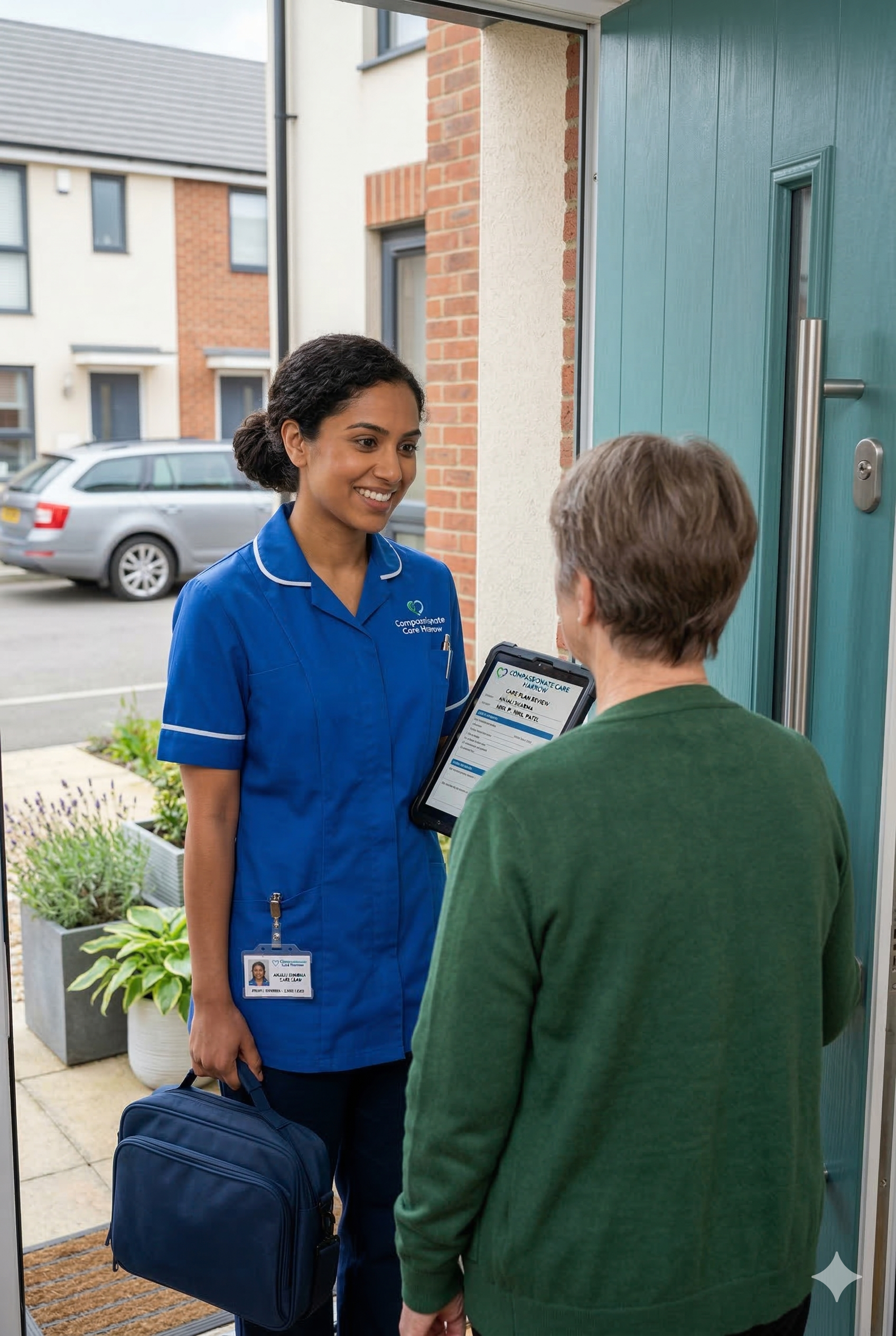
Complex Care in Cheltenham
Complex care is specialist support for people who need extra support at home. Medication prompting, catheter and stoma care, PEG feeding, hoisting, and condition-specific support for Parkinson’s, stroke recovery, and sensory impairment. Delivered by trained carers working alongside NHS district nurses.
Complex Condition Support
Parkinson’s, MS, stroke recovery, COPD. Our carers are trained to support people living with complex conditions — managing daily care while coordinating with the NHS clinical team.
This is one of the our full range of home care services in Cheltenham that families in Cheltenham trust us to deliver with compassion and professionalism.
Medication Management
Complex medication regimes need precision. Our carers prompt medication at every visit, log what was taken, and flag anything unusual to the GP or district nurse immediately.
Working with NHS Clinical Teams
We have a strong working relationship with NHS teams in Cheltenham. When your parent needs nursing tasks like catheter care or wound dressing, we coordinate with NHS district nurses to ensure seamless care.
Monitoring and Reporting
Detailed visit notes after every call. Changes in condition, fluid intake, mobility, mood — everything is recorded and shared with your family and the clinical team so nothing gets missed.
End of Life Care Support
When palliative care is needed, our carers provide dignified, compassionate support at home. We work alongside hospice teams and NHS palliative care nurses to keep your parent comfortable.
Condition-Specific Experience
Every carer who delivers complex care support has experience specific to your parent’s condition. Not a general carer who reads a handbook — someone who has already supported people with this condition.
Complex Care at Home Keeps Your Parent Where They Belong
When your parent has a complex medical condition, hospital is not the only option. Complex care at home brings specialist support into familiar surroundings — where recovery is faster and comfort is greater.
What Complex Care at Home Actually Means
The phrase “complex care” can sound intimidating. It conjures images of hospitals, medical equipment, and clinical wards. But complex care at home is something quite different. It means your parent receives specialist support for a complex medical condition — right where they feel most comfortable, in their own home, surrounded by their own things and their own routines.
At SW Care, complex care support means our trained carers provide the daily personal care, medication prompts, condition monitoring, and detailed reporting that your parent needs. When clinical or nursing tasks are required — things like catheter care, stoma management, wound dressing changes, or clinical observations — those are carried out by NHS district nurses and clinical teams, not by our staff. Our role is to deliver everything else: the personal care, the companionship, the watchful eye that spots changes early, and the communication bridge between your family and the NHS.
This distinction matters. Some care companies blur the lines. They hint at nursing capabilities they do not have, or they let families assume carers can perform clinical procedures. We are straightforward about it. Our carers are not nurses. They are trained care workers who specialise in supporting people with complex conditions at home — and they are very good at it. When nursing tasks are needed, we coordinate with the NHS professionals who are qualified to deliver them.
The result is a joined-up care package where your parent gets the best of both worlds. Professional clinical intervention from NHS staff when it is needed, and consistent, compassionate daily support from a carer who knows your parent by name, knows their routine, and notices when something is not quite right.
We have been delivering complex care support in Cheltenham since July 2018. We are CQC Rated Good and a Top 20 Home Care Group (Homecare.co.uk 2025 national award). Over that time, we have supported 100s of families through complex health situations — from stroke recovery and progressive neurological conditions to end of life care at home. We are rated 9.8 out of 10 by 121 families on Homecare.co.uk, and we were named a Top 20 Home Care Group in 2025. Those numbers reflect the trust families place in us when the situation is at its most challenging.
How Our Carers Work with NHS Teams
Complex care at home only works when everyone involved is communicating properly. Your parent might have a district nurse visiting three times a week, a GP reviewing medications monthly, and a specialist consultant overseeing their condition. Our carers are there every day — sometimes multiple times a day — and that daily presence gives them a perspective the clinical team simply cannot have.
Here is how the coordination works in practice. Our carer arrives for their visit. They carry out personal care — washing, dressing, help with meals, mobility support. While they are with your parent, they are observing and recording everything. Has their appetite changed? Are they more breathless than yesterday? Is the wound site looking different? Has their mood dropped? Is the medication causing side effects?
These observations go into detailed visit notes after every single call. Not tick-box notes — proper written records that describe what happened, what was different, and what needs attention. When the district nurse arrives for their clinical visit, those notes are available. When the GP calls to review, our registered manager can share exactly what has been happening on the ground.
We have a strong working relationship with NHS teams in Cheltenham. Our registered manager coordinates directly with district nurses, community matrons, and specialist teams to make sure your parent’s care plan reflects their current medical needs — not a plan that was written months ago and never updated.
When something changes — and with complex conditions, things do change — our carers flag it immediately. They do not wait for the next scheduled review. If your parent’s condition deteriorates overnight, we are on the phone to the clinical team first thing. If a new symptom appears, it is recorded and escalated the same day. That rapid communication can be the difference between a quick intervention at home and an unnecessary hospital admission.
This is what families tell us they value most. Not just the care itself, but the peace of mind that comes from knowing someone is watching, recording, and communicating — every single visit.
Conditions We Support at Home
Complex care support at home covers a wide range of complex conditions. Every situation is different, but here are the conditions our carers most commonly support families with in Cheltenham:
Stroke recovery. After a stroke, your parent may need help with mobility, speech exercises, personal care, and medication management. Our carers support the daily recovery process while the NHS stroke rehabilitation team handles the clinical interventions. We work alongside the NHS Cheltenham Stroke Early Supported Discharge Team to ensure your parent gets consistent, coordinated care at home.
Parkinson’s disease. Parkinson’s affects movement, balance, and daily functioning in ways that change over time. Our carers are trained to support people living with Parkinson’s — helping with mobility, managing medication timing (which is critical with Parkinson’s drugs), and adapting to the fluctuations that come with the condition. On good days, they encourage independence. On difficult days, they provide the hands-on support your parent needs.
Multiple sclerosis (MS). MS is unpredictable. Some days your parent might manage well; other days, fatigue and mobility issues make basic tasks impossible. Our carers learn to read the signs and adjust their support accordingly. They handle personal care, meal preparation, and medication prompts — and they record everything so the MS specialist nurse has a clear picture of how the condition is progressing at home.
COPD and respiratory conditions. Breathing difficulties make everyday activities exhausting. Our carers help with pacing — breaking tasks into manageable steps so your parent does not become dangerously breathless. They monitor oxygen levels when required, prompt inhaler and nebuliser use, and know when to escalate to the respiratory team or call for emergency support.
Heart failure. Managing heart failure at home requires close attention to fluid intake, weight changes, medication compliance, and symptom monitoring. Our carers track all of this at every visit and report changes to the cardiology team promptly. The goal is always the same: keep your parent stable at home and out of hospital.
Cancer care support. Families managing cancer treatment at home need reliable, compassionate daily support. Our carers help with personal care during chemotherapy recovery, medication management, nutrition support, and emotional wellbeing — working alongside the oncology team and Macmillan nurses to ensure your parent is as comfortable as possible.
- Stroke recovery and rehabilitation support
- Parkinson’s disease daily care
- Multiple sclerosis (MS) support
- COPD and chronic respiratory conditions
- Heart failure monitoring and daily care
- Cancer care support during treatment
- Diabetes management and monitoring
- Post-surgical recovery at home
- Progressive neurological conditions
- End of life and palliative care support
If your parent’s condition is not listed here, call us anyway. We have supported families through a wide range of complex health situations, and we will tell you honestly whether we can help — and if we cannot, we will point you in the right direction.
Medication Management for Complex Conditions
When your parent has a complex medical condition, medication is rarely simple. It is not one tablet in the morning. It might be six different medications at four different times of day, some with food, some without, some that interact badly if taken too close together. Getting this wrong has serious consequences.
Our carers are trained in medication prompting and management. At every visit, they prompt your parent to take their medication at the right time. They record exactly what was taken and when. If your parent refuses medication, that is recorded too — and the GP or district nurse is informed so they can follow up.
Families across Cheltenham rely on our care services we provide across Cheltenham for consistent, high-quality support at home.
For complex regimes, we work with the pharmacy and GP to create a clear medication schedule that our carers follow at every visit. When medications change — and with complex conditions, they change frequently — we update the care plan immediately. No lag, no confusion, no risk of a carer working from an outdated list.
Side effects are another area where our daily presence makes a real difference. A district nurse visiting twice a week might not notice a gradual change. A carer visiting every day will. If your parent starts sleeping more, eating less, becoming confused, or showing new symptoms after a medication change, our carer records it and flags it to the prescriber. Early identification of side effects prevents small problems from becoming serious ones.
We do not administer medication. That is an important distinction. Our carers prompt, record, and report — they do not make decisions about dosage or timing. Those decisions belong to the clinical team. But the daily oversight our carers provide means those clinical decisions are based on accurate, up-to-date information rather than a snapshot from the last outpatient appointment.
Monitoring, Recording, and Reporting
With complex conditions, what gets recorded matters. A missed observation today can become a hospital admission next week. That is why every SW Care clinical support visit includes detailed written notes — not checkboxes, not “all fine” — proper observations that the clinical team can act on.
Our carers record:
- Physical condition — mobility, skin integrity, breathing, pain levels, swelling
- Medication — what was taken, what was refused, any side effects observed
- Nutrition and hydration — what your parent ate and drank, appetite changes
- Mood and cognition — alertness, confusion, anxiety, low mood
- Continence — changes in pattern, any concerns
- Functional ability — what your parent could do independently versus what they needed help with
These notes are shared with your family. You do not have to wonder how your parent is doing between your visits. You can see exactly what happened, how they were, and whether anything has changed. For families who live further away, this level of reporting is invaluable.
Our registered manager reviews care notes regularly, looking for patterns that individual carers might not spot. A gradual decline in mobility over three weeks. A slow reduction in food intake. Increasing confusion at a particular time of day. These patterns get picked up, discussed with the clinical team, and acted on — often before the situation becomes urgent.
We also report directly to the NHS clinical team involved in your parent’s care. If the district nurse needs to know what happened overnight, they can get that information from us. If the consultant wants to know how a new medication is affecting your parent at home, our records provide that picture. This two-way communication means everyone involved in your parent’s care is working from the same information.
End of Life Care at Home
This is the hardest conversation a family will ever have. When your parent is approaching end of life, the question of where they spend their final days is deeply personal. Many families want their parent to stay at home. For that to work, the right support has to be in place.
SW Care provides end of life care support at home in Cheltenham, working alongside NHS palliative care teams, hospice at home services, and district nurses. Our carers provide the personal care, comfort, companionship, and practical support that keeps your parent dignified and comfortable. The clinical aspects — pain management, symptom control, medication adjustments — are handled by the palliative care nurses and doctors.
Our carers who support end of life care have specific experience in this area. They understand what to expect as a condition progresses. They know how to provide gentle, unhurried personal care when every movement matters. They know when to talk and when to just be present. And they support the wider family too — because watching a parent decline is one of the most difficult things any of us go through.
Every carer is covered by our insurance, every visit, no exceptions. That matters in end of life care, where visits might be longer, more frequent, or at unusual hours. You need to know that the person in your parent’s home is fully insured, fully trained, and fully supported by our team.
Families often tell us that having a consistent carer during this time made an enormous difference. Not a rotating roster of strangers, but someone who knows your parent, knows your family, and understands what is happening. That continuity brings comfort when very little else can.
How Complex Care Is Different from Standard Home Care
Standard home care covers the essentials: help with washing, dressing, meals, and light housework. It is exactly right for many older people who need a bit of extra support. But when your parent has a complex medical condition, standard care is not enough.
Complex care support adds several critical layers:
- Condition-specific experience. Your parent’s carer has hands-on experience with their condition — not generic care knowledge, but real-world understanding of the challenges of that particular condition.
- Enhanced monitoring. Every visit includes detailed observations that go beyond standard care notes. Our carers are trained to spot the early signs of deterioration specific to your parent’s condition.
- NHS coordination. Your carer is not working in isolation. They are part of a wider care team that includes district nurses, GPs, and specialist consultants. Information flows both ways, every day.
- Complex medication support. Standard carers might prompt one or two tablets. Complex care carers manage complex, multi-drug regimes with precision timing and detailed recording.
- Escalation protocols. Our carers know exactly when and how to escalate concerns. They do not wait for things to become critical. Clear protocols mean the right person is contacted at the right time.
The difference is not about doing more tasks. It is about doing care differently — with greater awareness, more detailed recording, closer coordination with the NHS, and carers who truly understand the condition they are supporting.
At SW Care, we have delivered over 100,000 hours of care in Cheltenham. A significant portion of that has been complex care support for families managing complex conditions at home. We know what works because we have done it — hundreds of times, for hundreds of families.
If your parent has a complex medical condition and you are trying to work out whether they can stay at home, call us on 01242 352 554. We will talk you through what complex care support at home looks like, what it costs, and how it works alongside the NHS care your parent is already receiving. No obligation. No jargon. Just a straightforward conversation about what happens next.
Meet the Cheltenham Team That Delivers Your Home Care
You’re in safe hands.
Every family that trusts us with their loved one’s care deserves to know who’s behind it. Here is the team that runs your care — from the first phone call to daily visits at home.

Kasha Patrzykowska
Registered Manager
Kasha brings 17 years of domiciliary care experience, including advanced qualifications in care management, safeguarding, and medication administration. She is named on our CQC registration — which means she is personally accountable for the quality and safety of every care package we deliver. Kasha oversees every care plan, leads our team of carers, and is the person the CQC inspector speaks to when they visit.

Stacey Cole
Manager
Stacey brings 13 years of care management experience, with training in person-centred care planning, risk assessment, and family communication. As Manager, she handles family enquiries, organises care assessments, and makes sure the transition from your first phone call to a carer arriving at your door is smooth and stress-free. Stacey is often the first person families speak to — and she stays involved throughout.

Kamila Czerwonka
Care Coordinator
Kamila brings 14 years of care coordination experience, with specialist knowledge in rota management, carer matching, and continuity of care. As Care Coordinator, her job is to match the right carer to your loved one, schedule every visit, and make sure nothing falls through the cracks. Kamila learns your loved one’s preferences, personality, and routine — then builds a small, consistent team of named carers around them.

Faisal Khan
Head of Marketing
Faisal leads the organisation’s marketing strategy, strengthening brand visibility and supporting sustainable growth. He focuses on clear communication, digital presence and community engagement to ensure services are accessible and well represented. His work supports trust, transparency and awareness of high-quality home care within the local community.

Gus Saggu
Nominated Individual & Director
A Nominated Individual is the person registered with the Care Quality Commission (CQC) who is responsible for supervising the management of the regulated activity. They are the main point of contact between the service and the CQC. Gus brings extensive leadership experience in health and social care, ensuring robust governance, compliance, and a culture of continuous improvement across the Cheltenham service.
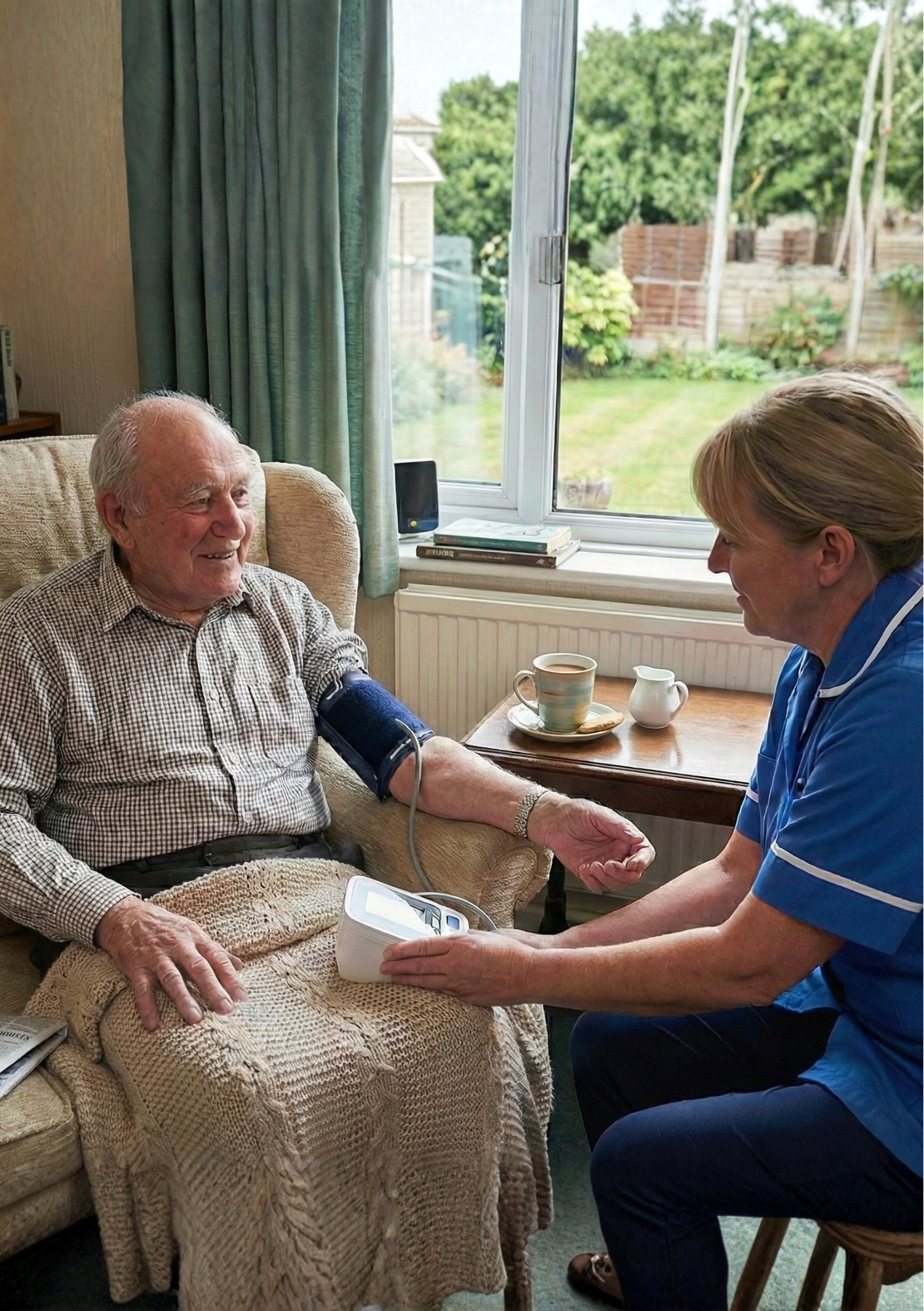
Behind every care team is a wider team of admin, finance, HR, recruitment and marketing people that all work together — making sure your loved one’s care runs smoothly, every single day.
Getting Started Takes One Phone Call
Most families feel unsure about this first step. That’s completely normal. Here’s what happens.
01
One 10-Minute Phone Call Gives You Clarity
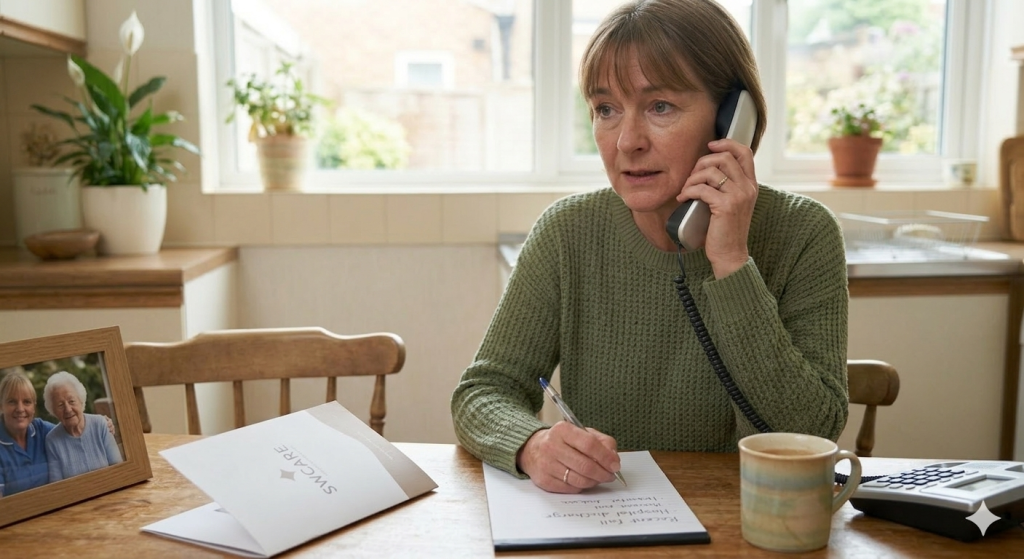
Call our care team on 01242 352 554 or send an email. Speak directly to Kasha, Kamila, Stacey or Faisal — our care team. Tell them what’s worrying you and what you need. No pressure. They’ll walk you through the process.
02
We Visit. We Listen. We Assess and Plan.
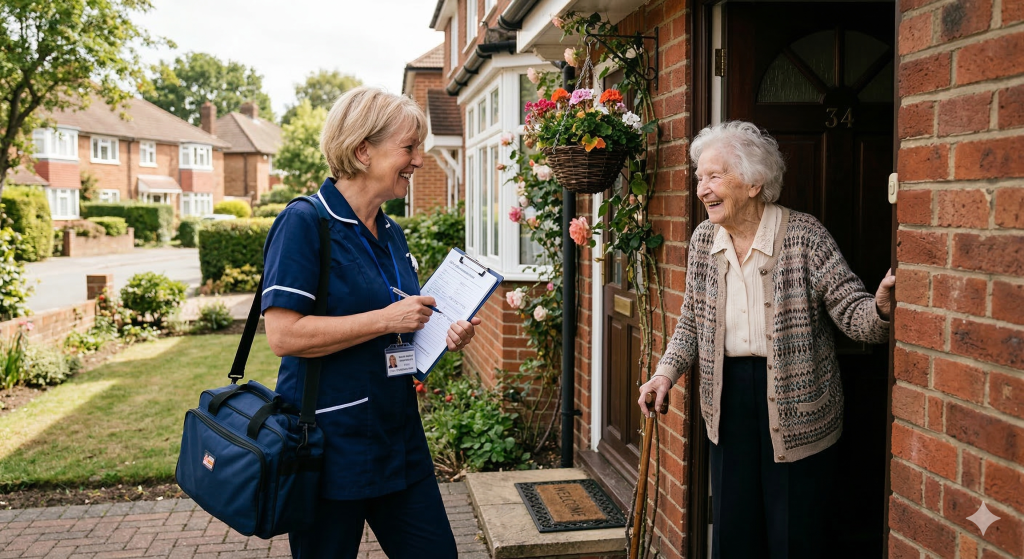
We visit you and carry out a CARE ASSESSMENT. It’s FREE and will give you a detailed plan of what care is required. Plans are made to fit your budget and personal family circumstances.
03
Your Parent Gets Their Own Small Team
Based on your loved one’s needs, we match a SMALL TEAM of qualified and appropriately trained carers. And if and when you are happy with everything, we will begin care.
The best way to start is to call our dedicated Cheltenham care team on 01242 352 554 or send an email. There’s no obligation. They’re here to answer your questions and help you decide at your pace.
Nine Care Services Delivered by One Local Cheltenham Team
We provide nine distinct home care services to families across Cheltenham. Every service is managed from our Cambray Place office and delivered by carers who are trained to Care Certificate standards with ongoing development. Meet the team behind your parent’s care.
- Personal Care — Washing, dressing, bathing, and continence support
- Dementia Care — Consistent routines and patient support for memory loss
- Live-In Care — A dedicated carer in your parent’s home around the clock
- Complex Care — PEG feeding, catheter care, stoma maintenance, and hoisting
- Companionship Care — Regular visits for company, conversation, and light support
- Overnight Care — Waking or sleeping night carers for safety and reassurance
- Respite Care — Temporary cover so family carers can take a proper break
- Hospital Discharge Care — Reablement support when your parent leaves hospital
- End-of-Life Care — Comfort, companionship, and dignity in the final weeks and months
Most families start with one or two visits a day and adjust as needs change. Your parent’s care plan is reviewed regularly, and you can call the office at any time to discuss changes. Browse our full range of home care services to see what support looks like in practice.
Get Expert Guidance on the Right Care for Your Loved One
In just 10 minutes, our care coordinators will help you understand your options and create a plan that works for your family.
There is never any obligation.
Get Clarity in 10 Minutes.Peace of Mind for Your Loved One.
Speak directly to our care team—Stacey, Kasha, Kamila, or Faisal—at our Cheltenham office. You’ll get clear answers about what care looks like, what it costs, and whether it’s the right step for your loved one.
What to Expect from Your First Call
When you call our Cheltenham office, you’re connecting with real care professionals who’ve helped families like yours. We’ll listen, answer honestly, and help you understand your options—without pressure.
Understand Your Loved One’s Needs
We’ll ask about their daily challenges, health conditions, and what matters most to them.
Explore Your Options
We’ll explain what care looks like, how it works, what it costs, and how we can customise it. No surprises.
Take the Next Step
If homecare is right for your loved one, we’ll help you get started this week. If it’s not the right time, we’ll tell you honestly.