
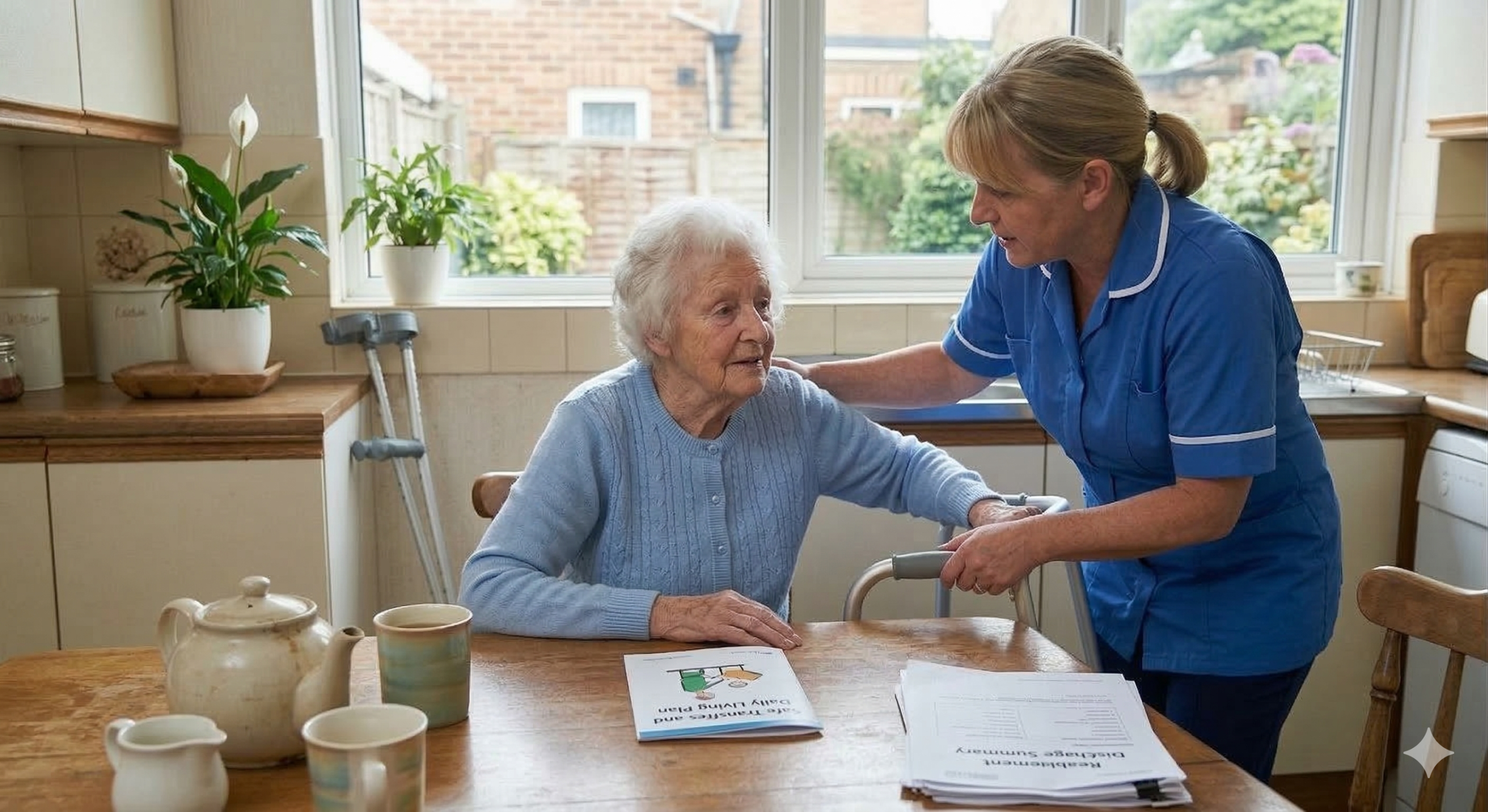
Overnight Care in Cheltenham
Peace of mind through the night, with a carer there when your parent needs them.
Waking Night Care
A carer who stays awake all night, providing active support — medication, repositioning, toileting, reassurance. For parents who need regular attention throughout the night.
This is one of the our full range of home care services in Cheltenham that families in Cheltenham trust us to deliver with compassion and professionalism.
Sleeping Night Care
A carer who sleeps in your parent’s home and wakes if needed. Ideal when your parent is mostly settled at night but you need someone there in case of a fall or confusion.
Fall Prevention and Response
Night-time falls are one of the biggest risks for older people living alone. Having a carer present means immediate help if your parent gets out of bed and loses their balance.
Medication and Comfort
Overnight medication prompts, repositioning in bed, getting a glass of water, adjusting pillows. The small things that make the difference between a restful night and a frightening one.
Dementia Night Support
Sundowning, confusion, wandering. Dementia symptoms often worsen at night. A trained carer provides calm redirection and reassurance when your parent feels most disoriented.
Respite for Family Carers
If you are doing the night shifts yourself, you know the toll it takes. Overnight care gives you the sleep you need while knowing your parent is safe and looked after.
Overnight Care Means Your Parent Is Never Alone at Night
Night-time is when the risks are highest and the worry is worst. Overnight care puts a trained, trusted carer in your parent’s home so you can sleep knowing they are safe.
You already know the feeling. It is two in the morning and you are lying awake, wondering whether your parent is all right. Did they get up to use the bathroom? Did they fall? Are they confused, calling out, frightened in the dark? You cannot be there every night. Nobody can. But someone needs to be.
That is what overnight care is for. A trained, experienced carer stays in your parent’s home during the night \u2014 either awake throughout or sleeping in a nearby room, ready to respond. Your parent gets the help they need when they need it. You get the sleep you have been missing for months.
SW Care has been providing overnight care in Cheltenham since July 2018. We are a Top 20 Home Care Group (Homecare.co.uk 2025 national award) and have a strong working relationship with the NHS Cheltenham Stroke Early Supported Discharge Team. We have delivered over 100,000 hours of care across all our services, and our families rate us 9.8 out of 10 on Homecare.co.uk based on 121 verified reviews. We know what night-time care looks like in practice \u2014 and we know how to get it right.
Waking Night Care vs Sleeping Night Care
The first question most families ask is whether their parent needs a carer who stays awake all night or one who sleeps in the home and wakes when needed. The answer depends entirely on your parent’s condition and what is happening after dark.
Waking night care means your carer is awake and active from the moment they arrive until the morning handover. They are there to provide continuous support \u2014 helping your parent to the bathroom, administering medication at set times, repositioning them in bed to prevent pressure sores, and offering reassurance if they wake confused or distressed. Waking night care is the right choice when your parent needs regular, hands-on help throughout the night. If they are getting up multiple times, if they need turning every few hours, or if their condition means they cannot safely be left without someone watching \u2014 waking care is the answer.
Sleeping night care works differently. Your carer sleeps in your parent’s home \u2014 usually in a nearby room \u2014 and wakes if your parent calls out, presses a buzzer, or gets out of bed. It is designed for situations where your parent is mostly settled at night but there is a real risk of something going wrong. A fall in the bathroom. A moment of confusion. An episode of pain that needs someone calm and capable to respond. Sleeping night care gives your parent the safety net they need without the intensity of full waking support.
Not sure which your parent needs? That is completely normal. When you call us, our care team will talk through what is happening at night and help you decide. Some families start with sleeping night care and move to waking care as their parent’s needs change. Others find that sleeping care is all they ever need. There is no one-size-fits-all answer, and we will never push you towards more care than your parent actually requires.
Why Night-Time Is the Highest Risk
If you have been caring for your parent, you already know this instinctively. Night-time is when the worst things happen. The statistics back it up: falls at night are more likely to result in serious injury because there is nobody there to catch them, nobody to call for help straight away, and nobody to keep them calm while they wait.
There are several reasons why nights are so dangerous for older people living alone:
- Reduced visibility. Even with a night light, your parent may misjudge distances, trip over furniture, or miss a step. Poor eyesight combined with darkness is a recipe for falls.
- Medication effects. Many medications cause drowsiness, dizziness, or confusion \u2014 effects that are worse at night when your parent is already half-asleep and disoriented.
- Dehydration and low blood pressure. After several hours without drinking, your parent’s blood pressure can drop when they stand up. This causes dizziness and can lead to a fall before they even reach the bathroom.
- Cognitive changes. For people with dementia, night-time confusion (sundowning) can cause wandering, agitation, and distress. Your parent may not recognise their own home in the dark.
- Isolation and fear. Being alone at night is frightening, particularly for someone whose health is declining. Anxiety itself can worsen symptoms and make your parent more likely to panic and rush.
An overnight carer removes every one of these risks. They are there to guide your parent safely to the bathroom, to turn on lights, to hold a steady arm, to speak calmly and clearly. The difference between a fall that results in a broken hip and one that does not happen at all is often nothing more than having someone present.
Who Needs Overnight Care
Families come to us about overnight care for all sorts of reasons. There is no single trigger \u2014 but there are patterns we see again and again.
Parents who have started falling at night. One fall might be written off as bad luck. Two or three falls and the pattern is clear. If your parent is getting up at night and losing their balance, they need someone there. Not a pendant alarm that calls an ambulance after the damage is done \u2014 a real person who can prevent the fall from happening in the first place.
Parents with dementia or cognitive decline. Night-time confusion is one of the most common and most distressing symptoms of dementia. Your parent may wander the house, try to leave, become agitated or frightened, or simply not understand where they are. A trained carer who knows your parent can provide the calm, gentle redirection that prevents a crisis.
Parents recovering from surgery or a hospital stay. The first few weeks after a hip replacement, a stroke, or a hospital discharge are the highest-risk period. Your parent may be unsteady, in pain, and adjusting to new medication. Overnight care during recovery can be the difference between a successful return home and a readmission.
Parents who need regular repositioning. If your parent is bedbound or has limited mobility, they need to be turned regularly to prevent pressure sores. This is not something that can wait until morning. Pressure sores develop quickly and heal slowly \u2014 and they are entirely preventable with proper overnight support.
Family carers who are exhausted. Perhaps the most common reason families call us. You have been doing the night shifts yourself \u2014 getting up two, three, four times a night to check on your parent. You are running on empty, and it is affecting your health, your work, your relationships. You cannot keep going like this. Overnight care is not a luxury. It is the thing that stops you from burning out completely.
What Your Overnight Carer Does
Every overnight care placement is different because every parent is different. But here is what a typical night looks like with an SW Care carer in your parent’s home.
Your carer arrives at an agreed time \u2014 usually between 8pm and 10pm, depending on your parent’s routine. If your parent needs help getting ready for bed, the carer assists with washing, changing into nightclothes, medication, and settling in. They check that the home is secure, lights are set appropriately, and everything your parent might need during the night is within reach.
For waking night care, the carer stays awake and available throughout. They check on your parent regularly, assist with bathroom visits, reposition them in bed if needed, provide medication at the right times, and offer reassurance if your parent wakes confused or anxious. They keep a detailed record of the night \u2014 what happened, when, and how your parent responded \u2014 so you and our care team always know exactly how things are going.
For sleeping night care, the carer settles into a nearby room and sleeps lightly, ready to respond. If your parent calls out, gets out of bed, or activates an alarm, the carer is there within moments. They provide whatever help is needed, settle your parent back in, and stay alert until everything is calm again.
In the morning, your carer helps your parent get up, assists with washing and dressing if needed, and prepares breakfast. They hand over to the daytime carer or simply make sure your parent is safe, comfortable, and settled before leaving. Every carer is covered by our insurance, every visit, no exceptions.
Families across Cheltenham rely on our care services we provide across Cheltenham for consistent, high-quality support at home.
The specifics are always matched to your parent. Some parents need help getting to the bathroom every two hours. Others sleep through most of the night but need someone there for the one time they do not. Your parent’s care plan sets out exactly what happens and when \u2014 and it is reviewed regularly to make sure it still fits.
Overnight Care for People with Dementia
Dementia changes the way night-time works. Your parent may sleep during the day and become active, agitated, or distressed after dark. They may get dressed at 3am convinced it is morning. They may try to leave the house to go to a job they retired from twenty years ago. They may call out repeatedly, not recognising their own bedroom.
This is called sundowning, and it is one of the most exhausting aspects of caring for someone with dementia. It is also one of the main reasons families reach their breaking point with night-time care.
Our overnight carers are trained in dementia support. They understand that arguing with someone who is confused makes things worse. They know how to redirect gently, how to use familiar routines and reassuring language, and how to create a calm environment that helps your parent settle. They do not restrain, they do not argue, and they do not rush. They sit with your parent, they talk softly, and they wait.
Consistency matters enormously for people with dementia. We aim to send the same carer to your parent’s home each night, so your parent sees a familiar face and the carer learns your parent’s specific patterns. They know that your mum likes the hallway light left on. They know that your dad settles faster with a cup of warm milk. These details sound small, but they are the difference between a calm night and a distressing one.
If your parent has dementia and you are struggling with nights, call us on 01242 352 554. We will talk through what is happening and explain how overnight care can help. Many families tell us they wish they had called sooner.
How Overnight Care Fits with Daytime Support
Overnight care does not exist in isolation. Most families who use our overnight service also have daytime care in place \u2014 whether that is personal care visits, companionship care, or a more comprehensive package.
The advantage of using SW Care for both day and night is continuity. Your parent’s daytime carers and overnight carers work from the same care plan, communicate through the same system, and are managed by the same Cheltenham-based team. If something happens during the night \u2014 a change in condition, a difficult episode, a medication issue \u2014 the daytime team knows about it before they walk through the door.
Some families use overnight care every night. Others use it three or four nights a week, covering the nights when they cannot be there themselves. Some use it only during particularly difficult periods \u2014 after a hospital discharge, during a carer’s holiday, or when their parent’s condition worsens temporarily. We build the schedule around what your family actually needs.
If your parent needs more support than overnight and daytime visits can provide, we also offer live-in care \u2014 where a carer lives in your parent’s home full-time. For some families, combining overnight care with daytime visits works perfectly. For others, live-in care turns out to be simpler and more cost-effective. We will help you work out which option is right.
What Overnight Care Costs
Cost is always one of the first questions families ask, and rightly so. Overnight care is a significant investment, and you need to understand what you are paying for before you commit.
The cost depends on the type of overnight care your parent needs:
- Waking night care costs more because your carer is awake and actively working throughout the night. This is the right choice when your parent needs regular, hands-on support.
- Sleeping night care costs less because your carer is sleeping for much of the night, waking only when needed. This works well when your parent is mostly settled but needs someone present for safety.
We do not publish fixed prices on our website because the cost depends on your parent’s specific needs, how many nights per week they need support, and whether the care is combined with daytime services. What we can tell you is this: we will give you a clear, honest quote before anything starts, and we will explain exactly what is included. No hidden charges, no unexpected bills.
It is also worth knowing that overnight care at home is often significantly cheaper than a care home, particularly when your parent does not need 24-hour nursing. Your parent stays in their own home, surrounded by their own things, sleeping in their own bed \u2014 and you pay only for the hours of support they actually receive.
Some families fund overnight care privately. Others use a local authority direct payment or a personal budget from adult social care. If your parent has been assessed as needing night-time support, there may be funding available. We cannot arrange funding for you, but we can tell you who to contact and what to ask for. Our care team has helped hundreds of families through this process.
If you are unsure whether you can afford overnight care, call us on 01242 352 554 and we will talk you through the options. There is no obligation, and we would rather you understood the full picture before making any decisions.
SW Domiciliary Care is CQC-rated Good, rated 9.8/10 by 121 families on Homecare.co.uk, and has been providing overnight care in Cheltenham for over seven years. When you choose us, you are choosing a local team that knows what it is doing, that takes responsibility for every night of care, and that will be honest with you about what your parent needs.
The first step is always the same: pick up the phone and call 01242 352 554. Tell us what is happening at night, and we will explain exactly how we can help.
Meet the Cheltenham Team That Delivers Your Home Care
You’re in safe hands.
Every family that trusts us with their loved one’s care deserves to know who’s behind it. Here is the team that runs your care — from the first phone call to daily visits at home.

Kasha Patrzykowska
Registered Manager
Kasha brings 17 years of domiciliary care experience, including advanced qualifications in care management, safeguarding, and medication administration. She is named on our CQC registration — which means she is personally accountable for the quality and safety of every care package we deliver. Kasha oversees every care plan, leads our team of carers, and is the person the CQC inspector speaks to when they visit.

Stacey Cole
Manager
Stacey brings 13 years of care management experience, with training in person-centred care planning, risk assessment, and family communication. As Manager, she handles family enquiries, organises care assessments, and makes sure the transition from your first phone call to a carer arriving at your door is smooth and stress-free. Stacey is often the first person families speak to — and she stays involved throughout.

Kamila Czerwonka
Care Coordinator
Kamila brings 14 years of care coordination experience, with specialist knowledge in rota management, carer matching, and continuity of care. As Care Coordinator, her job is to match the right carer to your loved one, schedule every visit, and make sure nothing falls through the cracks. Kamila learns your loved one’s preferences, personality, and routine — then builds a small, consistent team of named carers around them.

Behind every care team is a wider team of admin, finance, HR, recruitment and marketing people that all work together — making sure your loved one’s care runs smoothly, every single day. Meet the full team →
The First Step Is Always a Conversation
We have been helping families get support and care for their loved ones for many years. Whatever your personal requirements or budget are, our care team is ready to help.
There’s never any obligation.
Getting Started Takes One Phone Call
Most families feel unsure about this first step. That’s completely normal. Here’s what happens.

01
One Phone Call Changes Everything
01242 352 554
Mon–Fri 9am–5pm
Send your enquiry by email →
No waiting. No call centres. You’ll speak directly to Kasha, Kamila or Stacey — real people who’ve helped hundreds of Cheltenham families find the right care. Tell them what’s worrying you. They’ll be honest about what we can do.

02
We Visit. We Listen. We Plan.
We come to your parent’s home — not an office, not a hospital. We sit down, learn their routine, what matters to them, and what worries you. Then we build a care plan around their life — not a template. If you’re paying privately, we’ll work within your budget. No surprises.

03
Your Parent Gets Their Own Small Team
We match a small team of carers to your parent — people they’ll actually look forward to seeing. They arrive on time, every time. You get updates on the app after every visit. Same familiar faces at the door. No strangers. And for the first time in months, you can breathe.
The Smartest Way to Start Your Care Search Is a 10-Minute Phone Call.
Speak directly to Stacey, Kasha, Kamila or Faisal at our Cheltenham office. No call centres. No sales pitch. Just clear answers about what care looks like, what it costs, and whether it’s the right step.
There’s never any obligation.
Nine Care Services Delivered by One Local Cheltenham Team
We provide nine distinct home care services to families across Cheltenham. Every service is managed from our Cambray Place office and delivered by carers who are trained to Care Certificate standards with ongoing development. Meet the team behind your parent’s care.
- Personal Care — Washing, dressing, bathing, and continence support
- Dementia Care — Consistent routines and patient support for memory loss
- Live-In Care — A dedicated carer in your parent’s home around the clock
- Complex Care — PEG feeding, catheter care, stoma maintenance, and hoisting
- Companionship Care — Regular visits for company, conversation, and light support
- Overnight Care — Waking or sleeping night carers for safety and reassurance
- Respite Care — Temporary cover so family carers can take a proper break
- Hospital Discharge Care — Reablement support when your parent leaves hospital
- End-of-Life Care — Comfort, companionship, and dignity in the final weeks and months
Most families start with one or two visits a day and adjust as needs change. Your parent’s care plan is reviewed regularly, and you can call the office at any time to discuss changes. Browse our full range of home care services to see what support looks like in practice.
The Smartest Way to Start Your Care Search Is a 10-Minute Phone Call.
Speak directly to our care team: Stacey, Kasha, Kamila or Faisal – at our Cheltenham office. No call centres. No sales pitch. Just clear answers about what care looks like, what it costs, and whether it’s the right step.
Out of hours? Leave a voicemail
There is never any obligation.